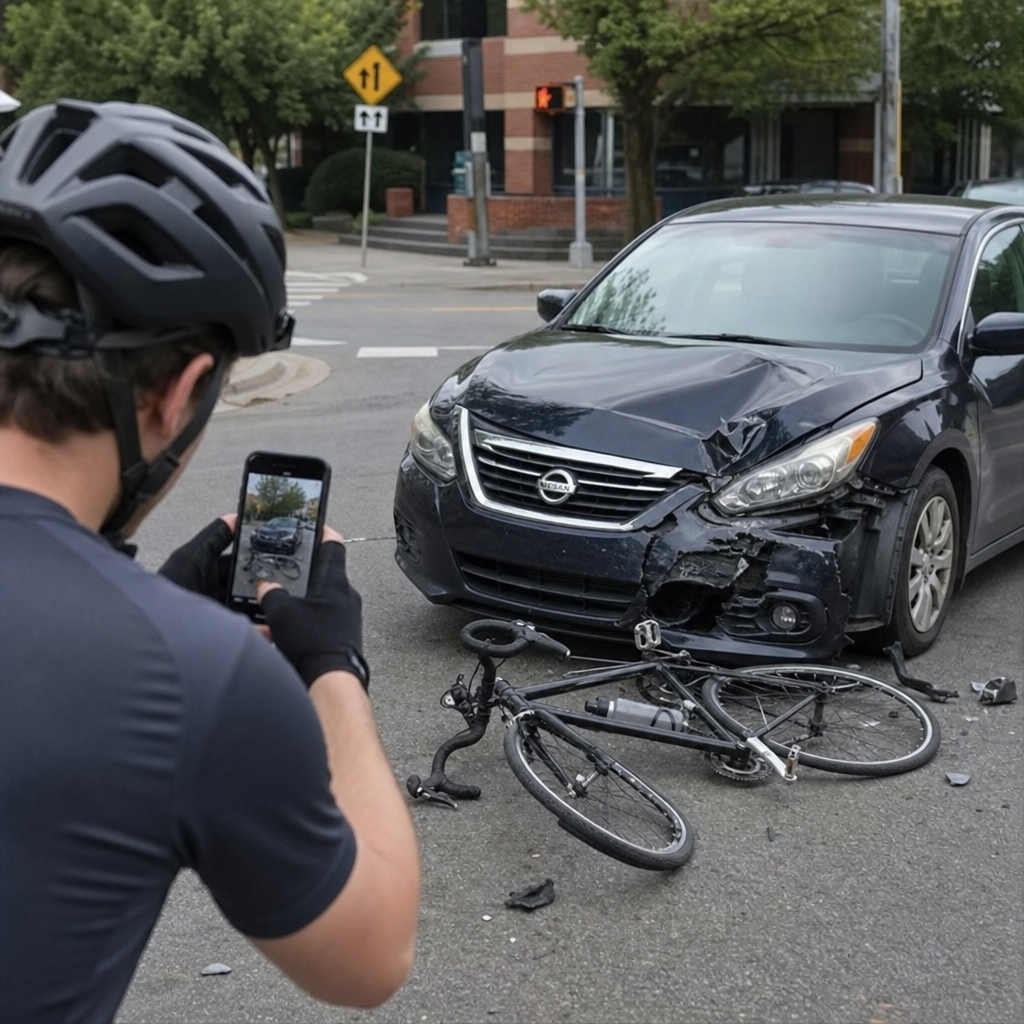
A bicycle crash can turn an ordinary ride through Columbus into a medical, financial, and legal problem in seconds. Whether the collision happens near Downtown, in the University District, along a neighborhood street, near the Olentangy Trail, or at a busy Columbus intersection, the steps you take afterward can affect your health and any future bicycle injury claim. This guide explains what to do after a bicycle crash in Columbus, how Ohio law may affect fault, what evidence you should preserve, and when it may make sense to speak with a Columbus bicycle accident attorney.
Call (614) 482-3793 or request a free consultation with a Columbus bicycle accident attorney at Buckeye Law Group Today.
A bicycle crash can turn an ordinary ride through Columbus into a medical, financial, and legal problem in seconds. Whether the collision happens in traffic, near one of the Columbus bike lanes, or at a driveway or intersection, the steps you take next can affect your health and any future bicycle injury claims. This guide explains what to do after a crash, how Ohio law may affect fault, and when it may make sense to speak with a Columbus bicycle accidents attorney.
What Should You Do Immediately After A Bicycle Crash in Columbus?
After a bicycle crash involving a car, truck, Uber & Lyft rideshare vehicle, or other road user in Columbus, your first priorities are safety, medical care, documentation, and reporting everything that happened. Move out of traffic if you can do so safely, call 911 if anyone is hurt or the roadway is blocked, and start preserving evidence before vehicles, witnesses, and road conditions disappear. Use this practical timeline as a guide:
- Get to a safer spot, but do not leave the scene: If you are able, move yourself and the bike out of moving traffic. If you may have a head, neck, back, or leg injury, stay still and wait for emergency help.
- Call 911 for injuries, danger, hit-and-run, or major damage: Ask for police and medical assistance. A responding officer can document the crash, identify drivers and witnesses, and create records that may later support insurance claims.
- Exchange information: Get the driver’s name, phone number, address, license plate, driver’s license information, and insurance details. If the driver is working, note the company name and vehicle markings.
- Take photos and video: Capture vehicle positions, your bicycle, skid marks, traffic signals, crosswalks, bike-lane markings, weather, lighting, debris, injuries, torn clothing, and nearby cameras.
- Find witnesses quickly: Ask for names, phone numbers, and a short description of what they saw. Neutral witnesses can be especially important when a driver later says the cyclist “came out of nowhere.”
- Preserve the bike and gear: Do not repair, clean, or discard the bicycle, helmet, lights, backpack, shoes, or clothing. Damage patterns can help show how the crash happened.
- Avoid quick recorded statements: You can report the crash to an insurer, but be careful about giving recorded statements, guessing about speed, or accepting blame before you understand your injuries and rights.
Columbus and Ohio reporting rules matter
Ohio uses standardized traffic crash reports, and when a law enforcement agency investigates a qualifying motor vehicle crash, the agency must forward an Ohio traffic crash report to the state within five days. The Ohio Administrative Code describes a traffic crash as involving a motor vehicle with fatality, personal injury, or property damage at or above the specified reporting amount.
For Columbus crashes that are not investigated at the scene, the City of Columbus allows online crash report filing for single-vehicle or multiple-vehicle crashes. The city notes that reports filed this way are for documentation and insurance purposes and do not receive investigative follow-up. That distinction matters: an online report can create a record, but it may not replace the evidence gathered by a responding officer after an injury crash.
Bicycle accident reports can become central evidence in a claim. Review the report when it becomes available and check for errors in the location, insurance information, witness names, and crash narrative. If the report leaves out your statement or misidentifies where you were riding, tell your attorney or insurer promptly so the issue can be addressed.
Why Medical Care Should Come Before Claim Strategy
Adrenaline can mask pain after a crash. Cyclists may walk away thinking they are “fine,” then develop concussion symptoms, shoulder pain, road rash infection, knee instability, numbness, or back pain hours or days later. If you hit your head, lost consciousness, vomited, felt confused, or have worsening pain, seek urgent care or emergency treatment right away.
Medical records also connect your injuries to the crash. Delayed treatment gives insurers room to argue that your symptoms came from something else. Follow discharge instructions, attend follow-up appointments, fill prescriptions, and keep copies of bills and visit summaries. If you cannot work, ask your medical provider about written restrictions rather than relying on your own explanation later.
Be honest with doctors about every symptom, even if it seems minor. A sore wrist, chipped tooth, or headache may become more significant after swelling or inflammation sets in. Your goal is not to “build a case” artificially; it is to get appropriate care and create an accurate timeline of what the crash caused.
Common Causes of Columbus Bicycle Accidents
Cycling in Columbus can involve a mix of neighborhood streets, arterials, campus traffic, trails, construction zones, and protected or painted bike lanes. The same crash can involve driver error, roadway design, visibility problems, or a dispute over where the cyclist had the right to ride. Common scenarios include:
- Dooring: A driver or passenger opens a parked car door into a cyclist’s path, often near curbside parking or bike lanes.
- Right-hook collisions: A driver passes a cyclist, then turns right across the cyclist’s path at an intersection or driveway.
- Unsafe passing: A motorist crowds a rider instead of leaving safe space.
- Left-turn conflicts: A driver turns across an oncoming cyclist’s lane.
- Distracted driving: A driver fails to see a bike because of phone use, navigation screens, food, or other distractions.
- Blocked or poorly marked lanes: Debris, parked vehicles, construction barrels, or faded markings can force cyclists to merge into traffic.
Columbus bike lanes can help organize traffic, but they do not eliminate risk. If a bike lane was blocked, ended abruptly, or routed you into a conflict point, photograph the condition and location. Those details may influence liability and help explain why you rode outside the lane or changed position.
Ohio Bicycle Laws and Fault Issues
Ohio law gives cyclists duties and protections. Under Ohio Revised Code § 4511.55, bicycle and e-bike riders on a roadway must obey traffic rules applicable to vehicles and ride as near to the right side as practicable, but the same section says riders are not required to stay at the edge when doing so is unreasonable or unsafe, including to avoid parked vehicles, moving vehicles, surface hazards, or lanes too narrow for safe side-by-side travel. Ohio also recognizes a safe passing distance for motorists. When a motor vehicle overtakes and passes a bicycle or e-bike, three feet or more is considered a safe passing distance under Ohio law. If a driver clips a cyclist while passing, that three-foot rule may become a key fact in the liability analysis.
Fault is not always all-or-nothing. Ohio’s comparative fault law generally allows an injured person to recover damages when their fault is not greater than the combined fault of others, but compensation is reduced by the injured person’s percentage of fault. In practical terms, insurers may argue that a cyclist was speeding, lacked lights, rode outside a lane, failed to signal, or was not wearing a helmet. Evidence matters because even a small fault dispute can reduce the value of bicycle injury claims.
Columbus also has a youth helmet ordinance: children and teens younger than 18 are required to wear helmets while riding bicycles and certain other wheeled devices in the city. Adults should still wear helmets, use lights, and ride visibly, not because every crash is preventable, but because safety habits protect both health and credibility.
Documentation Checklist After a Crash
Gather as much as you can in one folder, either digital or physical. This checklist can help you stay organized:
- Police report number, online report confirmation, or officer name and badge number.
- Driver and vehicle information, including license plate and insurance card photos.
- Witness names, phone numbers, emails, and short statements if available.
- Photos and videos of the scene, vehicles, bike, helmet, injuries, traffic controls, and bike-lane conditions.
- Medical records, discharge papers, prescriptions, referrals, imaging results, and therapy notes.
- Bills, explanation-of-benefits forms, receipts, mileage to appointments, and out-of-pocket costs.
- Employer wage records, missed-work notes, tax records, or proof of lost freelance income.
- Bike repair estimates, replacement quotes, and receipts for damaged gear.
- Insurance letters, claim numbers, adjuster emails, and recorded-statement requests.
- Personal injury journal noting pain levels, limitations, sleep problems, and missed activities.
Insurance and bicycle injury claims in Ohio
Most bicycle crash claims begin with the at-fault driver’s auto insurer. The insurer will review liability, injuries, medical costs, wage loss, property damage, and any comparative fault arguments. If the driver was uninsured, underinsured, or fled the scene, your own auto policy may provide uninsured/underinsured motorist coverage, depending on your policy terms.
Do not assume the first settlement offer reflects the full value of the claim. Early offers may arrive before you know whether you need surgery, therapy, dental work, or extended time away from work. Insurers may also ask broad medical-history questions or use recorded statements to highlight uncertainty. Keep communication factual, do not exaggerate, and avoid signing a release until you understand what rights you are giving up.
A Columbus bicycle accidents lawyer can help identify available insurance, preserve surveillance footage, evaluate crash reconstruction issues, and respond to blame-shifting. This is especially helpful after serious injuries, hit-and-run crashes, commercial vehicle crashes, disputed fault, or crashes involving complex roadway design.
Cycling safety tips for Columbus riders
Good cycling safety tips cannot guarantee that drivers will behave safely, but they can reduce risk and strengthen your ability to explain your choices after a crash.
- Use front and rear lights, even during daytime or cloudy weather.
- Ride predictably and signal turns when it is safe to remove a hand.
- Scan for opening doors when passing parked cars.
- Take the lane when the lane is too narrow, debris makes the edge unsafe, or you need to avoid a hazard.
- Slow before intersections and assume turning drivers may not see you.
- Choose routes with lower speeds, trails, or protected infrastructure when practical.
- Check the Ohio Department of Public Safety crash statistics system for broader bicycle accident statistics, but remember current-year data can change as reports are submitted and updated.
Protect Your Health and Preserve Evidence After a Columbus Bicycle Accident
After a bicycle crash in Columbus, protect your health first, then protect the evidence. Report the crash, get medical care, document everything, preserve damaged gear, and be cautious with insurers until the facts are clear. This information is general and is not legal advice. If you were injured, a Columbus bicycle accidents attorney can review your situation, explain Ohio law, and help you decide the next step before deadlines, evidence, or insurance opportunities are lost.
Call (614) 482-3793 or request a free consultation with a Columbus bicycle accident attorney at Buckeye Law Group.
*This article provides general information about Columbus bicycle accidents and the steps injured cyclists may consider taking after a crash. It is intended for educational purposes only and does not constitute legal advice for your specific circumstances. Reading this article or contacting Buckeye Law Group does not, by itself, create an attorney-client relationship. Bicycle accident claims may involve questions about driver negligence, roadway conditions, insurance coverage, medical treatment, witness evidence, and the actions taken immediately after the collision. Evaluating a potential claim requires a careful review of the crash, available evidence, applicable insurance policies, Ohio law, and relevant filing deadlines. Consult a qualified Ohio personal injury attorney for guidance regarding your rights, available legal options, and the steps that may be appropriate after a Columbus bicycle accident. Every case is different, and prior results do not guarantee a similar outcome.*
How to Document Lost Wages After a Columbus Car Accident
After a Columbus car accident, lost wage documentation is the paper trail that shows how your injuries reduced your income. The stronger that trail is, the easier it is to
How Can a Personal Injury Attorney Help After a Bicycle Accident in Middletown, Ohio?
A bicycle crash can turn an ordinary ride into a medical, financial, and legal problem in seconds. If you were hurt in a Middletown bicycle accident, a personal injury attorney
Columbus Bicycle Accidents and What to Do After A Crash
A bicycle crash can turn an ordinary ride through Columbus into a medical, financial, and legal problem in seconds. Whether the collision happens near Downtown, in the University District, along
Injured in a Columbus Rental Car Accident? Which Insurance Documents Matter
A rental car crash can turn into an insurance maze quickly, especially when someone is injured. After a Columbus rental car accident, the documents that matter most are the ones
Dog Bite at a Columbus Home or Apartment What Information Should You Preserve
A dog bite in a home, rental unit, hallway, courtyard, or apartment complex can become both a medical emergency and a legal problem within minutes. The information you preserve immediately
Pain That Appears After a Columbus Car Accident Documenting Symptoms and Treatment
Pain after a crash does not always show up at the scene. Many people walk away from a Columbus auto accident feeling shaken but “mostly fine,” only to wake up
Do I Need a Lawyer After a Car Accident in Columbus Ohio?
A car accident in Columbus can turn into a legal and financial problem long before you feel ready to deal with paperwork, phone calls, and medical bills. You may not
What to Do if the Police Report Is Wrong After a Columbus Car Accident
Finding an error in your police report can add uncertainty to an already difficult situation. You may worry that an incorrect diagram, missing witness, or inaccurate statement will affect your
The Insurer Blames You for a Columbus Motorcycle Crash What Evidence Matters
When an insurer says the rider caused a Columbus motorcycle crash, that is not the end of the claim. Fault can be challenged with the right records, careful crash scene
Akron Truck Accident Attorney: Protecting Your Rights After a Serious Collision
A serious truck crash can leave you managing medical treatment, missed work, vehicle damage, and calls from insurance companies. An Akron truck accident attorney can investigate the collision, identify potentially

Buckeye Law Group represents people injured in auto accidents, slip and falls, workplace accidents and more in Ohio. Contact us today to learn more.
© 2026 Todos los derechos reservados | The Buckeye Law Group Inc. Políticade privacidad Mapa del sitio
Ubicaciones de las oficinas
- Akron Office 388 S Main St #400 Akron, OH 44311 (330) 426-0288
- Cincinnati Office 201 E 5th St Ste 1910 Cincinnati, OH 45202 (513) 547-2445
- Cleveland Office 127 Public Square Ste 1540 Cleveland, OH 44114 (216) 677-5490
- Columbus Office 20 E Broad St Suite 300 Columbus, OH 43215 (614) 482-3793
- Dayton Office 70 Birch Alley Ste 240 Dayton, OH 45440 (937) 884-4474
- Euclid Office 25701 N Lakeland Blvd Suite 113-C, Cleveland, OH 44132 (216) 405-2626
- Mansfield Office 305 E Main St Ste 6A, Mansfield, OH 44904 (567) 210-2606
- Findlay Office 7430 Timberstone Dr unit 101a, Findlay, OH 45840 419-873-5119
- Mentor Office 7537 Mentor Ave Ste 101, Mentor, OH 44060 (440) 306-3536
- Middletown Office 300 N Main St #400, Middletown, OH 45042 (326) 800-9150
- Parma Office 1257 Rockside Rd #A, Parma, OH 44131 (216) 279-1664
- Springfield Office 2100 E High St Ste TL3, Springfield, OH 45505 (937) 806-5791
- Toledo Office 3950 Sunforest Ct Ste 200, Toledo, OH 43623 (567) 483-3883
- Westlake Office 26404 Center Ridge Rd Ste B2, Westlake, OH 44145 216-247-0565
- Whitehall Office 5340 E Main St Ste 203, Whitehall, OH 43213 (380) 257-5206
- Youngstown Office 306 Churchill Hubbard Rd, Youngstown, OH 44505 (234) 225-0683
Contáctenos
© 2026 Todos los derechos reservados | The Buckeye Law Group Inc. Políticade privacidad Mapa del sitio