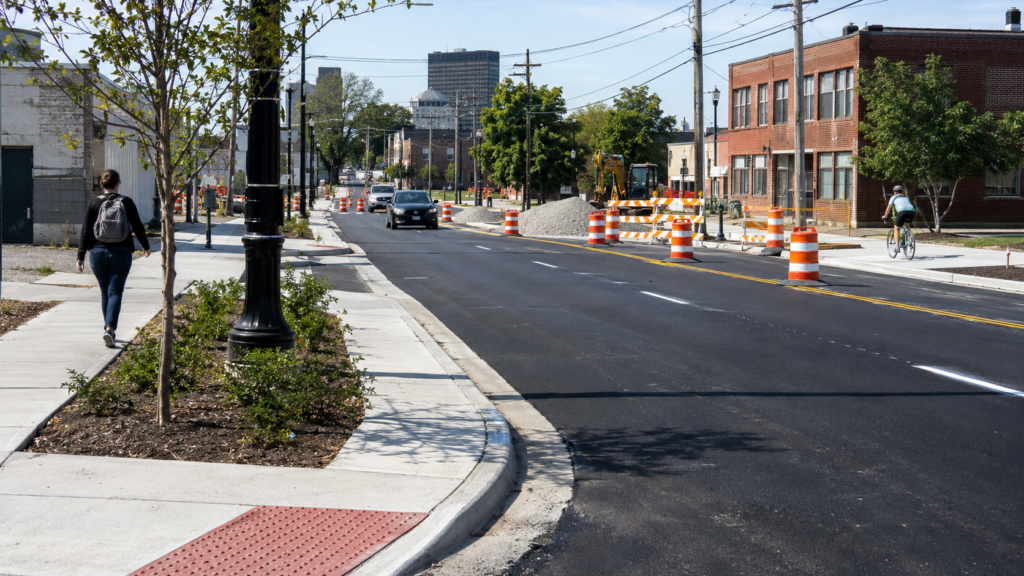
DAYTON, OHIO — Findlay Street is undergoing roadway reconstruction intended to address deteriorating pavement and improve conditions for people driving, walking, and bicycling east of downtown Dayton. Construction can temporarily affect access to nearby homes and businesses. As of November 23, 2026, a new construction phase is scheduled to alter traffic between East First Street and East Monument Avenue. Here is what travelers should know.
Call (937) 884-4474 or request a free consultation to speak with our experienced local Dayton pedestrian and car accident lawyers at Buckeye Law Group today.
What Is Included in the Findlay Street Reconstruction?
The City of Dayton’s 2026 infrastructure project overview identifies reconstruction between East First Street and East Monument Avenue. Planned improvements include new pavement, curbs, sidewalks, and street lighting. The city also says the auxiliary northbound lane will be removed and bicycle lanes added on both sides of Findlay Street.
A broader project application published through the Montgomery County Engineer describes improvements from Springfield Street to Monument Avenue, including drainage catch basins and traffic-signal work. The scope and traffic restrictions may differ by segment. New pavement and pedestrian facilities do not eliminate hazards at intersections and construction entrances.
November 23, 2026: Latest Reported Traffic Changes
According to WHIO’s November 20 report, the next construction phase is scheduled to begin Monday, November 23:
- Southbound Findlay Street: Scheduled to reopen between East Monument Avenue and East First Street.
- Northbound Findlay Street: Scheduled to close along that section beginning November 23.
- Northbound Detour: Reported to use East First Street, Keowee Street, and East Monument Avenue.
These reported changes are not guarantees of lane availability; conditions can change. Follow posted barricades and flaggers, and check the city’s updates before leaving. OHGO’s Dayton traffic map can help with conditions on ODOT-monitored roads, but it may not display every municipal street closure.
Published project pages contain different timing estimates. Residents should avoid treating an early estimated completion date as a confirmed reopening date.
Safety Considerations for Drivers on Findlay Street
Construction can introduce temporary signs, changed turns, and work vehicles. Drivers approaching East First Street, East Monument Avenue, and nearby connecting streets should:
- Reduce Speed For Actual Conditions: Allow enough distance to stop when traffic queues unexpectedly, particularly near barriers and construction equipment.
- Follow The Current Traffic-Control Layout: Temporary signs, signals, cones, and direction from authorized personnel take priority over habitual routes or outdated navigation instructions.
- Check For People At Turns: Look for cyclists beside moving traffic and pedestrians crossing at intersections or near reopened sidewalk sections.
- Avoid Abrupt Detour Decisions: If a turn is blocked, continue to a lawful route rather than making a sudden U-turn or entering a closed lane.
Allow extra time around Keowee Street and East Monument Avenue. Commercial drivers should verify detour suitability.
What Cyclists Should Know About the Planned Bike Lanes
The city says bicycle lanes will be added on both sides of Findlay Street. That is a planned end-state improvement; it does not establish that the lanes are available for continuous travel during construction.
Watch for uneven pavement, debris, closures, and turning vehicles. Do not enter a barricaded area because a new lane marking appears beyond it. Where a bicycle lane is unavailable, consider a lawful alternative route appropriate for your experience and traffic conditions.
Under Ohio Revised Code § 4511.55, cyclists using the roadway generally must follow applicable traffic laws. The statute also recognizes that conditions such as surface hazards or a narrow lane may make riding close to the roadway edge unreasonable or unsafe. Section 4511.27 addresses safe overtaking; when a driver passes a bicycle, three feet or more is considered a safe passing distance under Ohio law.
Pedestrian Access and Accessibility During Construction
New sidewalks and curbs are part of Dayton’s published plans, but work on those features may temporarily interrupt established walking routes. A route may be inaccessible to wheelchair, walker, or stroller users.
Before approaching a blocked sidewalk, look for a designated pedestrian detour. Use marked crossings and obey temporary pedestrian signals or directions. Avoid walking in an active traffic lane or through excavations to bypass a barricade. If a provided route is inaccessible, report the location to Dayton Civil Engineering rather than attempting an unsafe crossing.
Ohio’s crosswalk right-of-way law, § 4511.46, requires drivers to yield in specified circumstances where traffic signals do not otherwise assign the right of way. It also prohibits pedestrians from suddenly entering the path of a vehicle so close as to create an immediate hazard.
What Happens if a Collision Occurs Near the Work Zone?
A collision in a construction area does not automatically mean the city, contractor, or another driver was negligent. Legal responsibility depends on the evidence, the parties’ duties, how the incident happened, and which Ohio laws apply. Claims involving public entities may raise additional legal issues, including statutory immunity.
If an incident occurs, prioritize safety and medical needs. Call 911 for injuries or immediate danger. When safe, photograph vehicle positions, visible injuries, road markings, temporary signals, barriers, and the direction of travel. Record the exact intersection, date, approximate time, and contact details of witnesses. Save medical records, receipts, and any available photographs or dashcam footage. The Dayton Police Department explains that officers do not complete a formal Ohio Traffic Crash Report (OH-1) for every minor collision under current department policy. An absent OH-1 does not mean evidence is unavailable.
Ohio generally applies a two-year filing period to many personal injury actions under § 2305.10, subject to exceptions. § 2315.33 addresses how a claimant’s share of fault can affect recovery. Because deadlines and government-related claims can be fact-specific, prompt legal review may be important.
Hyperlocal Dayton Resources and Contact Information
These verified resources can help residents locate construction information, report roadway concerns, or obtain relevant records:
- City of Dayton Civil Engineering — (937) 333-3840:
- Questions about roadway projects, traffic operations, sidewalk work, and construction inspections. Department information.
- Dayton Public Works Call Center — (937) 333-4800:
- Report municipal street-maintenance concerns or request direction to the relevant division. City contact information.
- Dayton Police Department — (937) 333-2677 (non-emergency); 911 (emergency):
- Crash reporting and police assistance. Crash guidance.
- ODOT District 7 — (937) 492-1141:
- Regional construction advisories and state-route traffic information. OHGO traffic map.
- Greater Dayton RTA — (937) 425-8300:
- Bus route, stop, and accessibility questions if construction affects a transit trip. Customer support.
Check the City of Dayton project list and posted traffic controls. For a crash report, the Ohio Department of Public Safety crash search may be useful; the investigating agency maintains the official report.
Preguntas frecuentes
- Is Findlay Street closed to northbound traffic on November 23, 2026? A November 20 news report says northbound traffic between East First Street and East Monument Avenue is scheduled to close beginning November 23 while southbound access is scheduled to reopen. Confirm conditions on site before traveling.
- Will Findlay Street have bicycle lanes when reconstruction is finished? Yes. Dayton’s published 2026 project description includes bicycle lanes on both sides and removal of an auxiliary northbound lane. The city has not confirmed that these lanes are fully open for use during all stages of construction.
- Are sidewalks expected to remain accessible throughout the project? The city plans sidewalk improvements, but individual walking routes may change during construction. Follow marked pedestrian detours and report inaccessible pathways to Dayton Civil Engineering.
- Does a construction-zone crash automatically establish fault? No. Fault depends on the actions of those involved, available evidence, roadway conditions, and applicable legal duties. Construction alone does not establish liability.
- Where can Dayton residents report a dangerous street condition? Contact Dayton Civil Engineering at (937) 333-3840 for traffic or sidewalk construction concerns, or Public Works at (937) 333-4800 for municipal roadway issues. Call 911 for an immediate emergency.
Understanding Your Options After a Dayton Roadway Injury
Temporary roadway changes can create questions for people involved in a car, bicycle, or pedestrian collision. Buckeye Law Group’s Dayton office provides information about Ohio personal injury matters and can review how the particular circumstances of an incident may affect a potential claim. For related local guidance, see our articles on Dayton’s Salem Avenue reconstruction and Ludlow Street bicycle improvements.
Call (937) 884-4474 or request a free consultation to speak with our experienced local Dayton pedestrian and car accident lawyers at Buckeye Law Group today.
Legal Disclaimer: This article provides general educational information as of November 23, 2026, not legal advice. Construction conditions, agency procedures, and traffic restrictions may change. Every injury claim depends on its facts and applicable law. Reading this article does not create an attorney-client relationship.