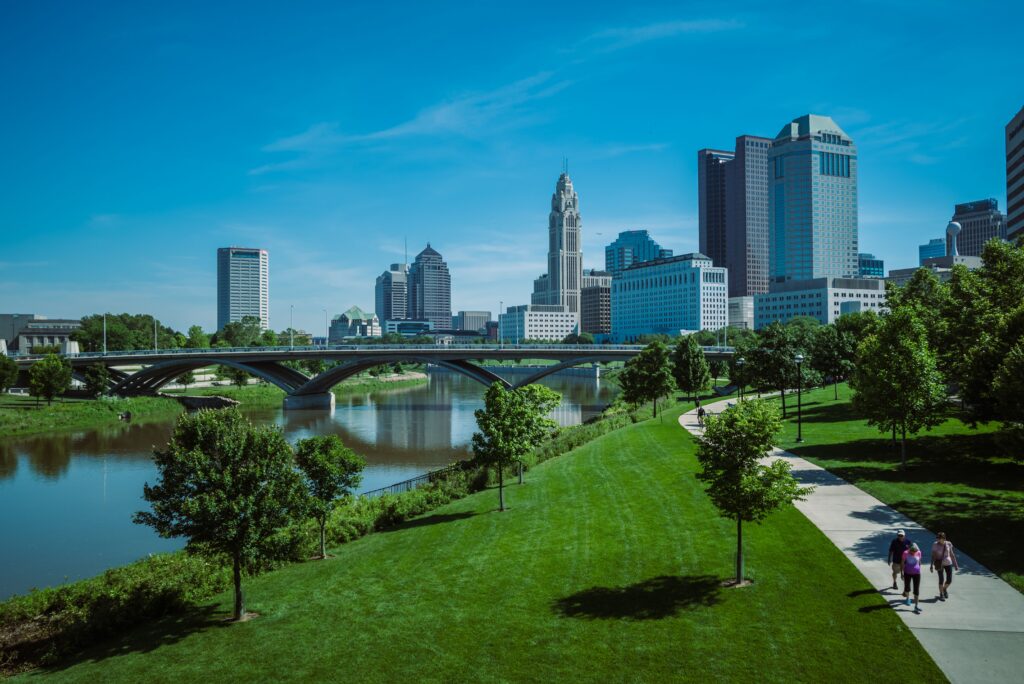
Construction along South High Street in downtown Columbus is changing how motorists, pedestrians, and bicyclists travel across Interstate 70. As part of the Ohio Department of Transportation’s (ODOT) larger I-70/I-71 Downtown Ramp Up initiative, the High Street bridge is undergoing reconstruction designed to improve roadway infrastructure, address long-standing safety concerns, and create better connections between downtown Columbus and surrounding neighborhoods.
The project affects an important north-south connection between downtown Columbus, the Brewery District, and nearby areas. With fewer available travel lanes, temporary turning restrictions, and construction activity, residents and visitors should prepare for changing traffic conditions. Understanding these restrictions, following designated pedestrian routes, and recognizing Ohio’s traffic safety requirements can help reduce the risk of collisions while construction continues.
Call (614) 482-3793 or request a free consultation to speak with an experienced local Columbus car accident attorney at Buckeye Law Group today.
What Is Happening With the High Street Bridge in Columbus?
The South High Street bridge crosses Interstate 70 near Livingston Avenue and connects downtown Columbus with neighborhoods to the south. The reconstruction is part of ODOT’s I-70/I-71 Downtown Ramp Up Phase 4A, which includes replacing the High Street, Third Street, and Fourth Street bridges over I-70.
According to ODOT, the broader work includes rebuilding portions of I-70, improving downtown connections, and replacing aging infrastructure. The High Street bridge is being reconstructed in two phases, allowing limited traffic to continue using the crossing while one portion is rebuilt.
- On October 5, 2025, the Ohio Department of Transportation (ODOT) reduced traffic on the South High Street bridge over Interstate 70 in downtown Columbus to one travel lane in each direction to accommodate phased bridge reconstruction. This temporary traffic configuration limits roadway capacity and may contribute to congestion, slower travel speeds, and changes in traffic flow near the construction zone. Motorists should anticipate possible delays, maintain a safe following distance, observe posted speed limits, and remain alert for construction workers, pedestrians, cyclists, and temporary traffic-control devices.
- Bridge reconstruction is occurring in phases rather than through one continuous full closure.
- Southbound left turns from High Street onto East Livingston Avenue are restricted during the first phase.
- ODOT indicated that bridge lane restrictions were expected to continue through summer 2028.
The complete Phase 4A project is scheduled through summer 2030, although individual construction activities have different schedules. These timelines are subject to change. Travelers should consult ODOT’s Downtown Ramp Up traffic advisories before traveling through the area.
Why the High Street Bridge Reconstruction Matters for Downtown Safety
The High Street bridge is part of an important transportation network connecting downtown Columbus, the Brewery District, and neighborhoods near German Village. ODOT identifies heavy congestion, high crash rates, and outdated roadway configurations as major reasons for the Downtown Ramp Up initiative. The larger project is intended to improve freeway connections, reduce unnecessary lane changes, replace aging bridges, and provide safer accommodations for people walking and bicycling.
During construction, however, temporary traffic patterns require additional attention. Lane shifts, concrete barriers, reduced roadway widths, and altered turning movements can make familiar routes more difficult to navigate. These conditions do not necessarily mean a construction zone is unsafe. Rather, drivers and other road users must adjust to temporary roadway layouts and remain attentive to signs, signals, and changing conditions.
Safety Tips for Drivers Traveling Through the High Street Construction Zone
Motorists approaching the High Street bridge should allow additional travel time and anticipate slower traffic near Interstate 70.
Reduce Speed and Maintain a Safe Following Distance
Narrowed travel lanes and changing traffic patterns can increase the likelihood of sudden braking. Drivers should reduce their speed according to posted restrictions, maintain adequate following distance, and avoid unnecessary lane changes.
Pay Attention to Turning Restrictions
Drivers traveling south on High Street should be particularly attentive to restrictions near East Livingston Avenue. ODOT’s published first-phase detour for the restricted southbound left turn uses Whittier Street, Third Street, and Sycamore Street to approach Livingston Avenue from northbound High Street. Drivers should verify that this route remains applicable before relying on it.
Avoid Distracted Driving
Ohio Revised Code § 4511.204 generally prohibits drivers from using or holding electronic wireless communications devices while driving, subject to statutory exceptions. Construction zones demand particular attention because motorists may encounter unfamiliar signs, temporary barriers, stopped vehicles, and people working close to moving traffic.
Watch for Pedestrians and Cyclists
When approaching intersections near Livingston Avenue, Fulton Street, or other downtown connections, drivers should check for pedestrians and bicyclists before turning. Never assume a pedestrian or cyclist has seen your vehicle, particularly where construction equipment, barriers, or parked vehicles may obstruct visibility.
Pedestrian Safety Near the South High Street Bridge
People walking between downtown Columbus and the Brewery District should exercise additional caution when approaching the bridge and surrounding intersections. Construction barriers, temporary walkways, and changes in traffic patterns may affect visibility and accessibility.
To help reduce the risk of pedestrian accidents near the South High Street bridge construction zone in downtown Columbus, individuals traveling on foot should remain attentive to changing traffic patterns, temporary sidewalk restrictions, and construction-related hazards. Pedestrians should follow designated walking routes, obey traffic-control signals, and exercise additional caution at intersections where reduced visibility, turning vehicles, or construction equipment may create potential safety risks. The following precautions can help pedestrians navigate the area more safely:
- Follow designated sidewalks and pedestrian detour signs rather than entering restricted construction areas.
- Use marked or legally recognized unmarked crosswalks and obey pedestrian signals.
- Check for turning vehicles, especially where drivers are navigating unfamiliar traffic patterns.
- Allow additional travel time when walking to nearby businesses, residences, and public transportation stops.
- Avoid entering travel lanes to bypass construction barriers.
Understanding Ohio Pedestrian Right-of-Way Laws
Ohio Revised Code § 4511.46 establishes important pedestrian right-of-way protections at crosswalks when traffic signals are absent, malfunctioning, or do not clearly assign the right-of-way.
Additionally, § 4511.14 governs pedestrian crossing signals. A flashing raised-hand signal generally means pedestrians should not begin crossing, although those who entered during the WALK indication may continue to the designated stopping point.
Pedestrians must also exercise reasonable care. However, drivers remain responsible for observing applicable traffic laws and taking appropriate precautions to avoid collisions.
Bicycle Safety During High Street Bridge Reconstruction
Cyclists traveling through downtown Columbus may encounter narrowed lanes, temporary barriers, uneven pavement, and changes to familiar routes. These conditions can require bicyclists to adjust their positioning on the roadway or consider an alternative route.
Under Ohio Revised Code § 4511.55, bicyclists generally must ride as near the right side of the roadway as practicable. However, the law recognizes exceptions when riding near the edge would be unsafe, including situations involving surface hazards, obstructions, or lanes too narrow for safe side-by-side travel.
Ohio Revised Code § 4511.27 also requires motorists overtaking bicycles to provide a safe passing distance of at least three feet. Cyclists should consider several precautions:
- Inspect the intended route for posted bicycle restrictions or temporary detours.
- Watch for construction debris, pavement transitions, metal plates, and uneven surfaces.
- Use visible front and rear lighting when riding in low-light conditions.
- Avoid riding close to large trucks or construction equipment where visibility may be limited.
- Communicate turns and lane changes clearly and allow additional stopping distance.
Bicyclists should not assume a sidewalk is a permitted alternative. Ohio allows local regulation of sidewalk cycling, and bicyclists must observe applicable local restrictions and yield appropriately to pedestrians.
Who May Be Responsible for an Accident in a Columbus Construction Zone?
An injury occurring near road construction does not automatically establish negligence or liability. Depending on the circumstances, an investigation may consider a motorist’s conduct, compliance with traffic-control devices, roadway conditions, and whether responsible parties exercised reasonable care.
For example, an accident investigation might examine distracted driving, unsafe passing, an improper turn, inadequate warnings, or the placement of temporary traffic controls. Ohio follows a modified comparative negligence framework. Under Ohio Revised Code § 2315.33, an injured person’s contributory fault generally does not prohibit recovery when it is 50% or less, although recoverable compensation is reduced proportionately.
Claims involving public entities, roadway design, or construction contractors may raise additional legal issues, including governmental immunity and special procedural requirements. Responsibility depends on the evidence and applicable law.
What to Do After an Accident Near the High Street Bridge
Anyone involved in a collision near the construction area should prioritize personal safety and obtain emergency assistance when necessary. If conditions permit, useful steps include documenting the location, photographing vehicle damage and nearby traffic-control signs, obtaining witness information, and identifying the responding law enforcement agency.
Medical attention is important when injuries are suspected, even if symptoms are not immediately obvious. Preserving records may also be helpful because construction arrangements, equipment positions, and temporary traffic patterns can change.
Ohio Revised Code § 2305.10 generally establishes a two-year period for filing personal injury lawsuits after a claim accrues, although exceptions and other deadlines may apply. Claims involving government entities may require special analysis.
Frequently Asked Questions About Columbus High Street Bridge Construction
- Is the High Street bridge in Columbus closed? ODOT’s published construction plan allows one lane in each direction over I-70 during phased bridge reconstruction. Temporary closures or additional restrictions may occur, so travelers should verify current conditions.
- How long will High Street bridge construction last? ODOT initially projected that the bridge’s lane restrictions would remain through summer 2028. The broader Phase 4A project is scheduled through summer 2030. These are projected timelines rather than guaranteed completion dates.
- Can pedestrians and cyclists use the High Street bridge during construction? Access depends on the pedestrian and bicycle arrangements in effect at the time. Travelers should follow posted signs and designated pathways rather than assuming their usual route remains available.
- Where can drivers check current traffic restrictions? ODOT maintains Downtown Ramp Up traffic updates. Drivers can also use OHGO for traffic conditions and construction-related travel information.
Staying Safe as Downtown Columbus Continues to Develop
The High Street bridge reconstruction represents an important component of Columbus’s long-term transportation improvements. Although the project is intended to create safer and more accessible downtown connections, construction requires cooperation among motorists, pedestrians, cyclists, and roadway workers.
Remaining attentive, respecting temporary traffic restrictions, and preparing for changing travel conditions can help protect everyone using downtown Columbus streets. Buckeye Law Group encourages Ohio residents and visitors to prioritize roadway safety and consult official transportation resources before traveling through active construction areas.
Call (614) 482-3793 or request a free consultation to speak with an experienced local Columbus car accident attorney at Buckeye Law Group today.
Legal Disclaimer: This article is provided by Buckeye Law Group for general educational and informational purposes only and reflects publicly available information as of November 12, 2026. It does not constitute individualized legal, medical, or transportation advice. Construction schedules, traffic restrictions, detours, and applicable legal requirements may change without notice. Every personal injury matter depends on its specific facts, evidence, and applicable law. Reading this article or contacting Buckeye Law Group does not, by itself, establish an attorney-client relationship. Buckeye Law Group offers free consultations and represents eligible personal injury clients on a contingency-fee basis. Attorney fees and responsibility for case expenses are governed by the applicable written fee agreement. Past results do not guarantee future outcomes.