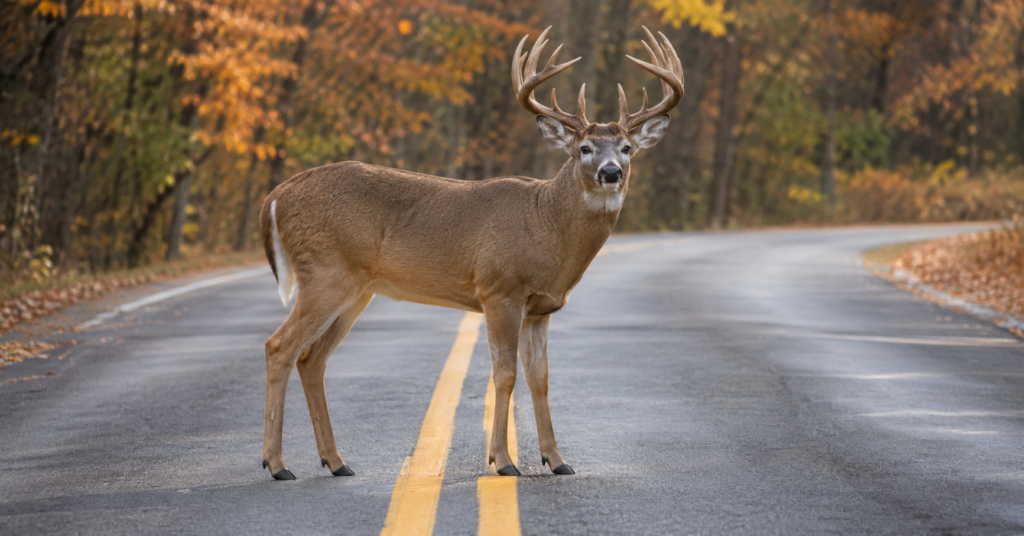
As November 2026 continues, Ohio motorists face an increased risk of encountering deer on roadways throughout the state. From rural highways in Richland and Hancock counties to suburban roads surrounding Cleveland, Columbus, Akron, Cincinnati, and throuthout Ohio, white-tailed deer can enter traffic unexpectedly, particularly during early morning and evening commutes.
On November 1, 2026, the Ohio State Highway Patrol (OSHP) issued a statewide safety reminder about deer-related collisions. The agency identified November as a particularly concerning period because peak deer breeding activity coincides with reduced daylight during common commuting hours. Understanding when deer are most active, how to respond to an unexpected crossing, and what insurance coverage may apply after a collision can help Ohio drivers make informed decisions throughout the fall season.
Call 1-800-411-PAIN or request a free consultation today to speak with an experienced local Ohio car accident attorney at Buckeye Law Group.
Why November Is a High-Risk Month for Deer Accidents in Ohio
White-tailed deer become more active during their annual breeding season, commonly known as the rut. During this period, deer may travel greater distances, cross unfamiliar areas, or move suddenly between wooded habitats and nearby roads. The return to standard time also changes driving conditions. Many Ohio residents traveling home from work encounter diminishing daylight around the same time deer activity increases.
According to guidance published by the Ohio Traffic Safety Office in October 2026, motorists should be particularly attentive near wooded roadsides, agricultural areas, fence lines, streams, and other natural corridors where deer frequently travel. Drivers should not assume deer-related collisions occur only in rural communities. Suburban neighborhoods, parks, residential developments, and roads bordering green spaces can also experience increased wildlife activity.
Ohio Deer-Related Crash Statistics: What the Latest 2026 Data Shows
| 111,359 | 49 |
| Deer-involved crashes since the beginning of 2021 | Fatal deer-involved crashes in that reporting period |
According to Ohio State Highway Patrol statistics published on November 1, 2026, the reported figures represent cumulative data collected over multiple years. These statistics should not be interpreted as reflecting incidents occurring exclusively in November 2026 or as final totals for the 2026 calendar year.
The Patrol reported that those 49 fatal crashes resulted in 50 deaths. Its data also highlights the disproportionate danger to motorcyclists: although motorcycles accounted for approximately 1% of deer-related crashes, they were involved in 82% of fatal deer-related crashes during the reporting period.
Earlier October 2026 information from the Ohio Traffic Safety Office identified Stark, Richland, Williams, Hancock, Tuscarawas, and Lorain as the six counties with the highest deer-related crash counts in its dataset. U.S. Route 30, State Route 2, and Interstate 71 were among the leading roadways identified.
These statistics describe historical crash patterns; they do not predict where an individual collision will occur. Final statistics for November 2026 are not yet available.
How Ohio Drivers Can Reduce the Risk of Deer Collisions
Although deer movements are unpredictable, certain driving precautions can reduce the likelihood of a collision or limit its severity. The Ohio State Highway Patrol and Ohio Department of Natural Resources recommend the following practices:
- Reduce Speed In Areas With Limited Visibility: Slower speeds provide additional time to recognize hazards and respond appropriately.
- Watch For Deer Near Wooded Roadsides: Pay particular attention to tree lines, fields, creek crossings, and residential areas bordering natural habitats.
- Use High-Beam Headlights Appropriately: High beams can improve visibility on unlit roads but should be dimmed when approaching or following other vehicles.
- Expect Additional Deer: Deer frequently travel in groups. If one crosses the roadway, others may follow.
- Brake Rather Than Swerve: If a collision cannot be avoided safely, apply the brakes firmly while maintaining control of the vehicle and remaining in the lane.
- Eliminate Distractions: Keeping attention on the roadway is particularly important during dawn, dusk, and nighttime travel.
The Patrol emphasizes that swerving into another lane, roadside obstacle, or oncoming traffic can produce consequences more severe than the initial wildlife encounter.
What Should You Do After Hitting a Deer in Ohio?
A deer collision can cause extensive vehicle damage, injuries, or secondary collisions involving other motorists. The following steps can help protect drivers and passengers while preserving information relevant to an insurance claim.
1. Move to a Safe Location:
If the vehicle remains operable, pull off the traveled roadway when safe. Activate hazard lights and avoid stopping in an active traffic lane unnecessarily.
2. Contact Law Enforcement:
Call 911 for injuries, immediate danger, or an unsafe roadway. The Ohio State Highway Patrol also provides assistance through #677. Reporting the incident can help establish the circumstances and create an official record.
3. Do Not Approach the Deer:
An injured deer may react unpredictably. Remain at a safe distance and allow the appropriate authorities to address the animal.
4. Document the Collision:
When it is safe, photograph vehicle damage, the roadway, nearby signs, and relevant conditions. Record the crash location, time, witness information, and responding agency.
5. Seek Medical Attention When Necessary
Anyone experiencing pain, dizziness, confusion, or other symptoms following a collision should obtain appropriate medical evaluation. Some injuries may not be immediately apparent.
6. Notify Your Insurance Company
Report the collision promptly, retain repair estimates, and review applicable insurance coverage before authorizing major repairs.
Does Ohio Car Insurance Cover Deer-Related Accidents?
Insurance coverage following a deer-related accident in Ohio depends on how the collision occurred, the types of coverage included in the driver’s automobile insurance policy, and the policy’s specific terms and exclusions. According to the Ohio Department of Insurance Automobile Insurance Guide, damage resulting from a vehicle directly striking a deer is generally covered under comprehensive insurance, provided the driver has purchased that optional coverage. Comprehensive claims may also be subject to a deductible, which is the amount the policyholder must pay before insurance benefits apply.
However, not every deer-related accident is handled the same way. The circumstances of the incident, including whether the vehicle struck the animal directly or collided with another vehicle or object while attempting to avoid it, can affect which insurance coverage applies. Understanding these distinctions is important when evaluating a claim, determining potential out-of-pocket expenses, and reviewing available insurance benefits. Several scenarios warrant additional consideration:
- Direct Contact With A Deer: Generally handled through comprehensive coverage.
- Swerving And Striking A Tree Or Guardrail: May fall under collision coverage rather than comprehensive coverage.
- Medical Expenses: Health insurance or optional medical payments coverage may help, depending on policy terms.
Ohio’s mandatory liability insurance does not automatically cover damage to the insured driver’s own vehicle. Drivers should request clarification from their insurer when a claim involves disputed coverage, a deductible, or an unexpected denial.
Can Someone Be Legally Responsible for an Ohio Deer-Related Accident?
A collision involving a wild deer does not automatically establish negligence or create a personal injury claim against another party. However, legal responsibility may become relevant when another driver’s conduct contributes to an injury-producing collision.
For example, a secondary crash may involve allegations of distracted driving, speeding, unsafe lane changes, or failure to maintain appropriate control. Determining responsibility requires examining the available evidence rather than assuming either driver was at fault.
Under Ohio Revised Code § 2315.33, an injured person’s compensation may be reduced according to their percentage of fault, and recovery may be barred when that percentage exceeds 50%.
For many negligence-based bodily injury lawsuits, Ohio Revised Code § 2305.10 generally establishes a two-year filing period, although exceptions and different deadlines may apply.
Ohio Deer Accident Resources: Statewide and Local Agency Contacts
Ohio motorists can contact the following official agencies for crash reporting, road conditions, wildlife information, and insurance assistance:
Ohio State Highway Patrol:
- Call #677 for Patrol assistance.
- Visit the local Patrol post directory for jurisdiction-specific contact information.
Ohio Department of Natural Resources, Division of Wildlife:
- Call (800) 945-3543 for wildlife-related questions.
- Visit the Division of Wildlife contact page.
Ohio Department of Transportation:
Visit OHGO.com for current highway incidents, roadway conditions, and traffic alerts.
Ohio Department of Insurance:
- Call (800) 686-1526 for consumer insurance questions or assistance with complaints.
- Visit the Ohio Department of Insurance.
Local Law Enforcement Contacts
| Ohio City | Agency | Non-Emergency Phone |
|---|---|---|
| Cleveland | Cleveland Division of Police | (216) 621-1234 |
| Mentor | Mentor Police Department | (440) 255-1234 |
| Colón | Columbus Division of Police | (614) 645-4545 |
| Toledo | Toledo Police Department | (419) 255-8443 |
| Cincinnati | Cincinnati Police Department | (513) 765-1212 |
| Akron | Akron Police Department | (330) 375-2552 |
| Dayton | Dayton Police Department | (937) 333-2677 |
These municipal contacts serve their respective jurisdictions. Drivers outside city limits should contact the appropriate sheriff’s office, local police agency, or Patrol post. Always call 911 for emergencies.
Frequently Asked Questions About Ohio Deer Accidents
- Is November the most dangerous month for deer collisions in Ohio? November is a major peak period for deer-related crashes. A November 3, 2026 announcement from the City of Mentor reported that its average November deer-collision count is approximately three times the levels recorded during spring and summer months. Statewide patterns vary by location.
- Should I call the police if I hit a deer in Ohio? The Ohio State Highway Patrol recommends contacting law enforcement following a deer collision. An official report may help document the incident for insurance purposes.
- Does hitting a deer automatically increase my insurance rates? Not necessarily. Insurance rating practices depend on the insurer, policy, claims history, and applicable regulations. Drivers should ask their insurance company how an animal-related comprehensive claim may affect future premiums.
- Can I recover compensation if another driver causes a crash while avoiding a deer? Potentially. If another driver’s negligent conduct contributed to the collision, a liability claim may be available. The evidence, degree of fault, injuries, and applicable coverage all matter.
- Can a local personal injury attorney help after a deer-related accident? Legal assistance may be appropriate when another party’s negligence contributed to injuries, responsibility is disputed, or significant insurance questions remain. A direct deer strike without another legally responsible party typically presents different issues from a negligence-based injury claim.
Staying Safe on Ohio Roads During November 2026
Deer-related collisions remain a significant seasonal concern throughout Ohio. Motorists traveling near wooded areas, farmland, or suburban green spaces should remain attentive, particularly during periods of reduced visibility. By recognizing seasonal wildlife activity, practicing defensive driving, and understanding the steps to take after a collision, Ohio residents can be better prepared for unexpected roadway hazards.
If you or a family member sustained injuries in a crash involving a deer or another potentially negligent driver, Buckeye Law Group’s car accident resources provide information about Ohio injury claims and available legal options.
Call 1-800-411-PAIN or request a free consultation today to speak with an experienced local Ohio car accident attorney at Buckeye Law Group.
Legal disclaimer: This article provides general educational information about Ohio roadway safety, insurance, and personal injury law as of November 18, 2026. It is not legal advice and does not create an attorney-client relationship. Insurance coverage, liability, and filing deadlines depend on individual circumstances. Past results do not guarantee future outcomes.