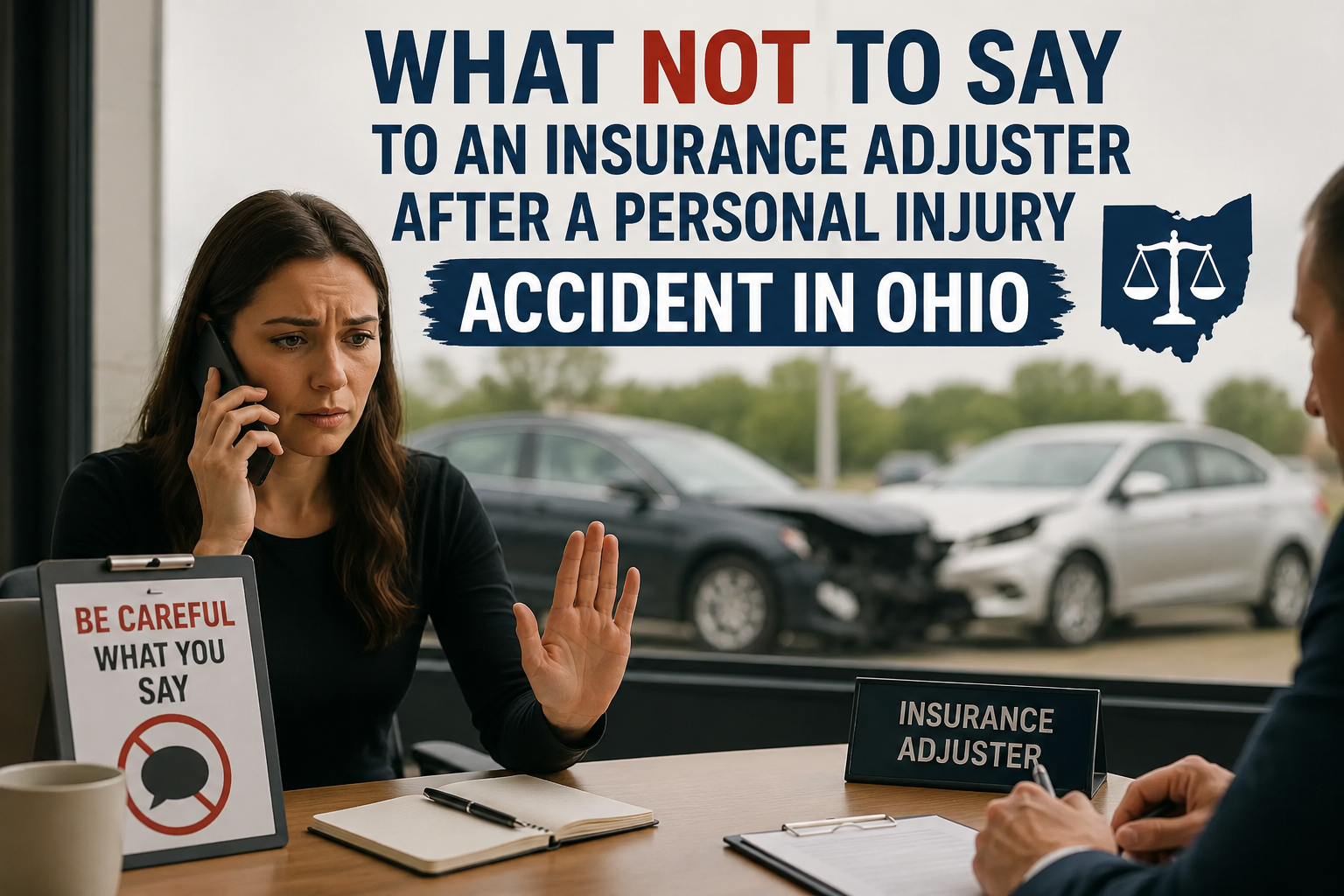
Protecting Your Ohio Personal Injury Accident Claim When Speaking With Insurance Adjusters
Navigating the aftermath of a personal injury accident in Ohio can feel overwhelming, especially when an insurance adjuster begins asking questions before you fully understand your injuries, medical needs, or legal options. After an accident, the words you use can affect how the insurance company evaluates fault, damages, and settlement value. Even a brief comment, apology, or guess about what happened may later be used to reduce or dispute your claim.
At Buckeye Law Group, we understand how insurance companies approach injury claims. Adjusters are trained to gather information that protects the insurer’s financial interests. That does not mean you should avoid communication entirely, but it does mean you should be careful, factual, and informed before making statements. If you were hurt in a personal injury accident in Ohio, legal guidance can help you protect your rights, preserve important evidence, and avoid mistakes that may weaken your claim.
Understanding the Insurance Adjuster’s Role After a Personal Injury Accident
After a personal injury accident, an insurance adjuster investigates the claim on behalf of the insurance company. The adjuster may review accident reports, photographs, witness statements, vehicle damage, medical records, policy limits, and statements from the people involved. Their role is to determine whether the claim is covered and how much the insurance company may be willing to pay.
It is important to remember that the adjuster does not represent you. The adjuster represents the insurance company. Their job often includes identifying ways to limit liability, question damages, or reduce the settlement amount. In a personal injury accident claim, even small inconsistencies can become important during negotiations. Common adjuster responsibilities include:
- Reviewing how the accident happened.
- Investigating liability and available insurance coverage.
- Requesting medical records or treatment information.
- Evaluating property damage and bodily injury damages.
- Negotiating settlement offers.
Understanding the adjuster’s role helps you approach every conversation with caution. You do not need to argue, exaggerate, or provide unnecessary details. You need to protect the accuracy of your personal injury claim.

Why Your Words Matter: How Statements Can Impact Your Claim
Your words can significantly affect your injury claim. Statements made to an insurance adjuster have consequences. Your statements after a personal injury accident can shape how the insurance company views your case. Adjusters listen closely for admissions of fault, inconsistent timelines, uncertainty about injuries, or comments that suggest you are not seriously hurt. A simple phrase spoken casually may be interpreted in a way you never intended.
For example, saying “I’m fine” may be used to argue that your injuries were minor. Saying “I didn’t see the other vehicle” may be used to suggest you were distracted. Apologizing may be framed as an admission of fault, even if you were only being polite. When discussing a personal injury accident, focus on basic facts. Avoid opinions, assumptions, and emotional statements. If you do not know the answer to a question, it is acceptable to say that you do not know. Accuracy matters more than speed. Your words may affect your claim because:
- Adjusters may use statements to dispute liability.
- Casual comments can be treated as admissions.
- Inconsistent details may weaken credibility.
- Early injury comments may conflict with later medical findings.
- Recorded statements may become evidence against your claim.
Top Things You Should Never Say to an Insurance Adjuster
Speaking with an insurance adjuster after a personal injury accident can be stressful. Many injured people want to be cooperative, but cooperation should not come at the expense of their rights. The safest approach is to provide limited, truthful information and avoid statements that could be misinterpreted.

Do Not Admit Fault or Apologize
After a personal injury accident, you may feel shaken, embarrassed, or worried about everyone involved. Still, you should avoid saying “I’m sorry,” “I should have seen them,” or “It was my fault.” Fault is a legal and factual issue that may depend on crash reports, witness statements, traffic laws, medical evidence, and investigation. Even if you believe you may have contributed to the accident, you may not know the full picture. Another driver may have been speeding, distracted, impaired, or violating Ohio traffic laws. A property owner may have failed to correct a dangerous condition. A company may have ignored safety policies. Let the evidence determine fault.
Do Not Guess About What Happened
Guessing after a personal injury accident can create problems. If you speculate about speed, distance, weather, visibility, timing, or how the collision occurred, the insurance company may treat your guess as a firm statement. Later, if the evidence shows something different, the adjuster may argue that your story changed. It is better to say, “I do not know,” or “I am still reviewing what happened.” Stick to what you personally observed and avoid filling in gaps.
Do Not Minimize Your Injuries
Many injury symptoms develop over time. Pain, stiffness, headaches, numbness, dizziness, and emotional distress may worsen after the adrenaline fades. If you tell an adjuster that you are “fine” shortly after a personal injury accident, the insurer may later use that statement to challenge your medical claim. You can be honest without minimizing your condition. A better response is, “I am still being evaluated,” or “I am following my doctor’s recommendations.” Your medical providers should determine the full extent of your injuries.
Do Not Discuss Detailed Medical Opinions Without Records
Insurance adjusters may ask detailed questions about diagnoses, treatment plans, prior injuries, pain levels, or future care. Be careful. Medical issues can be complex, and statements made before your doctors complete their evaluations may create confusion. After a personal injury accident, your medical records, treatment notes, diagnostic imaging, and provider opinions should speak for your injuries. Provide accurate information when appropriate, but avoid guessing about medical causation or long-term limitations.
Do Not Accept the First Settlement Offer
Insurance companies often make early settlement offers before the injured person understands the full cost of the personal injury accident. The offer may not account for future treatment, lost wages, reduced earning ability, pain and suffering, or long-term complications. Once you accept a settlement and sign a release, you may not be able to ask for more money later. Before agreeing to any offer, review the full value of your damages with an experienced personal injury attorney.
Do Not Give a Recorded Statement Without Legal Advice
A recorded statement can have lasting consequences. Adjusters may ask questions designed to lock you into specific answers before all evidence is available. They may later compare your recorded statement to medical records, police reports, or witness accounts. Before giving a recorded statement about a personal injury accident, speak with an attorney. Legal counsel can help you understand whether a statement is required, how to prepare, and how to avoid unintentionally harming your claim.
Common Insurance Adjuster Tactics in Ohio Injury Claims
Insurance adjusters in Ohio may use several tactics to reduce the value of a personal injury accident claim. Some adjusters are polite and professional, but their goal remains the same: protect the insurance company’s bottom line. Common tactics may include:
- Offering a quick, low settlement before injuries are fully known.
- Asking friendly questions that invite damaging statements.
- Suggesting you do not need an attorney.
- Downplaying pain, treatment, or long-term symptoms.
- Requesting broad medical authorizations.
- Pressuring you to provide a recorded statement.
- Delaying communication to create frustration.
- Implying that fault is clear before the investigation is complete.
If you recognize these tactics after a personal injury accident, you can respond with caution. You do not need to make immediate decisions. You have the right to seek legal advice before signing documents, accepting money, or providing detailed statements.

by Docusign
Essential Ohio Personal Injury Accident Tips for Protecting Your Claim
A strong personal injury accident claim begins with careful documentation. What you do in the days and weeks after the accident can affect your ability to prove liability, damages, and the true impact of your injuries.

Report the Accident Promptly
Report the accident to the appropriate authority. For vehicle crashes, a police report may provide key information about location, drivers, witnesses, citations, and initial observations. For premises liability incidents, report the hazard to the property owner, manager, or business.
Seek Medical Treatment Right Away
Medical treatment protects both your health and your claim. Delays in care may allow the insurance company to argue that your injuries were not serious or were unrelated to the personal injury accident. Follow your doctor’s treatment plan, attend appointments, and keep records of every visit.
Preserve Evidence
Take photographs of the accident scene, vehicle damage, visible injuries, dangerous property conditions, weather conditions, and anything else that may help explain what happened. Save witness names, phone numbers, insurance letters, repair estimates, medical bills, and wage loss records.
Avoid Social Media Posts
Insurance companies may review public social media activity after a personal injury accident. Photos, comments, check-ins, and updates may be taken out of context. Avoid posting about the accident, your injuries, your activities, or the claim while the matter is pending.
Keep a Recovery Journal
A recovery journal can help document pain levels, mobility issues, missed work, sleep problems, emotional distress, and limitations in daily life. These details may help show how the personal injury accident affected your health and routine.
The Importance of Consulting a Personal Injury Attorney
After a personal injury accident in Ohio, an attorney can help you understand your rights, evaluate insurance coverage, preserve evidence, and communicate with the insurance company. Legal representation is especially important when fault is disputed, injuries are serious, treatment is ongoing, or the insurer makes an early settlement offer. An experienced attorney can investigate the accident, identify responsible parties, calculate damages, review medical records, negotiate with adjusters, and prepare the case for litigation if a fair settlement is not offered. This allows you to focus on healing while your legal team protects the claim.
At Buckeye Law Group, our role is to provide clear guidance, strategic advocacy, and dependable support for injured Ohio residents and families. Every claim deserves careful attention, because the outcome can affect medical care, financial stability, and long-term recovery.
What to Do If You Already Spoke to an Insurance Adjuster
If you already spoke with an insurance adjuster after a personal injury accident, do not assume your claim is ruined. Many injured people speak with adjusters before realizing how important their statements can be. The next step is to speak with a personal injury attorney as soon as possible. An attorney can review what was said, evaluate whether any statements may affect your claim, and develop a strategy for moving forward. If the insurance company is using your words against you, legal counsel can help respond with evidence, medical documentation, and a clear explanation of the facts.
Frequently Asked Questions About Insurance Adjusters and Personal Injury Claims
- What is the role of an insurance adjuster? An insurance adjuster reviews a claim for the insurance company after an accident. Their role may include investigating what happened, reviewing medical records, evaluating property damage, speaking with witnesses, and deciding how much the insurer may offer. After a personal injury accident, remember that the adjuster works for the insurance company, not you, the injured person.
- How do adjusters affect my personal injury claim? Adjusters can influence how fault, injuries, medical treatment, lost income, and damages are valued. They may request statements, question treatment gaps, or offer a settlement before the full impact of the injury is known. After an injury accident in Ohio, speaking with an attorney can help protect your rights before accepting any offer. After 911, Call 1-800-411-7246
- Can I negotiate with an adjuster myself? Yes, you can speak with and negotiate with an adjuster on your own. However, it is important to understand that anything you say may affect your claim. Before discussing fault, injuries, or settlement value, consider getting legal guidance. A personal injury attorney can review the evidence, calculate damages, and help you avoid settling for less than your claim may be worth.
- How long does the claims process take? The claims process after a personal injury accident depends on the facts of the case, the severity of the injuries, medical treatment, insurance cooperation, and whether liability is disputed. Some claims resolve in a few months, while complex cases may take longer. An attorney can help protect deadlines, organize evidence, and pursue a fair resolution.
- What documents should I prepare? After a personal injury accident, gather any documents that help show what happened and how the injury affected your life. This may include accident reports, photos, medical records, bills, insurance letters, pay stubs, witness information, and repair estimates. Keeping organized records can help your attorney evaluate liability, damages, and available compensation.
- Can I decline a settlement offer? Yes. You do not have to accept the first settlement offer after a personal injury accident. Insurance companies may offer less than the full value of a claim, especially before the long-term medical impact is clear. An attorney can review the offer, explain your options, and help determine whether continued negotiation may better protect your interests.
Protecting Your Rights After an Ohio Personal Injury Accident
Protecting your rights after an accident begins with making informed decisions from the start. What you say to an insurance adjuster can affect how your claim is evaluated, so it is important to avoid recorded statements, quick admissions, or settlement discussions before you understand the full extent of your injuries. Buckeye Law Group helps injured individuals and families in Ohio navigate the claims process with experienced legal guidance and a commitment to protecting their best interests. If you were hurt in an accident, contact Buckeye Law Group today for a free consultation and learn how a personal injury lawyer can help you pursue the compensation you deserve.
How Uninsured Motorist Coverage Works After a Car Accident in Dayton, Ohio
A crash with an uninsured or underinsured driver can turn an ordinary Dayton commute into a confusing insurance problem. Uninsured motorist coverage helps protect you when the at-fault driver has
Whiplash Symptoms After a Cleveland Car Accident: What Injured Drivers Should Know
Whiplash is one of the most common neck injuries people worry about after a car accident, especially after a rear-end collision. For Cleveland drivers, the challenge is that auto accident
Uninsured Motorist Coverage in Ohio: What Cleveland Drivers Need to Know
Ohio requires drivers to prove financial responsibility, but that does not mean every driver on I-90, I-71, or a Cleveland surface street has enough insurance to pay for the harm
Rear-End Collisions in Columbus: Who Is at Fault and What Evidence Matters?
Rear-end crashes can look simple from the outside, but fault still depends on what each driver did, what the road conditions were, and what the evidence shows. In Columbus, Ohio,
How to Prove a Slip-and-Fall Injury Claim in Cincinnati Ohio
A slip-and-fall injury claim in Cincinnati, Ohio, usually turns on proof: what caused the fall, who controlled the property, what the owner or occupier knew or should have known, and
What to Do After a Truck Accident in Cleveland, Ohio: A Step-by-Step Guide
A serious truck crash can leave you shaken, injured, and unsure what to do next. This Cleveland truck accident guide walks you through the practical steps to protect your health,
Are Personal Injury Settlements Taxable in Ohio?
A personal injury settlement in Ohio is often not taxable when the money compensates you for physical injuries or physical sickness. But some parts of a settlement can be taxable,
Is It Worth Hiring a Cincinnati Car Accident Attorney After a Minor Crash?
A minor crash can feel like something you should be able to handle with a few phone calls and a repair estimate. Sometimes that is true. But if pain appears
Does Homeowners Insurance Cover Dog Bite Injuries in Cincinnati?
Homeowners insurance often provides coverage for dog bite injuries in Cincinnati, Ohio. However, coverage is not guaranteed. Whether an insurance policy covers a particular incident depends on its liability provisions,
Who Is Responsible for a Multi-Vehicle Car Accident on I-480 Near Cleveland?
A multi-vehicle crash on I-480 can feel chaotic from the first second: traffic stops, drivers swerve, several insurers get involved, and everyone has a different version of what happened. Responsibility
Buckeye Law Group represents people injured in auto accidents, slip and falls, workplace accidents and more in Ohio. Contact us today to learn more.
© 2026 Todos los derechos reservados | The Buckeye Law Group Inc. Políticade privacidad Mapa del sitio
Ubicaciones de las oficinas
- Akron Office 388 S Main St #400 Akron, OH 44311 (330) 426-0288
- Cincinnati Office 201 E 5th St Ste 1910 Cincinnati, OH 45202 (513) 547-2445
- Cleveland Office 127 Public Square Ste 1540 Cleveland, OH 44114 (216) 677-5490
- Columbus Office 20 E Broad St Suite 300 Columbus, OH 43215 (614) 482-3793
- Dayton Office 70 Birch Alley Ste 240 Dayton, OH 45440 (937) 884-4474
- Euclid Office 25701 N Lakeland Blvd Suite 113-C, Cleveland, OH 44132 (216) 405-2626
- Mansfield Office 305 E Main St Ste 6A, Mansfield, OH 44904 (567) 210-2606
- Findlay Office 7430 Timberstone Dr unit 101a, Findlay, OH 45840 419-873-5119
- Mentor Office 7537 Mentor Ave Ste 101, Mentor, OH 44060 (440) 306-3536
- Middletown Office 300 N Main St #400, Middletown, OH 45042 (326) 800-9150
- Parma Office 1257 Rockside Rd #A, Parma, OH 44131 (216) 279-1664
- Springfield Office 2100 E High St Ste TL3, Springfield, OH 45505 (937) 806-5791
- Toledo Office 3950 Sunforest Ct Ste 200, Toledo, OH 43623 (567) 483-3883
- Westlake Office 26404 Center Ridge Rd Ste B2, Westlake, OH 44145 216-247-0565
- Whitehall Office 5340 E Main St Ste 203, Whitehall, OH 43213 (380) 257-5206
- Youngstown Office 306 Churchill Hubbard Rd, Youngstown, OH 44505 (234) 225-0683
Contáctenos
© 2026 Todos los derechos reservados | The Buckeye Law Group Inc. Políticade privacidad Mapa del sitio