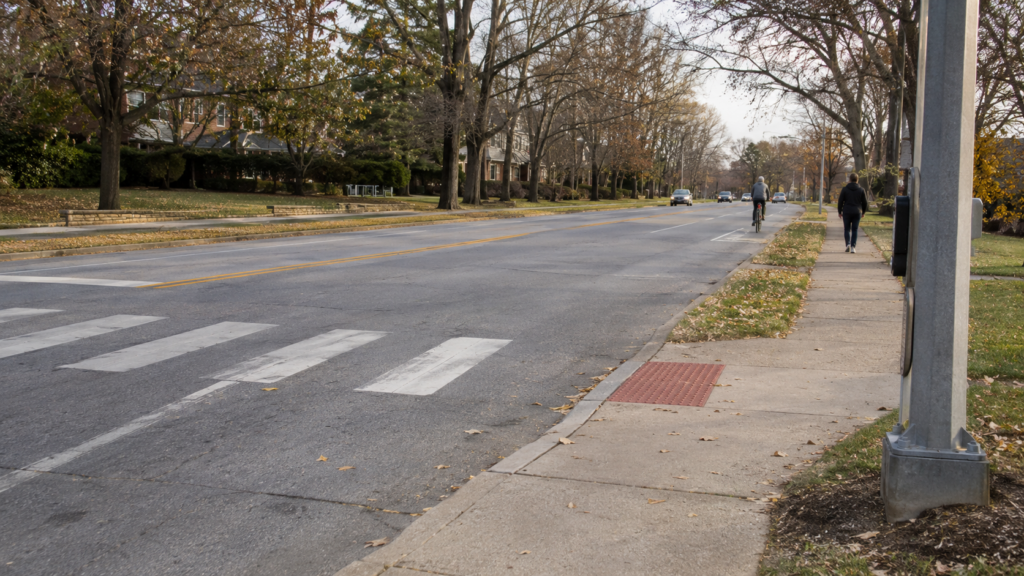
Worthington, Ohio, is preparing several bicycle and pedestrian infrastructure improvements intended to strengthen connections between neighborhoods, trails, public transportation, and community destinations. Through the regional LinkUS initiative, the city is advancing projects involving the State Route 315/State Route 161 interchange, East Wilson Bridge Road, and gaps in existing sidewalk networks.
In September 2026, Worthington City Council approved Ordinance No. 26-2026, appropriating up to $390,000 for the 2026 Active Transportation and Mobility Services Project and authorizing an engineering services agreement with EMH&T. Although planning and funding have progressed, the principal construction phases are scheduled for future years. Understanding what is proposed, when work may begin, and how current traffic conditions affect roadway safety can help residents make informed decisions.
Call (220) 241-2166 or request a free consultation today to speak with an experienced Worthington pedestrian accident attorney at Buckeye Law Group.
What Is LinkUS, and How Will It Affect Worthington?
LinkUS is a regional transportation initiative involving the Central Ohio Transit Authority (COTA), the Mid-Ohio Regional Planning Commission (MORPC), and local governments. Its transportation-supportive infrastructure program helps finance improvements such as sidewalks, bicycle connections, shared-use paths, and transit access.
Worthington’s three principal LinkUS-funded projects are:
- Improvements to the Olentangy Trail crossing near SR 315 and SR 161.
- A new shared-use path along East Wilson Bridge Road.
- A citywide sidewalk-gap elimination program.
These investments are designed to improve the continuity of Worthington’s transportation network. However, the projects remain subject to engineering requirements, permits, funding agreements, and construction scheduling.
Planned SR 315 and SR 161 Pedestrian Crossing Improvements
One important project focuses on the connection between the Olentangy Trail and SR 161 near the SR 315 interchange. According to Worthington’s 2026 Citywide Active Transportation and Mobility Program, people traveling west from the Olentangy Trail currently encounter a challenging trail-spur configuration.
The proposed project would replace that connection with a new pedestrian crossing at the eastern ramp intersection of SR 161 and SR 315. Planned features include:
- Pedestrian traffic signals and crosswalk markings.
- Updated crossing signs and protective guardrails.
- ADA-compliant curb ramps.
- Roadway lane modifications intended to provide additional separation between vehicles and sidewalk users.
The city also proposes reconfiguring a section of SR 161 to create a buffer alongside the sidewalk. These measures are intended to address identified crossing difficulties, but their effectiveness will depend on final design, installation, maintenance, and roadway conditions.
Construction Timeline: The city’s engineering schedule identifies May 2027 as the anticipated start of construction, subject to required approvals and potential changes.
East Wilson Bridge Road Shared-Use Path
Another major LinkUS investment involves a proposed shared-use path along East Wilson Bridge Road. The city’s engineering documents describe a 10-foot-wide path extending approximately 0.7 miles from High Street to Eastview Drive. The design scope includes crosswalks, street lighting, street trees, and drainage improvements.
This project could improve connections between the High Street corridor, the Worthington Community Center area, and surrounding pedestrian and bicycle facilities. The city is also evaluating potential changes to the East Wilson Bridge Road and High Street intersection. The shared-use path design must be coordinated with that separate intersection study.
When Will Construction Begin?
The city’s published planning schedule identifies:
- December 2026: Preliminary design completion.
- July 2027: Detailed design and right-of-way work.
- February 2028: Anticipated completion of land acquisition.
- May 2029: Targeted construction start.
These dates are planning milestones, not guarantees. Residents and property owners should consult the City of Worthington for updated alignment information and potential property impacts.
Worthington’s Sidewalk-Gap Elimination Program
Worthington’s third LinkUS project addresses missing sections within existing sidewalk networks. The city’s engineering documents identify up to 1.36 miles of sidewalk gaps for evaluation and potential improvements. Unlike projects that construct sidewalks along entirely unserved streets, this program primarily focuses on connecting incomplete sections where sidewalk infrastructure already exists. Engineering assessments will examine drainage, utilities, topography, right-of-way availability, and adjacent property conditions.
The city intends to prioritize less complicated locations before advancing segments that require additional design or property agreements. Initial construction for the least complex locations is targeted for April 2027, with other improvements anticipated in phases through 2029. For pedestrians, continuous sidewalks may reduce the need to enter roadways or navigate disconnected walking routes. However, residents should not assume that every missing sidewalk segment will be constructed immediately.
Additional Worthington Bicycle and Pedestrian Planning
Beyond the three LinkUS projects, Worthington is studying potential improvements along Worthington-Galena Road and portions of Schrock Road. The corridor study will examine existing transportation conditions, pedestrian accessibility, intersections, and opportunities for safer travel.
This study is a separate planning effort rather than confirmation that a particular sidewalk or bicycle facility has been approved for construction. Residents can monitor these efforts through Worthington’s Bicycle and Pedestrian Advisory Board, which reviews mobility priorities and provides recommendations to city officials.
Safety Considerations for Drivers, Pedestrians, and Cyclists
Until the proposed improvements are constructed, existing traffic conditions remain important.
- Drivers should approach crosswalks, intersections, trail access points, and turning movements with appropriate caution. Watch for pedestrians and cyclists, obey traffic signals, and avoid distracted driving.
- Pedestrians should use designated crossings where available, follow pedestrian signals, and remain attentive to turning vehicles. Where sidewalks are discontinuous, evaluate the route before proceeding.
- Cyclists should observe applicable traffic controls, remain alert to vehicles entering or leaving intersections, and account for existing roadway and trail conditions.
When construction begins, everyone using the affected corridors should follow temporary traffic controls and posted detour instructions. Project schedules should not be interpreted as announcements of current road closures.
Understanding Ohio’s Pedestrian and Bicycle Traffic Laws
Ohio law establishes responsibilities for motorists, pedestrians, and bicycle operators. Under Ohio Revised Code § 4511.46, motorists generally must yield to pedestrians within crosswalks under specified conditions when traffic signals do not otherwise assign the right-of-way. ORC § 4511.14 explains the meaning of pedestrian control signals, including when pedestrians may begin crossing.
For cyclists, ORC § 4511.55 addresses roadway positioning and recognizes circumstances in which riding near the road’s edge may be unreasonable or unsafe. These provisions are relevant when evaluating a collision, but responsibility cannot be determined from the location of an accident alone. Signal indications, roadway design, visibility, traffic movements, and individual conduct may all matter.
Ohio also applies comparative-negligence principles under ORC § 2315.33. Depending on the circumstances, an injured person’s share of fault can affect the ability to recover damages.
What Should Someone Do After a Pedestrian or Bicycle Accident?
When an accident occurs near a Worthington intersection, sidewalk, trail connection, or construction area, the immediate priority is safety. Call 911 when emergency assistance is needed. Seek appropriate medical evaluation, even when symptoms initially seem minor.
When it is safe, document the location, traffic controls, pavement conditions, vehicle positions, and visible damage. Preserve witness information and any available photographs or recordings. A police report, medical records, and evidence of the roadway configuration may help clarify what happened.
Under ORC § 2305.10, many Ohio bodily-injury claims generally have a two-year filing deadline. Exceptions and additional procedural requirements may apply, particularly when governmental entities are involved.
Worthington and Central Ohio Resources
Residents seeking project information, roadway assistance, or accident-related records can contact the following agencies:
City of Worthington Service & Engineering Department
380 Highland Avenue, Worthington, OH 43085
Phone: (614) 431-2425
Contact this department about sidewalk maintenance, roadway conditions, engineering plans, project schedules, and city infrastructure concerns.
Worthington Division of Police
6555 Worthington-Galena Road, Worthington, OH 43085
Non-emergency: (614) 885-4463
Records: (614) 436-8740
The police division can assist with non-emergency incidents and requests for available police records. For emergencies, call 911.
Central Ohio Transit Authority (COTA)
33 North High Street, Columbus, OH 43215
Phone: (614) 228-1776
COTA provides information about regional transit services, LinkUS, accessibility, and transportation connections.
Mid-Ohio Regional Planning Commission (MORPC)
111 Liberty Street, Suite 100, Columbus, OH 43215
Phone: (614) 228-2663
MORPC provides regional transportation planning information, bicycle and pedestrian planning resources, and opportunities for public involvement.
Ohio Department of Transportation — District 6
400 East William Street, Delaware, OH 43015
Phone: (740) 833-8000
ODOT oversees state transportation infrastructure in Franklin County and can provide information concerning applicable highway projects and state-managed roadway conditions.
Preguntas frecuentes
- When will Worthington’s LinkUS improvements be completed? Construction is currently anticipated in phases from 2027 through 2029. Individual schedules depend on final engineering, permitting, funding, and construction progress.
- Where is the new pedestrian crossing planned? The crossing is proposed near the eastern ramp intersection of SR 315 and SR 161, improving the connection between the Olentangy Trail and destinations west of SR 315.
- Will LinkUS add sidewalks throughout Worthington? The sidewalk-gap program targets up to 1.36 miles of missing sections within existing sidewalk networks. It does not automatically authorize sidewalks on every street without them.
- Can cyclists use the East Wilson Bridge Road shared-use path now? The proposed shared-use path has not yet been constructed under this project. Cyclists should use existing lawful routes and follow current traffic controls.
- What if someone is injured at a Worthington crosswalk? A collision may raise questions involving right-of-way, driver conduct, traffic signals, roadway conditions, and insurance coverage. The circumstances and available evidence determine which legal issues require evaluation.
Staying Informed About Worthington’s Transportation Improvements
Worthington’s planned LinkUS investments represent an effort to strengthen pedestrian accessibility and bicycle connectivity throughout the community. Residents should continue reviewing official city announcements as the projects advance from design into construction.
If you were injured in a pedestrian, bicycle, or motor vehicle accident, Buckeye Law Group’s Worthington office offers free consultations to discuss the circumstances and potential legal options. You can also review our firm’s bicycle accident and pedestrian accident resources for additional educational information.
Call (220) 241-2166 or request a free consultation to speak with an experienced Worthington pedestrian accident attorney at Buckeye Law Group today.
Legal Disclaimer: This article is provided for general educational purposes and does not constitute legal advice. Transportation plans, construction schedules, and applicable laws may change. Reading this article does not establish an attorney-client relationship. The facts and circumstances of each accident affect potential legal rights and remedies. Past outcomes do not guarantee future results.