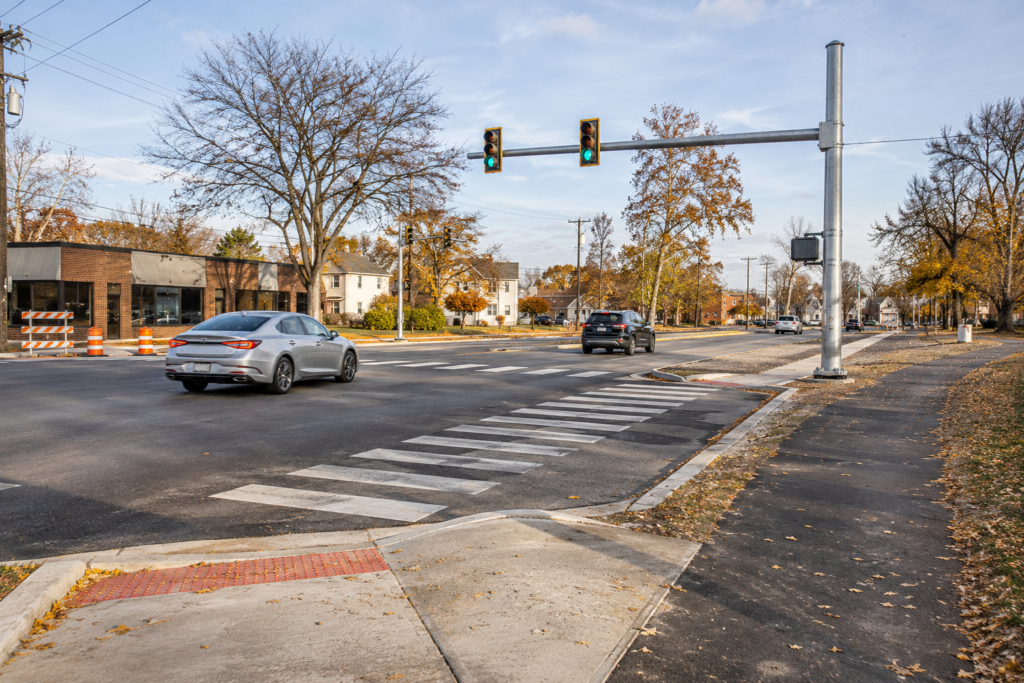
The intersection of Cleveland Avenue and East Hudson Street in Columbus, Ohio, is the focus of a roadway improvement project designed to address longstanding traffic safety concerns in the Linden neighborhood. The City of Columbus and the Ohio Department of Transportation (ODOT) have partnered on improvements intended to reduce certain types of collisions, improve pedestrian accessibility, and help traffic move more predictably through this busy intersection.
For residents, commuters, pedestrians, and COTA passengers, understanding the project is important when planning daily travel. This guide examines the Cleveland Avenue and Hudson Street intersection improvements, the safety concerns they are intended to address, relevant Ohio traffic laws, and local resources available to Columbus residents.
Call (614) 482-3793 or request a free consultation to speak with our experienced local Columbus pedestrian and auto accident attorneys at Buckeye Law Group today.
Why Is the Cleveland Avenue and Hudson Street Intersection Being Improved?
Cleveland Avenue, designated State Route 3, is an important north-south transportation corridor serving Columbus neighborhoods, businesses, and public transportation routes. Its intersection with East Hudson Street has been identified as a location requiring additional roadway safety improvements.
According to the City of Columbus, a safety study completed in 2019 examined crashes occurring at the intersection. The study identified several collision patterns, including:
- Rear-End Collisions: Crashes involving vehicles traveling in the same direction.
- Angle Collisions: Collisions involving vehicles approaching from different directions.
- Sideswipe-Passing Collisions: Crashes involving vehicles traveling alongside or passing one another.
The intersection was also identified as a priority safety location through Ohio’s Highway Safety Improvement Program and is included on Columbus’ Vision Zero High Injury Network. These classifications help explain why transportation officials prioritized the location for infrastructure improvements. They do not establish that every collision at the intersection resulted from its roadway design.
What Improvements Are Planned for Cleveland Avenue and Hudson Street?
The Columbus Department of Public Service identifies several improvements intended to make the intersection safer and more accessible.
New Turn Lanes:
The project includes northbound and southbound left-turn lanes on Cleveland Avenue, along with a westbound right-turn lane on Hudson Street. Dedicated turning lanes can help separate turning vehicles from through traffic and reduce certain conflicts associated with turning movements.
Reconstructed Traffic Signals:
The intersection’s traffic signals are being reconstructed to improve signal-head visibility. Clearer signals may help drivers recognize traffic instructions earlier, particularly when approaching an unfamiliar intersection or navigating changing roadway conditions.
Pedestrian And Shared-Use Path Improvements:
Additional sidewalk improvements are included in the project. The shared-use path along the south side of Hudson Street is also intended to connect with the existing path east of Cleveland Avenue.
This connection is particularly relevant to pedestrians, cyclists, and other residents who rely on accessible transportation routes. Additional project work includes roadway, drainage, and related infrastructure improvements.
What Is the Project’s Status in November 2026?
The City of Columbus’ project page, updated April 17, 2026, described the intersection improvements as under construction. Earlier city materials estimated construction completion in late 2025. However, estimated construction schedules may change because of utility work, weather, coordination requirements, or other circumstances.
As of November 20, 2026, the available official sources do not confirm that all intersection improvements are complete. Residents should consult the official Columbus project page for published updates rather than assuming that earlier schedules remain current. Drivers should also follow the signs, pavement markings, signals, and temporary traffic-control devices present at the intersection.
Driving Safely Near Cleveland Avenue and Hudson Street
Intersection improvements can alter familiar traffic patterns. Drivers traveling through Linden should remain attentive to posted instructions, particularly when approaching turning lanes or newly configured roadway sections. Recommended precautions include:
- Observe Lane Assignments: Follow current pavement markings and turn-lane signs rather than relying on previously familiar traffic patterns.
- Maintain A Safe Following Distance: Vehicles may slow or stop while preparing to turn, especially near signalized intersections.
- Check For Pedestrians Before Turning: Look for people entering or already using crosswalks.
- Reduce Distractions: Keep attention on signals, traffic conditions, and nearby roadway users.
- Avoid Sudden Lane Changes: Position your vehicle in the correct lane before reaching the intersection.
Drivers should also allow additional travel time when encountering construction equipment, changing traffic patterns, or unexpected congestion. For another Columbus example of how construction can affect travel, see our downtown Columbus High Street bridge construction safety guide.
Pedestrian and Bicycle Safety Near the Intersection
Pedestrian accessibility is an important part of the Cleveland Avenue and Hudson Street improvements. The Hudson Street shared-use path connection is intended to improve continuity between walking and bicycling facilities near Cleveland Avenue.
While navigating this area, pedestrians and cyclists should:
- Use available designated crossings and follow pedestrian signals.
- Watch for turning vehicles, particularly when crossing near newly configured turn lanes.
- Follow posted temporary pedestrian or bicycle routes if construction affects an established pathway.
- Avoid entering closed sidewalks or restricted work areas.
- Exercise additional caution during darkness, precipitation, or reduced visibility.
People using mobility devices, walkers, or strollers should identify accessible routes before entering a construction area. If an accessible sidewalk or crossing is obstructed, residents can report the condition through Columbus’ 311 service.
COTA Riders Should Check for Service Changes:
COTA operates its CMAX service along Cleveland Avenue, including the Hudson Street area. Bus passengers should confirm their stop locations and scheduled service before traveling. Construction activity and roadway changes can affect boarding locations or pedestrian access. Current COTA information is available through the COTA website.
Understanding Ohio Traffic Laws at Signalized Intersections
Several Ohio traffic laws are particularly relevant to intersections involving turning vehicles and pedestrians:
Traffic Signals and Turning Vehicles: Under Ohio Revised Code § 4511.13, drivers must comply with applicable traffic signals and yield to pedestrians lawfully within associated crosswalks when required. Turning right on red is permitted under certain conditions after stopping, unless a traffic-control device prohibits the movement. Drivers must follow any posted restrictions.
Pedestrian Crosswalk Rights: ORC § 4511.46 addresses pedestrian right-of-way when traffic signals are absent, inoperative, or do not clearly assign right-of-way. At signalized crossings, ORC § 4511.14 establishes rules for pedestrian signal indications.
Safe Vehicle Speeds: ORC § 4511.21 requires drivers to operate at reasonable and appropriate speeds considering traffic, roadway conditions, and other relevant circumstances. Compliance with a posted speed limit does not eliminate the obligation to maintain reasonable control.
What Should You Do After an Accident Near the Intersection?
If a vehicle collision or pedestrian accident occurs near Cleveland Avenue and Hudson Street, taking appropriate steps can help protect personal safety and preserve important information.
1. Seek Medical Attention: Call 911 for emergencies. Obtain an appropriate medical evaluation if you experience pain, injury symptoms, or other concerns.
2. Report The Accident: Contact law enforcement when appropriate and provide accurate information about the location and circumstances.
3. Document The Scene: When safe, photograph vehicle damage, traffic signals, road markings, visible injuries, and relevant roadway conditions.
4. Identify Witnesses: Record names and contact information for people who observed the incident.
5. Preserve Relevant Records: Keep medical documentation, insurance communications, photographs, receipts, and crash-report information.
Ohio generally provides a two-year filing period for many bodily-injury claims under ORC § 2305.10, although exceptions and different deadlines may apply. Additionally, ORC § 2315.33 addresses comparative fault, which can affect recovery when multiple parties share responsibility.
Construction activity or an intersection’s high-crash designation does not automatically establish negligence. Legal responsibility depends on the evidence and circumstances of the particular incident. For additional information about relevant legal services, see Buckeye Law Group resources on Ohio car accident claims and Columbus pedestrian accident claims.
Columbus and Franklin County Traffic Safety Resources
Residents looking for construction information, roadway assistance, or accident documentation can contact the following agencies:
Columbus Department of Public Service
- Phone: (614) 645-3111
- Project Email: dpsprojects@columbus.gov
- Website: Columbus Public Service
Contact the city about project information, traffic-signal concerns, obstructed sidewalks, or roadway maintenance questions.
Ohio Department of Transportation — District 6
- Phone: (740) 363-1251
- Address: 400 E William St, Delaware, OH 43015
- Website: ODOT District 6
ODOT provides information about state transportation projects, including its involvement in Cleveland Avenue safety improvements.
Columbus Division of Police
- Emergency Phone: 911
- Non-Emergency Phone: (614) 645-4545
- Address: 120 Marconi Blvd, Columbus, OH 43215
- Website: Columbus Division of Police
Residents can contact the department for police assistance or information about accidents investigated by Columbus officers.
Central Ohio Transit Authority (COTA)
- Customer Care Phone: (614) 228-1776
- Address: 33 N High St, Columbus, OH 43215
- Website: COTA
COTA provides information about routes, schedules, bus stops, and service changes affecting Cleveland Avenue and Hudson Street.
Ohio Department of Public Safety
- Online Resource: Ohio Crash Report Search
- Address: Charles D. Shipley Building, 1970 W Broad St, Columbus, OH 43223
The state provides access to submitted crash reports. Official certified records, when required, should be requested from the investigating agency.
Preguntas frecuentes
- Will the Cleveland Avenue and Hudson Street improvements reduce accidents? The improvements are designed to address documented collision patterns and improve intersection safety. Actual results should be evaluated using subsequent crash data rather than assumed before sufficient evidence is available.
- Are there currently road closures at the intersection? The reviewed official project materials do not confirm specific closures for November 20, 2026. Drivers should follow current posted traffic-control instructions and consult city updates.
- Can pedestrians use the Hudson Street shared-use path? The City of Columbus identifies the shared-use path as part of the corridor’s pedestrian and bicycle network. Users should follow current signs and avoid any temporarily restricted sections.
- Who should residents contact about unsafe intersection conditions? For non-emergency concerns involving traffic signals, sidewalks, or street conditions, contact Columbus 311 at (614) 645-3111.
Staying Informed About Columbus Intersection Safety
The Cleveland Avenue and Hudson Street improvements represent an investment in roadway safety and pedestrian accessibility in Columbus’ Linden neighborhood. Understanding the project, following current traffic-control instructions, and knowing where to obtain official information can help residents navigate the intersection more safely. Anyone injured in a vehicle or pedestrian collision can also consult Buckeye Law Group’s Columbus personal injury attorneys to discuss the circumstances, relevant evidence, and available legal options.
Call (614) 482-3793 or request a free consultation to speak with our experienced local Columbus pedestrian and auto accident attorneys at Buckeye Law Group today.
Legal Disclaimer: This article provides general educational information and does not constitute legal advice. Each accident and potential claim depends on its specific facts, applicable law, and available evidence.
