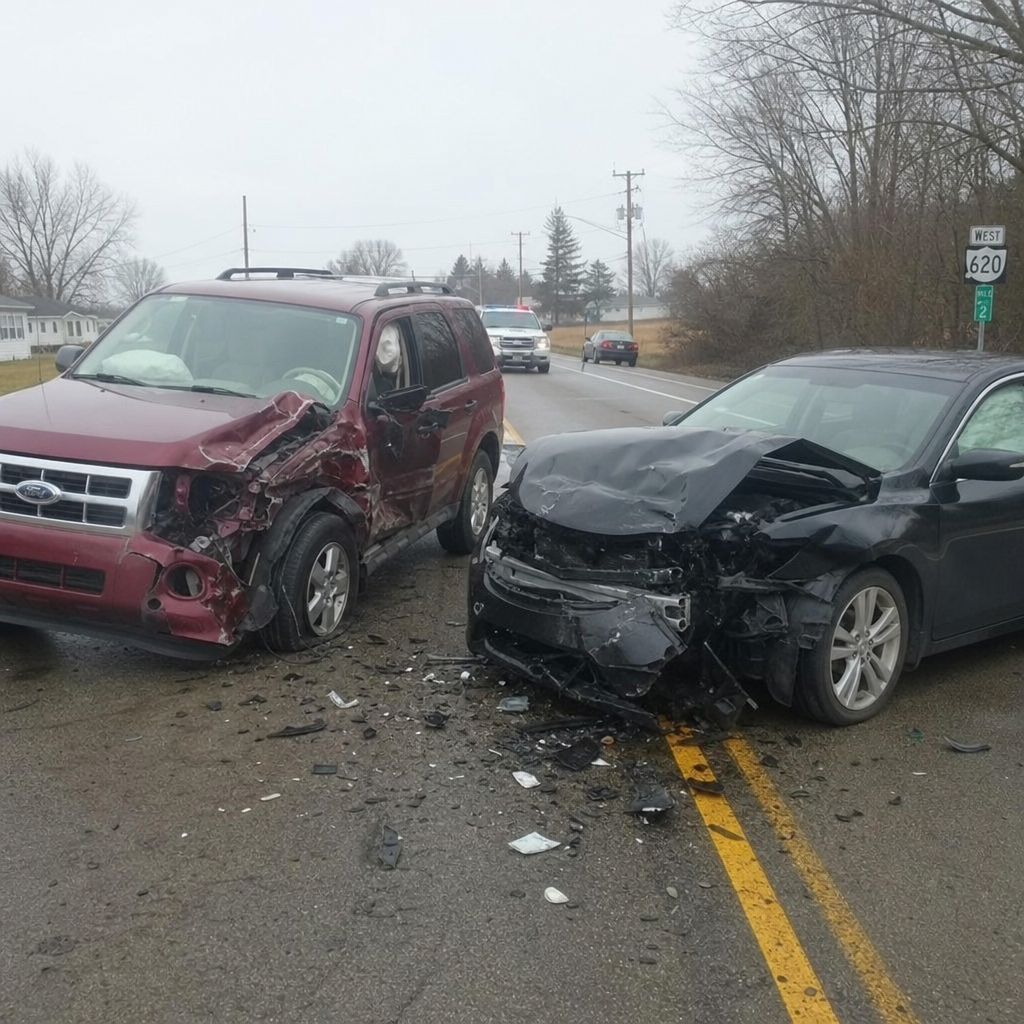
Ohio is not a no-fault state for car accidents. Ohio uses an at-fault, or tort, system, which means the person who caused the crash is generally responsible for the resulting losses through their liability insurance or personal assets. For injured drivers and passengers, that makes fault, evidence, insurance coverage, and timing central to successful auto accident claims.
Call 1-800-411-7246 today to schedule a complimentary consultation with a local Ohio personal injury attorney from Buckeye Law Group.
Is Ohio a no-fault state for car accidents?
No. If you are asking, “is Ohio a no fault state for car accidents,” the direct answer is that Ohio follows an at-fault insurance system, not a no-fault insurance model. In practical terms, that means an injured person usually looks first to the at-fault driver’s liability coverage for compensation, rather than automatically relying on their own personal injury protection benefits the way drivers do in many no-fault states. This difference matters because Ohio car accident laws focus heavily on who caused the collision. If another driver ran a red light, followed too closely, failed to yield, or otherwise acted negligently, their insurer may be responsible for medical bills, lost wages, vehicle damage, and other legally recognized losses. If fault is disputed, the claim can become more complex, especially when both drivers share some blame.
Ohio’s at-fault system changes how claims work
In a no-fault insurance state, drivers often turn to their own policy first for certain medical costs, regardless of who caused the crash. Ohio works differently. Liability coverage is designed to pay for harm a driver causes to others, and Ohio requires proof of financial responsibility to drive legally. The Ohio BMV lists minimum coverage of $25,000 for injury or death of one person, $50,000 for injury or death of two or more people, and $25,000 for property damage.
That minimum coverage may not be enough after a serious collision. A hospital stay, surgery, long recovery period, or totaled vehicle can quickly create losses beyond a basic policy. That is one reason drivers often consider optional coverages, such as uninsured motorist, underinsured motorist, collision, comprehensive, or medical payments coverage. The NAIC describes uninsured motorist coverage as protection for costs incurred when someone is injured by a driver without auto insurance. Here is the basic difference:
| Issue | Ohio At-Fault System | No-Fault Insurance System |
|---|---|---|
| First Claim Target | Usually the at-fault driver’s insurer. | Often your own insurer for covered injury benefits. |
| Fault Investigation | Central to the claim. | Still relevant, but less central for initial benefits. |
| Lawsuits | Available against the at-fault party when legally supported. | Often limited unless injuries or costs meet certain thresholds. |
| Pain and Suffering | May be pursued from the liable party. | Often restricted unless legal thresholds are met. |
How is car accident liability decided in Ohio?
Car accident liability in Ohio is decided by looking at negligence: who failed to use reasonable care and how that failure caused the crash. Insurance adjusters, attorneys, judges, or juries may review police reports, photos, traffic citations, witness statements, vehicle damage, medical records, dashcam footage, and expert analysis when deciding fault.
Ohio also uses a modified comparative negligence rule. Under Ohio Revised Code Section 2315.33, a person’s contributory fault does not bar recovery if that person’s fault is not greater than the combined fault of others, but compensation is reduced in proportion to that person’s share of fault. If you are 50% or less at fault, you may still recover damages, but your recovery is reduced by your percentage of fault. If you are more than 50% at fault, you generally cannot recover from the other party. For example, if your damages are valued at $40,000 and you are found 25% responsible, your potential recovery would be reduced by 25%. If you are found 60% responsible, Ohio’s rule can prevent recovery from the other driver. This is why statements made at the scene, incomplete evidence, or an early insurer decision can have a major impact on the outcome.
What should you do after an Ohio car accident?
The steps you take immediately after a crash can protect your health, preserve evidence, and support your insurance claim. Even if you feel shaken but “fine,” injuries can become more noticeable later, and details at the scene can disappear quickly. Use this practical checklist:
- Check for injuries and call 911 if needed. Safety comes first. Get medical help for anyone who may be hurt.
- Move to a safe location if possible. If the vehicles can be moved and it is safe to do so, get out of traffic.
- Contact law enforcement when the crash is serious. Ohio traffic crash reporting rules apply to crashes involving injury, death, or property damage meeting the statutory reporting threshold, and Ohio administrative rules define reportable traffic crashes to include fatality, personal injury, or qualifying property damage.
- Exchange information. Get names, contact details, driver’s license information, plate numbers, and insurance information.
- Document the scene. Photograph vehicle positions, damage, road conditions, traffic signals, skid marks, debris, and visible injuries.
- Avoid admitting fault. Be truthful, but do not guess, apologize as a legal conclusion, or accept blame before the facts are reviewed.
- Notify your insurer. Most policies require prompt reporting, even when another driver caused the crash.
- Get medical care and follow treatment instructions. Medical records connect your injuries to the collision and show the seriousness of your losses.
Insurance claims and lawsuits after an Ohio crash
Most auto accident claims begin with insurance. You may file a third-party claim against the at-fault driver’s insurer, a first-party claim under your own policy, or both, depending on the facts and available coverage. If the other driver is uninsured, underinsured, unidentified, or disputes fault, your own policy may become especially important. Insurance companies often investigate liability before paying. They may request recorded statements, review medical bills, inspect vehicle damage, and compare your version of events with other evidence. A claim can be delayed or undervalued if the insurer argues that your injuries were preexisting, your treatment was excessive, your lost wages are not well documented, or you were partly responsible for the crash. A lawsuit may be an option when settlement negotiations fail or when damages exceed available coverage. Because Ohio is an at-fault state, injured people are not automatically blocked from suing the negligent driver the way they might be in stricter no-fault systems. However, every case depends on evidence, damages, deadlines, and the parties involved.
When legal help may make a difference
Not every fender bender requires a lawyer. If there are no injuries, fault is clear, and the property damage is minor, you may be able to resolve the claim directly with insurance. Legal guidance becomes more important when injuries are serious, fault is disputed, multiple vehicles are involved, the insurer blames you, or the available coverage may not cover the full loss. An attorney can help gather evidence, communicate with insurers, calculate damages, evaluate comparative negligence arguments, and determine whether settlement or litigation makes sense. This is especially valuable when car accident liability is not obvious or when an insurer’s offer does not reflect the real cost of medical care, missed work, future treatment, and pain and suffering.
Understanding Fault and Protecting Your Claim After an Ohio Car Accident
Ohio no fault state car accidents is a common search phrase, but it describes the wrong system. Ohio is an at-fault state, so proving who caused the crash is often the foundation of compensation. After an accident, focus on safety, reporting, documentation, medical care, and timely insurance notice. If the claim involves injuries, disputed fault, or pressure from an insurer, getting legal advice early can help you avoid mistakes that may reduce your recovery.
Call 1-800-411-7246 today to schedule a complimentary consultation with a local Ohio personal injury attorney from Buckeye Law Group.
*This page provides general educational information and is not a substitute for legal advice tailored to your circumstances. Reading this page or contacting Buckeye Law Group does not, by itself, establish an attorney-client relationship. Your legal rights, filing deadlines, and potential remedies depend on the facts of your case and applicable law. Consult a qualified personal injury attorney to evaluate your circumstances and understand the steps needed to protect your rights. Every case is different, and prior results do not guarantee a similar outcome.*
How Much Should an Insurance Company Pay for Injuries After a Car Accident?
After an Ohio car accident, an insurance company may offer a settlement before the full extent of your injuries, anticipated medical treatment, or long-term financial losses becomes clear. Ohio law
What Happens If an Insurance Company Won’t Offer a Fair Settlement After a Car Accident?
After an Ohio car accident, an insurance settlement offer may arrive while medical treatment continues and fault remains disputed. If the insurance company won’t offer a fair settlement, you do
Toledo’s Summit Street Cycle Track: What the 2026–2027 Redesign Means for Cyclist and Pedestrian Safety
Toledo’s Summit Street Cycle Track project is a two-phase reconstruction intended to make a section of North Summit Street safer and more connected for people walking and bicycling. In 2026,
Greater Dayton’s 2026 E-Bike and E-Moto Safety Proposal: What Ohio Riders and Parents Should Know
Electric bicycles and other small electric-powered vehicles are becoming increasingly common on roads, neighborhood streets, and recreational trails throughout Greater Dayton. Their growing use also raises important questions about rider
Dayton’s Keowee Street Safety Project: How Lane Reductions and New Walking Paths Could Improve Roadway Safety
Dayton’s Keowee Street safety project would reduce the roadway from seven lanes to five between East Fifth Street and East Monument Avenue, adding multi-use paths, landscaping, and signal upgrades. The
Dayton I-75 Construction in November 2026: Lane Closures, Traffic Shifts, and Work-Zone Safety
Motorists traveling along I-75 through Dayton, Ohio, in November 2026 should be aware of multiple construction projects that may affect travel times, lane configurations, and access to nearby interchanges. According
Columbus I-70/I-71 Construction in November 2026: Ramp Closures, Detours, and Driver Safety
Motorists traveling through downtown Columbus, Ohio, in November 2026 should prepare for temporary traffic disruptions as construction continues along the I-70/I-71 corridor. Overnight interstate restrictions, ramp closures, and designated detours
Mansfield’s Main Street Transformation: What Drivers and Pedestrians Should Know About Downtown Traffic Changes in 2026
As Mansfield completes its 2026 Main Street Transformation, residents and visitors should understand how the redesigned streets affect access to downtown businesses, public buildings, pedestrian crossings, and nearby parking areas.
Toledo’s Douglas Road and Monroe Street Intersection Improvements: What Drivers and Pedestrians Should Know in 2026
The City of Toledo identifies the Douglas Road and Monroe Street intersection as a 2026 improvement project intended to support pedestrian safety, driver safety, and better pavement conditions. For people
Springfield’s South Limestone Street Safety Improvements: What Drivers Should Know
South Limestone Street in Springfield, Ohio, is the focus of safety improvements intended to reduce conflicts between vehicles entering, leaving, and traveling along the corridor. The Ohio Department of Transportation’s

Buckeye Law Group represents people injured in auto accidents, slip and falls, workplace accidents and more in Ohio. Contact us today to learn more.
© 2026 Todos los derechos reservados | The Buckeye Law Group Inc. Políticade privacidad Mapa del sitio
Ubicaciones de las oficinas
- Akron Office 388 S Main St #400 Akron, OH 44311 (330) 426-0288
- Cincinnati Office 201 E 5th St Ste 1910 Cincinnati, OH 45202 (513) 547-2445
- Cleveland Office 127 Public Square Ste 1540 Cleveland, OH 44114 (216) 677-5490
- Columbus Office 20 E Broad St Suite 300 Columbus, OH 43215 (614) 482-3793
- Dayton Office 70 Birch Alley Ste 240 Dayton, OH 45440 (937) 884-4474
- Euclid Office 25701 N Lakeland Blvd Suite 113-C, Cleveland, OH 44132 (216) 405-2626
- Mansfield Office 305 E Main St Ste 6A, Mansfield, OH 44904 (567) 210-2606
- Findlay Office 7430 Timberstone Dr unit 101a, Findlay, OH 45840 419-873-5119
- Mentor Office 7537 Mentor Ave Ste 101, Mentor, OH 44060 (440) 306-3536
- Middletown Office 300 N Main St #400, Middletown, OH 45042 (326) 800-9150
- Parma Office 1257 Rockside Rd #A, Parma, OH 44131 (216) 279-1664
- Springfield Office 2100 E High St Ste TL3, Springfield, OH 45505 (937) 806-5791
- Toledo Office 3950 Sunforest Ct Ste 200, Toledo, OH 43623 (567) 483-3883
- Westlake Office 26404 Center Ridge Rd Ste B2, Westlake, OH 44145 216-247-0565
- Whitehall Office 5340 E Main St Ste 203, Whitehall, OH 43213 (380) 257-5206
- Youngstown Office 306 Churchill Hubbard Rd, Youngstown, OH 44505 (234) 225-0683
Contáctenos
© 2026 Todos los derechos reservados | The Buckeye Law Group Inc. Políticade privacidad Mapa del sitio