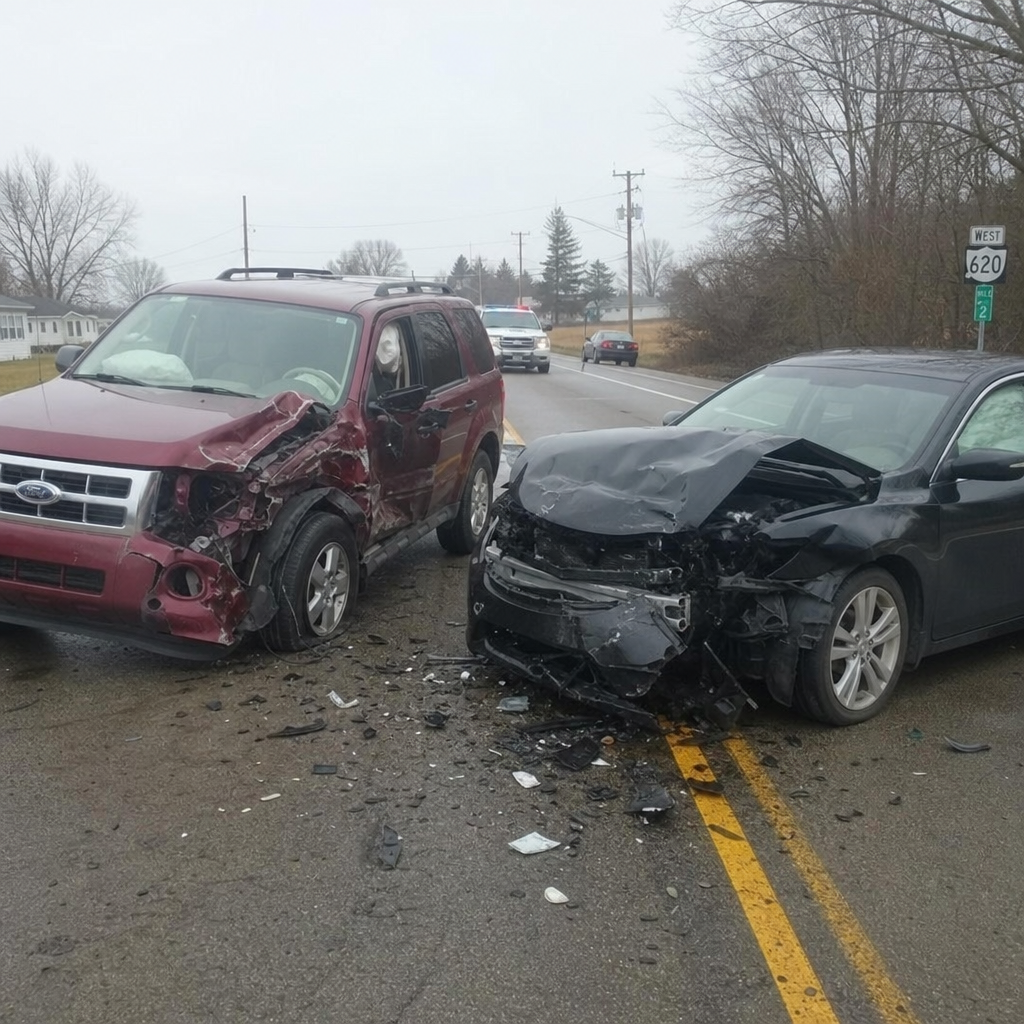
Ohio is not a no-fault state for car accidents. Ohio uses an at-fault, or tort, system, which means the person who caused the crash is generally responsible for the resulting losses through their liability insurance or personal assets. For injured drivers and passengers, that makes fault, evidence, insurance coverage, and timing central to successful auto accident claims.
Call 1-800-411-7246 today to schedule a complimentary consultation with a local Ohio personal injury attorney from Buckeye Law Group.
Is Ohio a no-fault state for car accidents?
No. If you are asking, “is Ohio a no fault state for car accidents,” the direct answer is that Ohio follows an at-fault insurance system, not a no-fault insurance model. In practical terms, that means an injured person usually looks first to the at-fault driver’s liability coverage for compensation, rather than automatically relying on their own personal injury protection benefits the way drivers do in many no-fault states. This difference matters because Ohio car accident laws focus heavily on who caused the collision. If another driver ran a red light, followed too closely, failed to yield, or otherwise acted negligently, their insurer may be responsible for medical bills, lost wages, vehicle damage, and other legally recognized losses. If fault is disputed, the claim can become more complex, especially when both drivers share some blame.
Ohio’s at-fault system changes how claims work
In a no-fault insurance state, drivers often turn to their own policy first for certain medical costs, regardless of who caused the crash. Ohio works differently. Liability coverage is designed to pay for harm a driver causes to others, and Ohio requires proof of financial responsibility to drive legally. The Ohio BMV lists minimum coverage of $25,000 for injury or death of one person, $50,000 for injury or death of two or more people, and $25,000 for property damage.
That minimum coverage may not be enough after a serious collision. A hospital stay, surgery, long recovery period, or totaled vehicle can quickly create losses beyond a basic policy. That is one reason drivers often consider optional coverages, such as uninsured motorist, underinsured motorist, collision, comprehensive, or medical payments coverage. The NAIC describes uninsured motorist coverage as protection for costs incurred when someone is injured by a driver without auto insurance. Here is the basic difference:
| Issue | Ohio At-Fault System | No-Fault Insurance System |
|---|---|---|
| First Claim Target | Usually the at-fault driver’s insurer. | Often your own insurer for covered injury benefits. |
| Fault Investigation | Central to the claim. | Still relevant, but less central for initial benefits. |
| Lawsuits | Available against the at-fault party when legally supported. | Often limited unless injuries or costs meet certain thresholds. |
| Pain and Suffering | May be pursued from the liable party. | Often restricted unless legal thresholds are met. |
How is car accident liability decided in Ohio?
Car accident liability in Ohio is decided by looking at negligence: who failed to use reasonable care and how that failure caused the crash. Insurance adjusters, attorneys, judges, or juries may review police reports, photos, traffic citations, witness statements, vehicle damage, medical records, dashcam footage, and expert analysis when deciding fault.
Ohio also uses a modified comparative negligence rule. Under Ohio Revised Code Section 2315.33, a person’s contributory fault does not bar recovery if that person’s fault is not greater than the combined fault of others, but compensation is reduced in proportion to that person’s share of fault. If you are 50% or less at fault, you may still recover damages, but your recovery is reduced by your percentage of fault. If you are more than 50% at fault, you generally cannot recover from the other party. For example, if your damages are valued at $40,000 and you are found 25% responsible, your potential recovery would be reduced by 25%. If you are found 60% responsible, Ohio’s rule can prevent recovery from the other driver. This is why statements made at the scene, incomplete evidence, or an early insurer decision can have a major impact on the outcome.
What should you do after an Ohio car accident?
The steps you take immediately after a crash can protect your health, preserve evidence, and support your insurance claim. Even if you feel shaken but “fine,” injuries can become more noticeable later, and details at the scene can disappear quickly. Use this practical checklist:
- Check for injuries and call 911 if needed. Safety comes first. Get medical help for anyone who may be hurt.
- Move to a safe location if possible. If the vehicles can be moved and it is safe to do so, get out of traffic.
- Contact law enforcement when the crash is serious. Ohio traffic crash reporting rules apply to crashes involving injury, death, or property damage meeting the statutory reporting threshold, and Ohio administrative rules define reportable traffic crashes to include fatality, personal injury, or qualifying property damage.
- Exchange information. Get names, contact details, driver’s license information, plate numbers, and insurance information.
- Document the scene. Photograph vehicle positions, damage, road conditions, traffic signals, skid marks, debris, and visible injuries.
- Avoid admitting fault. Be truthful, but do not guess, apologize as a legal conclusion, or accept blame before the facts are reviewed.
- Notify your insurer. Most policies require prompt reporting, even when another driver caused the crash.
- Get medical care and follow treatment instructions. Medical records connect your injuries to the collision and show the seriousness of your losses.
Insurance claims and lawsuits after an Ohio crash
Most auto accident claims begin with insurance. You may file a third-party claim against the at-fault driver’s insurer, a first-party claim under your own policy, or both, depending on the facts and available coverage. If the other driver is uninsured, underinsured, unidentified, or disputes fault, your own policy may become especially important. Insurance companies often investigate liability before paying. They may request recorded statements, review medical bills, inspect vehicle damage, and compare your version of events with other evidence. A claim can be delayed or undervalued if the insurer argues that your injuries were preexisting, your treatment was excessive, your lost wages are not well documented, or you were partly responsible for the crash. A lawsuit may be an option when settlement negotiations fail or when damages exceed available coverage. Because Ohio is an at-fault state, injured people are not automatically blocked from suing the negligent driver the way they might be in stricter no-fault systems. However, every case depends on evidence, damages, deadlines, and the parties involved.
When legal help may make a difference
Not every fender bender requires a lawyer. If there are no injuries, fault is clear, and the property damage is minor, you may be able to resolve the claim directly with insurance. Legal guidance becomes more important when injuries are serious, fault is disputed, multiple vehicles are involved, the insurer blames you, or the available coverage may not cover the full loss. An attorney can help gather evidence, communicate with insurers, calculate damages, evaluate comparative negligence arguments, and determine whether settlement or litigation makes sense. This is especially valuable when car accident liability is not obvious or when an insurer’s offer does not reflect the real cost of medical care, missed work, future treatment, and pain and suffering.
Understanding Fault and Protecting Your Claim After an Ohio Car Accident
Ohio no fault state car accidents is a common search phrase, but it describes the wrong system. Ohio is an at-fault state, so proving who caused the crash is often the foundation of compensation. After an accident, focus on safety, reporting, documentation, medical care, and timely insurance notice. If the claim involves injuries, disputed fault, or pressure from an insurer, getting legal advice early can help you avoid mistakes that may reduce your recovery.
Call 1-800-411-7246 today to schedule a complimentary consultation with a local Ohio personal injury attorney from Buckeye Law Group.
*This page provides general educational information and is not a substitute for legal advice tailored to your circumstances. Reading this page or contacting Buckeye Law Group does not, by itself, establish an attorney-client relationship. Your legal rights, filing deadlines, and potential remedies depend on the facts of your case and applicable law. Consult a qualified personal injury attorney to evaluate your circumstances and understand the steps needed to protect your rights. Every case is different, and prior results do not guarantee a similar outcome.*
Is Ohio a No-Fault State for Car Accidents?
Ohio is not a no-fault state for car accidents. Ohio uses an at-fault, or tort, system, which means the person who caused the crash is generally responsible for the resulting
Who Pays Medical Bills After a Truck Accident in Columbus Ohio?
After a serious truck crash in Columbus, the hospital does not wait for the insurance companies to finish arguing about fault. Medical bills usually start with the coverage available right
What Is My Car Accident Case Worth in Columbus Ohio Factors That Affect Compensation
The value of an Ohio car accident case in Columbus depends on the losses you can prove, the seriousness of your injuries, available insurance, and how fault is divided. There
Injured at a Columbus Apartment Complex? What Tenants and Visitors Should Document
A fall at a Columbus apartment complex can raise more than immediate medical concerns when a dangerous property condition may have contributed to the injury. For tenants and lawful visitors,
What Happens After a Personal Injury Lawsuit Is Filed in Franklin County?
Filing a personal injury lawsuit in Franklin County, OH, places your claim within a formal court process governed by procedural rules and deadlines. After filing, the defendant must be served
What to Do After a Hit-and-Run Accident in Columbus, Ohio
A hit-and-run accident in Columbus, OH, or the neighboring communities can leave you hurt, shaken, and unsure how to prove what happened. The right response is simple but urgent: get
Injured as a Passenger in a Columbus Car Accident? Understanding Your Options
If you were injured as a passenger in a Columbus car accident, you may have more options than you realize. Passengers are usually not the person blamed for the crash,
Who Pays Medical Bills While an Ohio Car Accident Claim Is Pending?
After a crash, medical care cannot wait for an insurance settlement. In Ohio, the person who caused the collision may ultimately be responsible for injury-related losses, but the at-fault driver’s
Cleveland Premises Liability Lawyers: Understanding Property Injury Claims in Ohio
How Cleveland Premises Liability Lawyers Evaluate Property Injury Claims Under Ohio Law A serious injury on someone else’s property can raise immediate questions about medical bills, responsibility, and your next
How Long Does an Auto Accident Settlement Take in Ohio? A Guide to the Claims Process
Ohio Auto Accident Settlement Timeline: What to Expect From Claim to Payout An Ohio auto accident settlement can move quickly when injuries are minor, liability is clear, and records are
Buckeye Law Group represents people injured in auto accidents, slip and falls, workplace accidents and more in Ohio. Contact us today to learn more.
© 2026 All Rights Reserved | The Buckeye Law Group Inc. Privacy Policy Sitemap
Office Locations
- Akron Office 388 S Main St #400 Akron, OH 44311 (330) 426-0288
- Cincinnati Office 201 E 5th St Ste 1910 Cincinnati, OH 45202 (513) 547-2445
- Cleveland Office 127 Public Square Ste 1540 Cleveland, OH 44114 (216) 677-5490
- Columbus Office 20 E Broad St Suite 300 Columbus, OH 43215 (614) 482-3793
- Dayton Office 70 Birch Alley Ste 240 Dayton, OH 45440 (937) 884-4474
- Euclid Office 25701 N Lakeland Blvd Suite 113-C, Cleveland, OH 44132 (216) 405-2626
- Mansfield Office 305 E Main St Ste 6A, Mansfield, OH 44904 (567) 210-2606
- Findlay Office 7430 Timberstone Dr unit 101a, Findlay, OH 45840 419-873-5119
- Mentor Office 7537 Mentor Ave Ste 101, Mentor, OH 44060 (440) 306-3536
- Middletown Office 300 N Main St #400, Middletown, OH 45042 (326) 800-9150
- Parma Office 1257 Rockside Rd #A, Parma, OH 44131 (216) 279-1664
- Springfield Office 2100 E High St Ste TL3, Springfield, OH 45505 (937) 806-5791
- Toledo Office 3950 Sunforest Ct Ste 200, Toledo, OH 43623 (567) 483-3883
- Westlake Office 26404 Center Ridge Rd Ste B2, Westlake, OH 44145 216-247-0565
- Whitehall Office 5340 E Main St Ste 203, Whitehall, OH 43213 (380) 257-5206
- Youngstown Office 306 Churchill Hubbard Rd, Youngstown, OH 44505 (234) 225-0683
Contact Us
© 2026 All Rights Reserved | The Buckeye Law Group Inc. Privacy Policy Sitemap