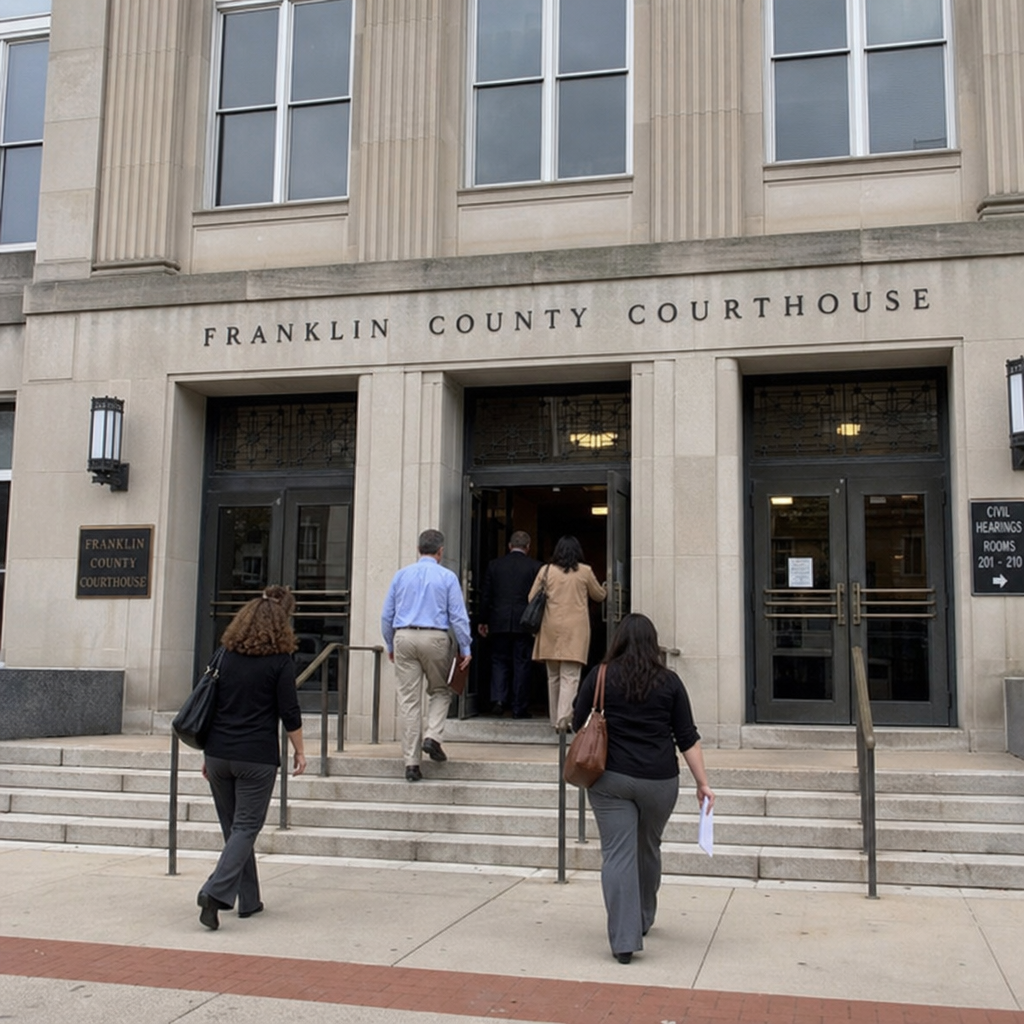
Filing a personal injury lawsuit in Franklin County, OH, places your claim within a formal court process governed by procedural rules and deadlines. After filing, the defendant must be served and has an opportunity to respond. The parties then generally enter discovery, a process that may include exchanging relevant documents, answering written questions, and obtaining sworn testimony through depositions. Settlement discussions or mediation may occur while the case proceeds. If the dispute remains unresolved and is not decided through court rulings, it may proceed to trial.
For injured individuals in Columbus and surrounding Franklin County communities, understanding these stages can make an unfamiliar process more manageable. Your local Ohio personal injury attorney can explain court requirements, prepare you for testimony, and help you evaluate settlement proposals. You can support that work by preserving records, responding promptly, and providing accurate information about your injuries, treatment, and missed work. Although each case follows its own timeline, knowing what to expect helps you participate confidently and make informed decisions.
Call (614) 482-3793 today to schedule a complimentary consultation with a local Ohio personal injury attorney from Buckeye Law Group.
What Happens First After the Lawsuit is Filed?
The first step is that the complaint is formally opened with the correct court and the defendant must be served with legal notice. In Franklin County, civil cases seeking more than $15,000 generally belong in the Franklin County Court of Common Pleas, General Division, while the Franklin County Municipal Court Civil Department handles civil matters within its monetary jurisdiction of up to $15,000.
The complaint is the document that explains who is being sued, what happened, why the defendant is alleged to be legally responsible, and what damages are being requested. In personal injury claims, damages may include medical expenses, lost income, pain and suffering, property damage, or other losses tied to the injury. Once filed, the lawsuit does not automatically mean the case is headed straight to trial; it means the claim is now on a litigation track with court deadlines and formal procedures.
The Defendant is Served and Responds
After filing, the defendant must receive proper service of the complaint and summons. Service gives the defendant official notice of the lawsuit and starts the clock for responding. If service is delayed or completed incorrectly, the case can slow down before it really begins. Once served, the defendant typically files an answer. The answer responds to the allegations, admits or denies specific points, and may raise legal defenses. In many injury cases, the defendant is represented by an insurance defense attorney, especially when the claim involves a car crash, premises liability incident, or business-related injury. This early stage often feels quiet to the injured person, but important work is happening behing the scenes. Your attorney may be monitoring service of process, reviewing the defendant’s answer, evaluating asserted defenses, and determining what evidence is needed to prove liability and damages.
Local Venue and Deadline Basics Matter
Franklin County procedure depends partly on where the case is filed and how much is at stake. The Municipal Court Civil Department is located at 375 South High Street, Columbus, OH, and accepts civil filings in person or by mail, while the Common Pleas courthouse is associated with civil cases above the municipal limit. One deadline is especially important before a lawsuit is ever filed: Ohio’s general statute of limitations for bodily injury claims is two years after the cause of action accrues, unless an exception applies. Missing that deadline can put the right to sue at risk, which is one reason injured people should not wait until evidence has gone stale or the deadline is close. Key items to confirm early include:
- Correct Court: Common Pleas or Municipal Court, depending on the amount claimed and the type of case.
- Proper Parties: The lawsuit should name the legally responsible person, business, or entity.
- Service Method: The defendant must be notified in a way the court recognizes.
- Calendar Control: Response dates, discovery deadlines, mediation dates, and trial dates should be tracked carefully.
- Medical Documentation: Treatment records, bills, work restrictions, and future care recommendations should be organized from the start.
Discovery Builds the Evidence
Discovery is the formal evidence-gathering phase. Each side can request information, documents, and testimony from the other. For an injured plaintiff, this is where the case becomes more detailed: medical records are reviewed, accident facts are tested, witnesses may be questioned, and the defense may examine whether the injuries were caused by the incident. Common discovery tools include written interrogatories, requests for documents, requests for admissions, subpoenas, and depositions. A deposition is sworn testimony taken outside the courtroom, usually in a conference room or remote setting, where lawyers ask questions and a court reporter records the answers.
Franklin County Common Pleas guidance emphasizes that litigants are expected to follow the Ohio Rules of Civil Procedure, local rules, and courtroom-specific guidelines. The court also expects parties to make real efforts to resolve discovery disputes before asking the judge to intervene. For plaintiffs, discovery can feel repetitive because the same injury, treatment, and life-impact details may come up in different ways. That repetition has a purpose: both sides are evaluating credibility, causation, damages, and trial risk.
How Can You Help Your Case During Litigation?
You can help by staying organized, responsive, and consistent. A personal injury attorney handles the legal strategy, but the injured person often has the best access to treatment updates, work limitations, out-of-pocket costs, and daily-life details that show how the injury has affected them. Practical steps include:
- Keep Treating as Recommended: Gaps in care can create questions about the seriousness or cause of the injury.
- Save Every Related Bill and Receipt: Include prescriptions, mileage to appointments, medical devices, and co-pays.
- Track Missed Work and Reduced Duties: Wage loss is easier to explain with employer records, schedules, and pay documentation.
- Avoid Guessing in Discovery Responses: If you do not know or do not remember, say so after discussing the response with your attorney.
- Be Careful Online: Social media posts can be requested or used to challenge injury claims.
- Update Your Lawyer Quickly: New doctors, new symptoms, job changes, and insurance letters can all matter.
The best habit is simple: assume every document and statement could become part of the case story. Accuracy matters more than drama.
Settlement Talks and Mediation are Common
Many personal injury claims settle before trial, but settlement usually depends on the strength of the evidence. Once both sides understand the medical picture, liability arguments, insurance issues, and trial risks, negotiations often become more focused. Mediation is also common in Franklin County civil litigation. The local rules of the Franklin County Court of Common Pleas include provisions governing mandatory mediation, while the court’s civil practice materials address referrals to mediation when appropriate. Mediation is not a trial. A neutral mediator helps both sides explore settlement, but does not decide who wins. The plaintiff usually needs to be prepared to discuss the injury, the treatment course, the financial impact, and the reasons a proposed settlement is or is not acceptable.
Trial Preparation Begins Before the Trial Date
If the case does not settle, your attorneys prepare for trial. That may involve witness lists, exhibit lists, expert reports, motions, jury instructions, and final pretrial conferences. Trial preparation often starts long before anyone walks into a courtroom because good trial presentation depends on evidence gathered during discovery. At trial, the plaintiff has the burden to prove the defendant’s legal responsibility and the damages caused by the incident. The defense can challenge fault, causation, the extent of injuries, medical necessity, or the amount being requested. After the evidence is presented, the judge or jury reaches a decision. Even after a verdict, the case may not be completely over. There may be post-trial motions, collection issues, settlement paperwork, lien resolution, or an appeal. Your attorney should explain what happens next based on the specific outcome.
How Long Does the Process Usually Take?
A personal injury lawsuit can take months or longer, depending on the court schedule, the complexity of the injuries, the number of parties, expert involvement, discovery disputes, and whether the case settles. Simple cases may resolve during discovery or mediation, while disputed cases can take substantially longer if they proceed to trial or appeal. The most important point is that litigation has phases. Delays do not always mean something is wrong; they may reflect service issues, medical record collection, deposition scheduling, expert review, or court availability. An Ohio attorney can give a more realistic estimate once the defendant has answered and the court has set a schedule.
What to Expect After Filing a Personal Injury Lawsuit in Franklin County
A personal injury lawsuit can feel unfamiliar, but understanding the next steps can help you approach the process with greater confidence. Preserve your records, provide accurate information, and stay in contact with your attorney as your case progresses. If you are considering a personal injury lawsuit in Columbus or elsewhere in Franklin County, Buckeye Law Group can review your circumstances, explain your legal options, and discuss what filing may involve. Bring your available records, insurance correspondence, and questions about treatment, missed work, or the court process.
Call (614) 482-3793 today to schedule a complimentary consultation with a local Ohio personal injury attorney from Buckeye Law Group.
*This page provides general educational information and does not constitute legal advice for your specific circumstances. Reading this page or contacting Buckeye Law Group does not, by itself, create an attorney-client relationship. Your rights, applicable filing deadlines, and potential remedies depend on the facts of your case and governing law. Consult a qualified attorney for an individualized assessment and guidance on protecting your rights. Every case is different, and past results do not guarantee a similar outcome.*
What Happens After a Personal Injury Lawsuit Is Filed in Franklin County?
Filing a personal injury lawsuit in Franklin County, OH, places your claim within a formal court process governed by procedural rules and deadlines. After filing, the defendant must be served
What to Do After a Hit-and-Run Accident in Columbus, Ohio
A hit-and-run accident in Columbus, OH, or the neighboring communities can leave you hurt, shaken, and unsure how to prove what happened. The right response is simple but urgent: get
Injured as a Passenger in a Columbus Car Accident? Understanding Your Options
If you were injured as a passenger in a Columbus car accident, you may have more options than you realize. Passengers are usually not the person blamed for the crash,
Who Pays Medical Bills While an Ohio Car Accident Claim Is Pending?
After a crash, medical care cannot wait for an insurance settlement. In Ohio, the person who caused the collision may ultimately be responsible for injury-related losses, but the at-fault driver’s
Cleveland Premises Liability Lawyers: Understanding Property Injury Claims in Ohio
How Cleveland Premises Liability Lawyers Evaluate Property Injury Claims Under Ohio Law A serious injury on someone else’s property can raise immediate questions about medical bills, responsibility, and your next
How Long Does an Auto Accident Settlement Take in Ohio? A Guide to the Claims Process
Ohio Auto Accident Settlement Timeline: What to Expect From Claim to Payout An Ohio auto accident settlement can move quickly when injuries are minor, liability is clear, and records are
How Buckeye Law Group’s Slip and Fall Injury Lawyers Help Injured Ohioans Understand Their Legal Options
Ohio Slip and Fall Injury Lawyers Helping You Understand Your Rights After a Serious Injury A slip and fall can turn an ordinary trip to a store, apartment building, workplace,
How Can an Ohio Truck Accident Lawyer Help You Protect Your Rights After a Commercial Truck Crash?
Legal Guidance After an Ohio Truck Accident: How an Ohio Truck Accident Lawyer Can Support Your Claim A truck accident lawyer from Buckeye Law Group can help injured individuals and
Should You Accept An Insurance Settlement Offer? Why Ohio Injury Victims Should Speak With An Attorney First
After an accident, an insurance settlement offer may provide welcome financial relief while medical bills and lost wages continue to accumulate. However, accepting an offer before the full extent of
What Should You Do After a Pedestrian Accident Near Ohio State University in Columbus?
A pedestrian accident near Ohio State University can leave you hurt, disoriented, and unsure what to do next. In the OSU area, where student foot traffic, Uber & Lyft rideshare

Buckeye Law Group represents people injured in auto accidents, slip and falls, workplace accidents and more in Ohio. Contact us today to learn more.
© 2026 All Rights Reserved | The Buckeye Law Group Inc. Privacy Policy Sitemap
Office Locations
- Akron Office 388 S Main St #400 Akron, OH 44311 (330) 426-0288
- Cincinnati Office 201 E 5th St Ste 1910 Cincinnati, OH 45202 (513) 547-2445
- Cleveland Office 127 Public Square Ste 1540 Cleveland, OH 44114 (216) 677-5490
- Columbus Office 20 E Broad St Suite 300 Columbus, OH 43215 (614) 482-3793
- Dayton Office 70 Birch Alley Ste 240 Dayton, OH 45440 (937) 884-4474
- Euclid Office 25701 N Lakeland Blvd Suite 113-C, Cleveland, OH 44132 (216) 405-2626
- Mansfield Office 305 E Main St Ste 6A, Mansfield, OH 44904 (567) 210-2606
- Findlay Office 7430 Timberstone Dr unit 101a, Findlay, OH 45840 419-873-5119
- Mentor Office 7537 Mentor Ave Ste 101, Mentor, OH 44060 (440) 306-3536
- Middletown Office 300 N Main St #400, Middletown, OH 45042 (326) 800-9150
- Parma Office 1257 Rockside Rd #A, Parma, OH 44131 (216) 279-1664
- Springfield Office 2100 E High St Ste TL3, Springfield, OH 45505 (937) 806-5791
- Toledo Office 3950 Sunforest Ct Ste 200, Toledo, OH 43623 (567) 483-3883
- Westlake Office 26404 Center Ridge Rd Ste B2, Westlake, OH 44145 216-247-0565
- Whitehall Office 5340 E Main St Ste 203, Whitehall, OH 43213 (380) 257-5206
- Youngstown Office 306 Churchill Hubbard Rd, Youngstown, OH 44505 (234) 225-0683
Contact Us
© 2026 All Rights Reserved | The Buckeye Law Group Inc. Privacy Policy Sitemap