
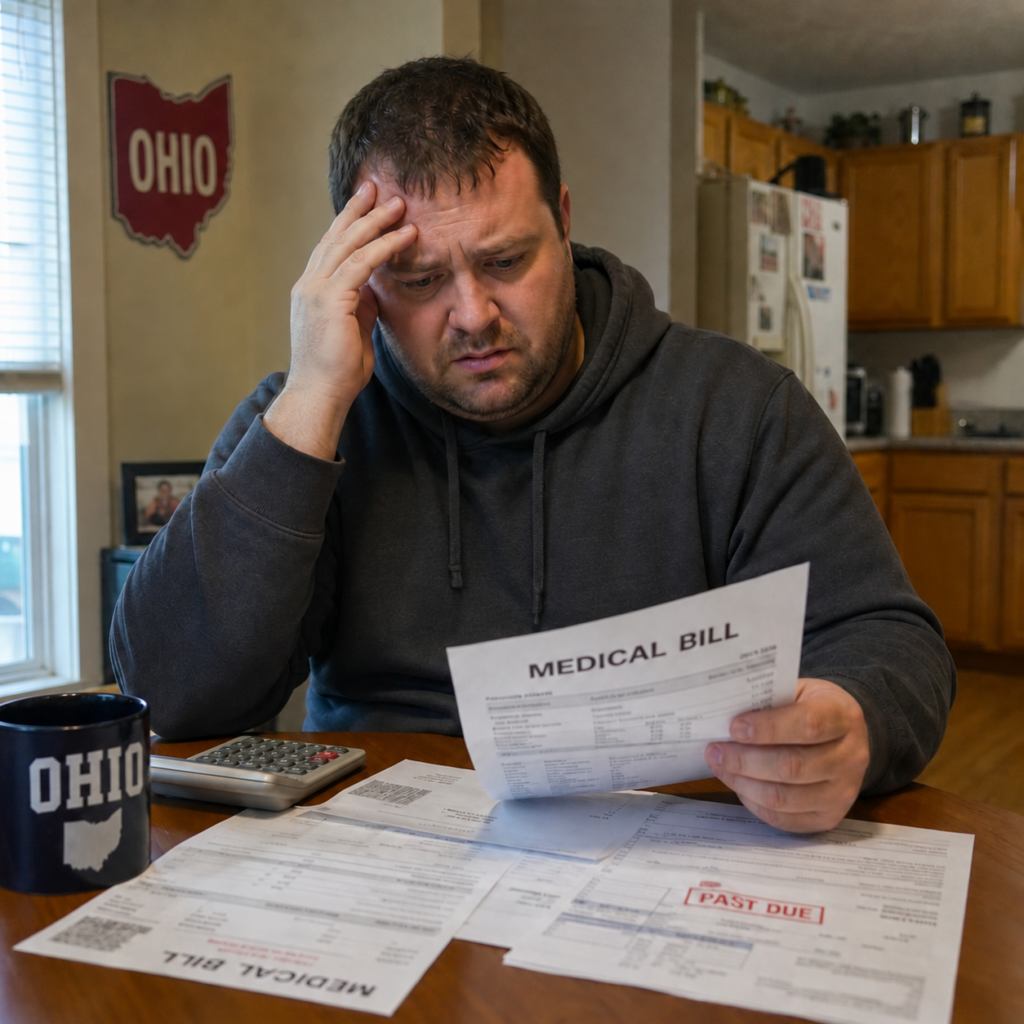
After a crash, medical care cannot wait for an insurance settlement. In Ohio, the person who caused the collision may ultimately be responsible for injury-related losses, but the at-fault driver’s insurer usually resolves those losses through a settlement or judgment rather than paying each bill as it arrives. That gap is why managing Ohio medical bills early is just as important as proving fault in car accident claims.
Call 1-800-411-7246 today to schedule a complimentary consultation with a local Ohio personal injury attorney from Buckeye Law Group.
Managing Medical Bills After an Ohio Car Accident: Coverage Options and Steps to Take Before Settlement
In most cases, you are responsible for keeping medical bills addressed while the claim is pending, even if another driver caused the crash. Ohio liability insurance is built around legal responsibility for damages, with state minimum bodily injury limits of $25,000 per person and $50,000 per accident, but that does not mean the other insurer becomes your ongoing health-care payer during treatment.
That can feel unfair, especially when the crash was not your fault. The practical reality is that your providers still bill you, your health insurer, Medicare, Medicaid, MedPay, or another available source before the injury claim is resolved. The at-fault insurer typically evaluates the full package later: medical records, bills, lost income, future treatment needs, pain and suffering, and liability evidence.
The Payment Sources That May Help Before Settlement
A pending claim often involves more than one insurance policy. The key is to use available coverage without creating confusion, duplicate payments, or avoidable reimbursement problems. Common payment sources include:
- Health insurance: If you have private health insurance, use it. It can reduce billed charges, keep accounts moving, and prevent unpaid balances from sitting with providers.
- Medicare or Medicaid: Government benefits may pay accident-related treatment, but they can later seek reimbursement from a settlement or other recovery. CMS explains that Medicare may make conditional payments so beneficiaries do not have to pay out of pocket first, and those payments may need to be repaid after settlement.
- Medical Payments coverage: MedPay is optional auto coverage that can pay medical expenses after a crash, regardless of fault. The Ohio Department of Insurance describes MedPay as optional coverage that pays medical bills, though it is not health insurance.
- Uninsured or underinsured motorist coverage: UM/UIM coverage may matter when the at-fault driver has no insurance or not enough insurance. Ohio law recognizes policies that include uninsured and underinsured motorist coverage and allows policy terms that affect deadlines, limits, and reimbursement rights.
- Provider payment plans or liens: Some hospitals, doctors, chiropractors, or specialists may agree to defer collection, accept monthly payments, or treat under a lien against a future settlement.
Each source has rules. Before assuming a bill is “handled,” confirm who paid it, whether any balance remains, and whether that payer will claim reimbursement later.
How Do Liens and Subrogation Affect Your Final Recovery?
Liens and subrogation can reduce the amount you take home from a settlement because a health insurer, Medicare, Medicaid, MedPay carrier, or provider may claim repayment from the recovery. In simple terms, subrogation means a payer that covered accident-related care may step into your shoes to recover from the legally responsible party. This is where many people are surprised. A bill marked “paid” by health insurance may not be gone forever if the health plan has reimbursement rights. Medicare uses the term “recovery claim” for its repayment interest, and CMS notes that settlement information can trigger a review of Medicare-paid claims and a demand process.
Medicaid has similar third-party recovery concepts. Federal Medicaid guidance explains that third-party liability involves another person or insurer being legally obligated to pay medical assistance costs, and Ohio Medicaid rules preserve recovery rights against liable third-party payers for medical services. The important takeaway is not to ignore reimbursement letters. A local Ohio accident attorney may be able to review whether charges are crash-related, dispute unrelated items, and negotiate reductions where permitted.
Practical Steps for Managing Car Crash Expenses
The best time to organize medical bills Ohio residents face after a collision is before accounts become delinquent. Even when you are in pain, a simple tracking system can protect both your claim and your credit. Use this checklist:
- Tell every provider the treatment is accident-related: Give them your health insurance, auto policy information, claim numbers, and attorney contact if you have one.
- Use health insurance when available: Do not leave bills unpaid simply because another driver was at fault.
- Ask your auto insurer about MedPay: Many people do not know whether they purchased it until they check the declarations page.
- Save every bill and explanation of benefits: You need both the amount charged and the amount paid or adjusted.
- Request itemized statements: These help separate accident care from unrelated medical treatment.
- Call providers before collections begin: Ask for a payment plan, temporary hold, or lien arrangement if you cannot pay immediately.
- Track mileage, prescriptions, braces, therapy, and follow-up visits: Smaller expenses can become part of the overall damages picture.
- Do not sign a quick release without knowing future care needs: A settlement usually ends the claim, even if symptoms worsen later.
Mistakes That Can Make Ohio Medical Bills Harder To Resolve
One common mistake is assuming the at-fault insurance company will automatically pay the hospital. That assumption can lead to missed notices, collection calls, and gaps in treatment. Keep communicating with providers, even when liability seems obvious. Another mistake is refusing to use health insurance. Some crash victims worry that using health insurance weakens the injury claim, but it often helps stabilize the billing situation while the legal claim develops. The settlement can still account for medical damages, subject to the evidence and reimbursement rules. A third mistake is settling before the medical picture is clear. If you accept money before reaching maximum improvement or understanding future treatment, you may be left paying later car crash expenses yourself.
When Legal Help Becomes Especially Important
Not every minor crash requires a lawyer, but legal guidance is valuable when bills are high, injuries continue, fault is disputed, multiple insurers are involved, or Medicare, Medicaid, MedPay, or provider liens are in play. Ohio’s general deadline for bodily injury actions is two years from when the injury occurs, although specific facts can affect deadlines and insurance policies may contain separate notice requirements.
A local Ohio accident attorney can help identify coverage, gather records, communicate with insurers, protect deadlines, and address reimbursement claims before settlement funds are distributed. That support can be especially helpful when the other driver has only minimum insurance or when uninsured/underinsured motorist coverage may be needed.
Managing Medical Bills While Your Ohio Car Accident Claim Is Pending
While an Ohio car accident claim is pending, medical bills usually must be managed through your own health insurance, Medicare or Medicaid, MedPay, payment arrangements, or liens until the injury claim resolves. The at-fault driver may ultimately owe damages, but waiting passively for that insurer to pay can create avoidable financial stress. Stay organized, use available coverage, communicate with providers, and get local legal advice before signing away your claim. Taking these steps can help you manage immediate expenses while making informed decisions about your medical care and financial recovery.
Call 1-800-411-7246 today to schedule a complimentary consultation with a local Ohio personal injury attorney from Buckeye Law Group.
*This page provides general educational information and does not replace legal advice tailored to your circumstances. Reading this page or contacting Buckeye Law Group does not, by itself, establish an attorney-client relationship. Your legal rights, applicable deadlines, and available remedies depend on the facts and circumstances of your case. Consult a qualified attorney for guidance about your situation and legal options. Every case is different, and past results do not guarantee a similar outcome.*
Injured as a Passenger in a Columbus Car Accident? Understanding Your Options
If you were injured as a passenger in a Columbus car accident, you may have more options than you realize. Passengers are usually not the person blamed for the crash,
Who Pays Medical Bills While an Ohio Car Accident Claim Is Pending?
After a crash, medical care cannot wait for an insurance settlement. In Ohio, the person who caused the collision may ultimately be responsible for injury-related losses, but the at-fault driver’s
Cleveland Premises Liability Lawyers: Understanding Property Injury Claims in Ohio
How Cleveland Premises Liability Lawyers Evaluate Property Injury Claims Under Ohio Law A serious injury on someone else’s property can raise immediate questions about medical bills, responsibility, and your next
How Long Does an Auto Accident Settlement Take in Ohio? A Guide to the Claims Process
Ohio Auto Accident Settlement Timeline: What to Expect From Claim to Payout An Ohio auto accident settlement can move quickly when injuries are minor, liability is clear, and records are
How Buckeye Law Group’s Slip and Fall Injury Lawyers Help Injured Ohioans Understand Their Legal Options
Ohio Slip and Fall Injury Lawyers Helping You Understand Your Rights After a Serious Injury A slip and fall can turn an ordinary trip to a store, apartment building, workplace,
How Can an Ohio Truck Accident Lawyer Help You Protect Your Rights After a Commercial Truck Crash?
Legal Guidance After an Ohio Truck Accident: How an Ohio Truck Accident Lawyer Can Support Your Claim A truck accident lawyer from Buckeye Law Group can help injured individuals and
Should You Accept An Insurance Settlement Offer? Why Ohio Injury Victims Should Speak With An Attorney First
After an accident, an insurance settlement offer may provide welcome financial relief while medical bills and lost wages continue to accumulate. However, accepting an offer before the full extent of
What Should You Do After a Pedestrian Accident Near Ohio State University in Columbus?
A pedestrian accident near Ohio State University can leave you hurt, disoriented, and unsure what to do next. In the OSU area, where student foot traffic, Uber & Lyft rideshare
How Do I Choose the Right Dog Bite Lawyer in Columbus, Ohio?
If you were bitten or otherwise injured by a dog in central Ohio, the right lawyer can help determine liability, preserve evidence, communicate with insurance companies, and pursue fair compensation
How to Choose the Right Columbus Wrongful Death Attorney for Your Family
Losing someone because of another person’s negligence is devastating, and choosing the right legal help can feel overwhelming when your family is already grieving. The best wrongful death attorneys combine
Buckeye Law Group represents people injured in auto accidents, slip and falls, workplace accidents and more in Ohio. Contact us today to learn more.
© 2026 Todos los derechos reservados | The Buckeye Law Group Inc. Políticade privacidad Mapa del sitio
Ubicaciones de las oficinas
- Akron Office 388 S Main St #400 Akron, OH 44311 (330) 426-0288
- Cincinnati Office 201 E 5th St Ste 1910 Cincinnati, OH 45202 (513) 547-2445
- Cleveland Office 127 Public Square Ste 1540 Cleveland, OH 44114 (216) 677-5490
- Columbus Office 20 E Broad St Suite 300 Columbus, OH 43215 (614) 482-3793
- Dayton Office 70 Birch Alley Ste 240 Dayton, OH 45440 (937) 884-4474
- Euclid Office 25701 N Lakeland Blvd Suite 113-C, Cleveland, OH 44132 (216) 405-2626
- Mansfield Office 305 E Main St Ste 6A, Mansfield, OH 44904 (567) 210-2606
- Findlay Office 7430 Timberstone Dr unit 101a, Findlay, OH 45840 419-873-5119
- Mentor Office 7537 Mentor Ave Ste 101, Mentor, OH 44060 (440) 306-3536
- Middletown Office 300 N Main St #400, Middletown, OH 45042 (326) 800-9150
- Parma Office 1257 Rockside Rd #A, Parma, OH 44131 (216) 279-1664
- Springfield Office 2100 E High St Ste TL3, Springfield, OH 45505 (937) 806-5791
- Toledo Office 3950 Sunforest Ct Ste 200, Toledo, OH 43623 (567) 483-3883
- Westlake Office 26404 Center Ridge Rd Ste B2, Westlake, OH 44145 216-247-0565
- Whitehall Office 5340 E Main St Ste 203, Whitehall, OH 43213 (380) 257-5206
- Youngstown Office 306 Churchill Hubbard Rd, Youngstown, OH 44505 (234) 225-0683
Contáctenos
© 2026 Todos los derechos reservados | The Buckeye Law Group Inc. Políticade privacidad Mapa del sitio