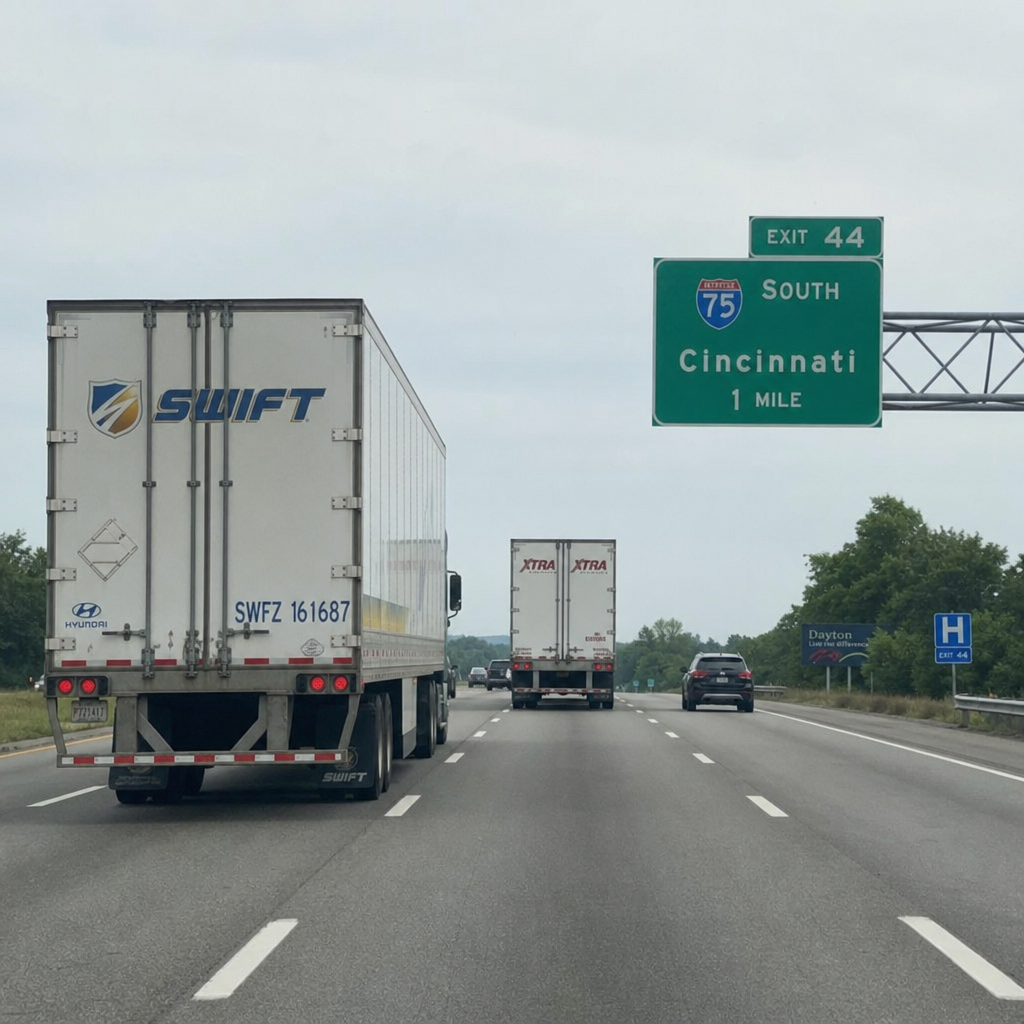
A commercial truck crash on I-75 near Dayton can involve more than one responsible party. The driver may be part of the story, but truck accident liability often turns on the trucking company, maintenance records, cargo loading, insurance coverage, and the choices of other motorists. If you are asking, “Who Is Liable After a Commercial Truck Accident on I-75 Near Dayton?”, the practical answer is: liability depends on what caused the crash and who had control over the risk. This article explains the common commercial truck accident liability parties involved, what evidence matters, and why speaking with a truck accident lawyer Dayton residents trust can help protect a claim before records disappear.
Call (937) 884-4474 or request a free consultation to speak with a Dayton truck accident attorney at Buckeye Law Group today.
Who can be liable after a truck crash on I-75 near Dayton?
The liable party is the person or business whose negligence contributed to the crash. In many commercial vehicle accidents, that may include the truck driver, the motor carrier, a maintenance contractor, a cargo loader, a truck or parts manufacturer, another driver, or more than one of them at the same time.
Truck crashes are rarely simple because a tractor-trailer is part of a larger business system. Someone hired the driver. Someone scheduled the load. Someone inspected or repaired the vehicle. Someone may have set delivery expectations that encouraged unsafe choices. A careful investigation looks beyond the police report and asks how each decision connected to the collision.
The Federal Motor Carrier Safety Administration’s large truck crash research highlights why this matters: crash causation can involve driver decisions, vehicle failures, weather, roadway conditions, and other associated factors, not just one obvious mistake. FMCSA also notes that “critical reason” coding begins the analysis but does not, by itself, fully describe legal cause.
The truck driver’s conduct is often the starting point
A truck driver may be liable when careless driving causes or contributes to the crash. On I-75, that might involve following too closely in heavy traffic, speeding for conditions, making an unsafe lane change, failing to check blind spots, driving while distracted, or pushing through fatigue.
Driver behavior matters because commercial trucks need more time and distance to stop than passenger vehicles. A small lapse can become serious when an 18-wheeler is moving at highway speed. Evidence such as dash camera footage, electronic logging data, phone records, witness statements, and the truck’s event data can help show whether the driver acted reasonably. Common driver-related issues in truck accident lawsuits include:
- Speed and Spacing: Was the truck moving too fast for traffic, weather, construction, or merging vehicles?
- Distraction: Was the driver using a phone, onboard device, navigation system, or dispatch communication at the wrong time?
- Fatigue: Did the driver have enough rest, or do logs suggest pressure to keep moving?
- Impairment or Medication Concerns: Were drugs, alcohol, or sedating medications a factor?
- Unsafe Maneuvers: Did the driver drift, cut off another vehicle, fail to yield, or make a sudden movement without warning?
Even when the driver made the immediate mistake, the investigation should not stop there. The next question is whether the driver’s employer, contractor, or another company helped create the conditions that made the mistake likely.
Trucking companies may share responsibility
A trucking company can be liable when its own actions contributed to the accident or when the driver was acting within the scope of work. This is one of the biggest differences between ordinary car crashes and commercial vehicle accidents: the company behind the truck may have significant responsibility for hiring, training, supervision, scheduling, and vehicle safety.
A motor carrier’s liability may involve negligent hiring if the company put an unsafe or unqualified driver on the road. It may involve poor training if the driver was not prepared for highway merging, winter conditions, construction zones, or heavy urban traffic around Dayton. It may also involve negligent supervision if the company ignored warning signs, prior violations, complaints, crashes, or repeated safety issues.
Company pressure can matter, too. Delivery deadlines, unrealistic routes, or pay structures may encourage drivers to hurry, skip breaks, or keep driving when conditions call for caution. That does not automatically prove liability, but it gives a Dayton truck accident lawyer a reason to examine dispatch records, route plans, safety policies, and communications between the driver and carrier.
Other parties may be involved in commercial truck accident liability
The driver and trucking company are the most visible parties, but they are not always the only ones. Modern freight movement often includes brokers, shippers, warehouses, mechanics, leasing companies, and separate cargo contractors. Each may have information that affects the claim. Potentially liable parties may include:
- Maintenance Companies: If defective brakes, worn tires, lighting problems, steering issues, or ignored repairs contributed to the crash.
- Cargo Loaders or Shippers: If freight shifted, exceeded safe limits, blocked visibility, or made the trailer unstable.
- Truck or Parts Manufacturers: If a defective tire, brake component, coupling system, or other part failed.
- Truck Owners or Leasing Companies: If ownership and operational control were split between businesses.
- Other Motorists: If another driver cut off the truck, caused a chain reaction, or created a hazard.
- Government or Road Contractors: In limited cases, if unsafe road design, work-zone setup, or maintenance played a role.
This is why identifying the commercial truck accident liability parties involved takes time. A crash scene may look straightforward, but the paperwork behind the vehicle can reveal a different picture.
What evidence helps prove liability?
Evidence proves what happened, who had control, and whether someone failed to act with reasonable care. In truck accident lawsuits, the most important evidence is often held by the trucking company or its vendors, so early preservation is critical. A strong investigation may focus on:
- Crash-Scene Evidence: Photos, skid marks, debris fields, vehicle resting positions, roadway conditions, and nearby surveillance video.
- Vehicle Data: Event data recorders, telematics, GPS history, speed information, braking data, and dash camera footage.
- Driver Records: Qualification files, training history, driving history, logs, drug and alcohol testing information, and communication records.
- Company Records: Dispatch notes, delivery schedules, safety policies, maintenance logs, inspection reports, and prior repair requests.
- Cargo Documents: Bills of lading, weight records, loading diagrams, seal records, and shipper instructions.
- Medical and Damages Evidence: Emergency treatment, follow-up care, lost income, pain limitations, and the long-term impact of injuries.
The goal is not simply to gather documents. The goal is to connect each fact to a legal theory of responsibility. For example, brake problems may point to maintenance failures, but they can also raise questions about inspections, company oversight, and whether the truck should have been on the road at all.
How does Ohio fault law affect a truck accident claim?
Ohio uses a comparative fault system. In general, an injured person’s recovery can be reduced by that person’s percentage of fault, and Ohio law states that contributory fault does not bar recovery if the plaintiff’s fault was not greater than the combined fault of the other responsible parties. That rule matters because trucking companies and insurers may argue that the injured driver shares blame. They may claim the passenger vehicle merged too closely, stopped suddenly, drove in a blind spot, or failed to react in time. Sometimes those arguments are fair; sometimes they are an attempt to reduce payout exposure.
A careful liability analysis should compare every party’s conduct. Did the truck have enough following distance? Was traffic already slowing? Were hazard lights or brake lights visible? Did a construction pattern, disabled vehicle, or weather condition change what reasonable driving required? These details can affect both settlement negotiations and trial strategy. Ohio also has timing rules for injury claims. Ohio Revised Code Section 2305.10 generally requires actions for bodily injury or injury to personal property to be brought within two years after the cause of action accrues, subject to exceptions that may apply in specific cases.
Commercial truck insurance changes the claim process
Commercial truck insurance is often more complex than standard auto insurance. A single crash may involve the driver’s policy, the motor carrier’s liability coverage, trailer coverage, excess policies, cargo-related coverage, or insurance connected to another business in the freight chain. That complexity can help injured people because more coverage may be available for serious losses. It can also make the claim harder because insurers may dispute which policy applies, whether the driver was on duty, whether the carrier had control, or whether another contractor should pay first.
After a severe I-75 crash, insurance representatives may move quickly. They may request recorded statements, authorizations, inspections, or early settlement discussions before the full medical picture is known. It is usually wise to avoid guessing about fault, injuries, speed, distance, or what you “could have done” until you have legal guidance.
Practical steps after a commercial truck accident
If you are physically able, these steps can help protect your health and potential claim:
- Call 911 and Get Medical Care: Some injuries worsen after adrenaline fades, and medical records help connect injuries to the crash.
- Document What You Can: Photos of vehicles, license plates, company names, road conditions, injuries, and witness contact information may become important.
- Do Not Rely Only on the Police Report: It is useful, but it may not identify every liable party or all contributing factors.
- Avoid Detailed Statements to Insurers: Basic facts are different from speculation about fault or injury severity.
- Preserve Evidence: Save medical paperwork, repair estimates, tow records, dashcam files, and any messages about the crash.
- Contact a Lawyer Early: Truck accident victims should contact a qualified local Ohio truck accident attorney as soon as possible after a collision. An attorney can issue evidence preservation letters and conduct an investigation before critical evidence is overwritten, altered, repaired, or lost.
A Dayton truck accident lawyer can connect the facts to the law
A serious truck crash claim is not just about proving that a collision occurred. It is about proving why it occurred, who had the power to prevent it, and how the injuries changed the victim’s life. That requires legal analysis, accident reconstruction when appropriate, medical documentation, and a clear damages presentation. A Dayton truck accident lawyer may investigate the driver, the carrier, the truck’s maintenance history, the load, insurance layers, and other parties that touched the shipment. The sooner that work begins, the better the chance of preserving records and building a complete liability picture.
Commercial truck accidents on I-75 near Dayton can leave injured people facing medical bills, missed work, pain, and pressure from insurers. Liability may rest with one party or several, and the answer depends on evidence. If you were hurt in a crash involving a semi-truck, delivery truck, or other commercial vehicle, getting prompt legal guidance can help you understand your options and avoid mistakes that weaken your claim.
Call (937) 884-4474 or request a free consultation to speak with a Dayton truck accident attorney at Buckeye Law Group today.
*This article provides general information about commercial truck accident claims in Dayton, Ohio, and the legal considerations injured individuals and their families may face. It is intended for educational purposes only and does not constitute legal advice. Reading this article or contacting Buckeye Law Group does not, by itself, create an attorney-client relationship. Truck accidents along Interstate 75, Interstate 70, and surrounding Dayton roadways may involve driver negligence, trucking company liability, federal safety regulations, and commercial insurance coverage. Determining liability requires evaluating available evidence, applicable laws, and potential defenses. Important documentation may include police reports, driver logs, electronic vehicle data, maintenance records, witness statements, medical records, and financial losses. Ohio’s comparative negligence rules and applicable filing deadlines may also affect a truck accident claim. Consult a qualified Dayton truck accident attorney at Buckeye Law Group to understand your legal rights and available options. Every case is different, and prior results do not guarantee a similar outcome.*
Who Is Liable After a Commercial Truck Accident on I-75 Near Dayton?
A commercial truck crash on I-75 near Dayton can involve more than one responsible party. The driver may be part of the story, but truck accident liability often turns on
What Happens When a Pedestrian Is Hit by a Car in Downtown Dayton?
When a pedestrian is hit by a car in downtown Dayton, the first priorities are medical care, safety, and creating a clear record of what happened. After the scene is
How Do You Prove a Slip and Fall Injury Claim in Dayton, Ohio?
A slip and fall injury claim in Dayton, Ohio, usually comes down to evidence: what dangerous condition caused the fall, who was responsible for the property, whether they knew or
What Are Common Signs of Medical Malpractice in Toledo Hospitals?
Medical malpractice can be difficult to recognize because poor outcomes sometimes happen even when doctors, nurses, and hospitals do everything right. Still, certain warning signs may suggest that a preventable
How an Ohio car accident lawyer helps negotiate with insurance companies
After a crash, the insurance process can feel like a second accident: confusing, stressful, and full of pressure to make quick decisions. Understanding how an Ohio car accident lawyer helps
What Evidence is Needed After a Commercial Truck Accident in Akron, Ohio?
After a commercial truck crash in Akron, the strongest claim is usually built from evidence gathered quickly, preserved properly, and connected to the real cause of the collision. Useful evidence
Most dangerous roads and intersections in Akron, Ohio
Akron has plenty of everyday driving pinch points: quick merges, busy arterials, short downtown blocks, and neighborhood streets where drivers, walkers, and cyclists all share a common space. The latest
What Happens After a Dog Bite in Dayton, Ohio?
A dog bite can turn an ordinary walk, delivery stop, visit, or neighborhood errand into a confusing medical and legal situation. In Dayton and the surrounding Montgomery County area, the
Wrongful Death Lawyers in Akron and How Local Ohio Attorneys Can Provide the Legal Resources Your Family Deserves
When a loved one dies because of another person’s carelessness, unsafe choices, or misconduct, the family is left with grief, unanswered questions, and often sudden financial pressure. Ohio law allows
How Can Cleveland Wrongful Death Lawyers Help Families Protect Their Rights and Pursue Compensation?
When a preventable death changes your family’s future, the legal process can feel impossible to face. Wrongful death lawyers in Cleveland can help families understand Ohio law, preserve evidence, deal
Buckeye Law Group represents people injured in auto accidents, slip and falls, workplace accidents and more in Ohio. Contact us today to learn more.
© 2026 Todos los derechos reservados | The Buckeye Law Group Inc. Políticade privacidad Mapa del sitio
Ubicaciones de las oficinas
- Akron Office 388 S Main St #400 Akron, OH 44311 (330) 426-0288
- Cincinnati Office 201 E 5th St Ste 1910 Cincinnati, OH 45202 (513) 547-2445
- Cleveland Office 127 Public Square Ste 1540 Cleveland, OH 44114 (216) 677-5490
- Columbus Office 20 E Broad St Suite 300 Columbus, OH 43215 (614) 482-3793
- Dayton Office 70 Birch Alley Ste 240 Dayton, OH 45440 (937) 884-4474
- Euclid Office 25701 N Lakeland Blvd Suite 113-C, Cleveland, OH 44132 (216) 405-2626
- Mansfield Office 305 E Main St Ste 6A, Mansfield, OH 44904 (567) 210-2606
- Findlay Office 7430 Timberstone Dr unit 101a, Findlay, OH 45840 419-873-5119
- Mentor Office 7537 Mentor Ave Ste 101, Mentor, OH 44060 (440) 306-3536
- Middletown Office 300 N Main St #400, Middletown, OH 45042 (326) 800-9150
- Parma Office 1257 Rockside Rd #A, Parma, OH 44131 (216) 279-1664
- Springfield Office 2100 E High St Ste TL3, Springfield, OH 45505 (937) 806-5791
- Toledo Office 3950 Sunforest Ct Ste 200, Toledo, OH 43623 (567) 483-3883
- Westlake Office 26404 Center Ridge Rd Ste B2, Westlake, OH 44145 216-247-0565
- Whitehall Office 5340 E Main St Ste 203, Whitehall, OH 43213 (380) 257-5206
- Youngstown Office 306 Churchill Hubbard Rd, Youngstown, OH 44505 (234) 225-0683
Contáctenos
© 2026 Todos los derechos reservados | The Buckeye Law Group Inc. Políticade privacidad Mapa del sitio