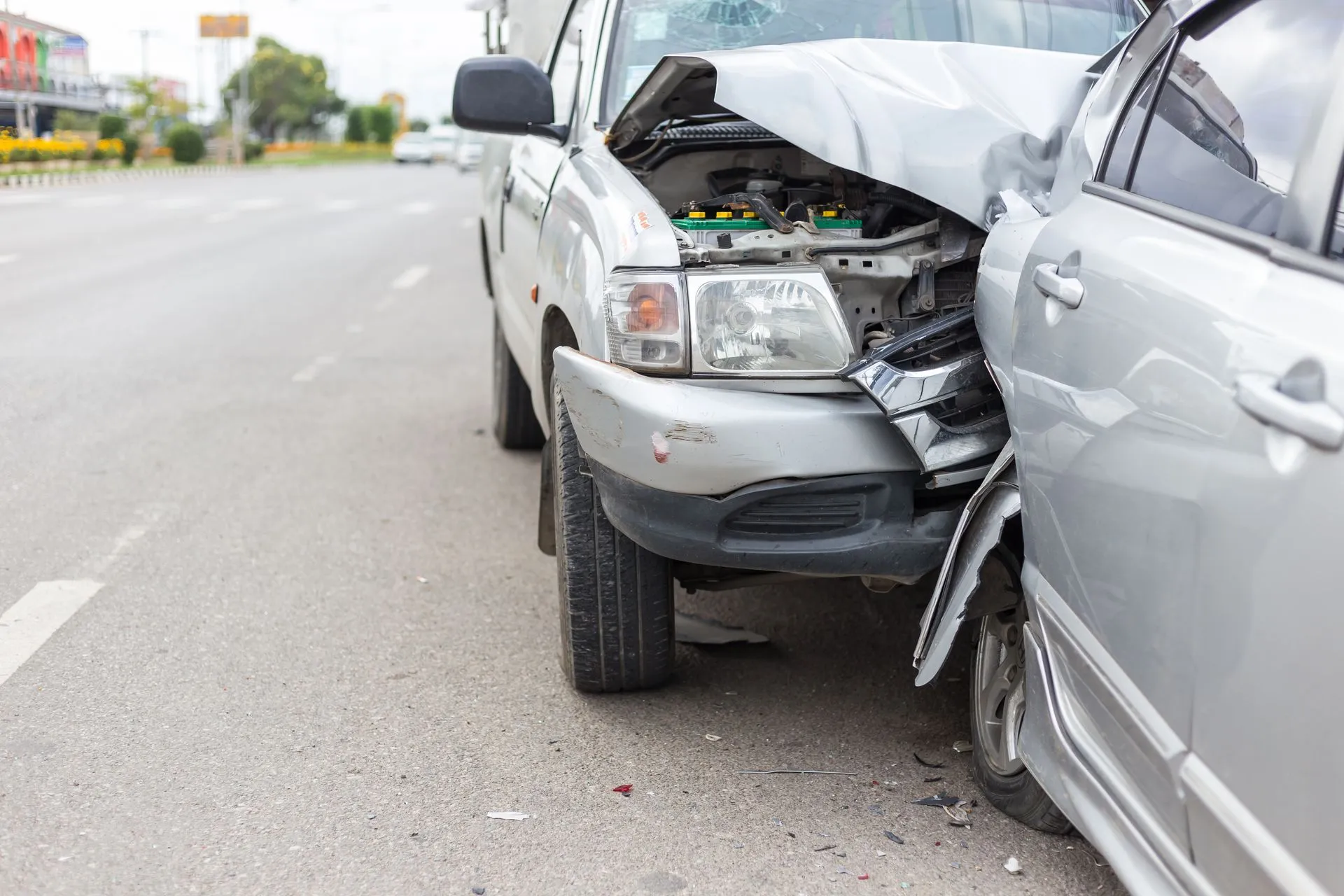
Despite spending a good portion of our lives driving, we can’t deny how easy it can be to get into an accident. If this happens to you, one of the first issues you’ll normally encounter is figuring out the distribution of blame and whose insurance pays for vehicle damage and injuries.
There are some states where blame doesn’t matter in regard to injuries – at least not immediately. For example, if the car crash happened in a no-fault state, each driver is responsible for their own medical costs (up to their PIP limit), rendering it impossible to take legal action unless medical costs, lost wages and pain and suffering exceed their personal policy limits.
The same is not true for property damage costs, in which fault does still matter in no-fault states. The at-fault party’s property damage liability coverage should pay for the other driver’s vehicle repairs or replacement.
Is Ohio a no-fault state? No – it’s an at-fault state (otherwise known as a tort state), meaning that responsibility for injuries can be assigned to a driver and dealt with legally. If you decide to sue the at-fault party for damages related to injuries, you can only do so in an at-fault state or in certain circumstances in no-fault states (like if you suffered a catastrophic injury resulting in a disability, permanent scarring, etc.).
What Does “No-Fault State” Mean?
In a no-fault state, each driver’s personal injury protection (PIP) insurance (or “no-fault” insurance as it’s also called since it’s only a policy in no-fault states) will cover their own injuries, diminished wages and any other injury-related losses suffered from the accident. Regardless of which driver is at fault, you are responsible for your own medical costs, even if you’re left with thousands of dollars in debt, unless certain conditions are met.
However, even in a no-fault state, automotive property damage must be paid with the liable driver’s insurance. The party who is not at fault can also pursue recompense for their pain and suffering damages. Still, drivers in these states will have to cover most of their own medical expenses while not being able to pursue a personal injury lawsuit against the offending driver.
What is an “At-Fault State,” And What Does That Mean for Ohio Drivers?
Thankfully, Ohio is an at-fault state. As the name implies, in an at-fault state, the driver who is found responsible is liable for almost all damages caused by the accident.
In addition to paying their own damages (which may or may not be covered depending on their own insurance policies), they are also required to compensate the other party using their property damage liability and bodily injury liability portions of their insurance policy. If the expense exceeds their policy limit, they may be forced to pay out-of-pocket.
Because one must be assigned fault in an at-fault state, there is often a lengthy insurance investigation and negotiation process to decide who was to blame. As a result, car accident injury insurance claims may take longer to process.
Since Ohio is an at-fault or tort state, if you’re in an accident, you can take legal action to pursue compensation if needed. If the collision wasn’t your fault, you shouldn’t have to shoulder the costs alone. Whether there is trouble deciding who caused the accident or whether the at-fault party’s insurance won’t give you a proper reimbursement, the Buckeye Law Group can help.
Attorneys in the Buckeye Law Group Network Have Won More Than One Billion Dollars in Settlements and Verdicts for Our Clients
Our team of experienced lawyers fight for the fair settlements our clients deserve in all sorts of accidents. Whether the collision was with a bike, car, truck, bus, motorcycle or an Uber or Lyft driver, our lawyers have the knowledge and expertise to support your case. No matter the circumstances, we will work hard to help you get the settlement you deserve.
Learn more about what the Buckeye Law Group can do for you. Call 1-800-411-PAIN or visit our website for a free case consultation.
What Greater Akron’s latest crash data reveals about roadway safety and serious injuries
Greater Akron’s latest regional crash report shows fewer crashes overall, but serious injuries remain a concern. The Akron Metropolitan Area Transportation Study’s 2022–2024 analysis separates encouraging declines in fatalities from
Why Is St. Clair Avenue One of Cleveland’s Most Dangerous Roads? Crash Data and Safety Improvements Explained
St. Clair Avenue’s danger comes into focus when you look beyond fender-benders to deaths and life-changing injuries. Cleveland reports at least 14 people killed and 79 seriously injured between East
Dayton’s 2026 Road Safety Action Plan: What Local Crash Data Reveals About Dangerous Driving Conditions
The City of Dayton, Ohio, has adopted a comprehensive Safe Streets and Roads for All (SS4A) Safety Action Plan to address traffic fatalities, serious injuries, and hazardous roadway conditions throughout
Cleveland’s 2026 Daylight Saving Time Change: Earlier Darkness, Pedestrian Safety, and Ohio Traffic Laws
Cleveland’s daylight saving time ends on Sunday, November 1, 2026, at 2:00 a.m., when clocks move backward one hour and Northeast Ohio returns to Eastern Standard Time (EST). While the
Halloween Weekend 2026 in Dayton: Impaired Driving Risks, Free Rideshare Resources, and Ohio Accident Laws
Halloween weekend brings celebrations throughout Dayton, Ohio, but increased nighttime traffic, pedestrians, and alcohol-related activities also create important safety concerns. Whether you are attending an event in downtown Dayton, visiting
Halloween Pedestrian Safety Near Ohio State University: Columbus Crosswalk Laws, Accident Risks, and What to Do If You’re Injured
Halloween weekend brings students, residents, and visitors throughout Columbus, particularly around The Ohio State University and the surrounding University District. As people travel between campus, restaurants, residential neighborhoods, and entertainment
Can You Pursue Compensation for a Traumatic Brain Injury After an Ohio Car Accident?
A traumatic brain injury sustained in an Ohio car accident can have significant and lasting consequences for an individual’s health, financial stability, and quality of life. When another party’s negligence
How Long After a Car Accident Can Concussion Symptoms Appear?
A concussion can cause symptoms immediately after a crash or several hours or days later. Sometimes a person first recognizes changes in sleep, mood, concentration, or memory a week or
Not at Fault in a Columbus Car Accident? What Ohio Drivers Should Do Next
Following a car accident in Columbus, Ohio, that may have been caused by another driver’s negligence, taking appropriate steps can help protect your health, preserve important evidence, and safeguard your
Is Personal Injury Mediation Legally Binding in Ohio?
Personal injury mediation in Ohio does not automatically create a binding outcome, but a settlement reached through mediation can be legally enforceable. The distinction is between negotiating a resolution and

Buckeye Law Group represents people injured in auto accidents, slip and falls, workplace accidents and more in Ohio. Contact us today to learn more.
© 2026 Todos los derechos reservados | The Buckeye Law Group Inc. Políticade privacidad Mapa del sitio
Ubicaciones de las oficinas
- Akron Office 388 S Main St #400 Akron, OH 44311 (330) 426-0288
- Cincinnati Office 201 E 5th St Ste 1910 Cincinnati, OH 45202 (513) 547-2445
- Cleveland Office 127 Public Square Ste 1540 Cleveland, OH 44114 (216) 677-5490
- Columbus Office 20 E Broad St Suite 300 Columbus, OH 43215 (614) 482-3793
- Dayton Office 70 Birch Alley Ste 240 Dayton, OH 45440 (937) 884-4474
- Euclid Office 25701 N Lakeland Blvd Suite 113-C, Cleveland, OH 44132 (216) 405-2626
- Mansfield Office 305 E Main St Ste 6A, Mansfield, OH 44904 (567) 210-2606
- Findlay Office 7430 Timberstone Dr unit 101a, Findlay, OH 45840 419-873-5119
- Mentor Office 7537 Mentor Ave Ste 101, Mentor, OH 44060 (440) 306-3536
- Middletown Office 300 N Main St #400, Middletown, OH 45042 (326) 800-9150
- Parma Office 1257 Rockside Rd #A, Parma, OH 44131 (216) 279-1664
- Springfield Office 2100 E High St Ste TL3, Springfield, OH 45505 (937) 806-5791
- Toledo Office 3950 Sunforest Ct Ste 200, Toledo, OH 43623 (567) 483-3883
- Westlake Office 26404 Center Ridge Rd Ste B2, Westlake, OH 44145 216-247-0565
- Whitehall Office 5340 E Main St Ste 203, Whitehall, OH 43213 (380) 257-5206
- Youngstown Office 306 Churchill Hubbard Rd, Youngstown, OH 44505 (234) 225-0683
Contáctenos
© 2026 Todos los derechos reservados | The Buckeye Law Group Inc. Políticade privacidad Mapa del sitio