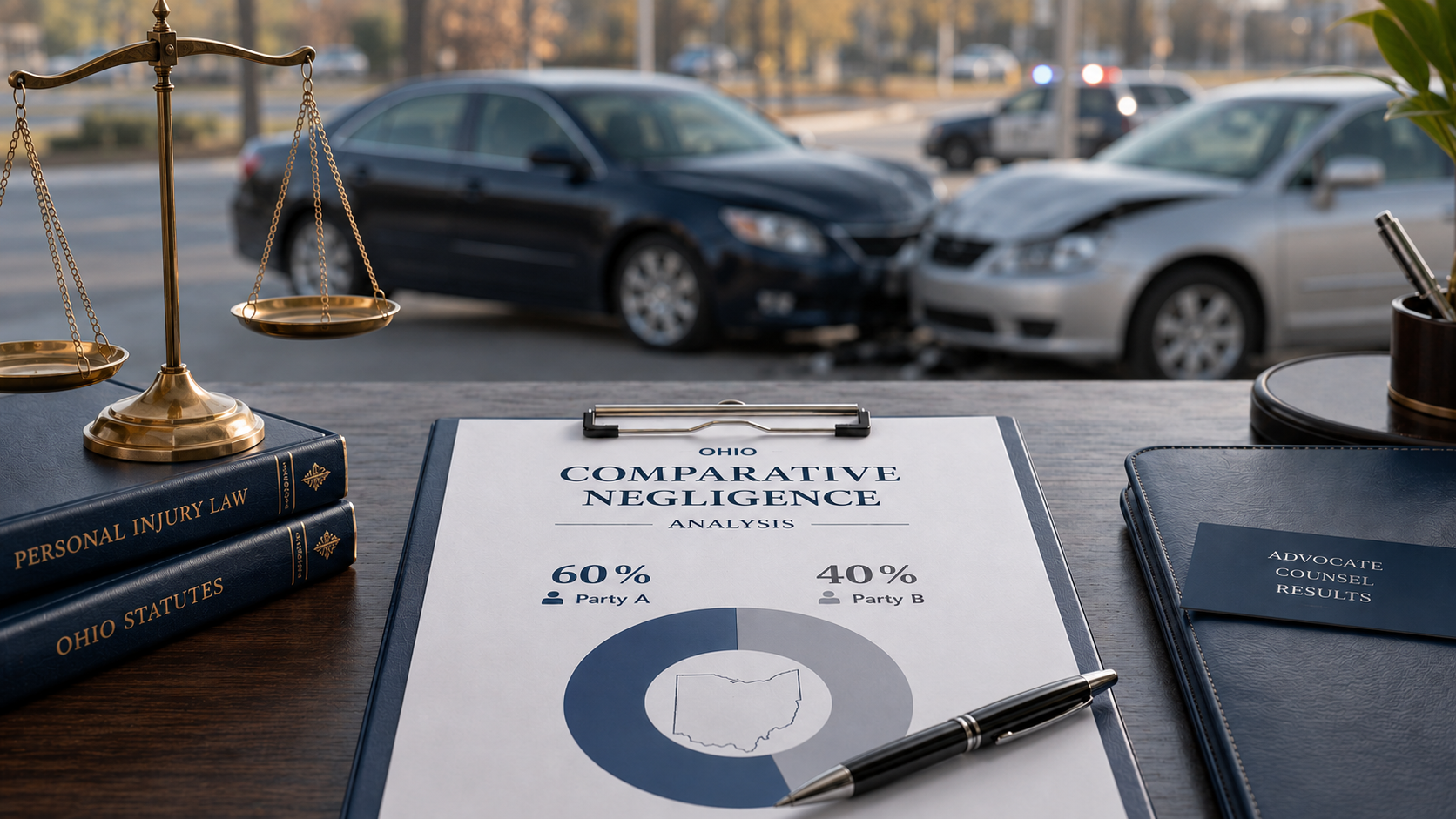
Ohio’s comparative negligence law can directly affect both your eligibility for compensation and the amount you may recover after an accident. Ohio applies a modified comparative negligence standard, which assigns each party a percentage of fault based on the available evidence. An injured person who is 50% or less responsible may still recover damages, but the award is reduced by that percentage of fault. A claimant found more than 50% responsible generally cannot recover compensation. Insurance companies may use this rule to shift blame and reduce claim values. Promptly preserving photographs, witness statements, medical records, police reports, and other evidence can help protect your rights and challenge unsupported allegations of fault.
Understanding Ohio’s Comparative Negligence Law
Ohio’s comparative negligence law is essential in determining liability. This law allocates fault among all parties involved. It ensures that responsibility matches the actual contribution to the accident. The law operates under a modified system. You can recover damages if found less than 51% at fault. The amount of compensation is reduced by your percentage of fault. This system encourages fair assessment. It requires analyzing actions leading to the incident. Every party involved shares responsibility proportionately. Key aspects of Ohio’s negligence law include:
- Allocation of fault among parties involved.
- Reduction of compensation based on fault percentage.
- Recovery possible if less than 51% at fault.
Understanding these elements is essential when navigating a personal injury claim under Ohio’s comparative negligence law. Because fault percentages can directly affect whether compensation is available and how much may be recovered, these cases often require careful legal analysis. An experienced personal injury attorney can explain how the law applies, evaluate the available evidence, address allegations of shared fault, and help build a well-supported claim.

The 51% Rule: What Ohio’s Comparative Negligence Law Means for Your Claim
Ohio’s 51% rule directly affects whether an injured person may recover compensation. Under Ohio’s comparative negligence law, a claimant may pursue damages only when they are 50% or less responsible for the accident. If fault reaches 51% or more, recovery is generally barred. When compensation is available, the award is reduced by the claimant’s percentage of fault. For example, a person found 30% responsible would receive 70% of the proven damages. Because insurers may attempt to shift blame, a careful review of police reports, witness statements, photographs, medical records, and expert opinions is essential. Legal counsel can help challenge unsupported fault allegations and protect the value of the claim.
- You must be under 51% at fault to claim damages.
- Compensation decreases based on your fault percentage.
- Understanding your fault is critical for claims success.
How Fault Is Determined in Ohio Personal Injury Cases
Determining fault in an Ohio personal injury case requires a careful review of both direct and circumstantial evidence. Under Ohio’s comparative negligence law, responsibility may be divided among multiple parties based on each party’s contribution to the accident. Police reports, witness statements, photographs, medical records, electronic data, and expert analysis can help establish how the incident occurred and who bears the greatest share of fault. Thorough evidence collection is essential because insurance companies and courts rely on these facts when assigning percentages of liability and evaluating available compensation. Key factors considered when determining fault include:
- Details of the accident circumstances.
- Testimonies from eyewitnesses.
- Expert opinions on the incident.
Impact of Comparative Negligence on Compensation
Ohio’s comparative negligence law directly affects how much compensation you receive. If found partially at fault, your compensation reduces proportionally to your degree of fault. This principle is crucial when negotiating settlements. For instance, if you’re 30% responsible, you’ll get 70% of the total damages awarded. This rule encourages a fair allocation of responsibility in personal injury claims. It ensures that each party bears the costs of their mistakes. Here’s how compensation adjustment works:
- 10% at fault: 90% of damages awarded.
- 25% at fault: 75% of damages awarded.
- 50% at fault: No compensation awarded if exceeding 50%.
Common Types of Cases Affected by Comparative Negligence in Ohio
Ohio’s comparative negligence law applies to many personal injury claims, including car accidents, truck collisions, slip and falls, and other incidents involving shared fault. The law affects how liability is assigned and whether an injured person may recover compensation. Understanding how these rules apply can help you evaluate your legal options and protect the value of your claim.
Common Case Types:
- Car Accidents: Typically involve shared fault situations.
- Slip and Falls: Property owners may share liability.
- Medical Malpractice: Errors are evaluated against patient actions.
Understanding the type of case you’re involved in helps navigate Ohio’s negligence law. Recognizing potential fault allocations aids in managing realistic expectations.

Evidence and Strategies to Prove Fault
Gathering and preserving evidence is critical in any negligence claim because it helps establish liability and supports the full value of your damages. Under Ohio’s comparative negligence law, the strength of the evidence may also influence how fault is divided among the parties and the amount of compensation an injured person can recover.
Essential Types of Evidence:
- Police Reports: Provide official accident details.
- Witness Statements: Offer third-party perspectives.
- Expert Testimony: Clarifies technical aspects of the incident.
Using strategic evidence can strengthen your position and counter attempts by defendants or insurance companies to shift blame. Under Ohio’s comparative negligence law, the percentage of fault assigned to each party can directly affect the compensation available. Carefully analyze, preserve, and present all relevant information to demonstrate the other party’s negligence and protect the value of your claim.
How Insurance Companies Use Comparative Negligence
Insurance companies often leverage comparative negligence to reduce payout amounts. They analyze fault distribution to argue for lower compensation. This tactic can catch claimants off guard.
Tactics Insurers Might Use:
- Emphasizing your share of fault.
- Highlighting unclear accident details.
- Using minor discrepancies in statements.
Understanding these insurance tactics can help you protect your claim and prepare for settlement negotiations. Knowledge of Ohio’s comparative negligence law is especially important because insurers may attempt to assign you a greater share of fault to reduce your compensation. Experienced legal guidance can challenge unsupported allegations, strengthen your negotiating position, and help prevent an unfairly reduced settlement.
Why Legal Representation Matters
Navigating Ohio’s negligence and comparative fault laws can be difficult, especially while recovering from a serious injury. An experienced personal injury attorney from Buckeye Law Group can investigate the accident, preserve critical evidence, identify every potentially liable party, and determine how fault may affect your right to compensation. Legal counsel can also document medical expenses, lost income, future treatment needs, pain and suffering, and other accident-related losses.
Insurance companies often dispute liability, minimize the severity of injuries, or pressure claimants into accepting inadequate settlements. Because Ohio’s comparative negligence law can reduce compensation based on an injured person’s percentage of fault, insurers may attempt to shift blame without sufficient evidence. An attorney can manage communications with adjusters, challenge unsupported fault allegations, consult qualified experts when necessary, and pursue compensation that reflects the full impact of the injury. When a fair resolution is not offered, legal counsel can prepare the claim for litigation and ensure it is filed within the applicable Ohio deadline. This guidance allows injured individuals to focus on recovery while protecting their legal rights and financial interests.
Frequently Asked Questions About Ohio Negligence Law
- What is the statute of limitations for personal injury claims? In Ohio, most personal injury lawsuits must be filed within two years of the date the injury occurred. However, shorter deadlines or limited exceptions may apply depending on the defendant, the claimant’s age, and when the injury was discovered. Because filing deadlines and Ohio’s comparative negligence law can directly affect an injured person’s ability to recover compensation, prompt legal review is important. An attorney can help preserve evidence, identify the applicable deadline, evaluate disputed fault, and protect your right to pursue a claim.
- Can I recover damages if I’m partially at fault? Yes. Ohio’s comparative negligence law generally allows an injured person to recover damages when they are 50% or less at fault. However, compensation is reduced by that person’s percentage of responsibility. A claimant found more than 50% at fault cannot recover, making a thorough investigation and strong liability evidence essential.
- How does evidence impact my case? Evidence can determine whether you prove negligence, challenge unfair allegations of fault, and document the full value of your losses. Under Ohio’s comparative negligence law, strong evidence may also help reduce the percentage of fault assigned to you. Police reports, photographs, video footage, witness statements, medical records, expert opinions, and wage documentation can strengthen an Ohio personal injury claim. Preserving this information early may prevent insurers from minimizing injuries, shifting blame, or denying fair compensation.
Protecting Your Rights Under Ohio Negligence Law
Ohio’s comparative negligence law can directly affect whether you recover compensation and how much your claim may be worth. Insurance companies may attempt to shift blame, minimize your injuries, or reduce the amount they pay. An experienced personal injury attorney can investigate the accident, preserve critical evidence, evaluate fault, and pursue the full compensation available under Ohio law. Contact Buckeye Law Group today for a free consultation. You pay no upfront attorney fees, and we only receive a fee if compensation is recovered on your behalf. Our team looks forward to providing you with the legal resources that you deserve.
How Uninsured Motorist Coverage Works After a Car Accident in Dayton, Ohio
A crash with an uninsured or underinsured driver can turn an ordinary Dayton commute into a confusing insurance problem. Uninsured motorist coverage helps protect you when the at-fault driver has
Whiplash Symptoms After a Cleveland Car Accident: What Injured Drivers Should Know
Whiplash is one of the most common neck injuries people worry about after a car accident, especially after a rear-end collision. For Cleveland drivers, the challenge is that auto accident
Uninsured Motorist Coverage in Ohio: What Cleveland Drivers Need to Know
Ohio requires drivers to prove financial responsibility, but that does not mean every driver on I-90, I-71, or a Cleveland surface street has enough insurance to pay for the harm
Rear-End Collisions in Columbus: Who Is at Fault and What Evidence Matters?
Rear-end crashes can look simple from the outside, but fault still depends on what each driver did, what the road conditions were, and what the evidence shows. In Columbus, Ohio,
How to Prove a Slip-and-Fall Injury Claim in Cincinnati Ohio
A slip-and-fall injury claim in Cincinnati, Ohio, usually turns on proof: what caused the fall, who controlled the property, what the owner or occupier knew or should have known, and
What to Do After a Truck Accident in Cleveland, Ohio: A Step-by-Step Guide
A serious truck crash can leave you shaken, injured, and unsure what to do next. This Cleveland truck accident guide walks you through the practical steps to protect your health,
Are Personal Injury Settlements Taxable in Ohio?
A personal injury settlement in Ohio is often not taxable when the money compensates you for physical injuries or physical sickness. But some parts of a settlement can be taxable,
Is It Worth Hiring a Cincinnati Car Accident Attorney After a Minor Crash?
A minor crash can feel like something you should be able to handle with a few phone calls and a repair estimate. Sometimes that is true. But if pain appears
Does Homeowners Insurance Cover Dog Bite Injuries in Cincinnati?
Homeowners insurance often provides coverage for dog bite injuries in Cincinnati, Ohio. However, coverage is not guaranteed. Whether an insurance policy covers a particular incident depends on its liability provisions,
Who Is Responsible for a Multi-Vehicle Car Accident on I-480 Near Cleveland?
A multi-vehicle crash on I-480 can feel chaotic from the first second: traffic stops, drivers swerve, several insurers get involved, and everyone has a different version of what happened. Responsibility
Buckeye Law Group represents people injured in auto accidents, slip and falls, workplace accidents and more in Ohio. Contact us today to learn more.
© 2026 Todos los derechos reservados | The Buckeye Law Group Inc. Políticade privacidad Mapa del sitio
Ubicaciones de las oficinas
- Akron Office 388 S Main St #400 Akron, OH 44311 (330) 426-0288
- Cincinnati Office 201 E 5th St Ste 1910 Cincinnati, OH 45202 (513) 547-2445
- Cleveland Office 127 Public Square Ste 1540 Cleveland, OH 44114 (216) 677-5490
- Columbus Office 20 E Broad St Suite 300 Columbus, OH 43215 (614) 482-3793
- Dayton Office 70 Birch Alley Ste 240 Dayton, OH 45440 (937) 884-4474
- Euclid Office 25701 N Lakeland Blvd Suite 113-C, Cleveland, OH 44132 (216) 405-2626
- Mansfield Office 305 E Main St Ste 6A, Mansfield, OH 44904 (567) 210-2606
- Findlay Office 7430 Timberstone Dr unit 101a, Findlay, OH 45840 419-873-5119
- Mentor Office 7537 Mentor Ave Ste 101, Mentor, OH 44060 (440) 306-3536
- Middletown Office 300 N Main St #400, Middletown, OH 45042 (326) 800-9150
- Parma Office 1257 Rockside Rd #A, Parma, OH 44131 (216) 279-1664
- Springfield Office 2100 E High St Ste TL3, Springfield, OH 45505 (937) 806-5791
- Toledo Office 3950 Sunforest Ct Ste 200, Toledo, OH 43623 (567) 483-3883
- Westlake Office 26404 Center Ridge Rd Ste B2, Westlake, OH 44145 216-247-0565
- Whitehall Office 5340 E Main St Ste 203, Whitehall, OH 43213 (380) 257-5206
- Youngstown Office 306 Churchill Hubbard Rd, Youngstown, OH 44505 (234) 225-0683
Contáctenos
© 2026 Todos los derechos reservados | The Buckeye Law Group Inc. Políticade privacidad Mapa del sitio