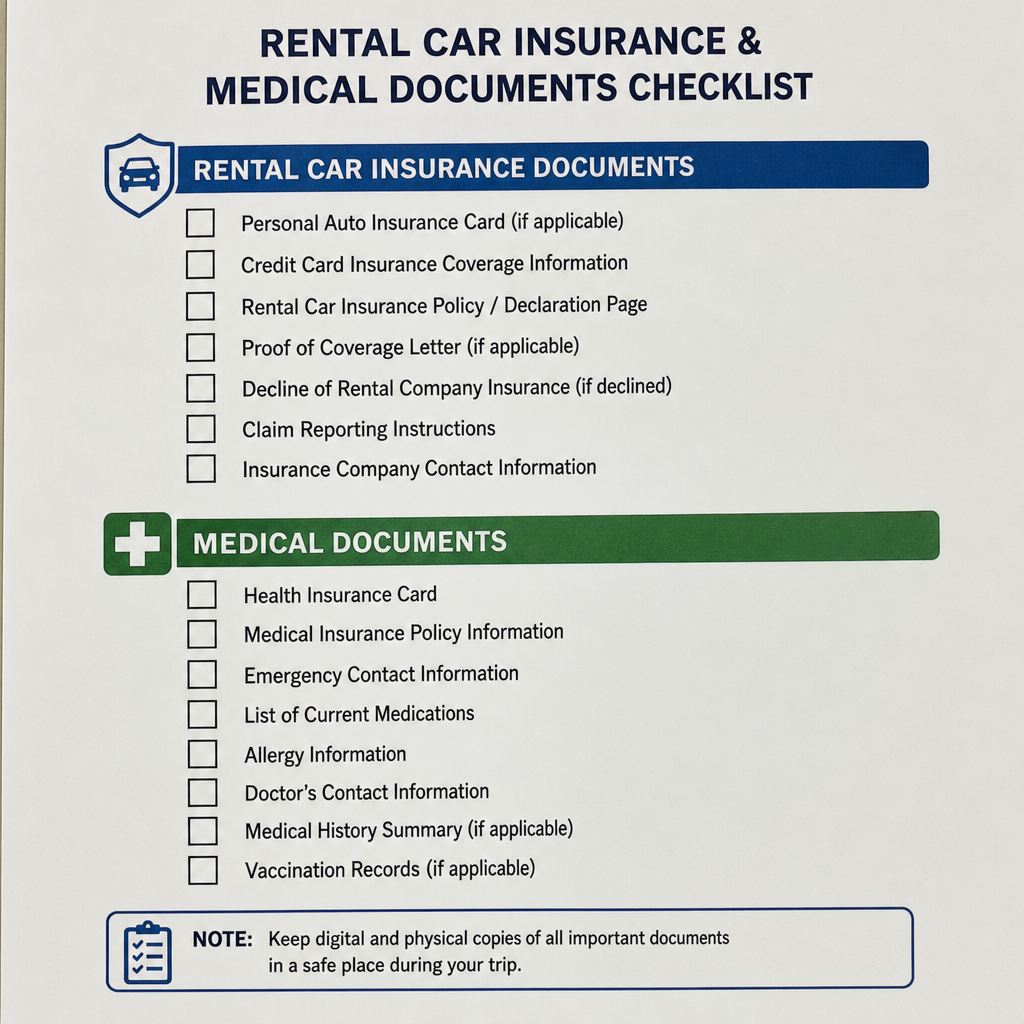
A rental car crash can turn into an insurance maze quickly, especially when someone is injured. After a Columbus rental car accident, the documents that matter most are the ones that show who was involved, which policies may apply, what the rental agreement required, and how your injuries developed after the collision. This guide explains how to organize those records, understand possible coverage layers, and avoid common claim mistakes.
Call (614) 482-3793 or request a complimentary consultation with a Columbus rental car accident attorney at Buckeye Law Group.
Which insurance documents matter first?
The most important insurance documents are the police crash report, every driver’s insurance information, the rental agreement, your personal auto policy, any rental counter protection paperwork, credit card benefit terms, and medical records connected to the injury. Together, these records help show fault, confirm available rental car coverage, and support the value of your injury claim. Ohio requires drivers to maintain proof of financial responsibility, and proof may need to be shown at accident scenes, traffic stops, or inspections.
Start by saving the documents in one folder, digital and physical if possible. A rental car claim often involves more than one insurer, so you may need to send the same records to your own insurer, the rental company, the at-fault driver’s carrier, and possibly a credit card benefits administrator. Keeping the paperwork organized from day one makes it easier to answer questions without guessing or accidentally giving inconsistent information.
The coverage layers behind a rental car injury claim
In a typical Columbus rental car accident, insurance follows fault first, then policy language. If another driver caused the crash, that driver’s liability insurance is usually the first place to look for injury compensation. If you caused the crash, your own liability coverage, the rental company’s offered protection, or another applicable policy may become important, depending on what you purchased and what your documents say.
Ohio uses a comparative fault system. In general, an injured person’s recovery can be reduced by their share of fault, and recovery may be barred if their fault is greater than the combined fault of the other responsible parties. That makes evidence especially important, because a small shift in the fault argument can affect the claim’s value.
Personal auto insurance
Your personal auto policy may extend some coverage to a rental vehicle, but you should never assume the details. Look for the declarations page, liability limits, collision and comprehensive coverage, medical payments coverage, and uninsured or underinsured motorist coverage. If you already carry Columbus car insurance, your policy may define when insurance for rentals applies, whether the rental must be temporary, and whether business travel or out-of-state use changes the analysis.
Rental company protection
Rental companies often offer car rental protection at the counter, but the names can be confusing. A collision damage waiver may help with damage to the rental vehicle, yet it is usually a waiver of the company’s right to charge you for certain vehicle damage rather than broad injury insurance. Supplemental liability protection, personal accident coverage, and personal effects coverage provide different types of protection. For that reason, the signed rental agreement, coverage selections, and any receipts for optional add-ons should be preserved and reviewed carefully when evaluating the insurance available after a rental car accident.
Credit card rental benefits
Some credit cards offer rental car coverage when the rental is paid with that card and the renter declines certain rental company protections. These benefits often focus on physical damage to the rental vehicle, not injury compensation. The benefit guide may also include exclusions, reporting deadlines, vehicle restrictions, country restrictions, and requirements to submit the rental agreement and repair documents.
Other driver or third-party coverage
If another driver hit your rental car, their liability policy may be central to your injury claim. If that driver has no insurance or not enough coverage, your own uninsured or underinsured motorist coverage may matter. Ohio’s minimum required auto insurance is commonly summarized as $25,000 for bodily injury or death of one person, $50,000 for two or more people, and $25,000 for property damage, so serious injuries can exceed available limits.

Document checklist for injured renters
Use this checklist to build a claim file before memories fade or paperwork disappears:
- Police Crash Report: Get the report number at the scene if possible, then request the final report when available.
- Photos and Videos: Capture vehicle positions, license plates, damage, traffic signals, skid marks, road conditions, and visible injuries.
- Driver and Witness Information: Save names, phone numbers, addresses, license numbers, plate numbers, and insurance cards.
- Rental Agreement: Keep the full contract, not just the receipt. Include pages showing accepted or declined protection.
- Personal Auto Policy: Save the declarations page and any endorsement discussing rental car coverage, liability, medical payments, or uninsured motorist benefits.
- Credit Card Benefit Guide: Download the guide that was active on the rental date, plus proof the rental was charged to that card.
- Medical Records and Bills: Keep emergency room paperwork, diagnosis notes, imaging orders, prescriptions, therapy referrals, and receipts.
- Lost Income Records: Save pay stubs, employer notes, schedules, and any work restriction documentation.
- Communications Log: Track every call, email, claim number, adjuster name, and deadline.
This list may feel detailed, but each item answers a practical insurance question. Who caused the crash? Which contract controlled the rental? Which policy had coverage on the date of loss? What injuries were diagnosed, and how did they affect daily life and work?

How do different rental car coverages compare?
Rental car insurance terms overlap, but they do not all protect you the same way. The table below gives a practical way to sort the common coverage types before you speak with an adjuster.
| Coverage or Document | What it May Help With | What to Verify |
|---|---|---|
| Personal auto liability | Injuries or damage you cause to others | Limits, exclusions, and whether rentals are covered |
| Collision/comprehensive on your policy | Damage to the rental vehicle | Deductible and whether coverage transfers to rentals |
| Collision damage waiver | Rental company vehicle damage charges | Exclusions, fees, and whether the waiver was accepted |
| Supplemental liability protection | Added liability protection for claims against you | Limit amount and who is insured |
| Credit card rental benefit | Often rental vehicle damage or theft | Whether it is primary or secondary and claim deadlines |
| Medical payments coverage | Certain medical bills regardless of fault | Covered people, limits, and coordination with health insurance |
| Uninsured/underinsured motorist | Injuries caused by drivers with no or low coverage | Policy limits, notice rules, and consent-to-settle requirements |
This comparison is not a substitute for reading the policy. Two people can rent the same type of car in Columbus and have very different outcomes because one used a credit card benefit, one bought counter protection, and one relied only on a personal policy.
Steps to protect your injury claim after the crash
What you do in the first hours and days after a rental crash can shape the entire claim. Take these steps when you can do so safely:
- Call 911 and Request Medical Help if Needed: A police report and prompt medical evaluation create important records.
- Exchange Complete Information: Photograph insurance cards, driver’s licenses, plates, and the rental car registration if available.
- Document the Scene Before Vehicles Move: If safety requires moving, take photos as soon as possible afterward.
- Notify the Rental Company: Follow the accident reporting instructions in the rental agreement.
- Notify Your Insurer: Even if another driver appears at fault, your policy may require timely notice.
- Contact Credit Card Benefits if Applicable: Many card programs impose strict reporting and document deadlines.
- Avoid Recorded Statements Until Prepared: Be truthful, but do not guess about speed, distance, injuries, or fault.
- Continue Medical Care: Gaps in treatment are often used to argue that injuries were minor or unrelated.
These steps are especially important when several insurers are involved. One company may focus on vehicle damage, another on liability, and another on medical bills. Clear documentation keeps the claim from being decided by assumptions.
Insurance adjusters look for gaps
After a Columbus rental car accident, adjusters may ask reasonable questions, but they are also looking for reasons to reduce or deny payment. They may argue that treatment was delayed, that symptoms came from a prior condition, that the rental driver accepted responsibility, or that another policy should pay first. This is why your timeline matters.
Create a simple chronology that starts before the trip. Include when you rented the car, when the collision happened, when pain began, when you first sought care, and how symptoms affected work, driving, sleep, childcare, or daily tasks. Avoid exaggeration. A consistent, specific record is stronger than dramatic language. Also be careful with quick settlement offers. Early offers may arrive before the full injury picture is clear, especially if you are still waiting on imaging, specialist appointments, or therapy. Once a release is signed, it may end the claim even if symptoms worsen later.
When legal help becomes important
You should consider speaking with a lawyer if you suffered more than minor injuries, fault is disputed, the at-fault driver is uninsured or underinsured, multiple policies may apply, or an adjuster pressures you to settle quickly. Legal help can also be valuable when the rental company claims you owe vehicle damage charges while you are still dealing with an injury claim. A local Ohio lawyer can review the rental agreement, personal policy, car hire insurance documents, credit card benefits, and available liability coverage together. That bigger picture matters because insurers may point at one another instead of clearly explaining who should pay. If your medical bills, missed work, or long-term symptoms are significant, getting advice early can help preserve evidence and prevent avoidable mistakes.
Build a Complete Record After a Columbus Rental Car Accident
The right documents can make a confusing rental car claim much easier to manage. After a crash, focus on proof of fault, proof of coverage, proof of injury, and proof of financial loss. In Columbus, where rental car coverage may involve your own policy, rental company products, credit card benefits, and another driver’s insurance, the safest approach is to collect everything and review each layer carefully. If you are injured, do not rely on a counter receipt or a single insurance card to tell the whole story. Build a complete file, get medical care, follow reporting deadlines, and ask for legal guidance when the claim becomes complicated.
Call (614) 482-3793 or request a complimentary consultation with a Columbus rental car accident attorney at Buckeye Law Group.
*This article provides general information about Columbus rental car accidents for educational purposes and is not legal advice for your specific situation. Reading this article or contacting Buckeye Law Group does not, by itself, create an attorney-client relationship. Rental car accident claims can involve multiple sources of insurance coverage, including the rental company, your personal auto policy, credit card benefits, and other drivers’ insurance. Evaluating a claim requires a careful review of the crash, available evidence, applicable insurance policies, Ohio law, and relevant filing deadlines. Consult a qualified Ohio personal injury attorney for guidance regarding your rights and legal options. Every case is different, and prior results do not guarantee a similar outcome.*
Injured in a Columbus Rental Car Accident? Which Insurance Documents Matter
A rental car crash can turn into an insurance maze quickly, especially when someone is injured. After a Columbus rental car accident, the documents that matter most are the ones
Dog Bite at a Columbus Home or Apartment What Information Should You Preserve
A dog bite in a home, rental unit, hallway, courtyard, or apartment complex can become both a medical emergency and a legal problem within minutes. The information you preserve immediately
Pain That Appears After a Columbus Car Accident Documenting Symptoms and Treatment
Pain after a crash does not always show up at the scene. Many people walk away from a Columbus auto accident feeling shaken but “mostly fine,” only to wake up
Do I Need a Lawyer After a Car Accident in Columbus Ohio?
A car accident in Columbus can turn into a legal and financial problem long before you feel ready to deal with paperwork, phone calls, and medical bills. You may not
What to Do if the Police Report Is Wrong After a Columbus Car Accident
Finding an error in your police report can add uncertainty to an already difficult situation. You may worry that an incorrect diagram, missing witness, or inaccurate statement will affect your
The Insurer Blames You for a Columbus Motorcycle Crash What Evidence Matters
When an insurer says the rider caused a Columbus motorcycle crash, that is not the end of the claim. Fault can be challenged with the right records, careful crash scene
Akron Truck Accident Attorney: Protecting Your Rights After a Serious Collision
A serious truck crash can leave you managing medical treatment, missed work, vehicle damage, and calls from insurance companies. An Akron truck accident attorney can investigate the collision, identify potentially
Where Serious Crashes Occur in Columbus: A Data-Driven Guide to Local Roadway Risks
Understanding where serious crashes occur in Columbus can help you recognize roadway risks before your next trip. This guide draws on publicly available local crash data and safety reports to
Pedestrian Accident Near The University of Akron: What to Do and How to Protect Your Rights
A pedestrian accident near The University of Akron can interrupt your education, work, and daily life without warning. You may face medical bills, missed classes, and questions about who will
Is Ohio a No-Fault State for Car Accidents?
Ohio is not a no-fault state for car accidents. Ohio uses an at-fault, or tort, system, which means the person who caused the crash is generally responsible for the resulting
Buckeye Law Group represents people injured in auto accidents, slip and falls, workplace accidents and more in Ohio. Contact us today to learn more.
© 2026 Todos los derechos reservados | The Buckeye Law Group Inc. Políticade privacidad Mapa del sitio
Ubicaciones de las oficinas
- Akron Office 388 S Main St #400 Akron, OH 44311 (330) 426-0288
- Cincinnati Office 201 E 5th St Ste 1910 Cincinnati, OH 45202 (513) 547-2445
- Cleveland Office 127 Public Square Ste 1540 Cleveland, OH 44114 (216) 677-5490
- Columbus Office 20 E Broad St Suite 300 Columbus, OH 43215 (614) 482-3793
- Dayton Office 70 Birch Alley Ste 240 Dayton, OH 45440 (937) 884-4474
- Euclid Office 25701 N Lakeland Blvd Suite 113-C, Cleveland, OH 44132 (216) 405-2626
- Mansfield Office 305 E Main St Ste 6A, Mansfield, OH 44904 (567) 210-2606
- Findlay Office 7430 Timberstone Dr unit 101a, Findlay, OH 45840 419-873-5119
- Mentor Office 7537 Mentor Ave Ste 101, Mentor, OH 44060 (440) 306-3536
- Middletown Office 300 N Main St #400, Middletown, OH 45042 (326) 800-9150
- Parma Office 1257 Rockside Rd #A, Parma, OH 44131 (216) 279-1664
- Springfield Office 2100 E High St Ste TL3, Springfield, OH 45505 (937) 806-5791
- Toledo Office 3950 Sunforest Ct Ste 200, Toledo, OH 43623 (567) 483-3883
- Westlake Office 26404 Center Ridge Rd Ste B2, Westlake, OH 44145 216-247-0565
- Whitehall Office 5340 E Main St Ste 203, Whitehall, OH 43213 (380) 257-5206
- Youngstown Office 306 Churchill Hubbard Rd, Youngstown, OH 44505 (234) 225-0683
Contáctenos
© 2026 Todos los derechos reservados | The Buckeye Law Group Inc. Políticade privacidad Mapa del sitio