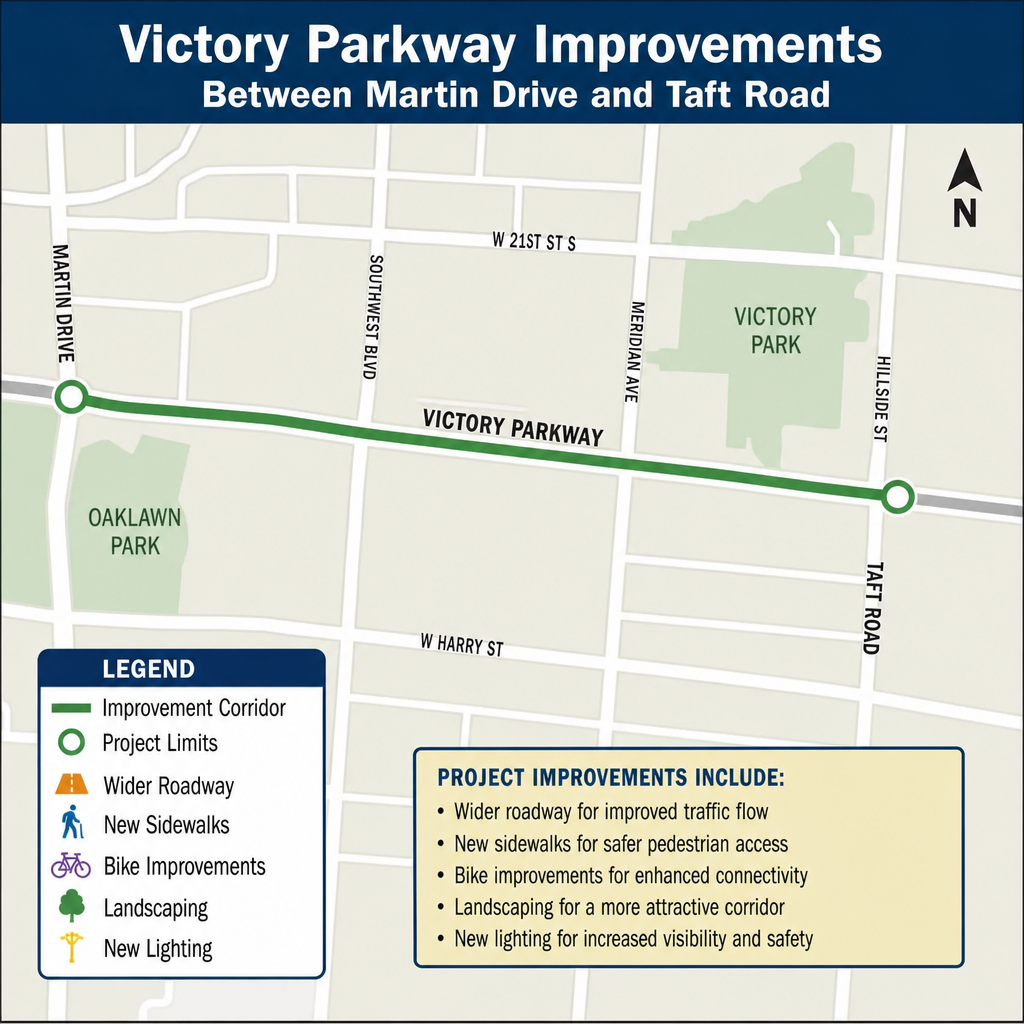
Cincinnati’s Victory Parkway Improvement Project represents a significant investment in roadway safety, pedestrian accessibility, and transportation infrastructure. Overseen by the Cincinnati Department of Transportation & Engineering (DOTE), the project includes roadway resurfacing, redesigned pedestrian crossings, dedicated bicycle facilities, and rehabilitation of the Park Avenue Bridge. With construction underway in 2026 and bridge improvements scheduled to continue through 2027, residents, motorists, pedestrians, and cyclists should understand how these infrastructure changes may affect traffic patterns, roadway access, and travel conditions. This guide examines the planned improvements, anticipated construction impacts, and practical safety considerations for those traveling along Victory Parkway and through surrounding Cincinnati neighborhoods. (cincinnati-oh.gov)
Call (513) 547-2445 or request a free consultation to speak with an experienced Cincinnati auto accident attorney at Buckeye Law Group today.
What improvements are coming to Victory Parkway?
The first phase covers approximately one mile between Martin Drive and William H. Taft Road. Its central change is a repaved roadway with one travel lane in each direction and a center turn lane, accompanied by pedestrian, bicycle, lighting, and intersection improvements. Together, these changes aim to make the corridor work better for people traveling through Walnut Hills, East Walnut Hills, and Eden Park. (cincinnati-oh.gov)
The planned improvements include:
- More Visible Crossings: Raised crosswalks at Luray Avenue and Krohn Conservatory, plus curb extensions at several intersections.
- Better Walking Connections: New or widened sidewalks along portions of Eden Park Drive and Victory Parkway.
- Bicycle Space: One-way bike lanes on both sides between Taft Road and Park Avenue.
- Intersection Changes: A redesigned Luray Avenue/Eden Park Drive intersection and an all-way stop at Martin Drive/Eden Park Drive.
- Lighting & Parking: New streetlights and additional on-street parking near Krohn Conservatory.
- Resurfacing With An Environmental Feature: Pavement incorporating titanium dioxide, described by the city as a smog-eating additive. (wvxu.org)
Safer street design means more than fresh pavement
These Cincinnati road improvements change how people encounter one another, not just the condition of the asphalt. A center turn lane gives left-turning drivers somewhere to wait outside the through lane. Federal Highway Administration guidance identifies that separation as a way to reduce conflicts involving vehicles stopped to turn. (highways.fhwa.dot.gov)
Curb extensions bring the sidewalk edge farther into the roadway at selected locations. That shortens the crossing distance and helps drivers see people waiting to cross. Raised crosswalks serve a different purpose: their approach ramps encourage slower driving while elevating pedestrians into a more visible position. (highways.dot.gov)
For someone walking with children or moving more slowly, less time crossing the street is a meaningful benefit. Still, treat the design as support for careful travel, not a substitute for it. Drivers should approach crossings ready to yield, and pedestrians should check for turning vehicles before stepping into the roadway. (nhtsa.gov)
The lane arrangement also deserves realistic expectations. Road diets can improve traffic operations by separating turning movements, but that does not guarantee an unchanged commute at every hour. Judge the finished layout separately from construction conditions, when temporary shifts and work activity may affect traffic. (highways.dot.gov)
When will construction happen, and what access remains?
DOTE’s detailed schedule says Park Avenue Bridge work began in late May 2026 and will continue through the end of 2027. West-side curb and sidewalk work is scheduled for the remainder of 2026, followed by east-side work around March 2027 after a winter break. Dates remain tentative. (cincinnati-oh.gov)
| Work Area | Published Schedule | Access Information |
|---|---|---|
| Eden Park Drive/Luray Avenue | June 15 through mid-July 2026 was the scheduled reconstruction window | Check current notices rather than assuming that earlier restrictions remain |
| Park Avenue Bridge | Late May 2026 through the end of 2027 | Traffic patterns vary; pedestrian access remains on one side |
| West-side curbs and sidewalks | Remainder of 2026, proceeding south from Taft Road | Access to affected properties is to be maintained |
| East-side curbs and sidewalks | Expected to resume around March 2027, proceeding north from Martin Drive | Work follows the winter break |
These are construction windows, not a promise of identical restrictions throughout each period. Check DOTE’s project updates before an unfamiliar trip, particularly when arranging deliveries, appointments, or an accessible walking route. (cincinnati-oh.gov)
Bridge and bicycle changes need a closer look
The Park Avenue Bridge over Kemper Lane is receiving a replacement driving surface, new railings, and new streetlights. Plans also include 16-foot-wide shared-use paths on both sides for pedestrians and bicyclists. Those paths are a distinct element of the project, rather than simply another name for the on-street bicycle lanes. (wvxu.org)
For cyclists, that distinction matters when planning a route. A shared-use path accommodates people walking and riding together; a bike lane identifies bicycle space alongside motor traffic. Slow down around walkers on shared paths, and stay alert for vehicles turning across on-street bicycle space. (transportation.ohio.gov)
The on-street lanes will not be protected bike lanes. DOTE attributes that limitation to the street’s narrow width. It also says a crosswalk at Park Avenue is unsuitable because road curvature limits sight distance, an important reminder to use designated crossings rather than assume every improved intersection offers a crossing. (cincinnati-oh.gov)
A practical routine for traveling through the work zone
Construction can make a familiar route feel unfamiliar overnight. Ohio’s traffic safety guidance warns that narrowed lanes, changing alignments, equipment, and stopped vehicles require extra attention even when workers are not visible. Build your trip around the signs and conditions in front of you. (otso.ohio.gov)
Use this checklist before and during your trip:
- Check The Route Before Leaving: Review project notices and allow extra time instead of trying to recover lost minutes inside the work zone.
- Reduce Speed At The First Warning Signs: Leave room to respond to queues, lane shifts, and construction vehicles.
- Keep Lane Changes Deliberate: Follow posted merge instructions and avoid unnecessary weaving around slower traffic.
- Keep Your Attention Outside The Vehicle: Set navigation before driving and leave phone adjustments until safely stopped.
- Plan Crossings In Advance: When walking, follow designated pedestrian routing rather than cutting between barriers or equipment.
- Give Other Travelers Room: Expect people walking or cycling to need additional space where routes narrow. (otso.ohio.gov)
If you use a wheelchair, push a stroller, or travel with someone who needs a step-free route, consider confirming access before setting out. Reporting a specific location and obstruction is more useful than a general complaint about construction. Note the nearest intersection and which direction you were traveling; do not enter the work area to investigate.
The next phase and Cincinnati’s broader safety effort
Phase 2 is separate from the active southern-corridor work. It extends from Taft Road to Gilbert Avenue, with construction targeted for summer 2029. Proposed changes include intersection realignments, slip-lane removal, replacement LED lighting, and rebuilt signals. These remain planning proposals rather than completed improvements. (cincinnati-oh.gov)
For example, the city proposes consolidating the Yale and Alms intersections and removing slip lanes at MLK/Madison. The practical aim is fewer or shorter pedestrian crossings and clearer vehicle movements. DOTE lists a public-comment deadline of December 4, 2026, offering residents an opportunity to describe specific crossing or visibility concerns. (cincinnati-oh.gov)
Victory Parkway also fits Cincinnati’s corridor-wide safety approach: coordinate improvements across multiple blocks rather than address each location in isolation. Separately, the city’s traffic-calming program evaluates neighborhood requests using speeding, crash, equity, destination, and transit-ridership information. That provides context for the project, but it does not establish a measured crash reduction on Victory Parkway before construction is finished. (cincinnati-oh.gov)
After a collision, focus on safety and the facts
If a collision occurs, first address immediate danger and contact emergency services when needed. Ohio’s driver guidance instructs motorists to exchange contact and insurance information and notify the appropriate authorities. Avoid arguing about fault at the scene; the priority is helping people and documenting what happened. (publicsafety.ohio.gov)
If you are considering speaking with a Cincinnati car accident attorney, prepare a clear account of the location, travel direction, and temporary traffic arrangement. For an injury-related consultation with a Cincinnati personal injury attorney, ask what records the lawyer needs to evaluate your circumstances. Do not assume that construction alone establishes responsibility or that a redesigned street prevents every collision.
Cincinnati Resources for Victory Parkway Construction, Traffic Safety, and Accident Reports
Residents traveling along Victory Parkway through Walnut Hills, East Walnut Hills, and Eden Park have access to several official Cincinnati and Hamilton County resources. Whether checking construction updates, reporting roadway hazards, or obtaining records following a collision, knowing which local agency to contact can help residents make informed decisions.
Cincinnati Department of Transportation & Engineering (DOTE)
The Cincinnati Department of Transportation & Engineering provides project information, construction schedules, and planned improvements along Victory Parkway between Martin Drive and William H. Taft Road.
Residents can review updates concerning Park Avenue Bridge rehabilitation, sidewalk construction, and roadway modifications. Because construction schedules may change, travelers should consult official announcements before planning routes through affected areas.
Cincinnati 311: Reporting Roadway and Sidewalk Hazards
Cincinnati residents can use 311Cincy to report non-emergency roadway concerns, including damaged sidewalks, street obstructions, and accessibility barriers.
- Phone: 311 or (513) 765-1212
- Online: 311Cincy service requests
When reporting a concern near Victory Parkway, identify the nearest intersection, describe the obstruction, and provide the direction of travel. The city also accepts reports involving construction sites without accessible alternative pedestrian routes.
Cincinnati Police Department: Accident Reports and Local Assistance
The Cincinnati Police Department’s District 2 serves Walnut Hills and East Walnut Hills, among other local neighborhoods.
- District 2 Address: 3295 Erie Avenue, Cincinnati, OH 45208
- District 2 Phone: (513) 979-4400
- Non-Emergency Assistance: (513) 765-1212
- Emergency Assistance: 911
Individuals seeking an official Cincinnati police accident report can contact the department’s Records Section at 801 Linn Street or call (513) 352-3559. Requests should include the collision date, location, and names of the individuals involved.
Ohio Department of Public Safety: Crash Report Search
The Ohio Crash Report Search allows individuals to locate crash information using details such as the crash number, date, county, or investigating agency. Reports may take up to six weeks to appear. The state’s online copies are provided for statistical purposes and are not official records. For an official report or supplemental documentation, contact the investigating law enforcement agency.
Hamilton County Common Pleas
Personal injury lawsuits arising from Cincinnati motor vehicle accidents may involve the Hamilton County court system, depending on jurisdiction and the circumstances of the case.
The Hamilton County Court of Common Pleas, General Division, hears civil cases, including personal injury lawsuits. However, the Hamilton County Clerk of Courts, Civil Division, is responsible for maintaining the official records associated with those proceedings.
- Address: 1000 Main St, Unit 315, Cincinnati, OH 45202
- Phone: (513) 946-5638
- Office hours: Monday–Friday, 8:00 a.m.–4:00 p.m.
Court records can help individuals understand filed claims and case proceedings. However, obtaining a police report or reviewing court records does not establish liability or determine whether compensation is available. These resources give Cincinnati residents practical starting points for navigating Victory Parkway construction, documenting traffic safety concerns, and understanding procedures following a motor vehicle collision.
Navigating Victory Parkway Construction Safely: Key Considerations for Cincinnati Drivers, Pedestrians, and Cyclists
As Cincinnati’s Victory Parkway Improvement Project progresses, motorists, pedestrians, and cyclists should remain attentive to changing traffic patterns, temporary lane restrictions, and designated pedestrian crossings. Before traveling through the construction corridor, review the latest updates from Cincinnati’s Department of Transportation & Engineering (DOTE), identify accessible routes, and allow additional travel time. Although the planned roadway improvements are intended to enhance traffic safety, pedestrian accessibility, and bicycle connectivity, infrastructure modifications alone cannot eliminate the risk of collisions. Drivers must continue exercising reasonable care, obeying posted traffic controls, and remaining alert to pedestrians, cyclists, and construction activity. Understanding current work-zone conditions and adapting to the completed roadway design can help residents and commuters navigate Victory Parkway more safely.
Call (513) 547-2445 or request a free consultation today to speak with an experienced Cincinnati auto accident attorney at Buckeye Law Group.
Legal Disclaimer: This article is provided by Buckeye Law Group for general educational and informational purposes and does not constitute individualized legal or medical advice. The content discusses Cincinnati, Ohio, roadway safety initiatives, Victory Parkway infrastructure improvements, local traffic conditions, motor vehicle accidents, and legal considerations involving personal injury claims. References to Ohio traffic laws, accident reporting procedures, insurance coverage, negligence, potential compensation, and filing deadlines are intended to help Cincinnati and Hamilton County residents better understand their rights and available resources following an auto accident. Every personal injury case involves unique circumstances, and determining liability or eligibility for compensation requires an evaluation of the available evidence, applicable Ohio laws, and individual facts. Reading this article or contacting Buckeye Law Group’s Cincinnati auto accident attorneys does not, by itself, establish an attorney-client relationship. Individuals seeking guidance about their specific circumstances should consult a qualified Ohio personal injury attorney. Past case results do not guarantee or predict future outcomes.
Cincinnati’s Victory Parkway Safety Improvements: What Drivers and Pedestrians Should Know in 2026
Cincinnati’s Victory Parkway Improvement Project represents a significant investment in roadway safety, pedestrian accessibility, and transportation infrastructure. Overseen by the Cincinnati Department of Transportation & Engineering (DOTE), the project includes
What Greater Akron’s latest crash data reveals about roadway safety and serious injuries
Greater Akron’s latest regional crash report shows fewer crashes overall, but serious injuries remain a concern. The Akron Metropolitan Area Transportation Study’s 2022–2024 analysis separates encouraging declines in fatalities from
Why Is St. Clair Avenue One of Cleveland’s Most Dangerous Roads? Crash Data and Safety Improvements Explained
St. Clair Avenue’s danger comes into focus when you look beyond fender-benders to deaths and life-changing injuries. Cleveland reports at least 14 people killed and 79 seriously injured between East
Dayton’s 2026 Road Safety Action Plan: What Local Crash Data Reveals About Dangerous Driving Conditions
The City of Dayton, Ohio, has adopted a comprehensive Safe Streets and Roads for All (SS4A) Safety Action Plan to address traffic fatalities, serious injuries, and hazardous roadway conditions throughout
Cleveland’s 2026 Daylight Saving Time Change: Earlier Darkness, Pedestrian Safety, and Ohio Traffic Laws
Cleveland’s daylight saving time ends on Sunday, November 1, 2026, at 2:00 a.m., when clocks move backward one hour and Northeast Ohio returns to Eastern Standard Time (EST). While the
Halloween Weekend 2026 in Dayton: Impaired Driving Risks, Free Rideshare Resources, and Ohio Accident Laws
Halloween weekend brings celebrations throughout Dayton, Ohio, but increased nighttime traffic, pedestrians, and alcohol-related activities also create important safety concerns. Whether you are attending an event in downtown Dayton, visiting
Halloween Pedestrian Safety Near Ohio State University: Columbus Crosswalk Laws, Accident Risks, and What to Do If You’re Injured
Halloween weekend brings students, residents, and visitors throughout Columbus, particularly around The Ohio State University and the surrounding University District. As people travel between campus, restaurants, residential neighborhoods, and entertainment
Can You Pursue Compensation for a Traumatic Brain Injury After an Ohio Car Accident?
A traumatic brain injury sustained in an Ohio car accident can have significant and lasting consequences for an individual’s health, financial stability, and quality of life. When another party’s negligence
How Long After a Car Accident Can Concussion Symptoms Appear?
A concussion can cause symptoms immediately after a crash or several hours or days later. Sometimes a person first recognizes changes in sleep, mood, concentration, or memory a week or
Not at Fault in a Columbus Car Accident? What Ohio Drivers Should Do Next
Following a car accident in Columbus, Ohio, that may have been caused by another driver’s negligence, taking appropriate steps can help protect your health, preserve important evidence, and safeguard your

Buckeye Law Group represents people injured in auto accidents, slip and falls, workplace accidents and more in Ohio. Contact us today to learn more.
© 2026 Todos los derechos reservados | The Buckeye Law Group Inc. Políticade privacidad Mapa del sitio
Ubicaciones de las oficinas
- Akron Office 388 S Main St #400 Akron, OH 44311 (330) 426-0288
- Cincinnati Office 201 E 5th St Ste 1910 Cincinnati, OH 45202 (513) 547-2445
- Cleveland Office 127 Public Square Ste 1540 Cleveland, OH 44114 (216) 677-5490
- Columbus Office 20 E Broad St Suite 300 Columbus, OH 43215 (614) 482-3793
- Dayton Office 70 Birch Alley Ste 240 Dayton, OH 45440 (937) 884-4474
- Euclid Office 25701 N Lakeland Blvd Suite 113-C, Cleveland, OH 44132 (216) 405-2626
- Mansfield Office 305 E Main St Ste 6A, Mansfield, OH 44904 (567) 210-2606
- Findlay Office 7430 Timberstone Dr unit 101a, Findlay, OH 45840 419-873-5119
- Mentor Office 7537 Mentor Ave Ste 101, Mentor, OH 44060 (440) 306-3536
- Middletown Office 300 N Main St #400, Middletown, OH 45042 (326) 800-9150
- Parma Office 1257 Rockside Rd #A, Parma, OH 44131 (216) 279-1664
- Springfield Office 2100 E High St Ste TL3, Springfield, OH 45505 (937) 806-5791
- Toledo Office 3950 Sunforest Ct Ste 200, Toledo, OH 43623 (567) 483-3883
- Westlake Office 26404 Center Ridge Rd Ste B2, Westlake, OH 44145 216-247-0565
- Whitehall Office 5340 E Main St Ste 203, Whitehall, OH 43213 (380) 257-5206
- Youngstown Office 306 Churchill Hubbard Rd, Youngstown, OH 44505 (234) 225-0683
Contáctenos
© 2026 Todos los derechos reservados | The Buckeye Law Group Inc. Políticade privacidad Mapa del sitio