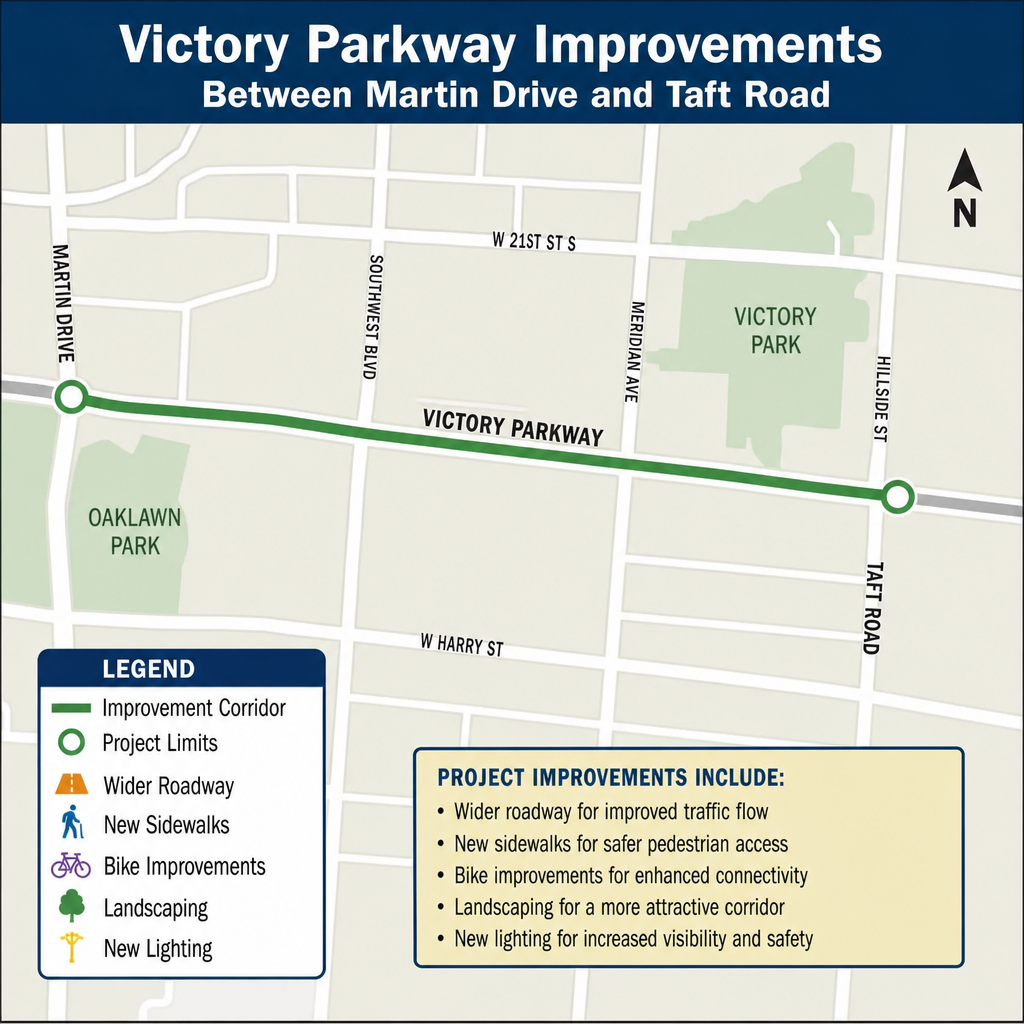
Cincinnati’s Victory Parkway Improvement Project represents a significant investment in roadway safety, pedestrian accessibility, and transportation infrastructure. Overseen by the Cincinnati Department of Transportation & Engineering (DOTE), the project includes roadway resurfacing, redesigned pedestrian crossings, dedicated bicycle facilities, and rehabilitation of the Park Avenue Bridge. With construction underway in 2026 and bridge improvements scheduled to continue through 2027, residents, motorists, pedestrians, and cyclists should understand how these infrastructure changes may affect traffic patterns, roadway access, and travel conditions. This guide examines the planned improvements, anticipated construction impacts, and practical safety considerations for those traveling along Victory Parkway and through surrounding Cincinnati neighborhoods. (cincinnati-oh.gov)
Call (513) 547-2445 or request a free consultation to speak with an experienced Cincinnati auto accident attorney at Buckeye Law Group today.
What improvements are coming to Victory Parkway?
The first phase covers approximately one mile between Martin Drive and William H. Taft Road. Its central change is a repaved roadway with one travel lane in each direction and a center turn lane, accompanied by pedestrian, bicycle, lighting, and intersection improvements. Together, these changes aim to make the corridor work better for people traveling through Walnut Hills, East Walnut Hills, and Eden Park. (cincinnati-oh.gov)
The planned improvements include:
- More Visible Crossings: Raised crosswalks at Luray Avenue and Krohn Conservatory, plus curb extensions at several intersections.
- Better Walking Connections: New or widened sidewalks along portions of Eden Park Drive and Victory Parkway.
- Bicycle Space: One-way bike lanes on both sides between Taft Road and Park Avenue.
- Intersection Changes: A redesigned Luray Avenue/Eden Park Drive intersection and an all-way stop at Martin Drive/Eden Park Drive.
- Lighting & Parking: New streetlights and additional on-street parking near Krohn Conservatory.
- Resurfacing With An Environmental Feature: Pavement incorporating titanium dioxide, described by the city as a smog-eating additive. (wvxu.org)
Safer street design means more than fresh pavement
These Cincinnati road improvements change how people encounter one another, not just the condition of the asphalt. A center turn lane gives left-turning drivers somewhere to wait outside the through lane. Federal Highway Administration guidance identifies that separation as a way to reduce conflicts involving vehicles stopped to turn. (highways.fhwa.dot.gov)
Curb extensions bring the sidewalk edge farther into the roadway at selected locations. That shortens the crossing distance and helps drivers see people waiting to cross. Raised crosswalks serve a different purpose: their approach ramps encourage slower driving while elevating pedestrians into a more visible position. (highways.dot.gov)
For someone walking with children or moving more slowly, less time crossing the street is a meaningful benefit. Still, treat the design as support for careful travel, not a substitute for it. Drivers should approach crossings ready to yield, and pedestrians should check for turning vehicles before stepping into the roadway. (nhtsa.gov)
The lane arrangement also deserves realistic expectations. Road diets can improve traffic operations by separating turning movements, but that does not guarantee an unchanged commute at every hour. Judge the finished layout separately from construction conditions, when temporary shifts and work activity may affect traffic. (highways.dot.gov)
When will construction happen, and what access remains?
DOTE’s detailed schedule says Park Avenue Bridge work began in late May 2026 and will continue through the end of 2027. West-side curb and sidewalk work is scheduled for the remainder of 2026, followed by east-side work around March 2027 after a winter break. Dates remain tentative. (cincinnati-oh.gov)
| Work Area | Published Schedule | Access Information |
|---|---|---|
| Eden Park Drive/Luray Avenue | June 15 through mid-July 2026 was the scheduled reconstruction window | Check current notices rather than assuming that earlier restrictions remain |
| Park Avenue Bridge | Late May 2026 through the end of 2027 | Traffic patterns vary; pedestrian access remains on one side |
| West-side curbs and sidewalks | Remainder of 2026, proceeding south from Taft Road | Access to affected properties is to be maintained |
| East-side curbs and sidewalks | Expected to resume around March 2027, proceeding north from Martin Drive | Work follows the winter break |
These are construction windows, not a promise of identical restrictions throughout each period. Check DOTE’s project updates before an unfamiliar trip, particularly when arranging deliveries, appointments, or an accessible walking route. (cincinnati-oh.gov)
Bridge and bicycle changes need a closer look
The Park Avenue Bridge over Kemper Lane is receiving a replacement driving surface, new railings, and new streetlights. Plans also include 16-foot-wide shared-use paths on both sides for pedestrians and bicyclists. Those paths are a distinct element of the project, rather than simply another name for the on-street bicycle lanes. (wvxu.org)
For cyclists, that distinction matters when planning a route. A shared-use path accommodates people walking and riding together; a bike lane identifies bicycle space alongside motor traffic. Slow down around walkers on shared paths, and stay alert for vehicles turning across on-street bicycle space. (transportation.ohio.gov)
The on-street lanes will not be protected bike lanes. DOTE attributes that limitation to the street’s narrow width. It also says a crosswalk at Park Avenue is unsuitable because road curvature limits sight distance, an important reminder to use designated crossings rather than assume every improved intersection offers a crossing. (cincinnati-oh.gov)
A practical routine for traveling through the work zone
Construction can make a familiar route feel unfamiliar overnight. Ohio’s traffic safety guidance warns that narrowed lanes, changing alignments, equipment, and stopped vehicles require extra attention even when workers are not visible. Build your trip around the signs and conditions in front of you. (otso.ohio.gov)
Use this checklist before and during your trip:
- Check The Route Before Leaving: Review project notices and allow extra time instead of trying to recover lost minutes inside the work zone.
- Reduce Speed At The First Warning Signs: Leave room to respond to queues, lane shifts, and construction vehicles.
- Keep Lane Changes Deliberate: Follow posted merge instructions and avoid unnecessary weaving around slower traffic.
- Keep Your Attention Outside The Vehicle: Set navigation before driving and leave phone adjustments until safely stopped.
- Plan Crossings In Advance: When walking, follow designated pedestrian routing rather than cutting between barriers or equipment.
- Give Other Travelers Room: Expect people walking or cycling to need additional space where routes narrow. (otso.ohio.gov)
If you use a wheelchair, push a stroller, or travel with someone who needs a step-free route, consider confirming access before setting out. Reporting a specific location and obstruction is more useful than a general complaint about construction. Note the nearest intersection and which direction you were traveling; do not enter the work area to investigate.
The next phase and Cincinnati’s broader safety effort
Phase 2 is separate from the active southern-corridor work. It extends from Taft Road to Gilbert Avenue, with construction targeted for summer 2029. Proposed changes include intersection realignments, slip-lane removal, replacement LED lighting, and rebuilt signals. These remain planning proposals rather than completed improvements. (cincinnati-oh.gov)
For example, the city proposes consolidating the Yale and Alms intersections and removing slip lanes at MLK/Madison. The practical aim is fewer or shorter pedestrian crossings and clearer vehicle movements. DOTE lists a public-comment deadline of December 4, 2026, offering residents an opportunity to describe specific crossing or visibility concerns. (cincinnati-oh.gov)
Victory Parkway also fits Cincinnati’s corridor-wide safety approach: coordinate improvements across multiple blocks rather than address each location in isolation. Separately, the city’s traffic-calming program evaluates neighborhood requests using speeding, crash, equity, destination, and transit-ridership information. That provides context for the project, but it does not establish a measured crash reduction on Victory Parkway before construction is finished. (cincinnati-oh.gov)
After a collision, focus on safety and the facts
If a collision occurs, first address immediate danger and contact emergency services when needed. Ohio’s driver guidance instructs motorists to exchange contact and insurance information and notify the appropriate authorities. Avoid arguing about fault at the scene; the priority is helping people and documenting what happened. (publicsafety.ohio.gov)
If you are considering speaking with a Cincinnati car accident attorney, prepare a clear account of the location, travel direction, and temporary traffic arrangement. For an injury-related consultation with a Cincinnati personal injury attorney, ask what records the lawyer needs to evaluate your circumstances. Do not assume that construction alone establishes responsibility or that a redesigned street prevents every collision.
Cincinnati Resources for Victory Parkway Construction, Traffic Safety, and Accident Reports
Residents traveling along Victory Parkway through Walnut Hills, East Walnut Hills, and Eden Park have access to several official Cincinnati and Hamilton County resources. Whether checking construction updates, reporting roadway hazards, or obtaining records following a collision, knowing which local agency to contact can help residents make informed decisions.
Cincinnati Department of Transportation & Engineering (DOTE)
The Cincinnati Department of Transportation & Engineering provides project information, construction schedules, and planned improvements along Victory Parkway between Martin Drive and William H. Taft Road.
Residents can review updates concerning Park Avenue Bridge rehabilitation, sidewalk construction, and roadway modifications. Because construction schedules may change, travelers should consult official announcements before planning routes through affected areas.
Cincinnati 311: Reporting Roadway and Sidewalk Hazards
Cincinnati residents can use 311Cincy to report non-emergency roadway concerns, including damaged sidewalks, street obstructions, and accessibility barriers.
- Phone: 311 or (513) 765-1212
- Online: 311Cincy service requests
When reporting a concern near Victory Parkway, identify the nearest intersection, describe the obstruction, and provide the direction of travel. The city also accepts reports involving construction sites without accessible alternative pedestrian routes.
Cincinnati Police Department: Accident Reports and Local Assistance
The Cincinnati Police Department’s District 2 serves Walnut Hills and East Walnut Hills, among other local neighborhoods.
- District 2 Address: 3295 Erie Avenue, Cincinnati, OH 45208
- District 2 Phone: (513) 979-4400
- Non-Emergency Assistance: (513) 765-1212
- Emergency Assistance: 911
Individuals seeking an official Cincinnati police accident report can contact the department’s Records Section at 801 Linn Street or call (513) 352-3559. Requests should include the collision date, location, and names of the individuals involved.
Ohio Department of Public Safety: Crash Report Search
The Ohio Crash Report Search allows individuals to locate crash information using details such as the crash number, date, county, or investigating agency. Reports may take up to six weeks to appear. The state’s online copies are provided for statistical purposes and are not official records. For an official report or supplemental documentation, contact the investigating law enforcement agency.
Hamilton County Common Pleas
Personal injury lawsuits arising from Cincinnati motor vehicle accidents may involve the Hamilton County court system, depending on jurisdiction and the circumstances of the case.
The Hamilton County Court of Common Pleas, General Division, hears civil cases, including personal injury lawsuits. However, the Hamilton County Clerk of Courts, Civil Division, is responsible for maintaining the official records associated with those proceedings.
- Address: 1000 Main St, Unit 315, Cincinnati, OH 45202
- Phone: (513) 946-5638
- Office hours: Monday–Friday, 8:00 a.m.–4:00 p.m.
Court records can help individuals understand filed claims and case proceedings. However, obtaining a police report or reviewing court records does not establish liability or determine whether compensation is available. These resources give Cincinnati residents practical starting points for navigating Victory Parkway construction, documenting traffic safety concerns, and understanding procedures following a motor vehicle collision.
Navigating Victory Parkway Construction Safely: Key Considerations for Cincinnati Drivers, Pedestrians, and Cyclists
As Cincinnati’s Victory Parkway Improvement Project progresses, motorists, pedestrians, and cyclists should remain attentive to changing traffic patterns, temporary lane restrictions, and designated pedestrian crossings. Before traveling through the construction corridor, review the latest updates from Cincinnati’s Department of Transportation & Engineering (DOTE), identify accessible routes, and allow additional travel time. Although the planned roadway improvements are intended to enhance traffic safety, pedestrian accessibility, and bicycle connectivity, infrastructure modifications alone cannot eliminate the risk of collisions. Drivers must continue exercising reasonable care, obeying posted traffic controls, and remaining alert to pedestrians, cyclists, and construction activity. Understanding current work-zone conditions and adapting to the completed roadway design can help residents and commuters navigate Victory Parkway more safely.
Call (513) 547-2445 or request a free consultation today to speak with an experienced Cincinnati auto accident attorney at Buckeye Law Group.
Legal Disclaimer: This article is provided by Buckeye Law Group for general educational and informational purposes and does not constitute individualized legal or medical advice. The content discusses Cincinnati, Ohio, roadway safety initiatives, Victory Parkway infrastructure improvements, local traffic conditions, motor vehicle accidents, and legal considerations involving personal injury claims. References to Ohio traffic laws, accident reporting procedures, insurance coverage, negligence, potential compensation, and filing deadlines are intended to help Cincinnati and Hamilton County residents better understand their rights and available resources following an auto accident. Every personal injury case involves unique circumstances, and determining liability or eligibility for compensation requires an evaluation of the available evidence, applicable Ohio laws, and individual facts. Reading this article or contacting Buckeye Law Group’s Cincinnati auto accident attorneys does not, by itself, establish an attorney-client relationship. Individuals seeking guidance about their specific circumstances should consult a qualified Ohio personal injury attorney. Past case results do not guarantee or predict future outcomes.
How Much Should an Insurance Company Pay for Injuries After a Car Accident?
After an Ohio car accident, an insurance company may offer a settlement before the full extent of your injuries, anticipated medical treatment, or long-term financial losses becomes clear. Ohio law
What Happens If an Insurance Company Won’t Offer a Fair Settlement After a Car Accident?
After an Ohio car accident, an insurance settlement offer may arrive while medical treatment continues and fault remains disputed. If the insurance company won’t offer a fair settlement, you do
Toledo’s Summit Street Cycle Track: What the 2026–2027 Redesign Means for Cyclist and Pedestrian Safety
Toledo’s Summit Street Cycle Track project is a two-phase reconstruction intended to make a section of North Summit Street safer and more connected for people walking and bicycling. In 2026,
Greater Dayton’s 2026 E-Bike and E-Moto Safety Proposal: What Ohio Riders and Parents Should Know
Electric bicycles and other small electric-powered vehicles are becoming increasingly common on roads, neighborhood streets, and recreational trails throughout Greater Dayton. Their growing use also raises important questions about rider
Dayton’s Keowee Street Safety Project: How Lane Reductions and New Walking Paths Could Improve Roadway Safety
Dayton’s Keowee Street safety project would reduce the roadway from seven lanes to five between East Fifth Street and East Monument Avenue, adding multi-use paths, landscaping, and signal upgrades. The
Dayton I-75 Construction in November 2026: Lane Closures, Traffic Shifts, and Work-Zone Safety
Motorists traveling along I-75 through Dayton, Ohio, in November 2026 should be aware of multiple construction projects that may affect travel times, lane configurations, and access to nearby interchanges. According
Columbus I-70/I-71 Construction in November 2026: Ramp Closures, Detours, and Driver Safety
Motorists traveling through downtown Columbus, Ohio, in November 2026 should prepare for temporary traffic disruptions as construction continues along the I-70/I-71 corridor. Overnight interstate restrictions, ramp closures, and designated detours
Mansfield’s Main Street Transformation: What Drivers and Pedestrians Should Know About Downtown Traffic Changes in 2026
As Mansfield completes its 2026 Main Street Transformation, residents and visitors should understand how the redesigned streets affect access to downtown businesses, public buildings, pedestrian crossings, and nearby parking areas.
Toledo’s Douglas Road and Monroe Street Intersection Improvements: What Drivers and Pedestrians Should Know in 2026
The City of Toledo identifies the Douglas Road and Monroe Street intersection as a 2026 improvement project intended to support pedestrian safety, driver safety, and better pavement conditions. For people
Springfield’s South Limestone Street Safety Improvements: What Drivers Should Know
South Limestone Street in Springfield, Ohio, is the focus of safety improvements intended to reduce conflicts between vehicles entering, leaving, and traveling along the corridor. The Ohio Department of Transportation’s

Buckeye Law Group represents people injured in auto accidents, slip and falls, workplace accidents and more in Ohio. Contact us today to learn more.
© 2026 All Rights Reserved | The Buckeye Law Group Inc. Privacy Policy Sitemap
Office Locations
- Akron Office 388 S Main St #400 Akron, OH 44311 (330) 426-0288
- Cincinnati Office 201 E 5th St Ste 1910 Cincinnati, OH 45202 (513) 547-2445
- Cleveland Office 127 Public Square Ste 1540 Cleveland, OH 44114 (216) 677-5490
- Columbus Office 20 E Broad St Suite 300 Columbus, OH 43215 (614) 482-3793
- Dayton Office 70 Birch Alley Ste 240 Dayton, OH 45440 (937) 884-4474
- Euclid Office 25701 N Lakeland Blvd Suite 113-C, Cleveland, OH 44132 (216) 405-2626
- Mansfield Office 305 E Main St Ste 6A, Mansfield, OH 44904 (567) 210-2606
- Findlay Office 7430 Timberstone Dr unit 101a, Findlay, OH 45840 419-873-5119
- Mentor Office 7537 Mentor Ave Ste 101, Mentor, OH 44060 (440) 306-3536
- Middletown Office 300 N Main St #400, Middletown, OH 45042 (326) 800-9150
- Parma Office 1257 Rockside Rd #A, Parma, OH 44131 (216) 279-1664
- Springfield Office 2100 E High St Ste TL3, Springfield, OH 45505 (937) 806-5791
- Toledo Office 3950 Sunforest Ct Ste 200, Toledo, OH 43623 (567) 483-3883
- Westlake Office 26404 Center Ridge Rd Ste B2, Westlake, OH 44145 216-247-0565
- Whitehall Office 5340 E Main St Ste 203, Whitehall, OH 43213 (380) 257-5206
- Youngstown Office 306 Churchill Hubbard Rd, Youngstown, OH 44505 (234) 225-0683
Contact Us
© 2026 All Rights Reserved | The Buckeye Law Group Inc. Privacy Policy Sitemap