A traumatic brain injury sustained in an Ohio car accident can have significant and lasting consequences for an individual’s health, financial stability, and quality of life. When another party’s negligence contributes to an accident, injured individuals may have legal grounds to pursue compensation for medical expenses, lost income, ongoing rehabilitation, and other recoverable damages. However, the outcome of a traumatic brain injury claim depends on several factors, including evidence establishing liability, the severity of the injuries, documented losses, and Ohio’s comparative negligence laws. Understanding your legal rights, available compensation, and applicable filing deadlines is an important step toward protecting your interests while prioritizing your medical recovery.
Call 1-800-411-7246 or request a free consultation today to speak with an experienced Ohio car accident attorney at Buckeye Law Group.
What compensation can you seek for an Ohio brain injury?
Brain injury compensation can include economic losses, such as medical expenses and lost income, and noneconomic losses, such as pain, emotional distress, and diminished enjoyment of life. The goal is to account for the injury’s financial and personal consequences, not simply reimburse the emergency room bill. Recoverable damages must be supported by evidence connecting them to the accident. Consider these categories when organizing your records:
- Medical Care: Emergency treatment, hospitalization, specialist visits, medications, and rehabilitation.
- Future Support: Anticipated therapy, assistance, or accommodations supported by medical evidence.
- Work-Related Losses: Missed wages and a lasting reduction in earning ability.
- Personal Harm: Physical suffering, mental anguish, and changes in relationships or everyday activities.
For example, think beyond whether you returned to work. Track whether you needed shorter shifts, additional supervision, or help completing tasks you previously handled independently. Ask your treating provider to document restrictions and explain anticipated care needs rather than relying on your own estimate of future costs.
Ohio’s limits on noneconomic damages
Ohio generally caps noneconomic damages at the greater of $250,000 or three times economic damages, subject to maximums of $350,000 per plaintiff and $500,000 per occurrence. Certain catastrophic injuries qualify for exceptions. A TBI diagnosis alone does not establish an exception; the injury must meet the statutory requirements, such as a qualifying permanent functional injury preventing independent self-care and life-sustaining activities.
How does partial fault affect your right to recover?
Ohio uses modified comparative negligence. You can recover damages if your fault is no greater than the combined fault of the other responsible people. Your compensation is reduced by your percentage of fault. If you are more than 50% responsible, recovery is barred under this rule. For a simplified example, assume proven damages total $100,000 before any applicable limits or other adjustments. If you are 20% responsible, the fault reduction leaves $80,000. At 50% fault, it leaves $50,000; at 51%, you cannot recover. These figures illustrate the rule, not a prediction of any settlement. An insurer’s initial fault assessment is not something you must accept without explanation. Ohio’s Department of Insurance advises claimants to ask how an assigned percentage was determined and states that insurers may not routinely assign fault while disregarding the facts. Request the reasoning in writing and preserve evidence that addresses disputed details.
What is the deadline for filing an Ohio TBI lawsuit?
Ohio generally requires a bodily injury lawsuit to be filed within two years after the cause of action accrues, ordinarily when the injury occurs. For a car accident injury, work from the crash date unless an attorney identifies a legally supported exception. Do not assume that a later diagnosis or delayed symptoms restart the clock.
Opening an insurance claim is not the same as filing a lawsuit. Because the statute addresses bringing a legal action, do not rely on ongoing negotiations to protect your deadline. Ask counsel to identify the filing date and any procedural requirements well before time runs short. Ohio law provides tolling in certain circumstances involving minors or people who meet its “unsound mind” requirements. Those provisions are specific; a brain injury does not automatically pause the deadline. Families helping an incapacitated person should seek an individualized assessment rather than assume an extension applies.
Medical evidence must explain more than a scan
A concussion is a mild TBI, and symptoms may appear immediately or emerge hours or days later. Difficulties can involve memory, concentration, balance, sleep, or emotional regulation. Report new symptoms promptly, including changes that seem less obvious than pain.
A normal CT or MRI does not rule out every traumatic brain injury. The FDA explains that imaging cannot detect all TBIs and that diagnosis requires clinical judgment. Ask your treating clinician whether specialist assessment or further testing is appropriate; do not pursue a particular scan solely because you expect it to strengthen a legal claim.
Get emergency help for danger signs, including a worsening headache that does not resolve, repeated vomiting, seizures, slurred speech, increasing confusion, or difficulty waking. Call 911 or seek emergency care rather than waiting for a legal consultation. Your immediate safety comes first.
How to Document Traumatic Brain Injury Symptoms After an Ohio Car Accident
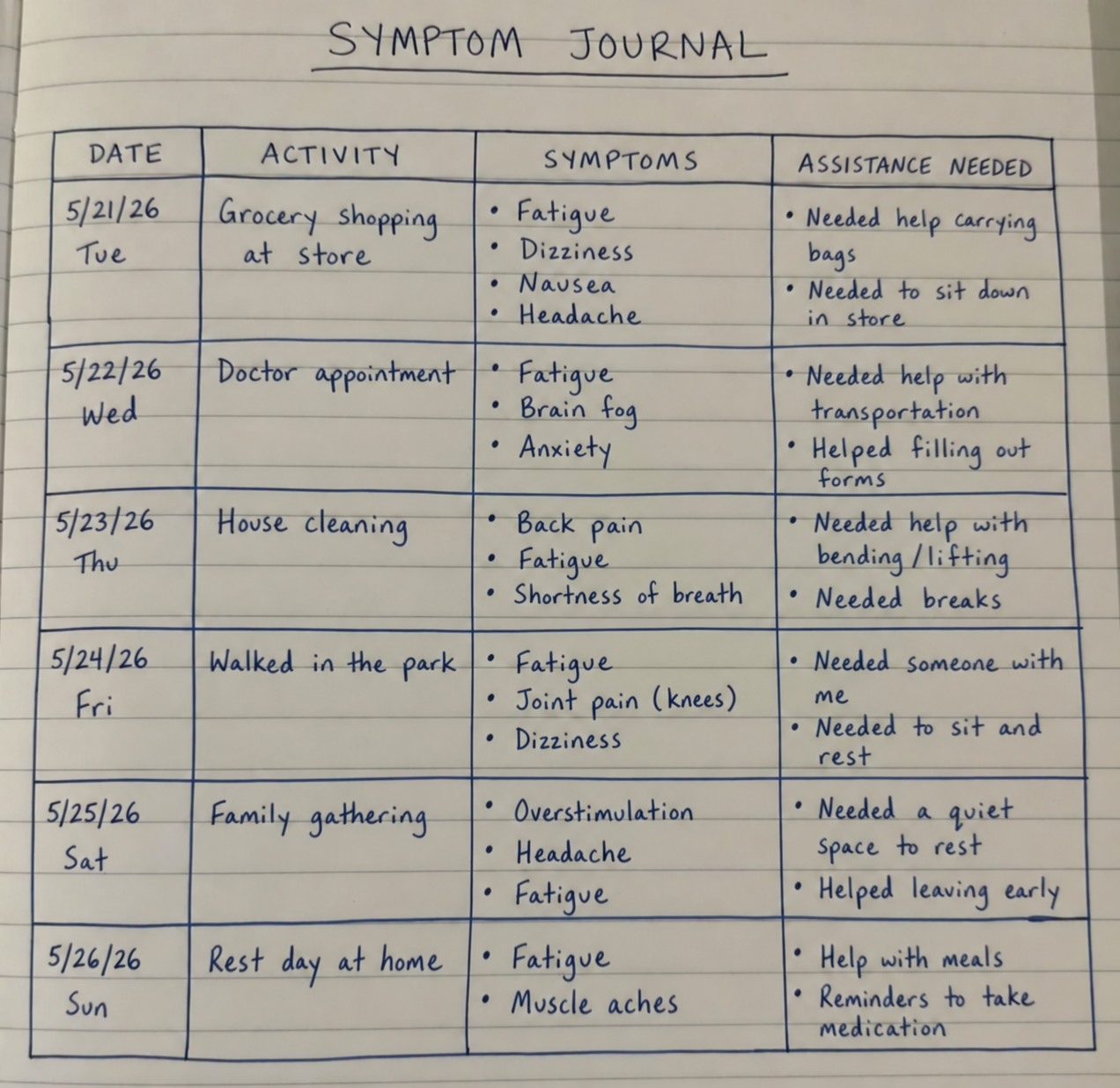
Use a dated journal to describe what happened, not just how bad you felt. Instead of writing “poor memory,” note that you missed an appointment despite reminders or needed help following a familiar recipe. Include good days as well as difficult ones so the record stays balanced. Ask relatives to record firsthand observations separately. Have them distinguish what they saw from what you reported, and avoid coaching anyone toward a diagnosis. Bring these observations to medical appointments so your provider can evaluate them in context.
Practical steps to protect your claim
You do not need to assemble everything at once. Start with a shared folder or simple binder, and ask a trusted person for help if organization feels overwhelming. Use this checklist to prepare for medical visits and a legal consultation:
- Keep Treatment Records Together: Save discharge instructions, referrals, prescriptions, appointment summaries, and rehabilitation plans. Record questions for your next visit.
- Preserve Crash Evidence: Retain photographs, witness contact details, police report information, and relevant messages. Keep original files rather than only edited copies.
- Document Financial Effects: Gather bills, receipts, pay records, missed-work dates, and employer communications about restrictions or changed duties.
- Track Assistance: Note help with transportation, household responsibilities, appointments, and personal care. Describe the task and why help was needed.
- Organize Insurance Communications: Save letters, emails, claim numbers, and offers. Before signing documents, ask what rights or claims they affect.
Maintaining accurate records throughout your medical recovery can help document how a traumatic brain injury affects your daily life. After each appointment, distinguish between the symptoms you reported, your healthcare provider’s clinical findings, and any recommended treatment or follow-up care. If transportation difficulties, financial limitations, or scheduling conflicts interfere with treatment, communicate these concerns to your provider and discuss available alternatives. Report persistent, worsening, or newly developing symptoms promptly so your healthcare provider can determine whether additional testing, treatment adjustments, or a specialist referral may be necessary. Personal notes can supplement, but should not replace, your official medical records.
Where can Ohio car accident and brain injury victims find local records and court information?
After a car accident involving a traumatic brain injury (TBI), finding the correct investigating agency and county court can make it easier to locate crash documentation, identify existing civil case records, and organize questions for an attorney. The contacts below serve major Ohio communities. For an emergency or worsening symptoms that require immediate assistance, call 911. The other police numbers listed here are for non-emergency inquiries.
Local police departments and county court contacts
- Columbus (Franklin County): The Columbus Division of Police can be reached at (614) 645-4545 (non-emergency) or (614) 645-4925 (public records).
- For civil court filings and case information, contact the Franklin County Clerk of Courts, General Division at (614) 525-3621, 345 S. High St., Columbus, OH 43215.
- Cleveland (Cuyahoga County): Call the Cleveland Division of Police at (216) 621-1234 (non-emergency) or (216) 623-5269 (accident records).
- The Cuyahoga County Clerk of Courts Civil Division is at 1200 Ontario St., 1st Floor, Cleveland, OH 44113; (216) 443-7950.
- Cincinnati (Hamilton County): The Cincinnati Police Department handles non-emergency requests at (513) 765-1212. For crash records, call its Records Section at (513) 352-3559.
- For Common Pleas civil case information, the Hamilton County Clerk of Courts lists (513) 946-5638, 1000 Main St., Cincinnati, OH 45202.
- Dayton (Montgomery County): Contact the Dayton Police Department at (937) 333-2677 (non-emergency) or (937) 333-1038 (auto accident information).
- The Montgomery County Common Pleas Court, General Division is at 41 N. Perry St., Dayton, OH 45422; (937) 225-6000.
- Akron (Summit County): The Akron Police non-emergency dispatch number is (330) 375-2181; its records office is (330) 375-2950.
- See the Akron Police contact directory. For civil filing questions, call the Summit County Clerk of Courts Civil Filing Desk at (330) 643-2217; the clerk’s office is located at 205 S. High St., Akron, OH 44308.
- Toledo (Lucas County): The Toledo Police Department lists (419) 255-8443 for non-emergency dispatch and (419) 245-3101 for its records section. Contact the Lucas County Clerk of Courts at (419) 213-4484, 700 Adams St., Toledo, OH 43604, for court record and filing inquiries.
Statewide crash reports and brain injury support
Ohio Department of Public Safety: Use the Ohio Crash Report Search to look for reported traffic collisions. Reports may take up to six weeks to appear, and copies obtained through this database are not official documents. For an official report, contact the police department, sheriff’s office, or highway patrol post that investigated the crash.
Ohio State Highway Patrol: For a collision investigated by state troopers, the Highway Patrol’s public records service explains how to request official crash reports and photographs. Central Records: (614) 466-3536. The Patrol recommends allowing at least seven business days before ordering an initial report.
Ohio Brain Injury Recovery Resources: The Ohio Brain Injury Connection at The Ohio State University Wexner Medical Center offers free resource navigation for people with brain injuries and their loved ones at (614) 293-7785. The Brain Injury Association of Ohio Helpline, (833) 783-1495, offers education, support, and referrals to local services. These organizations do not replace clinical evaluation or individualized legal advice.
Before Requesting Records: Have the collision date, location, investigating agency, report or incident number (if known), and names of the involved drivers available. A crash may fall under a suburban police department, a sheriff’s office, or the Ohio State Highway Patrol rather than the nearest large-city agency. Court staff can explain record-access and filing procedures but cannot determine where you should bring a claim or provide legal advice.
Evaluate insurance offers against the whole picture
Before evaluating an offer, compare it with documented expenses, income losses, and medically supported future needs. Ask what remains uncertain: further rehabilitation, work restrictions, or assistance at home. A useful review should explain both the evidence supporting the claim and the gaps that still need attention. Also ask which policies may apply. Optional medical payments coverage can help with eligible accident-related medical expenses regardless of fault, while uninsured or underinsured motorist coverage may provide protection when the responsible driver lacks sufficient insurance. Availability and benefits depend on the policy.
Check policy requirements before settling with the other driver. Notice and consent-to-settle provisions can affect uninsured or underinsured motorist coverage, particularly where noncompliance prejudices the insurer. Have counsel review the proposed release alongside your own coverage rather than treating them as unrelated matters.
Choosing legal help that fits your needs
When comparing brain injury lawyers, ask for a concrete explanation of how they would investigate fault, organize medical evidence, and evaluate future losses. A local Ohio brain injury attorney should explain the applicable deadline and identify issues requiring further investigation. Be cautious about promises of a particular result before records have been reviewed. Bring the crash report information, insurance documents, medical records available to you, and a short account of daily changes. Ask who will communicate with you and whether a trusted family member can participate with your permission. Request plain-language explanations if concentration or fatigue makes detailed discussions difficult.
If representation uses a contingency fee, Ohio requires a written agreement signed by the attorney and client. Ask how the fee is calculated, who advances expert and filing costs, and whether you owe expenses if the case is unsuccessful. Get those answers before signing.
Protect recovery and legal options together
Following a serious injury, protecting your health and understanding your legal rights should remain your priorities. Seek appropriate medical care, follow your healthcare provider’s recommendations, and preserve medical records, accident documentation, and evidence of how your injuries affect your daily life. Under Ohio law, filing deadlines and other legal requirements can affect your ability to pursue compensation, making it important to understand your options before accepting an insurance settlement or making decisions that could affect your claim.
At Buckeye Law Group, our local Ohio personal injury attorneys recognize that every injury presents unique medical, financial, and personal challenges. Our goal is to help injured individuals understand their legal options, evaluate the full extent of their documented losses, and make informed decisions about pursuing compensation. A free consultation can provide an opportunity to discuss your circumstances, identify potential legal considerations, and determine the appropriate next steps toward protecting your rights and supporting your recovery.
Call 1-800-411-7246 or request a free consultation to speak with an experienced Ohio car accident attorney at Buckeye Law Group today.
Legal Disclaimer: This article is provided by Buckeye Law Group for general educational and informational purposes and does not constitute legal or medical advice. The content specifically addresses Ohio personal injury law and legal considerations involving car accidents that result in traumatic brain injuries (TBIs), including concussions and other forms of brain trauma. Information concerning liability, insurance coverage, medical documentation, potential compensation, and applicable filing deadlines is intended to help Ohio residents better understand their legal rights and available options following a car accident involving a traumatic brain injury. Every case involves unique circumstances, and determining liability or eligibility for compensation requires a careful evaluation of medical evidence, accident circumstances, applicable Ohio laws, and individual facts. Individuals experiencing symptoms of a traumatic brain injury should seek appropriate medical evaluation and follow the recommendations of qualified healthcare professionals. Reading this article or contacting Buckeye Law Group does not, by itself, establish an attorney-client relationship. Individuals seeking guidance about their specific circumstances should consult a qualified Ohio personal injury attorney. Past case results do not guarantee or predict future outcomes.
How Much Should an Insurance Company Pay for Injuries After a Car Accident?
After an Ohio car accident, an insurance company may offer a settlement before the full extent of your injuries, anticipated medical treatment, or long-term financial losses becomes clear. Ohio law
What Happens If an Insurance Company Won’t Offer a Fair Settlement After a Car Accident?
After an Ohio car accident, an insurance settlement offer may arrive while medical treatment continues and fault remains disputed. If the insurance company won’t offer a fair settlement, you do
Toledo’s Summit Street Cycle Track: What the 2026–2027 Redesign Means for Cyclist and Pedestrian Safety
Toledo’s Summit Street Cycle Track project is a two-phase reconstruction intended to make a section of North Summit Street safer and more connected for people walking and bicycling. In 2026,
Greater Dayton’s 2026 E-Bike and E-Moto Safety Proposal: What Ohio Riders and Parents Should Know
Electric bicycles and other small electric-powered vehicles are becoming increasingly common on roads, neighborhood streets, and recreational trails throughout Greater Dayton. Their growing use also raises important questions about rider
Dayton’s Keowee Street Safety Project: How Lane Reductions and New Walking Paths Could Improve Roadway Safety
Dayton’s Keowee Street safety project would reduce the roadway from seven lanes to five between East Fifth Street and East Monument Avenue, adding multi-use paths, landscaping, and signal upgrades. The
Dayton I-75 Construction in November 2026: Lane Closures, Traffic Shifts, and Work-Zone Safety
Motorists traveling along I-75 through Dayton, Ohio, in November 2026 should be aware of multiple construction projects that may affect travel times, lane configurations, and access to nearby interchanges. According
Columbus I-70/I-71 Construction in November 2026: Ramp Closures, Detours, and Driver Safety
Motorists traveling through downtown Columbus, Ohio, in November 2026 should prepare for temporary traffic disruptions as construction continues along the I-70/I-71 corridor. Overnight interstate restrictions, ramp closures, and designated detours
Mansfield’s Main Street Transformation: What Drivers and Pedestrians Should Know About Downtown Traffic Changes in 2026
As Mansfield completes its 2026 Main Street Transformation, residents and visitors should understand how the redesigned streets affect access to downtown businesses, public buildings, pedestrian crossings, and nearby parking areas.
Toledo’s Douglas Road and Monroe Street Intersection Improvements: What Drivers and Pedestrians Should Know in 2026
The City of Toledo identifies the Douglas Road and Monroe Street intersection as a 2026 improvement project intended to support pedestrian safety, driver safety, and better pavement conditions. For people
Springfield’s South Limestone Street Safety Improvements: What Drivers Should Know
South Limestone Street in Springfield, Ohio, is the focus of safety improvements intended to reduce conflicts between vehicles entering, leaving, and traveling along the corridor. The Ohio Department of Transportation’s

Buckeye Law Group represents people injured in auto accidents, slip and falls, workplace accidents and more in Ohio. Contact us today to learn more.
© 2026 All Rights Reserved | The Buckeye Law Group Inc. Privacy Policy Sitemap
Office Locations
- Akron Office 388 S Main St #400 Akron, OH 44311 (330) 426-0288
- Cincinnati Office 201 E 5th St Ste 1910 Cincinnati, OH 45202 (513) 547-2445
- Cleveland Office 127 Public Square Ste 1540 Cleveland, OH 44114 (216) 677-5490
- Columbus Office 20 E Broad St Suite 300 Columbus, OH 43215 (614) 482-3793
- Dayton Office 70 Birch Alley Ste 240 Dayton, OH 45440 (937) 884-4474
- Euclid Office 25701 N Lakeland Blvd Suite 113-C, Cleveland, OH 44132 (216) 405-2626
- Mansfield Office 305 E Main St Ste 6A, Mansfield, OH 44904 (567) 210-2606
- Findlay Office 7430 Timberstone Dr unit 101a, Findlay, OH 45840 419-873-5119
- Mentor Office 7537 Mentor Ave Ste 101, Mentor, OH 44060 (440) 306-3536
- Middletown Office 300 N Main St #400, Middletown, OH 45042 (326) 800-9150
- Parma Office 1257 Rockside Rd #A, Parma, OH 44131 (216) 279-1664
- Springfield Office 2100 E High St Ste TL3, Springfield, OH 45505 (937) 806-5791
- Toledo Office 3950 Sunforest Ct Ste 200, Toledo, OH 43623 (567) 483-3883
- Westlake Office 26404 Center Ridge Rd Ste B2, Westlake, OH 44145 216-247-0565
- Whitehall Office 5340 E Main St Ste 203, Whitehall, OH 43213 (380) 257-5206
- Youngstown Office 306 Churchill Hubbard Rd, Youngstown, OH 44505 (234) 225-0683
Contact Us
© 2026 All Rights Reserved | The Buckeye Law Group Inc. Privacy Policy Sitemap