A concussion can cause symptoms immediately after a crash or several hours or days later. Sometimes a person first recognizes changes in sleep, mood, concentration, or memory a week or more after the collision. That does not mean every new symptom weeks later is a concussion. It means unexplained changes deserve a medical evaluation rather than an assumption about their cause. After a collision on I-70, I-71, I-270, or a Columbus neighborhood street, medical care comes first. This guide explains warning signs, recovery, and local Ohio resources.
Call (614) 482-3793 or request a free consultation today to speak with an experienced Columbus car accident attorney at Buckeye Law Group.
When Do Concussion Symptoms Start After a Car Accident?
According to the Centers for Disease Control and Prevention (CDC), some mild traumatic brain injury (TBI) symptoms appear right away, while others may not appear for hours or days after the accident. Symptom recognition can also occur later, particularly when a person returns to work or other demanding activities. A general timeline may look like this:
- At The Scene: Confusion, dizziness, headache, nausea, or difficulty remembering the collision.
- Hours To Days Later: Increasing awareness of headaches, sensitivity to light, poor balance, fatigue, or difficulty concentrating.
- During Subsequent Weeks: Sleep disturbances, irritability, or reduced tolerance for ordinary tasks may become more apparent. These changes require evaluation; their timing alone cannot establish that a concussion caused them.
No timeline applies to everyone. Discuss new symptoms with a clinician rather than diagnosing yourself; severe neurological symptoms require emergency treatment.
Can a Car Accident Cause a Concussion Without a Direct Head Impact?
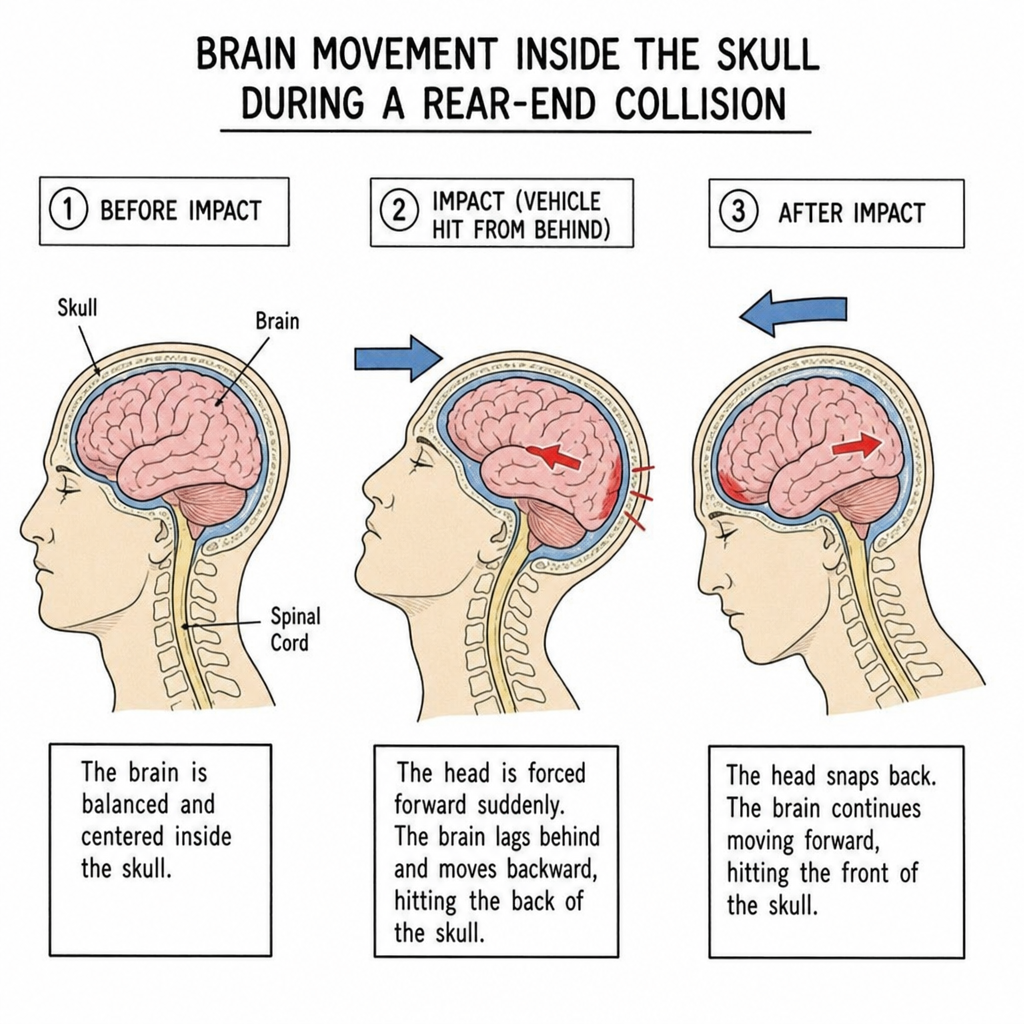
Yes. A concussion can result from a bump or blow to the head, or a forceful jolt to the body that rapidly moves the head and brain. During a rear-end, side-impact, or head-on collision, the body may move abruptly even when the head never contacts the windshield or steering wheel. A concussion is a mild TBI that disrupts brain function. Mild does not mean insignificant: concentration, driving, and work may be affected even without a visible wound or loss of consciousness. See the CDC’s explanation of mild TBI.
What Symptoms Should You Watch for After a Collision?
Concussion symptoms can vary significantly from person to person, and some may not become noticeable until hours or days after an accident. Rather than relying on a single obvious symptom, individuals should pay close attention to changes in their physical health, cognitive abilities, emotional well-being, and daily functioning. Persistent headaches, dizziness, difficulty concentrating, memory problems, and unusual fatigue may indicate a concussion or another injury requiring medical evaluation. Recognizing and documenting changes from your normal health and abilities can help healthcare professionals assess your condition, monitor your recovery, and determine whether additional medical care is necessary.
- Physical Changes: Headache, dizziness, nausea, balance difficulties, unusual fatigue, blurred vision, or sensitivity to light and noise.
- Thinking And Memory Changes: Mental fog, forgetfulness, difficulty following instructions, slowed responses, or difficulty concentrating.
- Emotional Changes: Irritability, anxiety, sadness, or reactions that seem unusual for you.
- Sleep Changes: Difficulty falling asleep or sleeping substantially more or less than normal.
Family or coworkers may notice confusion or difficulty with familiar tasks before you do. Tell your clinician about their observations.
Emergency Signs That Require Immediate Medical Attention
Call 911 or go to the nearest emergency department immediately if a person develops a worsening headache that will not go away, repeated vomiting, seizures, weakness or numbness, slurred speech, increasing confusion, one pupil larger than the other, or unusual drowsiness or difficulty waking up. These CDC danger signs may indicate a serious injury. Do not drive if you are unsafe to do so.
How Do Doctors Evaluate a Possible Concussion?
A clinician typically asks about the collision, possible head or body impacts, symptoms, medical history, medications, and previous head injuries. An examination may assess balance, memory, concentration, coordination, and neurological function. Be specific about when each symptom began and whether it is improving or worsening.
A normal CT scan does not necessarily mean that a person has avoided a concussion or mild traumatic brain injury (TBI). Although CT imaging can help healthcare professionals identify bleeding within the skull, certain structural injuries, and other potentially serious complications, concussions often do not produce abnormalities visible on standard imaging.
Healthcare professionals generally evaluate suspected concussions by reviewing the circumstances of the injury, assessing reported symptoms, examining neurological function, and considering changes in memory, concentration, balance, and coordination. Not every patient with a suspected concussion requires a CT scan; the decision depends on individual symptoms, medical history, examination findings, and potential risk factors.
According to the Centers for Disease Control and Prevention (CDC), medical evaluation is important even when a concussion is not visible on brain imaging. Patients should inform their healthcare providers about any previous concussions, medications that affect blood clotting, and new or worsening symptoms. These details can influence medical decisions and follow-up care.
Never stop or adjust prescribed medications without consulting a qualified healthcare professional. If symptoms such as worsening headaches, repeated vomiting, seizures, or increasing confusion develop after a head injury, seek emergency medical attention immediately.
Is It Whiplash, a Concussion, or Both?
Following a rear-end collision in Columbus, Ohio, individuals may experience symptoms associated with whiplash, a concussion, or both injuries. Although these conditions can share certain symptoms, they affect different parts of the body and may require different medical evaluations and treatment approaches. Whiplash occurs when the neck experiences a sudden, forceful movement, potentially injuring muscles, ligaments, and other soft tissues. Common symptoms include neck pain, stiffness, headaches, and a reduced range of motion. A concussion, which is a form of mild traumatic brain injury (TBI), can cause headaches, dizziness, memory difficulties, impaired concentration, and changes in sleep patterns.
Because symptoms can overlap or develop at different times, the order in which they appear does not necessarily establish which injury occurred or what caused it. For example, someone involved in a Columbus rear-end accident may initially experience neck discomfort before noticing difficulty concentrating or persistent headaches. Following a collision, it is important to seek an appropriate medical evaluation and inform healthcare professionals of all symptoms, when they first appeared, and how they affect everyday activities. Maintaining accurate records of symptoms, medical appointments, and changes in physical or cognitive functioning can support medical treatment and help document the effects of an injury if a personal injury claim becomes necessary.
What Should You Do if Concussion Symptoms Develop Days Later?
If symptoms associated with a concussion or traumatic brain injury develop after leaving an accident scene, seek prompt medical evaluation, even if you initially felt uninjured. Some concussion symptoms may not become noticeable until hours or days after a collision. Therefore, it is important to monitor any changes in your physical health, memory, concentration, balance, and ability to perform everyday activities. A qualified healthcare professional can evaluate your symptoms, determine whether additional testing or treatment is necessary, and provide guidance for monitoring your recovery. If serious warning signs develop, including a worsening headache, repeated vomiting, seizures, or increasing confusion, call 911 or seek emergency medical attention immediately.
In addition to prioritizing your health, maintaining accurate records of your symptoms, medical evaluations, and recovery can help establish a clearer timeline of your condition. This documentation may also become relevant when evaluating an Ohio personal injury claim arising from the accident. Consider the following practical steps to protect your health, document your symptoms, and support your recovery:
- Explain The Crash Mechanism: Tell the clinician whether you were struck from behind or from the side, whether your head moved suddenly, and whether you remember the full event.
- Describe The Timeline: Record the first day of each symptom, its severity, and any changes. Do not guess when something happened if you are uncertain.
- Ask About Daily Activities: Discuss driving, work, screen use, physical exertion, and other activities that could be unsafe or aggravate symptoms.
- Arrange A Follow-Up Appointment: Tell your provider about symptoms that worsen, reappear with activity, or do not improve.
Medical records help with ongoing treatment and provide a timely account of symptoms.
How Long Does Concussion Recovery Take?
Recovery from a concussion or mild traumatic brain injury (TBI) varies depending on the individual, the nature of the injury, and other medical factors. Although many individuals experience significant improvement within days or weeks, others may develop persistent symptoms that interfere with their ability to work, concentrate, sleep, or perform everyday activities. According to the Centers for Disease Control and Prevention (CDC), concussion recovery generally begins with approximately 24 to 48 hours of relative rest, followed by a gradual return to appropriate physical and cognitive activities as tolerated. Light activities, such as short walks, may be beneficial during recovery, provided they do not significantly worsen your symptoms.
Recovering from a concussion or mild traumatic brain injury requires an individualized approach that balances appropriate rest with a gradual return to everyday activities. Although rest is important during the initial stages of recovery, prolonged physical and cognitive inactivity is generally not recommended unless specifically advised by a qualified healthcare professional.
Following the initial recovery period, individuals should gradually resume appropriate activities while monitoring how their symptoms respond. Activities that significantly worsen headaches, dizziness, fatigue, or difficulty concentrating may need to be reduced or temporarily modified. Patients should also consult their healthcare providers before returning to driving, employment, strenuous exercise, or other activities that could present safety concerns.
If concussion symptoms persist beyond two to three weeks, fail to improve, or become more severe, further medical evaluation may be necessary. Individuals should not delay seeking medical attention when new or worsening symptoms arise, particularly when they suggest a potentially serious complication. Throughout recovery, maintaining detailed records of medical appointments, prescribed treatments, ongoing symptoms, and limitations on work or daily activities can help healthcare professionals evaluate progress and adjust treatment recommendations. For individuals injured in an Ohio motor vehicle accident, this documentation may also provide important evidence of how the injury has affected their health, employment, and quality of life when evaluating a potential personal injury claim.
Ohio Resources for Medical Care and Accident Documentation
For Columbus and Central Ohio residents, these resources can help with medical care and crash records.
Emergency and specialized medical care:
- The Ohio State University Wexner Medical Center at 2050 Kenny Rd, Columbus, OH 43221 provides emergency services in Columbus and information about concussion evaluation and neurological care.
- OhioHealth Riverside Methodist Hospital, at 3535 Olentangy River Road, Columbus, OH 43214, is another local hospital with emergency services. For severe symptoms, call 911 or use the nearest appropriate emergency department rather than traveling to a particular facility.
- The Columbus Division of Police at 120 Marconi Blvd, Columbus, OH 43215 explains how to obtain crash and accident reports. If another agency investigated your collision, for example, a suburban police department or the Ohio State Highway Patrol, contact that agency instead.
- The Ohio Department of Public Safety at Charles D. Shipley Building, 1970 W Broad St, Columbus, OH 43223 offers a searchable database. Reports may take up to six weeks to appear. Importantly, the online copies are provided for statistical purposes and are not official reports; request an official copy from the investigating agency when needed.
Why Medical Records Matter in an Ohio Car Accident Claim
If another driver’s negligence contributed to a crash, medical records may help document the injuries, recommended care, and effects on daily life. Preserve discharge instructions, referrals, appointments, treatment bills, prescriptions, missed-work information, and notes describing difficulties with activities you could perform before the accident. Preserve vehicle photographs, witness details, repair records, and available dashcam footage; video may be overwritten. A crash report does not, by itself, prove the cause of an injury.
Under Ohio Revised Code § 2305.10, many bodily injury claims are subject to a two-year filing period, generally measured from when the claim accrues. Discovering symptoms later does not automatically restart or extend that period. Exceptions and different rules can apply, so obtain case-specific legal advice promptly. Ohio also uses comparative fault rules. Under Ohio Revised Code § 2315.33, a person’s own share of fault can reduce compensation, and fault greater than 50% generally prevents recovery under the statute. A diagnosis does not by itself establish liability or a claim’s value.
Frequently Asked Questions About Delayed Concussions
- Can concussion symptoms appear three days after a car accident? Yes. The CDC recognizes that concussion symptoms may appear hours or days after an injury. New headaches, dizziness, concentration problems, or other changes should be discussed with a healthcare professional.
- Can you have a concussion if you did not hit your head? Yes. A forceful jolt that causes rapid head movement can produce a concussion without a direct head strike. A medical assessment is needed to determine whether a concussion or another condition explains the symptoms.
- Can a concussion be missed during an initial emergency visit? Yes. New symptoms may emerge after the first visit. Contact a clinician if your condition changes, even after an initially reassuring examination.
- Can you work or drive while recovering from a concussion? It depends on your symptoms. Dizziness and slow reactions may make driving or machinery unsafe. Ask your clinician for specific instructions.
- Do delayed symptoms prevent an Ohio personal injury claim? Not necessarily. Medical evidence, causation, fault, and deadlines all matter. Documentation helps but cannot guarantee compensation.
Speak With Buckeye Law Group About Your Ohio Car Accident
Following an Ohio car accident, protecting your health and seeking appropriate medical attention should always come first, particularly when a traumatic brain injury or other serious injury is suspected. Understanding your legal rights is another important step toward protecting your future. At Buckeye Law Group, our Ohio personal injury attorneys help individuals and families understand the legal considerations surrounding car accidents, including determining potential liability, preserving critical evidence, evaluating insurance coverage, and understanding applicable filing deadlines. If you or a loved one has suffered injuries in an Ohio car accident, our local legal team can review the circumstances of your case, answer your questions, and explain the options available under Ohio law. Contact Buckeye Law Group today for a free consultation to discuss your situation and learn how our attorneys may be able to assist you.
Call (614) 482-3793 or request a free consultation today to speak with an experienced Columbus car accident attorney at Buckeye Law Group.
Legal and Medical Disclaimer: This article is intended for general educational and informational purposes only and should not be considered a substitute for individualized medical evaluation, diagnosis, treatment, or legal advice. The information provided does not establish an attorney-client relationship with Buckeye Law Group. Individuals experiencing symptoms of a suspected concussion or traumatic brain injury should seek evaluation from a qualified healthcare professional. If serious or life-threatening warning signs develop, seek immediate emergency medical attention. Because every injury and legal claim involves unique circumstances, consult qualified medical and legal professionals regarding your specific situation. Past case results do not guarantee or predict similar outcomes in future cases.
How Long After a Car Accident Can Concussion Symptoms Appear?
A concussion can cause symptoms immediately after a crash or several hours or days later. Sometimes a person first recognizes changes in sleep, mood, concentration, or memory a week or
Not at Fault in a Columbus Car Accident? What Ohio Drivers Should Do Next
Following a car accident in Columbus, Ohio, that may have been caused by another driver’s negligence, taking appropriate steps can help protect your health, preserve important evidence, and safeguard your
Is Personal Injury Mediation Legally Binding in Ohio?
Personal injury mediation in Ohio does not automatically create a binding outcome, but a settlement reached through mediation can be legally enforceable. The distinction is between negotiating a resolution and
How to Obtain an Ohio Crash Report After an Accident in Dayton
After an accident in Dayton, start with Ohio’s Crash Retrieval system to locate a report, then contact the investigating agency if you need an official copy. The Ohio Department of
T-Bone Accidents in Columbus Ohio: Who Is at Fault and What Evidence Matters?
T-bone collisions are often among the most disputed Columbus car accidents because both drivers may tell very different stories about the same intersection. Fault usually depends on who had the
Medical Negligence in Dayton: When a Medical Error May Support an Ohio Malpractice Claim
A bad medical outcome does not always mean a provider committed malpractice, but some errors may support an Ohio medical malpractice claim. For patients and families in Dayton, the key
Fatal Cleveland Bicycle Hit-and-Run: Honoring a Life Lost and Raising Awareness About Roadway Safety
The tragic death of a bicyclist following an October 18, 2026, hit-and-run collision near West 25th Street and Detroit Avenue in Cleveland has left loved ones grieving an irreplaceable loss
Gregory E. Gudin’s $12 Million USAA Insurance Settlement
In 2021, attorney Gregory E. Gudin handled a case involving USAA, one of the nation’s most recognized insurance companies, that resulted in a $12 million settlement. This significant result is
Gregory E. Gudin’s $14.5 Million Progressive Insurance Settlement
Gregory E. Gudin has spent his legal career representing individuals whose cases involve serious financial consequences. Among the significant settlements on his professional portfolio is a $14.5 million settlement involving
Wrongful Death Lawsuits in Columbus, Ohio: Who Can File and What Compensation Is Available?
The wrongful death of a loved one can leave a family facing significant emotional and financial hardships, particularly when the loss results from another party’s negligence. Under Ohio law, surviving

Buckeye Law Group represents people injured in auto accidents, slip and falls, workplace accidents and more in Ohio. Contact us today to learn more.
© 2026 All Rights Reserved | The Buckeye Law Group Inc. Privacy Policy Sitemap
Office Locations
- Akron Office 388 S Main St #400 Akron, OH 44311 (330) 426-0288
- Cincinnati Office 201 E 5th St Ste 1910 Cincinnati, OH 45202 (513) 547-2445
- Cleveland Office 127 Public Square Ste 1540 Cleveland, OH 44114 (216) 677-5490
- Columbus Office 20 E Broad St Suite 300 Columbus, OH 43215 (614) 482-3793
- Dayton Office 70 Birch Alley Ste 240 Dayton, OH 45440 (937) 884-4474
- Euclid Office 25701 N Lakeland Blvd Suite 113-C, Cleveland, OH 44132 (216) 405-2626
- Mansfield Office 305 E Main St Ste 6A, Mansfield, OH 44904 (567) 210-2606
- Findlay Office 7430 Timberstone Dr unit 101a, Findlay, OH 45840 419-873-5119
- Mentor Office 7537 Mentor Ave Ste 101, Mentor, OH 44060 (440) 306-3536
- Middletown Office 300 N Main St #400, Middletown, OH 45042 (326) 800-9150
- Parma Office 1257 Rockside Rd #A, Parma, OH 44131 (216) 279-1664
- Springfield Office 2100 E High St Ste TL3, Springfield, OH 45505 (937) 806-5791
- Toledo Office 3950 Sunforest Ct Ste 200, Toledo, OH 43623 (567) 483-3883
- Westlake Office 26404 Center Ridge Rd Ste B2, Westlake, OH 44145 216-247-0565
- Whitehall Office 5340 E Main St Ste 203, Whitehall, OH 43213 (380) 257-5206
- Youngstown Office 306 Churchill Hubbard Rd, Youngstown, OH 44505 (234) 225-0683
Contact Us
© 2026 All Rights Reserved | The Buckeye Law Group Inc. Privacy Policy Sitemap