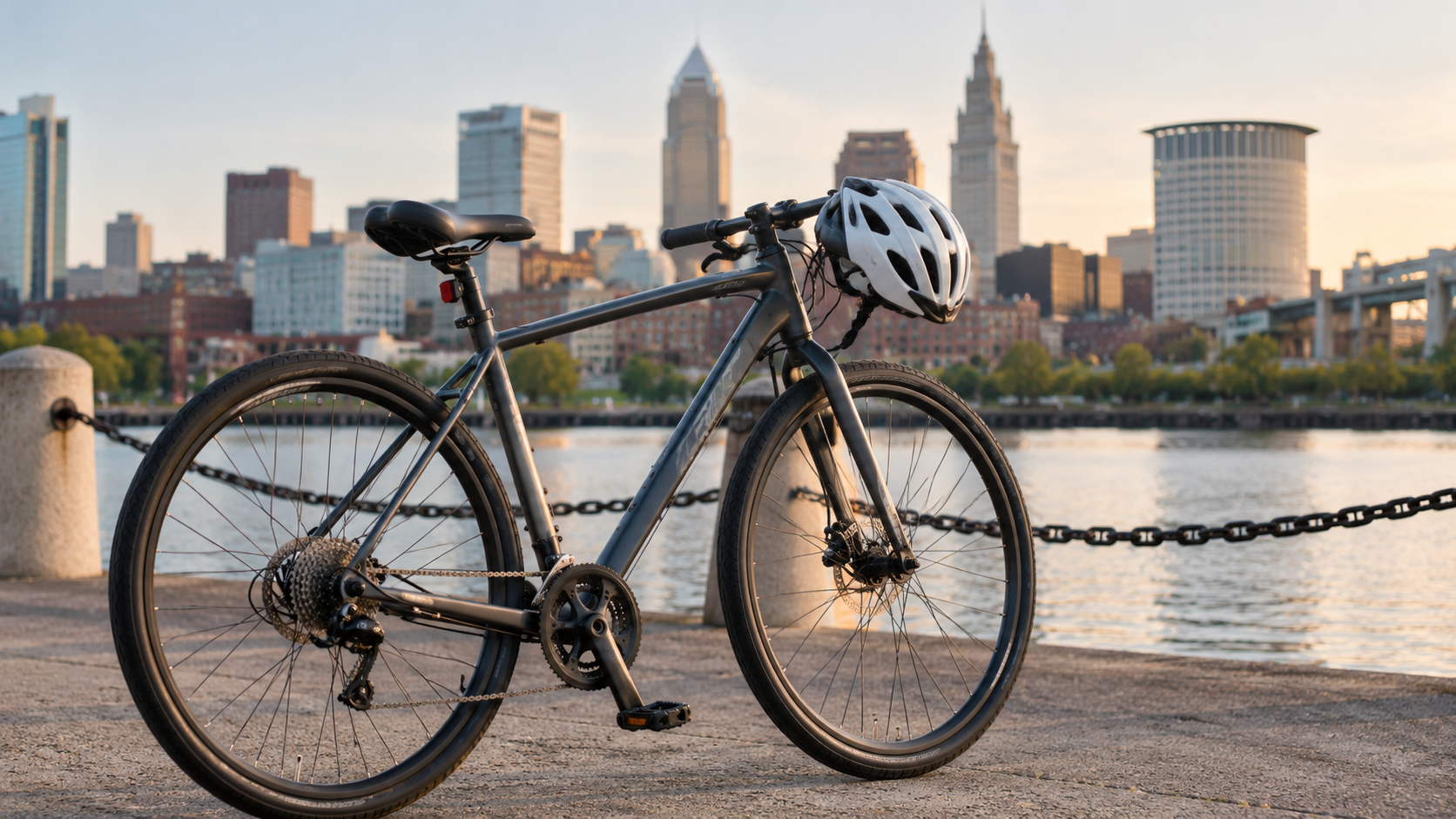
The tragic death of a bicyclist following an October 18, 2026, hit-and-run collision near West 25th Street and Detroit Avenue in Cleveland has left loved ones grieving an irreplaceable loss and a community seeking answers. According to Cleveland police, the motorist involved fled the scene, leaving investigators working to establish the circumstances surrounding this fatal collision. Beyond the profound grief experienced by the victim’s family, this tragedy serves as a solemn reminder of the importance of roadway safety, motorists’ legal responsibilities, and the protections afforded to bicyclists under Ohio law. As the investigation continues, the incident underscores the need for accountability, heightened awareness, and a shared commitment to preventing further tragedies on Cleveland’s roadways.
At Buckeye Law Group, we extend our sincere condolences to the individual’s family, friends, and loved ones. No legal proceeding can replace a life.
What Happened in the Cleveland Bicycle Hit-and-Run?
According to FOX 8 News and initial police reports, the collision occurred at approximately 4:57 p.m. on Sunday, October 18, near West 25th Street and Detroit Avenue.
Authorities stated that a black Ford F-150 struck a person riding a bicycle. Cleveland Emergency Medical Services transported the bicyclist to a hospital, where he was pronounced deceased. Police recovered the pickup truck at the scene, but its driver reportedly fled on foot.
The Cleveland Division of Police requested the public’s assistance in identifying the individual involved. The circumstances surrounding the collision remain under investigation, and the available information does not yet establish the events that contributed to the incident. A thorough evaluation of physical evidence, witness statements, and investigative findings is essential to determining liability. Any conclusions regarding fault should be based on verified facts and applicable law rather than speculation or unsubstantiated assumptions.
Ohio Hit-and-Run Laws: What Drivers Must Do After a Collision
Under Ohio Revised Code § 4549.02, a driver who knows they have been involved in a collision on a public roadway must immediately stop and provide the identifying information required by law.
If an injured person cannot understand or record that information, the driver must notify the appropriate police authority and remain at the scene until an officer arrives, unless the statutory exception applies. When a collision causes a death, a violation may constitute a felony, depending on the circumstances and the driver’s knowledge.
An alleged failure to stop does not establish responsibility for causing a collision. Civil liability may require evidence of vehicle movements, traffic signals, visibility, speed, and roadway conditions. Criminal and civil proceedings also involve different legal standards.
Ohio Bicycle Safety Laws Every Cleveland Motorist Should Understand
Bicyclists have a legal right to use Ohio’s roadways. Three provisions of Ohio law are particularly relevant to understanding the rights and responsibilities of motorists and bicyclists when sharing travel lanes.
Bicyclists’ Rights and Responsibilities
Ohio Revised Code § 4511.52 generally makes applicable traffic laws enforceable against bicyclists, subject to statutory exceptions. Motorists must also recognize cyclists’ lawful use of the roadway.
Ohio’s Three-Foot Passing Rule
Under Ohio Revised Code § 4511.27, drivers overtaking bicycles must pass at a safe distance; three feet or greater is considered safe under the statute. Conditions may require additional clearance. Drivers should wait if sufficient space is unavailable.
When Bicyclists May Use More of a Travel Lane
Ohio Revised Code § 4511.55 generally directs cyclists to ride as near the right side of the roadway as practicable. It does not require them to remain at the edge when doing so would be unsafe. Parked cars, potholes, moving obstacles, and lanes too narrow to share safely may justify riding farther into the lane. A cyclist’s lane position must be evaluated in light of actual conditions.
Practical Ways Drivers Can Help Prevent Bicycle Collisions
Motorists traveling through Ohio City, Downtown Cleveland, and corridors such as West 25th Street, Detroit Avenue, and Lorain Avenue can reduce risk by following a few essential practices:
- Allow Adequate Passing Room: Wait until it is safe to pass rather than crowding a bicycle.
- Check Carefully Before Turning: Look for cyclists approaching intersections, driveways, and parking areas.
- Reduce Speed When Necessary: Congestion, darkness, weather, and limited sightlines demand greater caution.
- Avoid Distracted Driving: Keep attention on changing traffic conditions and vulnerable roadway users.
- Respect Lawful Lane Positioning: A cyclist may need additional space to avoid hazards or protect against an unsafe pass.
These precautions promote safety without suggesting what caused this particular collision.
Why Bicycle Safety Matters in Cleveland
Cleveland’s Vision Zero initiative seeks to eliminate traffic deaths and serious injuries through safer street design, improved transportation practices, and community participation. The city adopted its Vision Zero Action Plan in September 2022.
The city’s published data recorded 37 traffic-related deaths in 2026 as of September 21. Separately, Bike Cleveland reported that at least 603 people walking or bicycling were struck by motorists in Cleveland during 2024. These different reporting periods both underscore the need for prevention. Safety also depends on road design, traffic speeds, visibility, maintenance, and community involvement.
How to Help the Cleveland Police Investigation
Anyone who witnessed the October 18 collision or has relevant firsthand information should contact the Cleveland Division of Police Accident Investigation Unit at 216-623-5295.
Evidence may include dashcam or surveillance footage, photographs, and firsthand observations. Nearby businesses should preserve potentially relevant recordings before systems overwrite them. Provide information directly to investigators. Avoid publishing unverified accusations or attempting to identify an individual independently. Accurate information is essential to a fair investigation.
Understanding Wrongful Death Claims After a Fatal Bicycle Accident
A fatal motor vehicle collision can leave surviving family members facing profound emotional loss, unexpected financial burdens, and complex legal questions. When negligence contributes to a fatal accident, Ohio law provides legal remedies that may help eligible families pursue accountability and compensation for their losses.
When a death results from another party’s wrongful conduct or negligence, Ohio Revised Code § 2125.01 may permit a wrongful death action.
Under Ohio Revised Code § 2125.02, the deceased person’s personal representative generally brings the claim for the benefit of eligible family members, including surviving spouses, children, parents, and other qualifying next of kin.
Depending on the evidence and applicable law, recoverable damages may include funeral and burial expenses, loss of financial support, loss of services, loss of companionship or guidance, and mental anguish. The general deadline is two years from the date of death, subject to applicable exceptions.
A wrongful death case is separate from a criminal investigation. Families may explore civil options without necessarily awaiting the conclusion of criminal proceedings. A local Ohio attorney can review evidence, coverage, and legal options while respecting the family’s circumstances.
Cleveland Resources for Families and Roadway Safety
These local resources provide information and assistance:
- Cleveland Division of Police: Investigates serious crashes. Information about this incident should go to the Accident Investigation Unit at 216-623-5295.
- City of Cleveland Vision Zero: Provides crash-safety data, street-safety initiatives, and ways to report near-miss incidents. Call 216-664-2952
- Bike Cleveland: Offers education, advocacy, and information about safer bicycling throughout Greater Cleveland. Call 216-245-3101
- Cleveland 311: Accepts nonemergency reports of street-maintenance concerns and other municipal issues. Call 311 or 216-664-2000. Call 911 for an emergency.
Frequently Asked Questions About Fatal Bicycle Accidents in Cleveland
- What should I do if I witnessed this hit-and-run? Preserve relevant photos or recordings, write down what you personally observed, and contact the Cleveland Police Accident Investigation Unit. Do not alter evidence or circulate unverified claims.
- Must drivers leave at least three feet when passing cyclists? Ohio law identifies three feet or greater as a safe passing distance. Drivers should provide more room when necessary to pass safely under the circumstances.
- Can a family pursue a wrongful death claim after a bicycle collision? Potentially. A claim depends on evidence that another party’s wrongful conduct or negligence caused the death. The deceased person’s personal representative generally files on behalf of eligible beneficiaries.
- Does a family have to wait for criminal charges before exploring civil remedies? Not necessarily. Criminal and civil proceedings are separate. A local Ohio attorney can assess whether sufficient evidence exists to pursue available civil remedies while an investigation continues.
- How long do families have to file an Ohio wrongful death claim? The general deadline is two years from the date of death under Ohio Revised Code § 2125.02. Specific circumstances may affect the deadline.
Honoring a Life Lost and Promoting Safer Cleveland Streets
This tragedy has permanently changed a family. The person who died deserves dignity, and his loved ones deserve compassion as the investigation continues. At Buckeye Law Group, we recognize that protecting bicyclists, pedestrians, and other vulnerable roadway users requires greater public awareness, responsible driving practices, and adherence to Ohio traffic safety laws.
We extend our sincere condolences to the family and all those affected by this tragedy and reaffirm our commitment to educating Cleveland residents about roadway safety, the legal responsibilities of motorists, and the importance of accountability when negligence results in preventable injuries or loss of life.
Legal Disclaimer: This article is provided by Buckeye Law Group for general educational and community awareness purposes and does not constitute legal advice. Information concerning the October 18, 2026, Cleveland bicycle collision is based on publicly available news reporting and may change as additional investigative findings become available. The Buckeye Law Group has not conducted an independent investigation of the incident and does not claim to represent any individual involved. References to Ohio traffic laws, wrongful death claims, and potential civil liability are informational and do not establish that any party was legally responsible for the collision. Reading this article or contacting Buckeye Law Group does not establish an attorney-client relationship. Every case is different, and prior results do not guarantee a similar outcome.
How Much Should an Insurance Company Pay for Injuries After a Car Accident?
After an Ohio car accident, an insurance company may offer a settlement before the full extent of your injuries, anticipated medical treatment, or long-term financial losses becomes clear. Ohio law
What Happens If an Insurance Company Won’t Offer a Fair Settlement After a Car Accident?
After an Ohio car accident, an insurance settlement offer may arrive while medical treatment continues and fault remains disputed. If the insurance company won’t offer a fair settlement, you do
Toledo’s Summit Street Cycle Track: What the 2026–2027 Redesign Means for Cyclist and Pedestrian Safety
Toledo’s Summit Street Cycle Track project is a two-phase reconstruction intended to make a section of North Summit Street safer and more connected for people walking and bicycling. In 2026,
Greater Dayton’s 2026 E-Bike and E-Moto Safety Proposal: What Ohio Riders and Parents Should Know
Electric bicycles and other small electric-powered vehicles are becoming increasingly common on roads, neighborhood streets, and recreational trails throughout Greater Dayton. Their growing use also raises important questions about rider
Dayton’s Keowee Street Safety Project: How Lane Reductions and New Walking Paths Could Improve Roadway Safety
Dayton’s Keowee Street safety project would reduce the roadway from seven lanes to five between East Fifth Street and East Monument Avenue, adding multi-use paths, landscaping, and signal upgrades. The
Dayton I-75 Construction in November 2026: Lane Closures, Traffic Shifts, and Work-Zone Safety
Motorists traveling along I-75 through Dayton, Ohio, in November 2026 should be aware of multiple construction projects that may affect travel times, lane configurations, and access to nearby interchanges. According
Columbus I-70/I-71 Construction in November 2026: Ramp Closures, Detours, and Driver Safety
Motorists traveling through downtown Columbus, Ohio, in November 2026 should prepare for temporary traffic disruptions as construction continues along the I-70/I-71 corridor. Overnight interstate restrictions, ramp closures, and designated detours
Mansfield’s Main Street Transformation: What Drivers and Pedestrians Should Know About Downtown Traffic Changes in 2026
As Mansfield completes its 2026 Main Street Transformation, residents and visitors should understand how the redesigned streets affect access to downtown businesses, public buildings, pedestrian crossings, and nearby parking areas.
Toledo’s Douglas Road and Monroe Street Intersection Improvements: What Drivers and Pedestrians Should Know in 2026
The City of Toledo identifies the Douglas Road and Monroe Street intersection as a 2026 improvement project intended to support pedestrian safety, driver safety, and better pavement conditions. For people
Springfield’s South Limestone Street Safety Improvements: What Drivers Should Know
South Limestone Street in Springfield, Ohio, is the focus of safety improvements intended to reduce conflicts between vehicles entering, leaving, and traveling along the corridor. The Ohio Department of Transportation’s

Buckeye Law Group represents people injured in auto accidents, slip and falls, workplace accidents and more in Ohio. Contact us today to learn more.
© 2026 All Rights Reserved | The Buckeye Law Group Inc. Privacy Policy Sitemap
Office Locations
- Akron Office 388 S Main St #400 Akron, OH 44311 (330) 426-0288
- Cincinnati Office 201 E 5th St Ste 1910 Cincinnati, OH 45202 (513) 547-2445
- Cleveland Office 127 Public Square Ste 1540 Cleveland, OH 44114 (216) 677-5490
- Columbus Office 20 E Broad St Suite 300 Columbus, OH 43215 (614) 482-3793
- Dayton Office 70 Birch Alley Ste 240 Dayton, OH 45440 (937) 884-4474
- Euclid Office 25701 N Lakeland Blvd Suite 113-C, Cleveland, OH 44132 (216) 405-2626
- Mansfield Office 305 E Main St Ste 6A, Mansfield, OH 44904 (567) 210-2606
- Findlay Office 7430 Timberstone Dr unit 101a, Findlay, OH 45840 419-873-5119
- Mentor Office 7537 Mentor Ave Ste 101, Mentor, OH 44060 (440) 306-3536
- Middletown Office 300 N Main St #400, Middletown, OH 45042 (326) 800-9150
- Parma Office 1257 Rockside Rd #A, Parma, OH 44131 (216) 279-1664
- Springfield Office 2100 E High St Ste TL3, Springfield, OH 45505 (937) 806-5791
- Toledo Office 3950 Sunforest Ct Ste 200, Toledo, OH 43623 (567) 483-3883
- Westlake Office 26404 Center Ridge Rd Ste B2, Westlake, OH 44145 216-247-0565
- Whitehall Office 5340 E Main St Ste 203, Whitehall, OH 43213 (380) 257-5206
- Youngstown Office 306 Churchill Hubbard Rd, Youngstown, OH 44505 (234) 225-0683
Contact Us
© 2026 All Rights Reserved | The Buckeye Law Group Inc. Privacy Policy Sitemap