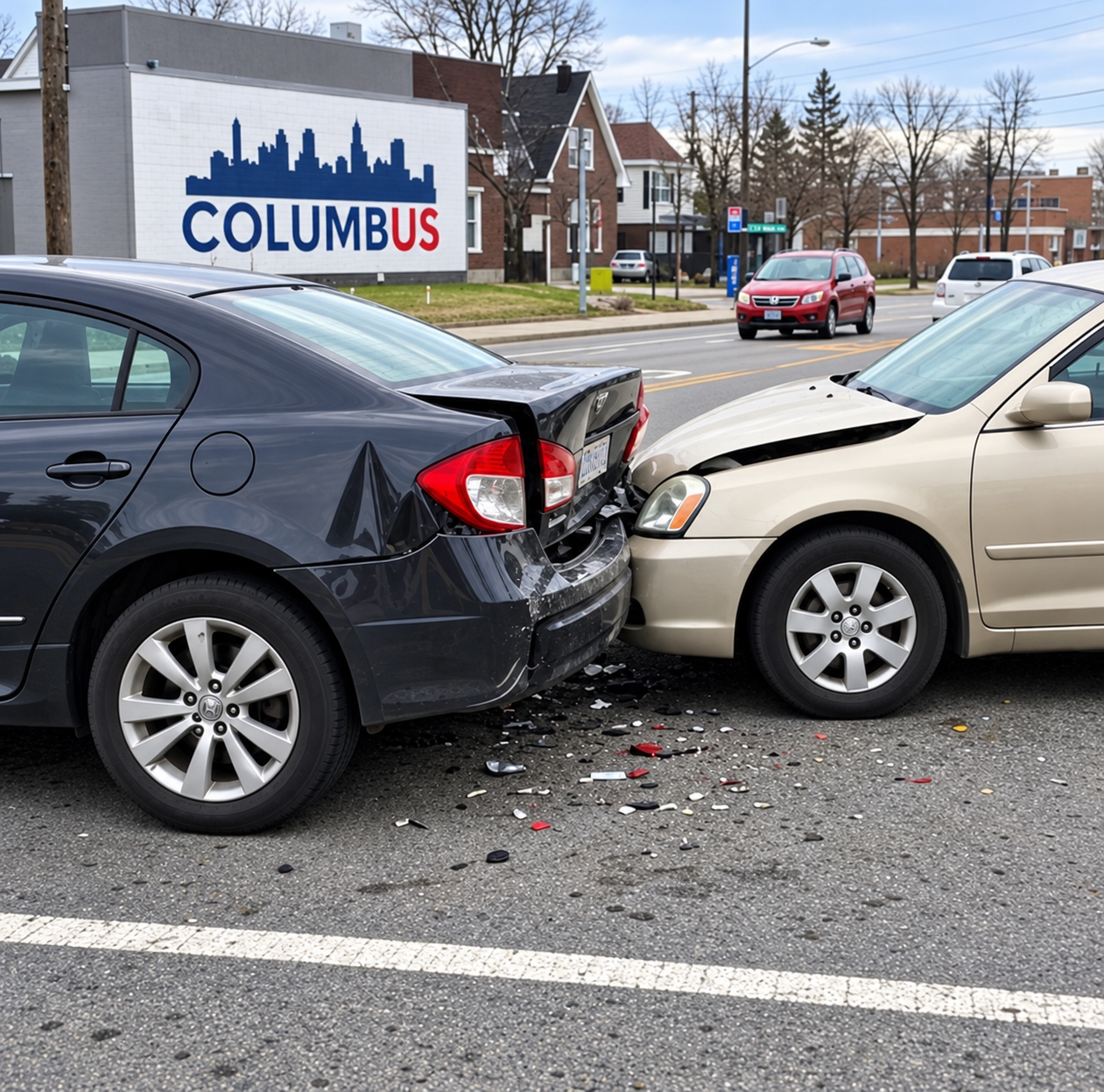
Rear-end crashes can look simple from the outside, but fault still depends on what each driver did, what the road conditions were, and what the evidence shows. In Columbus, Ohio, the rear driver is often the focus because state traffic laws require drivers to leave reasonable space and travel at a speed that allows them to stop safely. Still, strong evidence matters in every Columbus car accident claim, especially when an insurance company argues the lead driver shared blame.
Call (614) 482-3793 or request a free consultation to speak with a local Columbus car accident attorney at Buckeye Law Group today.
Who is usually at fault after a rear-end collision?
The rear driver is usually suspected of fault because Ohio law requires motorists not to follow another vehicle more closely than is “reasonable and prudent,” considering speed, traffic, and roadway conditions. Ohio’s assured clear distance rule also requires a driver to travel at a speed that allows them to stop within the clear distance ahead, which is why rear-end collisions in Columbus often turn on following distance, attention, and braking time.
That does not mean fault is automatic in every case. A driver who was hit from behind may still need to show how the crash happened, what injuries followed, and why the other driver’s conduct caused the damage. This is where photos, vehicle positions, statements, video, and medical records can make the difference between a disputed claim and a well-supported one.
Ohio fault rules make evidence important
Establishing liability in a Columbus rear-end collision requires more than determining which driver struck the other vehicle. A well-supported personal injury claim relies on evidence demonstrating how the collision occurred, whether a driver acted negligently, and how that conduct contributed to the resulting injuries and damages. Distracted driving, excessive speed, following too closely, and failing to adjust to hazardous weather or traffic conditions may all be relevant factors. Whether an accident occurs on I-71, I-70, I-270, High Street, Broad Street, or a residential roadway in Columbus, a thorough investigation of driver conduct, roadway conditions, witness statements, and available crash evidence can help establish liability under Ohio law.
Ohio also uses a comparative fault system. Under Ohio Revised Code Section 2315.33, a plaintiff’s contributory fault does not bar recovery if that fault was not greater than the combined fault of others, but recoverable damages are reduced in proportion to the plaintiff’s share of fault. In practical terms, an insurer may try to reduce a payout by arguing the front driver stopped suddenly, had broken brake lights, made an unsafe lane change, or failed to signal.
Common reasons rear-end crashes happen in Columbus
Columbus traffic creates plenty of rear-end risk: short merge lanes, sudden slowdowns, construction, downtown congestion, and fast freeway traffic that can stop without much warning. The legal question is not just “Who hit whom?” It is whether a driver acted reasonably under the conditions that existed at that moment. Common causes include:
- Distracted Driving: Looking at a phone, navigation screen, food, or a passenger can erase the seconds needed to brake.
- Following Too Closely: Tailgating leaves little room for ordinary traffic changes, especially in rush-hour traffic.
- Speeding Or Driving Too Fast For Conditions: A posted speed may still be unsafe when traffic, rain, darkness, or road work limits visibility and stopping distance.
- Impaired Or Fatigued Driving: Alcohol, drugs, or exhaustion can slow reaction time and make a driver miss brake lights ahead.
- Poor Vehicle Maintenance: Worn brakes, bald tires, and nonworking lights can become important facts when a crash is disputed.
- Multi-Car Chain Reactions: In pileups, more than one driver may share responsibility depending on the sequence of impacts.
A Columbus car accident lawyer will often look closely at timing. Did one impact push a vehicle into another? Were there two separate hits? Was the lead vehicle already stopped? These details can affect both fault and the value of Columbus car accident claims.
What evidence matters most in a rear-end collision?
The best evidence is the evidence that shows what happened before impact, during impact, and after impact. Start with the scene if it is safe to do so, then build a record that connects the crash to your injuries, repairs, missed work, and daily limitations. Useful evidence often includes:
- Scene photos and video showing vehicle positions, skid marks, debris, traffic signals, lane markings, weather, and visible damage.
- Close-up vehicle damage photos because impact location and crush patterns can help explain speed, angle, and sequence.
- Dashcam, doorbell, traffic, or business surveillance footage that may disappear quickly if no one requests it.
- Witness names and contact information from drivers, passengers, pedestrians, or nearby workers who saw the crash.
- Police or crash reports documenting driver information, insurance details, diagrams, citations, and officer observations.
- Medical records linking symptoms to the collision and showing the course of treatment.
- Repair estimates and total-loss paperwork showing the property damage side of the claim.
- Phone records, vehicle data, or commercial driver records when distraction, speeding, or company vehicle use may be involved.
Columbus provides ways to locate police-related records, including links for report requests, online crash reports, and state crash reports. The Ohio Department of Public Safety also maintains a crash report search for public roadway crashes submitted by law enforcement agencies for statistical purposes.
Medical documentation connects the crash to the claim
Rear-end crashes frequently involve neck, back, shoulder, head, and soft-tissue complaints. Some symptoms appear immediately, while others become more noticeable after adrenaline fades. If you feel pain, dizziness, numbness, headaches, or reduced range of motion, getting evaluated creates a medical record and helps you understand what care you may need. From a claims perspective, gaps in treatment can become a problem. Insurance adjusters may argue that delayed care means the injury was minor, unrelated, or caused by something else. You do not need to exaggerate symptoms, but you should be consistent, follow medical advice, attend appointments, and keep records of prescriptions, referrals, therapy, work restrictions, and out-of-pocket costs.
Insurance companies look for disputes
Even when liability seems obvious, insurance companies may investigate for reasons to pay less. They may say the lead driver slammed on the brakes for no reason, changed lanes too close to the rear vehicle, had nonworking brake lights, or caused a chain reaction. They may also separate property damage from injury damage and argue that a lower repair estimate means a lower injury risk.
Be careful with early recorded statements. A casual phrase like “I’m fine” can be used against you later, even if you meant only that you did not need an ambulance. Before giving detailed statements, signing releases, or accepting a quick settlement, consider whether you know the full medical picture and the long-term cost of the crash.
Steps to take after a Columbus rear-end crash
A calm checklist can protect your safety and your claim:
- Move to a safe location if possible and call 911 when anyone is hurt, traffic is blocked, or a vehicle cannot be driven.
- Exchange driver, vehicle, and insurance information.
- Photograph the full scene before vehicles are moved, if it is safe.
- Get witness information before people leave.
- Seek medical care and describe all symptoms clearly.
- Notify your insurer, but avoid guessing about fault or injuries.
- Save bills, repair documents, rental car receipts, and missed-work records.
- Speak with a Columbus car accident attorney if fault is disputed, injuries are significant, or the insurer is pressuring you.
Ohio generally requires actions for bodily injury or injury to personal property to be brought within two years after the cause of action accrues, subject to exceptions that may apply in specific cases. That deadline is one reason to avoid waiting too long before getting legal guidance from a Columbus personal injury attorney.
Columbus and Franklin County Resources After a Rear-End Collision
After a rear-end collision in Columbus, knowing where to obtain official records, seek medical care, and locate a damaged vehicle can help you protect your health and document your claim. Whether your accident occurred on I-70, I-71, I-270, Broad Street, or High Street, the following local resources may help you take the next steps.
Columbus Division of Police: Crash Reports
The Columbus Division of Police provides information about obtaining accident reports and requesting police records. If Columbus police investigated your collision, your report may contain driver information, officer observations, witness details, and a diagram of the crash.
Police non-emergency: (614) 645-4545
Ohio Department of Public Safety: Crash Report Search
The Ohio Department of Public Safety offers an online crash report search. Reports may take up to six weeks to appear. If your report is unavailable, contact the investigating law enforcement agency. Official copies should also be requested from that agency when necessary.
Columbus Police Impound Lot: Vehicle Recovery
If your vehicle was impounded following the collision, visit the City of Columbus Impounded Vehicles resource to review vehicle-release requirements and procedures for retrieving personal belongings.
Location: 2700 Impound Lot Road, Columbus, OH
Phone: (614) 645-4620
OhioHealth Grant Medical Center: Medical Assistance
Individuals injured in a Columbus rear-end collision can seek medical evaluation from an appropriate healthcare provider. OhioHealth Grant Medical Center is one local hospital with emergency services.
Location: 111 South Grant Avenue, Columbus, OH 43215
Phone: (614) 566-9000
Call 911 for a medical emergency.
Columbus 311: Reporting Roadway Hazards
If a collision involves a malfunctioning traffic signal, damaged street sign, or another roadway maintenance concern, Columbus residents can use the 311 Customer Service Center to submit a non-emergency service request. Preserve photographs and relevant information about the roadway condition when it is safe to do so.
These resources can help Columbus drivers obtain documentation, address immediate practical concerns, and make informed decisions after a rear-end collision.
When legal help can make a difference
Not every fender bender requires a lawyer. But a Columbus car accident lawyer can be especially helpful when the crash caused lasting pain, surgery, missed work, disputed liability, multiple vehicles, a commercial driver, uninsured coverage issues, or a low settlement offer. A lawyer can gather records, preserve video, identify insurance coverage, communicate with adjusters, and present damages in a way that reflects both economic and non-economic losses. The right Columbus car accident attorney will also look beyond the rear bumper. They may investigate whether another vehicle cut into the lane, whether a work vehicle was involved, whether a driver was distracted, or whether the crash sequence was more complicated than the police report suggests.
How Evidence and Legal Guidance Can Protect Your Columbus Rear-End Accident Claim
Rear-end crashes are often blamed on the following driver, but the strongest Columbus car accidents claims are built on evidence, not assumptions. Photos, reports, witnesses, medical records, and prompt documentation can help show what happened and how the collision affected your life. If your claim is disputed or your injuries are more than minor, talking with a Columbus personal injury attorney can help you understand your options before you make decisions that are hard to undo.
Call (614) 482-3793 or request a free consultation today to speak with a local Columbus car accident attorney at Buckeye Law Group.
*This article provides general information about how Columbus car accident attorneys may assist individuals injured in motor vehicle collisions throughout Columbus and Franklin County, Ohio. It is intended for educational purposes only and does not constitute legal advice. Reading this article or contacting Buckeye Law Group does not, by itself, establish an attorney-client relationship. Car accident claims may involve disputed liability, driver negligence, insurance coverage limitations, medical expenses, lost income, property damage, and applicable Ohio legal deadlines. Evaluating these claims may require reviewing police reports, accident scene photographs, surveillance footage, witness statements, medical records, insurance policies, and documentation of financial and nonfinancial losses. A Columbus car accident attorney at Buckeye Law Group may help injured individuals investigate negligence, identify potentially responsible parties, preserve critical evidence, evaluate potential compensation, negotiate with insurance companies, and understand their legal rights under Ohio personal injury law. Every case is different, and prior results do not guarantee a similar outcome.*
Rear-End Collisions in Columbus: Who Is at Fault and What Evidence Matters?
Rear-end crashes can look simple from the outside, but fault still depends on what each driver did, what the road conditions were, and what the evidence shows. In Columbus, Ohio,
How to Prove a Slip-and-Fall Injury Claim in Cincinnati Ohio
A slip-and-fall injury claim in Cincinnati, Ohio, usually turns on proof: what caused the fall, who controlled the property, what the owner or occupier knew or should have known, and
What to Do After a Truck Accident in Cleveland, Ohio: A Step-by-Step Guide
A serious truck crash can leave you shaken, injured, and unsure what to do next. This Cleveland truck accident guide walks you through the practical steps to protect your health,
Are Personal Injury Settlements Taxable in Ohio?
A personal injury settlement in Ohio is often not taxable when the money compensates you for physical injuries or physical sickness. But some parts of a settlement can be taxable,
Is It Worth Hiring a Cincinnati Car Accident Attorney After a Minor Crash?
A minor crash can feel like something you should be able to handle with a few phone calls and a repair estimate. Sometimes that is true. But if pain appears
Does Homeowners Insurance Cover Dog Bite Injuries in Cincinnati?
Homeowners insurance often provides coverage for dog bite injuries in Cincinnati, Ohio. However, coverage is not guaranteed. Whether an insurance policy covers a particular incident depends on its liability provisions,
Who Is Responsible for a Multi-Vehicle Car Accident on I-480 Near Cleveland?
A multi-vehicle crash on I-480 can feel chaotic from the first second: traffic stops, drivers swerve, several insurers get involved, and everyone has a different version of what happened. Responsibility
How to prove liability in a Toledo slip and fall accident
How to prove liability in a Toledo slip and fall accident comes down to evidence: what caused the fall, who controlled the property, what they knew or should have known,
How Long Does a Car Accident Settlement Take in Toledo Ohio?
If you were hurt in a crash in Toledo, the settlement timeline depends on the injury, the insurance coverage, the evidence, and whether the insurer accepts responsibility. A straightforward claim
PTSD After a Columbus Car Accident: Can Psychological Injuries Support Compensation?
A Columbus car accident can cause more than physical injuries. The psychological effects of a serious collision may persist long after visible injuries have healed. Individuals may experience recurring nightmares,
Buckeye Law Group represents people injured in auto accidents, slip and falls, workplace accidents and more in Ohio. Contact us today to learn more.
© 2026 All Rights Reserved | The Buckeye Law Group Inc. Privacy Policy Sitemap
Office Locations
- Akron Office 388 S Main St #400 Akron, OH 44311 (330) 426-0288
- Cincinnati Office 201 E 5th St Ste 1910 Cincinnati, OH 45202 (513) 547-2445
- Cleveland Office 127 Public Square Ste 1540 Cleveland, OH 44114 (216) 677-5490
- Columbus Office 20 E Broad St Suite 300 Columbus, OH 43215 (614) 482-3793
- Dayton Office 70 Birch Alley Ste 240 Dayton, OH 45440 (937) 884-4474
- Euclid Office 25701 N Lakeland Blvd Suite 113-C, Cleveland, OH 44132 (216) 405-2626
- Mansfield Office 305 E Main St Ste 6A, Mansfield, OH 44904 (567) 210-2606
- Findlay Office 7430 Timberstone Dr unit 101a, Findlay, OH 45840 419-873-5119
- Mentor Office 7537 Mentor Ave Ste 101, Mentor, OH 44060 (440) 306-3536
- Middletown Office 300 N Main St #400, Middletown, OH 45042 (326) 800-9150
- Parma Office 1257 Rockside Rd #A, Parma, OH 44131 (216) 279-1664
- Springfield Office 2100 E High St Ste TL3, Springfield, OH 45505 (937) 806-5791
- Toledo Office 3950 Sunforest Ct Ste 200, Toledo, OH 43623 (567) 483-3883
- Westlake Office 26404 Center Ridge Rd Ste B2, Westlake, OH 44145 216-247-0565
- Whitehall Office 5340 E Main St Ste 203, Whitehall, OH 43213 (380) 257-5206
- Youngstown Office 306 Churchill Hubbard Rd, Youngstown, OH 44505 (234) 225-0683
Contact Us
© 2026 All Rights Reserved | The Buckeye Law Group Inc. Privacy Policy Sitemap