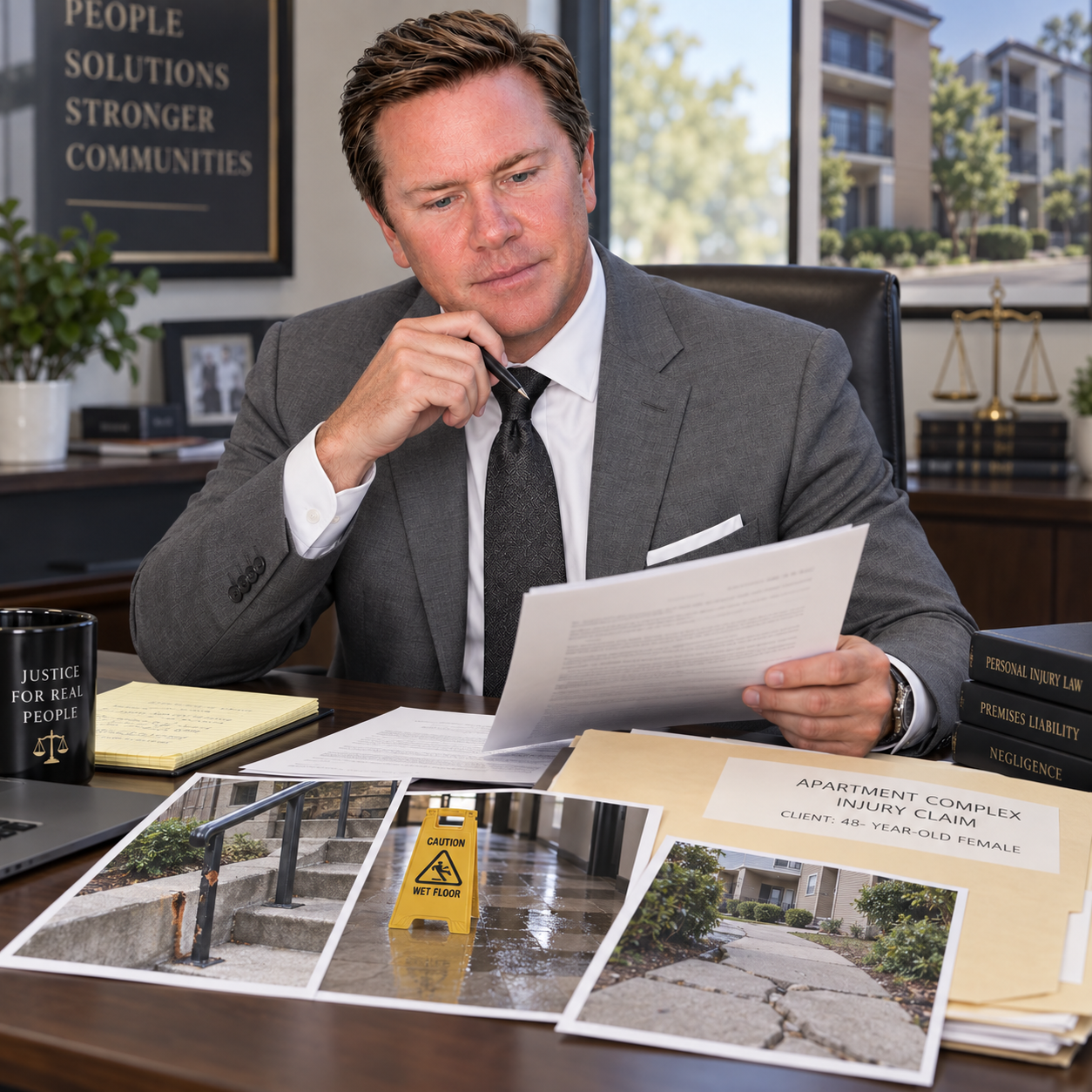
A fall at a Columbus apartment complex can raise more than immediate medical concerns when a dangerous property condition may have contributed to the injury. For tenants and lawful visitors, the evidence available during the first hours and days can become important when determining what happened, who controlled the area, whether the condition had previously been reported, and how the injury affected the person’s health and daily life.
Apartment injury claims are also highly fact-specific. A broken handrail presents different legal questions than naturally accumulated snow. A fall in a common stairwell may involve different responsibilities than an accident inside a tenant’s apartment. For that reason, careful documentation should begin as soon as it can be done safely. This guide explains what tenants and visitors should preserve after a slip-and-fall accident, how Ohio landlord duties may apply, and why early evidence preservation matters in a Columbus premises liability claim.
Call (614) 482-3793 today to schedule a complimentary consultation with a local Ohio personal injury attorney from Buckeye Law Group.
What Should You Document Immediately After a Fall?
Start by documenting the location, the condition that contributed to the fall, your injuries, the people who were present, and any communications with apartment management. Conditions can change quickly. A wet floor may be cleaned. A damaged stair may be repaired. A burned-out light may be replaced. Snow or ice may melt. Surveillance footage may be overwritten. Witnesses may also become more difficult to locate as time passes. If you can do so safely, photograph or record the exact area from several perspectives. Take close photographs of the suspected hazard and wider photographs showing how it relates to the surrounding property. Depending on the circumstances, important evidence may include:
- Scene photographs and video: Document the floor, stairway, sidewalk, railing, lighting, walkway, parking area, or other condition involved.
- Exact location: Record the apartment building, unit or building number, floor, stairwell, entrance, parking area, or other identifying information.
- Date and time: Record when the incident occurred and, when possible, preserve the original photograph and video files containing their metadata.
- Weather and lighting: Note rain, snow, ice, darkness, missing lights, glare, standing water, or other relevant conditions.
- Footwear and clothing: Preserve what you were wearing rather than discarding potentially relevant items.
- Witness information: Obtain names, telephone numbers, and email addresses when possible.
- Incident reports: Ask whether management, maintenance personnel, or security prepared a report and request a copy.
- Medical documentation: Preserve emergency department records, urgent-care records, prescriptions, imaging orders, specialist referrals, therapy records, and medical bills.
- Employment records: Keep documentation of missed work, reduced hours, wage loss, or employment restrictions.
- Daily limitations: Keep a factual record of symptoms and specific activities you are unable to perform or can perform only with difficulty.
Do not assume apartment management will preserve every piece of evidence that may later matter. If you believe a security camera recorded the area, document the camera’s location and make a written request that potentially relevant footage be preserved. An attorney may also consider whether a more formal preservation notice is appropriate.

What Duties Do Columbus Landlords Have?
Ohio Revised Code § 5321.04 establishes several obligations for residential landlords. Among other requirements, a landlord generally must comply with applicable building, housing, health, and safety codes that materially affect health and safety; make repairs reasonably necessary to keep the premises fit and habitable; keep common areas safe and sanitary; and maintain certain supplied systems and fixtures in safe working order.
These duties can become particularly important when an injury occurs in an area controlled or maintained by the apartment owner or management company, including a common stairway, hallway, lobby, elevator area, shared walkway, or other common space. Columbus also has local housing requirements. Columbus City Code § 4551.04 places responsibility on owners of dwellings containing two or more units to maintain shared or common areas in a clean and sanitary condition. However, the existence of a landlord duty does not automatically establish liability for an injury. The location of the accident, nature of the condition, control of the area, notice of the condition, causation, and other facts must still be evaluated.
Tenants and Visitors Can Raise Different, but Related, Questions
A visitor should not assume that Ohio’s landlord protections are limited entirely to the person named on the lease. In Mann v. Northgate Investors, L.L.C., a Franklin County apartment case, the Ohio Supreme Court held that a landlord’s statutory duty under R.C. § 5321.04(A)(3) to keep common areas safe extends to a tenant’s guest who is properly on the premises. That makes the exact location of the accident particularly important. Document whether the fall occurred in a shared hallway, stairwell, entrance, lobby, sidewalk, parking area, or another location and identify who appeared to control and maintain that area.
Evidence That May Help Establish Notice of a Dangerous Condition
One of the most important questions in many apartment injury cases is what the landlord or property manager knew, or reasonably should have known, about the condition before the accident. Ohio courts have explained that negligence per se is not the same as automatic liability. Depending on the particular statutory duty and circumstances, evidence concerning a landlord’s knowledge or notice of the defective condition can be important, along with proof that the condition caused the injury and resulting damages. Preserve communications that may establish when management first learned of the problem, including:
- Maintenance requests
- Resident-portal submissions
- Emails and text messages
- Letters
- Photographs previously sent to management
- Complaint confirmation numbers
- Work orders
- Voicemail records
- Prior inspection records, if available
- Communications from other tenants concerning the same condition
For example, repeated written reports about a loose stairway handrail may help establish when management learned about the condition and whether there was an opportunity to investigate or repair it before an injury occurred. When reporting a property condition, use specific facts rather than conclusions. Identify exactly where the condition is located, what you observed, when you observed it, and what action you are requesting.
A useful report might state: “The handrail in the second-floor east stairwell is loose and pulls away from the wall when pressure is applied. I first noticed the condition Monday evening, and it remains unrepaired today. Please inspect and repair the handrail.” Save a copy of the communication and any confirmation showing when it was submitted.
Special Considerations for Snow and Ice at Columbus Apartment Complexes
Snow-and-ice cases require particular care under Ohio law. Ohio generally does not impose liability on a landlord merely for failing to remove a natural accumulation of snow or ice from a common area. That means an apartment injury involving ordinary winter conditions should not automatically be treated the same as a fall caused by a broken stair, defective handrail, leaking pipe, inadequate lighting, or another property condition.
The analysis may be different when evidence suggests an unnatural accumulation, the property owner had superior knowledge of a particular danger, a contractual obligation applied, or another condition contributed to the fall. For example, ice allegedly resulting from leaking equipment or improperly directed drainage can present different factual questions than ice that formed solely from ordinary winter weather. Photograph the entire area, not just the patch of ice. Document nearby gutters, downspouts, drains, pipes, pavement slopes, standing water, roof runoff, and other conditions that could help explain how the ice formed.
Common Injuries and Losses After an Apartment Fall
Falls can cause injuries ranging from temporary sprains and bruising to fractures, ligament damage, head injuries, spinal injuries, or other conditions requiring extended medical treatment. What matters legally is not simply the diagnostic label. Medical evidence should help establish how the injury occurred, the treatment that became necessary, the person’s prognosis, and how the condition affected work and ordinary activities.
Depending on the facts and applicable Ohio law, recoverable damages in a premises liability case may include medical expenses, lost income, reduced earning capacity, pain and suffering, disability, disfigurement, and other legally compensable losses. Future damages generally require supporting evidence. A person claiming future treatment costs or long-term work limitations should not assume those losses will be accepted simply because they are requested. Keep records that establish both the financial and personal effects of the injury.
What If the Injured Person Was Visiting an Apartment?
Visitors should preserve many of the same records as tenants. Document who you were visiting, why you were on the property, where you entered, the route you took, the precise location of the fall, and what you observed immediately before and after the incident.
Ask the tenant whether the condition had existed previously or had been reported to management. Preserve any relevant communications rather than relying only on someone’s later recollection. The Ohio Supreme Court has recognized that certain statutory duties concerning apartment common areas can extend to a tenant’s lawful guest. Whether those duties were violated and whether a violation caused an injury still depend on the evidence.
Can You Report an Unsafe Apartment Condition in Columbus?
Depending on the nature of the condition, Columbus residents may have resources beyond reporting the problem directly to apartment management. The City of Columbus Code Enforcement Division enforces the city’s Housing Code and other property-related requirements. Columbus also allows residents to submit non-emergency service and code-enforcement requests through the city’s 311 Customer Service Center.
A government complaint does not establish a personal injury claim by itself. However, when appropriate, an inspection report, complaint history, violation notice, or related record may become relevant evidence concerning the condition of a property. Keep the request or case number and preserve any correspondence you receive from the city.
How Long Do You Have to Bring an Ohio Apartment Injury Claim?
Under Ohio Revised Code § 2305.10, an action for bodily injury generally must be brought within two years after the cause of action accrues, subject to the statute’s provisions and any other rules that may apply to a particular case. That does not mean waiting nearly two years is advisable.
Evidence can disappear long before a lawsuit deadline expires. Surveillance systems may overwrite recordings. Property conditions may be repaired. Maintenance personnel may change jobs. Witnesses may move. Records may become more difficult to obtain. For an apartment injury claim, evidence preservation can therefore be just as important as knowing the statute of limitations.
How Does Comparative Fault Affect an Ohio Premises Liability Claim?
Ohio follows a modified comparative-fault system. Under R.C. § 2315.33, a claimant’s compensatory damages may be reduced according to the percentage of fault attributed to that person. Recovery is barred when the claimant’s contributory fault is greater than the combined tortious conduct of the other persons considered under the statute. However, premises liability cases require more than simply asking whether an injured person “should have seen” a condition.
Ohio law distinguishes between common-law premises liability and claims involving certain statutory landlord duties. For example, the Ohio Supreme Court has held that a violation of the statutory duty to keep apartment common areas safe can constitute negligence per se and can affect application of the open-and-obvious doctrine. The proper analysis therefore depends on the location of the fall, the nature of the condition, the applicable duty, notice, causation, and the surrounding circumstances.
Protect the Evidence After a Columbus Apartment Injury
After a fall at a Columbus apartment complex, your health should come first. Once immediate medical needs are addressed, preserve the evidence while it still exists. Photograph the condition. Identify the exact location. Report the incident in writing. Keep copies of prior maintenance requests. Preserve witness information. Ask that relevant surveillance footage be retained. Maintain your medical and employment records. Document how the injury affects your ordinary activities.
These steps do not establish that a landlord or property owner is legally responsible. They create a more reliable factual record that can be used to determine what happened, whether an applicable duty was violated, whether management had notice of the condition, and whether that condition caused the injury. If an apartment fall caused a significant injury, required ongoing medical treatment, or involved a property condition that had previously been reported, speaking with an Ohio personal injury attorney can help you evaluate the evidence, applicable landlord duties, insurance issues, filing deadlines, and potential next steps before important evidence is lost.
Call (614) 482-3793 today to schedule a complimentary consultation with a local Ohio personal injury attorney from Buckeye Law Group.
*This article is provided for general educational purposes and does not constitute legal advice for any particular situation. Reading this article or contacting Buckeye Law Group does not, by itself, create an attorney-client relationship. Premises liability claims depend on the specific facts, applicable law, available evidence, and legal deadlines. Consult a qualified local Ohio attorney for advice concerning your individual circumstances.*
Injured at a Columbus Apartment Complex? What Tenants and Visitors Should Document
A fall at a Columbus apartment complex can raise more than immediate medical concerns when a dangerous property condition may have contributed to the injury. For tenants and lawful visitors,
What Happens After a Personal Injury Lawsuit Is Filed in Franklin County?
Filing a personal injury lawsuit in Franklin County, OH, places your claim within a formal court process governed by procedural rules and deadlines. After filing, the defendant must be served
What to Do After a Hit-and-Run Accident in Columbus, Ohio
A hit-and-run accident in Columbus, OH, or the neighboring communities can leave you hurt, shaken, and unsure how to prove what happened. The right response is simple but urgent: get
Injured as a Passenger in a Columbus Car Accident? Understanding Your Options
If you were injured as a passenger in a Columbus car accident, you may have more options than you realize. Passengers are usually not the person blamed for the crash,
Who Pays Medical Bills While an Ohio Car Accident Claim Is Pending?
After a crash, medical care cannot wait for an insurance settlement. In Ohio, the person who caused the collision may ultimately be responsible for injury-related losses, but the at-fault driver’s
Cleveland Premises Liability Lawyers: Understanding Property Injury Claims in Ohio
How Cleveland Premises Liability Lawyers Evaluate Property Injury Claims Under Ohio Law A serious injury on someone else’s property can raise immediate questions about medical bills, responsibility, and your next
How Long Does an Auto Accident Settlement Take in Ohio? A Guide to the Claims Process
Ohio Auto Accident Settlement Timeline: What to Expect From Claim to Payout An Ohio auto accident settlement can move quickly when injuries are minor, liability is clear, and records are
How Buckeye Law Group’s Slip and Fall Injury Lawyers Help Injured Ohioans Understand Their Legal Options
Ohio Slip and Fall Injury Lawyers Helping You Understand Your Rights After a Serious Injury A slip and fall can turn an ordinary trip to a store, apartment building, workplace,
How Can an Ohio Truck Accident Lawyer Help You Protect Your Rights After a Commercial Truck Crash?
Legal Guidance After an Ohio Truck Accident: How an Ohio Truck Accident Lawyer Can Support Your Claim A truck accident lawyer from Buckeye Law Group can help injured individuals and
Should You Accept An Insurance Settlement Offer? Why Ohio Injury Victims Should Speak With An Attorney First
After an accident, an insurance settlement offer may provide welcome financial relief while medical bills and lost wages continue to accumulate. However, accepting an offer before the full extent of

Buckeye Law Group represents people injured in auto accidents, slip and falls, workplace accidents and more in Ohio. Contact us today to learn more.
© 2026 Todos los derechos reservados | The Buckeye Law Group Inc. Políticade privacidad Mapa del sitio
Ubicaciones de las oficinas
- Akron Office 388 S Main St #400 Akron, OH 44311 (330) 426-0288
- Cincinnati Office 201 E 5th St Ste 1910 Cincinnati, OH 45202 (513) 547-2445
- Cleveland Office 127 Public Square Ste 1540 Cleveland, OH 44114 (216) 677-5490
- Columbus Office 20 E Broad St Suite 300 Columbus, OH 43215 (614) 482-3793
- Dayton Office 70 Birch Alley Ste 240 Dayton, OH 45440 (937) 884-4474
- Euclid Office 25701 N Lakeland Blvd Suite 113-C, Cleveland, OH 44132 (216) 405-2626
- Mansfield Office 305 E Main St Ste 6A, Mansfield, OH 44904 (567) 210-2606
- Findlay Office 7430 Timberstone Dr unit 101a, Findlay, OH 45840 419-873-5119
- Mentor Office 7537 Mentor Ave Ste 101, Mentor, OH 44060 (440) 306-3536
- Middletown Office 300 N Main St #400, Middletown, OH 45042 (326) 800-9150
- Parma Office 1257 Rockside Rd #A, Parma, OH 44131 (216) 279-1664
- Springfield Office 2100 E High St Ste TL3, Springfield, OH 45505 (937) 806-5791
- Toledo Office 3950 Sunforest Ct Ste 200, Toledo, OH 43623 (567) 483-3883
- Westlake Office 26404 Center Ridge Rd Ste B2, Westlake, OH 44145 216-247-0565
- Whitehall Office 5340 E Main St Ste 203, Whitehall, OH 43213 (380) 257-5206
- Youngstown Office 306 Churchill Hubbard Rd, Youngstown, OH 44505 (234) 225-0683
Contáctenos
© 2026 Todos los derechos reservados | The Buckeye Law Group Inc. Políticade privacidad Mapa del sitio