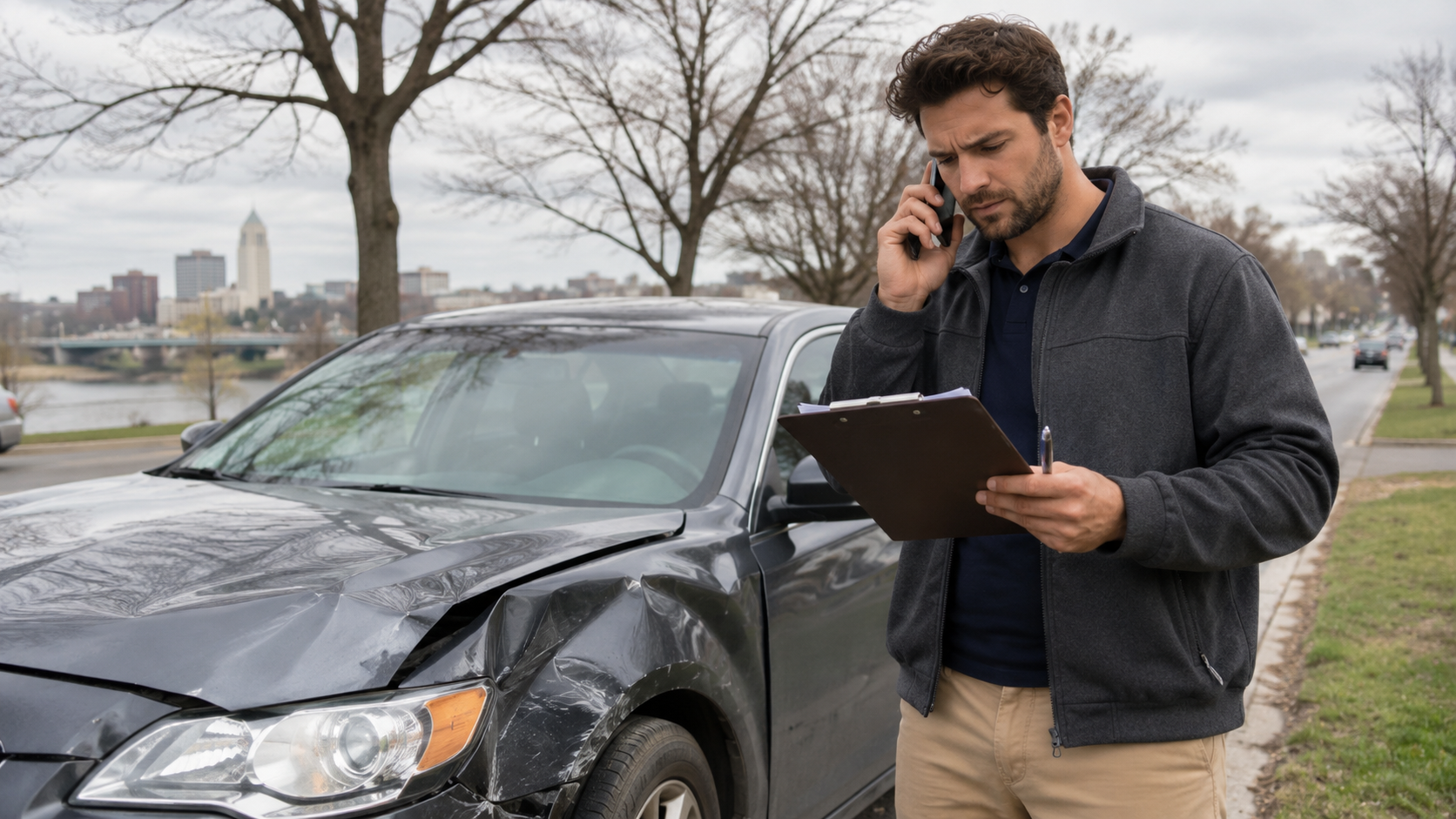
After an Ohio car accident, an insurance settlement offer may arrive while medical treatment continues and fault remains disputed. If the insurance company won’t offer a fair settlement, you do not necessarily have to accept its proposed amount. You can request an explanation, present additional evidence, negotiate, pursue appropriate complaint procedures, or consider legal action. Your options depend on the evidence and insurance coverage.
Call 1-800-411-PAIN or request a free consultation today to speak with an experienced Local Ohio personal injury attorney at Buckeye Law Group.
Can You Refuse a Low Insurance Settlement Offer?
Yes. A settlement is an agreement; receiving an offer generally does not require you to accept it. Ohio’s Department of Insurance automobile guide recognizes that consumers may negotiate with an adjuster. A disappointing offer does not automatically violate insurance law: liability, injury causation, damages, and coverage may be disputed. Understand precisely what the insurance settlement offer includes before accepting it. Property damage and bodily injury claims may be evaluated and resolved separately. Carefully review the proposed settlement agreement and release to determine which claims, injuries, damages, and potentially liable parties are covered. Accepting a settlement and signing a release may limit or permanently waive your right to pursue additional compensation.
Why Might an Insurance Company Offer Insufficient Compensation?
An initial evaluation may exclude information the adjuster has not yet received. Common disagreements concern:
- Medical Evidence: Whether treatment, symptoms, or future care are connected to the collision.
- Income Losses: Whether missed work, reduced hours, or diminished earning capacity are documented.
- Fault: Whether another driver was fully responsible or the injured person contributed to the accident.
- Policy Coverage: Whether an exclusion, deductible, or coverage limit affects payment.
- Property Damage: Whether repair costs or the vehicle’s pre-crash value are accurately calculated.
Five Steps to Take Before Negotiating an Insurance Settlement
- Request The Insurer’s Reasoning In Writing: Ask the adjuster to identify disputed facts, omitted expenses, any fault percentage assigned to you, and relevant policy provisions. Keep a record of communications and deadlines. Under Ohio Administrative Code Rule 3901-1-54, insurers must document the application of comparative negligence and disclose that information upon a claimant’s written request.
- Organize The Evidence Supporting Your Claim: Gather the crash report, scene photographs, witness information, treatment records, itemized bills, repair estimates, and records of work missed. Ask your medical providers about documented limitations and reasonably anticipated care. A factual symptom diary may document daily limitations.
- Calculate Losses Beyond The First Hospital Bill: Depending on the circumstances, an Ohio injury claim may involve past and reasonably supported future medical expenses, lost earnings, reduced earning capacity, pain and suffering, and other legally recoverable harm. Separate amounts already incurred from future projections. Account for liens, reimbursement claims, fees, and costs in your potential net recovery.
- Submit A Documented Counteroffer: Explain why the current figure is inadequate, attach the strongest supporting records, and state the amount requested and its basis. Avoid inventing a formula or applying a generic multiplier to medical bills. Support the request with evidence.
- Review The Release Before Accepting Payment: A final bodily injury release may prevent future recovery for the injuries covered, even if additional expenses appear later. Determine whether the offer addresses bodily injury, property damage, or both. If treatment or prognosis remains uncertain, consider obtaining individualized legal advice before resolving the injury claim.
How Does Ohio Law Affect Settlement Negotiations?
Shared fault can reduce compensation
Under Ohio Revised Code § 2315.33, an injured plaintiff generally may recover when their share of fault is not greater than the combined fault of others, but recoverable compensatory damages are reduced proportionately. If an adjuster asserts that you were partly responsible, request the evidence and calculation. The insurer’s assessment is not a binding court determination.
Claims-handling rules establish procedures, not guaranteed payouts
Ohio Administrative Code Rule 3901-1-54 generally requires insurers to acknowledge a claim within 15 days. After properly executed proof of loss, a 21-day decision rule applies, with notices required for continued investigation. These rules do not mean every disputed injury claim must settle within 21 days; the rule itself does not create a private lawsuit solely for its violation.
The filing deadline continues during negotiations
Ohio Revised Code § 2305.10 generally allows two years from accrual for a bodily injury lawsuit arising from a car accident, subject to case-specific exceptions. Negotiations and complaints do not automatically suspend that deadline; policy deadlines may also apply.
What If the Other Driver’s Insurance Is Not Enough?
Documented damages can exceed available insurance. Ohio’s minimum required bodily injury liability limits are $25,000 per injured person and $50,000 per accident. A serious injury may exceed those limits. Review whether additional responsible parties or other applicable policies exist. Purchased underinsured motorist coverage may apply, depending on statutory and policy conditions; Ohio does not require it. Medical payments coverage, when purchased, may address certain expenses irrespective of fault. Do not assume that any one policy will cover every loss.
What Happens When Negotiations Reach an Impasse?
Start by requesting review from the claims supervisor. For an unresolved dispute over your own policy, review any applicable appraisal or arbitration clause; these procedures are not automatically available for every third-party bodily injury claim. You may also submit a complaint to the Ohio Department of Insurance. The department can investigate claims-handling practices and possible rule violations, but it cannot act as your attorney or simply order an insurer to pay your preferred settlement amount. When appropriate, a personal injury attorney can evaluate a lawsuit against the allegedly responsible party. Litigation may involve document exchange, testimony, expert evaluation, mediation, and possibly trial. Settlement remains possible during litigation, without guaranteed results.
Important Distinction: Disputing the at-fault driver’s insurer is not the same as asserting bad faith against your own insurer. Ohio generally does not permit an injured third-party claimant to sue the other driver’s insurer directly for bad-faith settlement handling. Legal options vary.
Ohio Resources for an Insurance Claim Dispute
- Ohio Department Of Insurance: Visit its consumer complaint information page or call (800) 686-1526 for guidance on complaints and insurance rules.
- Crash Report Access: Search the Ohio Department of Public Safety’s crash report system. For an official report, contact the investigating agency.
- Ohio State Highway Patrol Investigations: Use its public records and reports request page for official Highway Patrol crash documents and photographs.
Frequently Asked Questions About Low Car Accident Settlement Offers
- Can I reject the first offer without losing my claim? Generally, yes. Rejecting an offer does not itself extinguish a valid injury claim. However, deadlines, policy conditions, and the evidence still matter. Keep the rejection and any counteroffer in writing.
- How do I know whether the insurance settlement offer is too low? Compare the offer with supported current and future losses, the evidence of responsibility, policy limits, and any liens or reimbursements. No calculator can determine every claim’s value.
- Can I sue an insurance company for offering too little? Not automatically. Ohio usually directs an injured person’s negligence lawsuit against the allegedly at-fault party, rather than that party’s insurer. Claims involving your own insurer raise different contractual and bad-faith questions.
- Will an Ohio insurance complaint increase my settlement? Not necessarily. Regulators may investigate improper claims handling, but they do not replace negotiations, determine personal injury damages, or guarantee additional payment.
- Should I accept a settlement while I am still receiving treatment? Consider the risk carefully. If future treatment needs or recovery are uncertain, settling a bodily injury claim may leave later expenses uncompensated. A local Ohio attorney can review the specific release and medical evidence before you decide.
Understand Your Options Before Signing a Settlement Agreement
An insurance company’s initial settlement offer does not necessarily reflect the full value of a personal injury claim. Before accepting an offer, injured individuals should carefully evaluate their medical expenses, lost income, anticipated future treatment, and other recoverable damages. Identifying disputed issues, preserving supporting evidence, and understanding the legal consequences of a settlement are essential steps toward protecting your interests.
Call 1-800-411-PAIN or request a free consultation today to speak with an experienced Local Ohio personal injury attorney at Buckeye Law Group.
Legal information: Current as of November 6, 2026. This article does not constitute legal advice or establish an attorney-client relationship with Buckeye Law Group. Claims, deadlines, insurance policies, and recoverable damages depend on individual circumstances. Prior results do not guarantee a similar outcome.
What Happens If an Insurance Company Won’t Offer a Fair Settlement After a Car Accident?
After an Ohio car accident, an insurance settlement offer may arrive while medical treatment continues and fault remains disputed. If the insurance company won’t offer a fair settlement, you do
Toledo’s Summit Street Cycle Track: What the 2026–2027 Redesign Means for Cyclist and Pedestrian Safety
Toledo’s Summit Street Cycle Track project is a two-phase reconstruction intended to make a section of North Summit Street safer and more connected for people walking and bicycling. In 2026,
Greater Dayton’s 2026 E-Bike and E-Moto Safety Proposal: What Ohio Riders and Parents Should Know
Electric bicycles and other small electric-powered vehicles are becoming increasingly common on roads, neighborhood streets, and recreational trails throughout Greater Dayton. Their growing use also raises important questions about rider
Dayton’s Keowee Street Safety Project: How Lane Reductions and New Walking Paths Could Improve Roadway Safety
Dayton’s Keowee Street safety project would reduce the roadway from seven lanes to five between East Fifth Street and East Monument Avenue, adding multi-use paths, landscaping, and signal upgrades. The
Dayton I-75 Construction in November 2026: Lane Closures, Traffic Shifts, and Work-Zone Safety
Motorists traveling along I-75 through Dayton, Ohio, in November 2026 should be aware of multiple construction projects that may affect travel times, lane configurations, and access to nearby interchanges. According
Columbus I-70/I-71 Construction in November 2026: Ramp Closures, Detours, and Driver Safety
Motorists traveling through downtown Columbus, Ohio, in November 2026 should prepare for temporary traffic disruptions as construction continues along the I-70/I-71 corridor. Overnight interstate restrictions, ramp closures, and designated detours
Mansfield’s Main Street Transformation: What Drivers and Pedestrians Should Know About Downtown Traffic Changes in 2026
As Mansfield completes its 2026 Main Street Transformation, residents and visitors should understand how the redesigned streets affect access to downtown businesses, public buildings, pedestrian crossings, and nearby parking areas.
Toledo’s Douglas Road and Monroe Street Intersection Improvements: What Drivers and Pedestrians Should Know in 2026
The City of Toledo identifies the Douglas Road and Monroe Street intersection as a 2026 improvement project intended to support pedestrian safety, driver safety, and better pavement conditions. For people
Springfield’s South Limestone Street Safety Improvements: What Drivers Should Know
South Limestone Street in Springfield, Ohio, is the focus of safety improvements intended to reduce conflicts between vehicles entering, leaving, and traveling along the corridor. The Ohio Department of Transportation’s
Middletown’s 2026 Safe Streets and Roads for All Initiative: What Residents Should Know
Middletown, Ohio’s Safe Streets and Roads for All (SS4A) effort is best understood as a road-safety planning-and-delivery process funded through the U.S. Department of Transportation. For residents following this community

Buckeye Law Group represents people injured in auto accidents, slip and falls, workplace accidents and more in Ohio. Contact us today to learn more.
© 2026 Todos los derechos reservados | The Buckeye Law Group Inc. Políticade privacidad Mapa del sitio
Ubicaciones de las oficinas
- Akron Office 388 S Main St #400 Akron, OH 44311 (330) 426-0288
- Cincinnati Office 201 E 5th St Ste 1910 Cincinnati, OH 45202 (513) 547-2445
- Cleveland Office 127 Public Square Ste 1540 Cleveland, OH 44114 (216) 677-5490
- Columbus Office 20 E Broad St Suite 300 Columbus, OH 43215 (614) 482-3793
- Dayton Office 70 Birch Alley Ste 240 Dayton, OH 45440 (937) 884-4474
- Euclid Office 25701 N Lakeland Blvd Suite 113-C, Cleveland, OH 44132 (216) 405-2626
- Mansfield Office 305 E Main St Ste 6A, Mansfield, OH 44904 (567) 210-2606
- Findlay Office 7430 Timberstone Dr unit 101a, Findlay, OH 45840 419-873-5119
- Mentor Office 7537 Mentor Ave Ste 101, Mentor, OH 44060 (440) 306-3536
- Middletown Office 300 N Main St #400, Middletown, OH 45042 (326) 800-9150
- Parma Office 1257 Rockside Rd #A, Parma, OH 44131 (216) 279-1664
- Springfield Office 2100 E High St Ste TL3, Springfield, OH 45505 (937) 806-5791
- Toledo Office 3950 Sunforest Ct Ste 200, Toledo, OH 43623 (567) 483-3883
- Westlake Office 26404 Center Ridge Rd Ste B2, Westlake, OH 44145 216-247-0565
- Whitehall Office 5340 E Main St Ste 203, Whitehall, OH 43213 (380) 257-5206
- Youngstown Office 306 Churchill Hubbard Rd, Youngstown, OH 44505 (234) 225-0683
Contáctenos
© 2026 Todos los derechos reservados | The Buckeye Law Group Inc. Políticade privacidad Mapa del sitio