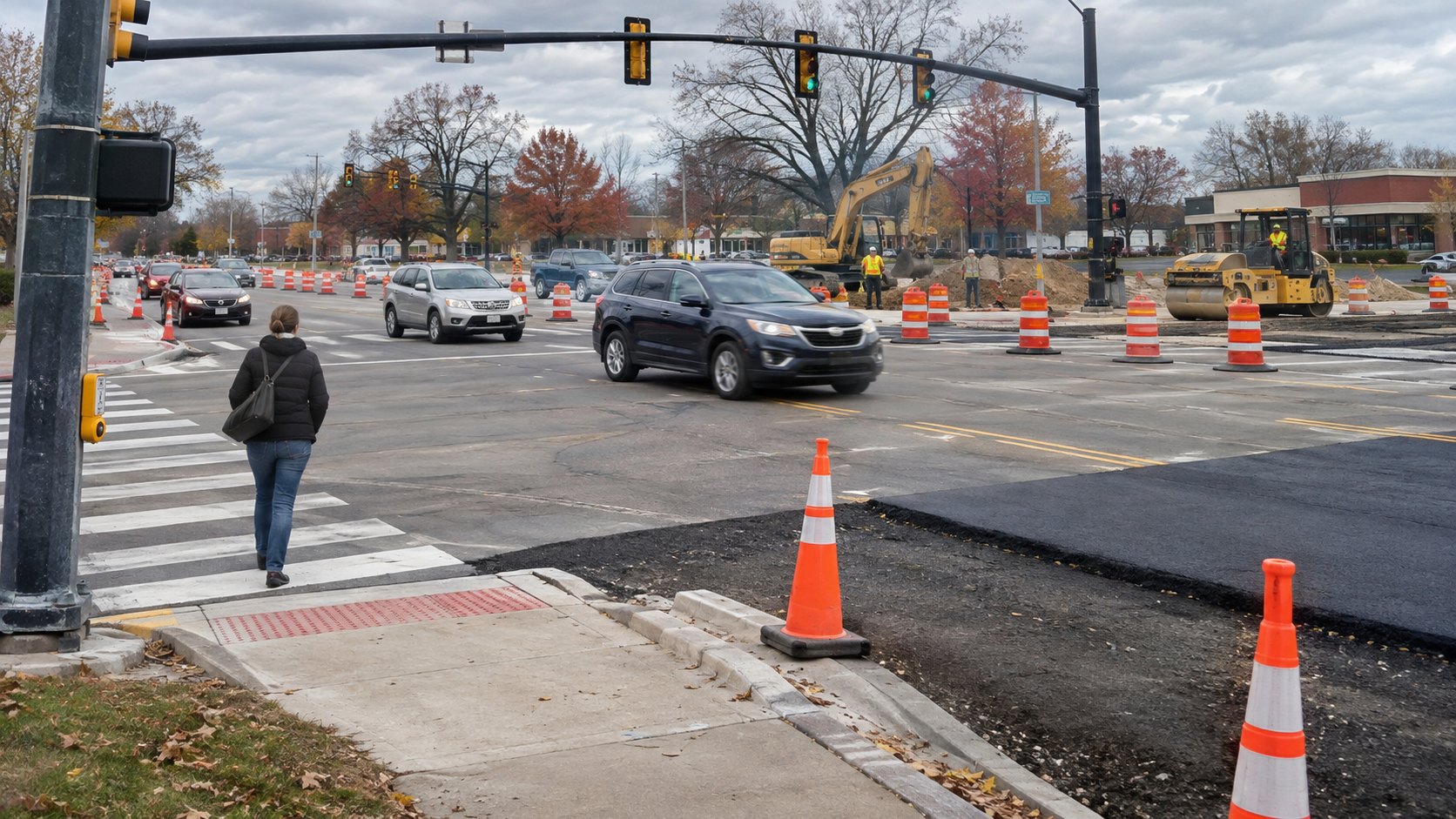
Construction along East Broad Street and Hamilton Road continues to affect travel through Whitehall, Ohio, as roadway improvements progress into November 2026. The ongoing work includes intersection modifications, additional turning lanes, median construction, and related infrastructure improvements intended to address congestion and improve traffic operations.
Understanding these roadway changes is essential for Whitehall residents, commuters, pedestrians, and public transit passengers navigating the affected areas safely and efficiently. Familiar travel patterns may no longer match current lane markings, and construction activities can temporarily affect sidewalks, intersections, and nearby business access. Recent City of Whitehall updates provide important information about the project’s progress, anticipated winter conditions, and precautions travelers should consider.
Call (380) 257-5206 or request a free consultation to speak with an experienced local Whitehall personal injury attorney at Buckeye Law Group today.
What Is the Current Status of Construction at Broad Street and Hamilton Road?
The intersection of East Broad Street (State Route 16) and Hamilton Road (State Route 317) is undergoing improvements coordinated by the Ohio Department of Transportation (ODOT). According to ODOT’s intersection improvement information, the project is intended to increase roadway capacity, provide dedicated turning lanes, and modify certain driveway entrances and median openings to improve traffic flow. Although earlier project documents anticipated completion before November 2026, more recent city records confirm that additional work remains.
During the October 27, 2026, Whitehall City Council committee meeting, Public Service Director Casey Rowlands discussed ongoing construction along Hamilton Road between Fairway Boulevard and Broad Street. According to the official meeting minutes, the contractor anticipated installing temporary pavement for winter and returning for final paving in the spring. The city also expected the roadway to return to a two-lane configuration by winter. These statements describe anticipated construction milestones, not confirmation that particular lanes have reopened or that all remaining improvements will be completed on a specific date.
How Is East Broad Street’s Separate Reconstruction Project Progressing?
Whitehall is also advancing a broader program of East Broad Street reconstruction. The city’s 2026 project schedule identifies Phase 4 along East Broad Street between Eastway Village and Parklawn Boulevard, with a tentative construction start in the third quarter of 2026 and an estimated completion in the second quarter of 2027.
This separate project includes roadway reconstruction, sidewalk replacement, shared-use path additions, stormwater improvements, street lighting, and bus stop infrastructure. Drivers should distinguish these improvements from the Broad Street–Hamilton Road intersection project. Construction notices for one section of East Broad Street do not necessarily describe conditions at another.
How Have Traffic Patterns Changed at Broad Street and Hamilton Road?
One significant concern involves the intersection’s modified turning-lane configuration. During an April 21, 2026, Whitehall City Council meeting, officials discussed changes from a familiar configuration with two through lanes to one with designated right-turn, through, and left-turn lanes. Council members expressed concern that motorists accustomed to the previous configuration might enter the wrong lane.
City officials reported that ODOT had added pavement markings, arrow boards, and signage to help drivers recognize the revised arrangement. Because additional construction has continued, motorists should not assume the configuration documented in April remains unchanged throughout November. Drivers approaching the intersection should:
- Identify The Correct Lane Early: Follow current signs, traffic signals, and pavement markings rather than relying on familiar turning patterns.
- Avoid Abrupt Lane Changes: Allow sufficient distance to respond to temporary traffic controls and vehicles slowing ahead.
- Watch For Pedestrians And Workers: Check intersections, turning movements, and construction entrances carefully.
- Adjust Driving To Visibility And Road Conditions: Temporary surfaces, darkness, rain, and construction equipment may require additional caution.
The appropriate travel lane is determined by current traffic controls, not an earlier project diagram.
What Should Pedestrians Know About Sidewalk and Crosswalk Access?
Road construction can create particular challenges for pedestrians, including individuals using wheelchairs, mobility aids, or public transportation. Temporary construction activities may change sidewalk access, curb ramps, pedestrian signals, or the location of a designated crossing.
At Broad Street and Hamilton Road, planned improvements include pedestrian infrastructure and changes to roadway geometry. However, a proposed or partially constructed improvement should not be treated as an accessible, completed route. Pedestrians should follow designated temporary walkways and official crossing instructions. If a sidewalk is obstructed, look for an authorized accessible alternative rather than entering an active work area. Crossing distances, vehicle turning movements, and visibility deserve particular attention near newly configured intersections.
Public Transit Passengers Should Check COTA Stop Locations
Construction has also affected Central Ohio Transit Authority (COTA) service near the intersection. COTA’s published reroute information identifies temporary closures affecting Stops 2509 and 7387 at East Broad Street and South Hamilton Road, beginning April 2, 2026.
Although the original notice estimated a two-to-three-month disruption, it remains important to verify whether the affected stops have reopened. Passengers should check COTA’s official reroute notices before traveling and confirm the appropriate stop for their route and direction.
What Ohio Traffic Laws Apply During Road Construction?
Construction does not eliminate the traffic laws governing drivers and pedestrians. Several Ohio statutes are especially relevant to changing intersection conditions.
Pedestrian Right-of-Way and Crosswalks
Under Ohio Revised Code § 4511.46, drivers generally must yield to pedestrians in crosswalks when traffic signals are absent, inoperative, or not clearly assigning right-of-way, subject to the statute’s conditions.
Ohio Revised Code § 4511.48 generally requires pedestrians crossing outside marked or unmarked intersection crosswalks to yield to roadway traffic. Importantly, this does not eliminate a driver’s obligation to exercise due care to avoid striking a pedestrian.
Where pedestrian signals operate, Ohio Revised Code § 4511.14 establishes instructions governing when pedestrians may begin or continue crossing. Pedestrians should follow these signals, remain alert for turning vehicles, and pay particular attention to temporary traffic controls or modified crossing routes near active construction zones.
Distracted Driving in Construction Zones
Ohio’s Hands-Free Law, Revised Code § 4511.204, generally prohibits drivers from using, holding, or physically supporting electronic wireless communication devices while operating vehicles, subject to statutory exceptions. Motorists should establish navigation instructions before traveling and avoid interacting with devices when approaching unfamiliar construction patterns.
What Should You Do After an Accident Near the Construction Area?
A collision near Broad Street and Hamilton Road may involve multiple contributing circumstances. Construction activity alone does not establish negligence or determine who is legally responsible. If a crash occurs, prioritize medical attention and personal safety. Call 911 when emergency assistance is necessary and follow responding officers’ instructions.
When circumstances permit, preserve photographs of the vehicles, roadway, traffic signals, temporary signs, pavement markings, and surrounding construction conditions. Also document the exact location, direction of travel, date, time, weather conditions, and contact information for available witnesses. Evidence may become more difficult to obtain as construction crews relocate equipment or alter traffic-control arrangements.
Can an Injured Person Pursue Compensation?
Determining responsibility requires examining the available evidence, applicable traffic laws, and conduct of the parties involved. Under Ohio Revised Code § 2315.33, an injured person may recover damages when their percentage of fault is not greater than the combined fault of the other responsible parties, with recoverable damages reduced proportionately.
Most Ohio personal injury lawsuits are generally subject to a two-year filing period under Ohio Revised Code § 2305.10, although exceptions and different requirements may apply. Claims potentially involving governmental entities, roadway maintenance, or construction contractors require additional legal analysis. Responsibility cannot be established merely because an accident occurred inside a work zone.
Helpful Resources for Whitehall and Franklin County Residents
Residents can obtain project information and public services through several official resources:
- City of Whitehall Public Service Department: Questions about municipal roadway improvements, sidewalks, and construction concerns can be directed to (614) 246-7853 or the city’s Capital Improvement Plan.
- ODOT and OHGO: Consult Franklin County traffic advisories and OHGO for available construction information, traffic restrictions, and travel conditions.
- Whitehall Division of Police: The police department is located at 365 South Yearling Road, Whitehall, OH 43213. For non-emergency assistance, contact (614) 237-6333. Call 911 for emergencies.
- Ohio Crash Report Search: The Ohio Department of Public Safety provides online access to submitted crash reports. Reports may take up to six weeks to appear; official copies should be requested from the investigating agency.
Frequently Asked Questions About Whitehall Road Construction
- Is the Broad Street and Hamilton Road intersection construction finished? Not completely, according to the October 27, 2026, Whitehall City Council update. Officials described remaining roadway work and anticipated final paving after winter. Travelers should confirm subsequent developments through official sources.
- Will Hamilton Road remain open during November 2026? City officials anticipated restoring two lanes by winter, but that statement does not confirm daily lane availability. Motorists should follow current traffic controls and verify restrictions before traveling.
- Are pedestrians allowed to walk through construction areas? Pedestrians should use designated, accessible routes and follow applicable traffic-control instructions. An unfinished sidewalk or construction area should not be assumed safe for pedestrian travel.
- Are COTA bus stops affected by the construction? COTA published temporary closures for stops near East Broad Street and South Hamilton Road. Passengers should consult current COTA reroute information to verify stop availability and alternatives.
- Who may be responsible for an accident in a Whitehall construction zone? Determining liability for an accident in a construction zone requires a careful evaluation of the circumstances surrounding the collision. Factors such as driver negligence, compliance with traffic-control devices, roadway conditions, construction-zone signage, and available evidence may help establish responsibility. However, the presence of ongoing roadwork does not automatically make a construction contractor or government agency liable. Each claim must be evaluated based on the applicable Ohio laws, the conduct of the parties involved, and the specific circumstances of the accident.
Staying Informed as Whitehall’s Road Improvements Continue
Whitehall’s Broad Street and Hamilton Road improvements represent an ongoing effort to modernize a heavily traveled intersection and surrounding transportation infrastructure. As construction progresses through November 2026, drivers and pedestrians should remain attentive to changing conditions, follow official traffic controls, and consult current project updates rather than relying solely on earlier construction schedules.
Individuals injured in a collision may also benefit from understanding how Ohio traffic laws, insurance coverage, and available evidence apply to their circumstances. Buckeye Law Group’s Whitehall personal injury attorneys offer free consultations to discuss potential injury claims, relevant documentation, and available legal options. Each situation requires an individual assessment, and no particular outcome can be guaranteed.
Call (380) 257-5206 or request a free consultation today to speak with an experienced local Whitehall personal injury attorney at Buckeye Law Group.
Legal Disclaimer: This article is provided by Buckeye Law Group for general educational and informational purposes only and reflects information concerning Whitehall’s Broad Street and Hamilton Road construction, pedestrian safety, and Ohio personal injury law as of November 10, 2026. It does not constitute individualized legal, medical, or transportation advice. Any discussion of Ohio traffic laws, negligence, liability, insurance coverage, potential compensation, or legal filing deadlines is intended to provide general guidance. Construction schedules, traffic restrictions, and applicable legal requirements are subject to change. Every personal injury claim is unique and depends on its specific facts, available evidence, applicable laws, and individual circumstances. Reading this article or contacting Buckeye Law Group does not, by itself, establish an attorney-client relationship.
Buckeye Law Group offers free consultations and represents eligible personal injury clients on a contingency-fee basis. This means there are no upfront attorney fees, and you do not pay attorney fees unless we recover compensation for you. Any applicable case costs, litigation expenses, and financial obligations are explained in the written fee agreement. Past case results do not guarantee or predict future outcomes. Individuals seeking advice regarding a specific accident, injury, or legal matter should consult a qualified local Ohio personal injury attorney.
Whitehall’s Broad Street and Hamilton Road Construction: What Drivers and Pedestrians Should Know in November 2026
Construction along East Broad Street and Hamilton Road continues to affect travel through Whitehall, Ohio, as roadway improvements progress into November 2026. The ongoing work includes intersection modifications, additional turning
How Much Should an Insurance Company Pay for Injuries After a Car Accident?
After an Ohio car accident, an insurance company may offer a settlement before the full extent of your injuries, anticipated medical treatment, or long-term financial losses becomes clear. Ohio law
What Happens If an Insurance Company Won’t Offer a Fair Settlement After a Car Accident?
After an Ohio car accident, an insurance settlement offer may arrive while medical treatment continues and fault remains disputed. If the insurance company won’t offer a fair settlement, you do
Toledo’s Summit Street Cycle Track: What the 2026–2027 Redesign Means for Cyclist and Pedestrian Safety
Toledo’s Summit Street Cycle Track project is a two-phase reconstruction intended to make a section of North Summit Street safer and more connected for people walking and bicycling. In 2026,
Greater Dayton’s 2026 E-Bike and E-Moto Safety Proposal: What Ohio Riders and Parents Should Know
Electric bicycles and other small electric-powered vehicles are becoming increasingly common on roads, neighborhood streets, and recreational trails throughout Greater Dayton. Their growing use also raises important questions about rider
Dayton’s Keowee Street Safety Project: How Lane Reductions and New Walking Paths Could Improve Roadway Safety
Dayton’s Keowee Street safety project would reduce the roadway from seven lanes to five between East Fifth Street and East Monument Avenue, adding multi-use paths, landscaping, and signal upgrades. The
Dayton I-75 Construction in November 2026: Lane Closures, Traffic Shifts, and Work-Zone Safety
Motorists traveling along I-75 through Dayton, Ohio, in November 2026 should be aware of multiple construction projects that may affect travel times, lane configurations, and access to nearby interchanges. According
Columbus I-70/I-71 Construction in November 2026: Ramp Closures, Detours, and Driver Safety
Motorists traveling through downtown Columbus, Ohio, in November 2026 should prepare for temporary traffic disruptions as construction continues along the I-70/I-71 corridor. Overnight interstate restrictions, ramp closures, and designated detours
Mansfield’s Main Street Transformation: What Drivers and Pedestrians Should Know About Downtown Traffic Changes in 2026
As Mansfield completes its 2026 Main Street Transformation, residents and visitors should understand how the redesigned streets affect access to downtown businesses, public buildings, pedestrian crossings, and nearby parking areas.
Toledo’s Douglas Road and Monroe Street Intersection Improvements: What Drivers and Pedestrians Should Know in 2026
The City of Toledo identifies the Douglas Road and Monroe Street intersection as a 2026 improvement project intended to support pedestrian safety, driver safety, and better pavement conditions. For people

Buckeye Law Group represents people injured in auto accidents, slip and falls, workplace accidents and more in Ohio. Contact us today to learn more.
© 2026 Todos los derechos reservados | The Buckeye Law Group Inc. Políticade privacidad Mapa del sitio
Ubicaciones de las oficinas
- Akron Office 388 S Main St #400 Akron, OH 44311 (330) 426-0288
- Cincinnati Office 201 E 5th St Ste 1910 Cincinnati, OH 45202 (513) 547-2445
- Cleveland Office 127 Public Square Ste 1540 Cleveland, OH 44114 (216) 677-5490
- Columbus Office 20 E Broad St Suite 300 Columbus, OH 43215 (614) 482-3793
- Dayton Office 70 Birch Alley Ste 240 Dayton, OH 45440 (937) 884-4474
- Euclid Office 25701 N Lakeland Blvd Suite 113-C, Cleveland, OH 44132 (216) 405-2626
- Mansfield Office 305 E Main St Ste 6A, Mansfield, OH 44904 (567) 210-2606
- Findlay Office 7430 Timberstone Dr unit 101a, Findlay, OH 45840 419-873-5119
- Mentor Office 7537 Mentor Ave Ste 101, Mentor, OH 44060 (440) 306-3536
- Middletown Office 300 N Main St #400, Middletown, OH 45042 (326) 800-9150
- Parma Office 1257 Rockside Rd #A, Parma, OH 44131 (216) 279-1664
- Springfield Office 2100 E High St Ste TL3, Springfield, OH 45505 (937) 806-5791
- Toledo Office 3950 Sunforest Ct Ste 200, Toledo, OH 43623 (567) 483-3883
- Westlake Office 26404 Center Ridge Rd Ste B2, Westlake, OH 44145 216-247-0565
- Whitehall Office 5340 E Main St Ste 203, Whitehall, OH 43213 (380) 257-5206
- Youngstown Office 306 Churchill Hubbard Rd, Youngstown, OH 44505 (234) 225-0683
Contáctenos
© 2026 Todos los derechos reservados | The Buckeye Law Group Inc. Políticade privacidad Mapa del sitio