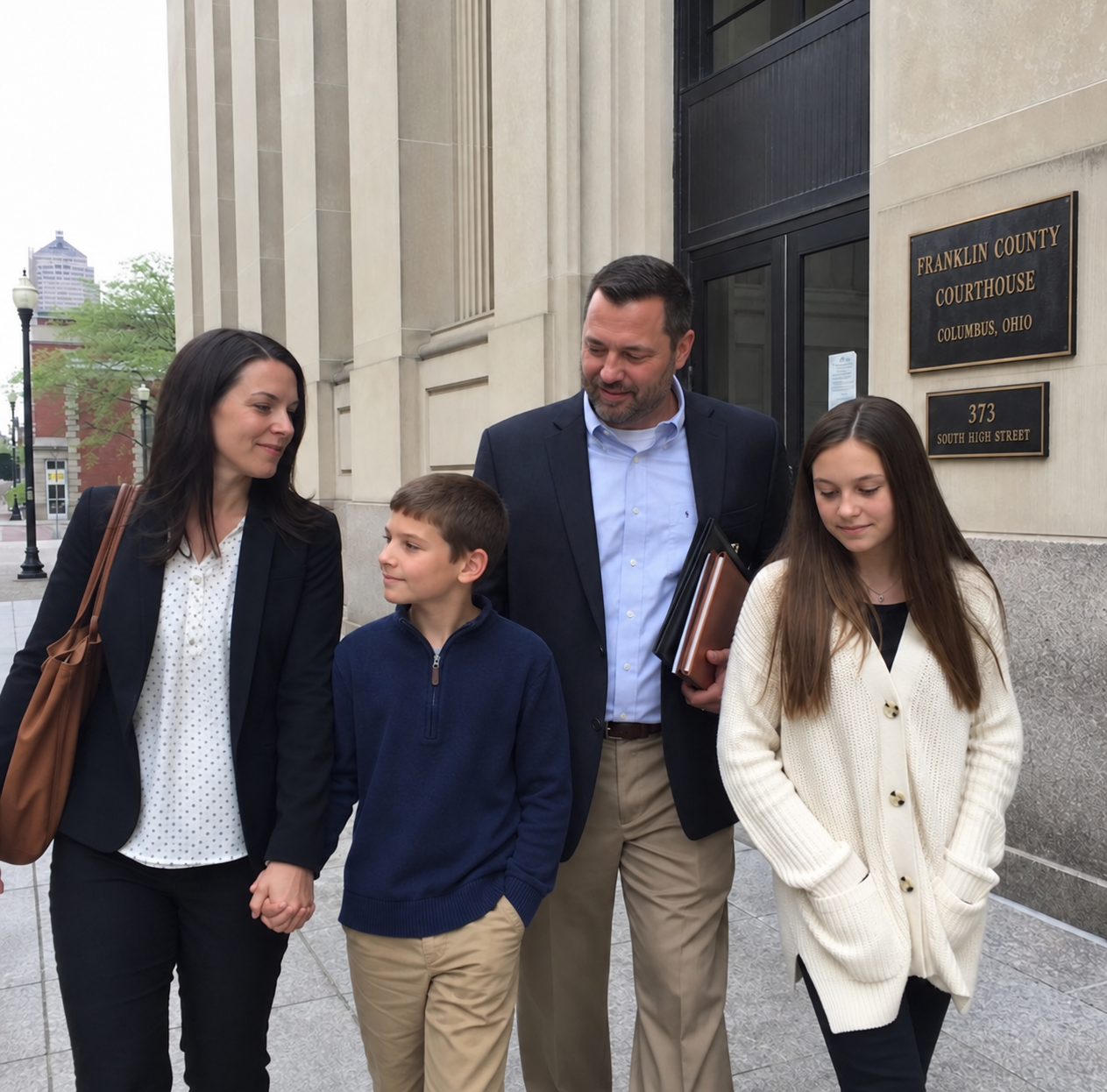
The wrongful death of a loved one can leave a family facing significant emotional and financial hardships, particularly when the loss results from another party’s negligence. Under Ohio law, surviving family members may be entitled to pursue compensation and hold responsible parties accountable. This guide explains how wrongful death claims are handled in Columbus, who has the legal authority to file a claim, which surviving family members may be eligible for compensation, and the damages that may be recoverable. It also examines how an experienced Columbus wrongful death attorney can help families navigate the legal process, preserve critical evidence, and protect their rights while pursuing accountability for their loss.
Call (614) 482-3793 or request a free consultation today to speak with an experienced Columbus wrongful death lawyer at Buckeye Law Group.
Who can file a wrongful death lawsuit in Ohio?
In Ohio, the lawsuit is filed by the personal representative of the deceased person’s estate, not separately by every grieving family member. That representative may be named in a will as executor, or appointed by the probate court as administrator if there is no will or no available executor. The case is brought for the benefit of surviving family members, including the spouse, children, parents, and, in some cases, other next of kin.
This point matters because families often know they have suffered the loss, but do not know who has legal authority to act. A surviving spouse, adult child, or parent may be the person most affected emotionally and financially, yet the court still needs the proper estate representative in place. A Columbus personal injury lawyer handling fatal accident claims can usually help coordinate the probate step while also investigating the accident.
If multiple relatives disagree about who should serve or how a settlement should be distributed, the process can become more complicated. That does not mean the case cannot move forward. It means the legal team must keep the wrongful death claim, probate responsibilities, and beneficiary rights aligned from the beginning.
The difference between wrongful death and survival claims
A wrongful death claim in Columbus seeks to hold negligent parties accountable while pursuing compensation for the financial losses and emotional suffering experienced by surviving family members following the loss of a loved one. That may include the loss of financial support, companionship, care, guidance, and the emotional pain of the death. Ohio law also allows recovery of reasonable funeral and burial expenses in wrongful death cases.
A survival action is different. It belongs to the deceased person’s estate and seeks damages the person could have pursued if they had lived, such as conscious pain and suffering, medical bills, or other losses between the injury and death. Ohio’s survival statute provides that certain claims for personal injury, property injury, deceit, or fraud survive the death of the person who had the claim.
In many serious cases, both claims may be considered together. For example, if a crash victim received emergency treatment before passing away, the estate may have a survival claim for medical expenses and suffering, while the family may have a wrongful death claim for their own losses. Understanding this distinction helps prevent valuable damages from being overlooked.
Common situations that lead to fatal accident claims
Wrongful death lawsuits in Columbus, Ohio, can arise from many forms of negligence, recklessness, or wrongful conduct. The facts matter more than the category, but some patterns appear often in personal injury litigation. Common sources of fatal accident claims include:
- Car, truck, motorcycle, pedestrian, and bicycle crashes, especially when speeding, impairment, distraction, or unsafe turns are involved.
- Commercial trucking collisions, where liability may involve a driver, motor carrier, maintenance contractor, broker, or cargo-loading company.
- Medical negligence, including delayed diagnosis, surgical errors, medication mistakes, or failure to monitor a patient.
- Workplace and construction incidents, particularly when third-party contractors, unsafe equipment, or site safety failures contribute to the death.
- Premises liability cases, such as fatal falls, negligent security incidents, or dangerous property conditions.
- Defective product claims, involving vehicles, machinery, tools, medical devices, or consumer products.
These cases often require fast evidence preservation. Vehicles may be repaired, surveillance footage may be erased, witnesses may move, and companies may control important documents. A wrongful death attorney can send preservation letters, identify all responsible parties, and work with investigators or experts before key proof disappears.
What compensation is available to surviving family members?
Compensation in an Ohio wrongful death claim is meant to account for both financial and human losses. No civil lawsuit can replace a loved one, but it can help a family address the real consequences of losing income, support, services, companionship, and emotional security. Ohio’s wrongful death statute lists categories such as loss of support, loss of services, loss of society, loss of prospective inheritance, mental anguish, and funeral and burial expenses.
Economic losses are the more measurable part of the case. They may include the income the deceased person would likely have earned, employment benefits, household services, childcare support, and other financial contributions. Lawyers may work with economists, vocational experts, or forensic accountants to evaluate earning capacity, work-life expectancy, benefits, inflation, taxes, and the family’s dependency on the deceased person.
Non-economic losses are deeply personal. They may include the loss of companionship, guidance, protection, advice, affection, and the day-to-day relationship that made the person irreplaceable. These damages can be especially important when the deceased person was a parent, spouse, caregiver, or close family anchor.
Ohio’s general statutory cap on noneconomic damages in tort cases does not apply to wrongful death actions brought under Chapter 2125, although different rules may affect related claims, claims against government entities, or survival damages.
How compensation is calculated in a Columbus wrongful death case
There is no universal formula that fairly measures every family’s loss. Instead, damages are built from evidence showing who the deceased person was, what they contributed, and how the death changed the lives of the surviving beneficiaries. A strong case may examine:
- Age, health, and life expectancy of the deceased person before the fatal incident.
- Income history and earning potential, including wages, benefits, promotions, business income, or career trajectory.
- Family dependency, such as a spouse relying on household income or children relying on parental care.
- Services provided at home, including childcare, transportation, repairs, elder care, financial management, or daily household support.
- Relationship evidence, such as involvement in family life, parenting, caregiving, mentoring, and emotional support.
- The strength of liability evidence, including whether the defendant clearly caused the death or disputes responsibility.
- Available insurance and collectability, because a judgment is only as useful as the ability to recover it.
Comparative fault can also affect recovery. Under Ohio law, damages may be reduced by the percentage of fault assigned to the plaintiff, and recovery is barred if that fault is greater than the combined fault of the other responsible parties.
This is one reason insurance companies often investigate the deceased person’s actions closely. In a traffic case, they may argue the person was speeding, not wearing a seat belt, distracted, or entered the roadway unsafely. A skilled columbus personal injury legal team will anticipate those arguments and gather evidence to challenge unfair blame-shifting.
The filing deadline is shorter than many families expect
In most Ohio wrongful death cases, the lawsuit must be commenced within two years after the date of death. Ohio law includes special provisions and exceptions, including rules involving certain product liability claims, but families should not assume extra time applies. The safest approach is to speak with counsel as early as possible, even if the family is not ready to file immediately.
Deadlines are not the only timing concern. Some cases require probate filings before settlement approval and distribution. Claims involving public entities may involve special procedures or shorter notice issues. Medical cases, product cases, trucking cases, and workplace-related deaths may each involve different records, experts, and investigation needs. Waiting can also weaken the facts. Witness memories fade, physical evidence changes, and defendants may begin building their side of the case right away. Early legal help allows the family to focus on grief while someone else protects the claim.
The legal process usually starts with investigation and probate
A wrongful death claim does not always begin with a lawsuit. Many begin with an investigation, insurance notice, estate appointment, and settlement demand. If the insurer or defendant refuses to accept responsibility or offer fair compensation, litigation may become necessary. A typical path may include:
- Initial Consultation: The family explains what happened, who survived the deceased person, and what immediate financial pressures exist.
- Estate Representative Appointment: If needed, the proper person seeks authority through probate court.
- Evidence Gathering: Attorneys collect police reports, medical records, photos, video, inspection records, employment information, and witness statements.
- Liability Analysis: The legal team identifies every party that may share fault, not just the most obvious defendant.
- Damages Development: Economists, medical experts, accident reconstructionists, or other specialists may help value the claim.
- Negotiation Or Mediation: Many cases settle, but serious preparation often improves negotiation leverage.
- Trial Readiness: If settlement fails, the case may proceed through discovery, motions, and trial.
A case does not have to be aggressive in tone to be strong. Families often need compassion and clear communication, while defendants and insurers need to see that the case is being prepared seriously.
Columbus and Franklin County Resources for Families After a Wrongful Death
Losing a loved one unexpectedly can leave families facing difficult legal, financial, and personal decisions. For individuals in Columbus and throughout Franklin County, understanding where to obtain official records, address estate matters, and find community assistance can help make an already challenging process more manageable. The following local resources may assist families after a fatal accident or suspected wrongful death.
Franklin County Probate Court: Estate Administration
The Franklin County Probate Court oversees estate administration, including the appointment of executors and administrators. Because Ohio generally requires wrongful death lawsuits to be brought by the deceased individual’s personal representative, establishing the proper legal authority is an important step.
- Address: 373 S. High Street, 22nd Floor, Columbus, OH 43215
- Phone: (614) 525-3894
- Website: Franklin County Probate Court
Franklin County Coroner’s Office: Death Investigations
When a death involves an accident, suspected violence, or other circumstances requiring investigation, the Franklin County Coroner’s Office may conduct a medical examination or autopsy. Completed coroner’s reports may contain information about the cause and circumstances of death that can be relevant to a wrongful death investigation.
- Address: 2090 Frank Road, Columbus, OH 43223
- Phone: (614) 525-5290
- Website: Request a Coroner’s Report
Columbus Division of Police: Accident and Investigation Reports
If a fatal accident occurred within Columbus, families may need to obtain records from the investigating law enforcement agency. Columbus Division of Police electronic crash reports are available through the Ohio Department of Public Safety after submission and acceptance. Other investigative records may require a separate public records request, and some information may be restricted.
- Resource: Columbus Police Accident Reports
Columbus Public Health: Certified Death Certificates
Certified death certificates are often necessary when addressing life insurance policies, financial accounts, estate administration, and other legal responsibilities following a death. Columbus Public Health’s Office of Vital Statistics provides certified death certificates and information about ordering records.
- Address: 240 Parsons Avenue, Columbus, OH 43215
- Phone: (614) 645-7417
- Website: Request a Death Certificate
LSS 211 Central Ohio: Family and Community Assistance
A wrongful death can create immediate financial hardships in addition to the emotional impact of losing a family member. LSS 211 Central Ohio connects Franklin County residents with community programs offering housing assistance, food resources, counseling referrals, transportation support, and other essential services.
- Phone: Dial 211
- Website: LSS 211 Central Ohio
These public resources can help families address important administrative and personal needs. However, obtaining records or opening an estate does not replace a thorough legal investigation. A Columbus wrongful death attorney at Buckeye Law Group can help families understand their rights, identify potentially responsible parties, preserve evidence, and evaluate whether a wrongful death claim may be available under Ohio law.
Why legal help matters after a fatal accident
A wrongful death attorney does more than file paperwork. The attorney protects the family from insurance tactics, missed deadlines, incomplete damage calculations, and procedural mistakes that can reduce recovery. In complex cases, legal counsel may also uncover multiple sources of liability, such as a negligent driver and an employer, a property owner and a security contractor, or a manufacturer and maintenance company.
Many families also worry about cost. Wrongful death and Columbus personal injury cases are commonly handled on a contingency-fee basis, meaning attorney fees are paid from a recovery rather than upfront hourly billing. Families should ask any lawyer they contact how fees, case costs, and repayment of expenses work before signing an agreement. For anyone searching for “wrongful death lawsuits Columbus, Ohio” the most important step is not guessing whether the case is valid. It is getting a careful review of the facts, the probate posture, the deadline, and the available evidence.
A steady path forward
An Ohio wrongful death claim cannot undo the loss, but it can help a family seek accountability and financial protection after a preventable death. The right legal strategy identifies the proper personal representative, protects beneficiaries, calculates the full scope of damages, and prepares the case as if trial may be necessary. If your family is facing questions after a fatal accident in Columbus, consider speaking with a Columbus injury lawyer as soon as you can. A compassionate legal team can explain your options, preserve evidence, and help you decide what comes next without adding unnecessary pressure during an already painful time.
Call (614) 482-3793 or request a free consultation today to speak with an experienced Columbus wrongful death lawyer at Buckeye Law Group.
*This article provides general information about how Columbus wrongful death lawyers at Buckeye Law Group may assist families who have lost loved ones due to negligence throughout Columbus and Franklin County, Ohio. It is intended for educational purposes only and does not constitute legal advice. Reading this article or contacting Buckeye Law Group does not establish an attorney-client relationship. Wrongful death claims may involve fatal motor vehicle accidents, medical malpractice, workplace incidents, defective products, or unsafe property conditions. Under Ohio Revised Code § 2125.02, wrongful death actions must generally be filed by the deceased individual’s personal representative within two years of the date of death, subject to applicable exceptions. Recoverable damages may include funeral expenses, lost financial support, loss of companionship, and mental anguish. A Columbus wrongful death lawyer at Buckeye Law Group may investigate negligence, identify responsible parties, preserve critical evidence, evaluate recoverable damages, and help surviving family members understand their legal rights under Ohio law. Every case is different, and prior results do not guarantee a similar outcome.*
Wrongful Death Lawsuits in Columbus, Ohio: Who Can File and What Compensation Is Available?
The wrongful death of a loved one can leave a family facing significant emotional and financial hardships, particularly when the loss results from another party’s negligence. Under Ohio law, surviving
Injured in an Uber Accident in Toledo? Understanding Insurance Coverage and Liability
A Toledo Uber accident can feel more confusing than a typical car crash because several insurance policies may be involved. The most important issue is usually the driver’s app status
Does Renters Insurance Cover Dog Bites in Ohio? What Cleveland Residents Should Know
In Ohio, renters insurance may cover dog bite claims through the policy’s personal liability section, but coverage depends on the policy language, the dog’s history, and any exclusions. Cleveland renters
How Uninsured Motorist Coverage Works After a Car Accident in Dayton, Ohio
A crash with an uninsured or underinsured driver can turn an ordinary Dayton commute into a confusing insurance problem. Uninsured motorist coverage helps protect you when the at-fault driver has
Whiplash Symptoms After a Cleveland Car Accident: What Injured Drivers Should Know
Whiplash is one of the most common neck injuries people worry about after a car accident, especially after a rear-end collision. For Cleveland drivers, the challenge is that auto accident
Uninsured Motorist Coverage in Ohio: What Cleveland Drivers Need to Know
Ohio requires drivers to prove financial responsibility, but that does not mean every driver on I-90, I-71, or a Cleveland surface street has enough insurance to pay for the harm
Rear-End Collisions in Columbus: Who Is at Fault and What Evidence Matters?
Rear-end crashes can look simple from the outside, but fault still depends on what each driver did, what the road conditions were, and what the evidence shows. In Columbus, Ohio,
How to Prove a Slip-and-Fall Injury Claim in Cincinnati Ohio
A slip-and-fall injury claim in Cincinnati, Ohio, usually turns on proof: what caused the fall, who controlled the property, what the owner or occupier knew or should have known, and
What to Do After a Truck Accident in Cleveland, Ohio: A Step-by-Step Guide
A serious truck crash can leave you shaken, injured, and unsure what to do next. This Cleveland truck accident guide walks you through the practical steps to protect your health,
Are Personal Injury Settlements Taxable in Ohio?
A personal injury settlement in Ohio is often not taxable when the money compensates you for physical injuries or physical sickness. But some parts of a settlement can be taxable,

Buckeye Law Group represents people injured in auto accidents, slip and falls, workplace accidents and more in Ohio. Contact us today to learn more.
© 2026 Todos los derechos reservados | The Buckeye Law Group Inc. Políticade privacidad Mapa del sitio
Ubicaciones de las oficinas
- Akron Office 388 S Main St #400 Akron, OH 44311 (330) 426-0288
- Cincinnati Office 201 E 5th St Ste 1910 Cincinnati, OH 45202 (513) 547-2445
- Cleveland Office 127 Public Square Ste 1540 Cleveland, OH 44114 (216) 677-5490
- Columbus Office 20 E Broad St Suite 300 Columbus, OH 43215 (614) 482-3793
- Dayton Office 70 Birch Alley Ste 240 Dayton, OH 45440 (937) 884-4474
- Euclid Office 25701 N Lakeland Blvd Suite 113-C, Cleveland, OH 44132 (216) 405-2626
- Mansfield Office 305 E Main St Ste 6A, Mansfield, OH 44904 (567) 210-2606
- Findlay Office 7430 Timberstone Dr unit 101a, Findlay, OH 45840 419-873-5119
- Mentor Office 7537 Mentor Ave Ste 101, Mentor, OH 44060 (440) 306-3536
- Middletown Office 300 N Main St #400, Middletown, OH 45042 (326) 800-9150
- Parma Office 1257 Rockside Rd #A, Parma, OH 44131 (216) 279-1664
- Springfield Office 2100 E High St Ste TL3, Springfield, OH 45505 (937) 806-5791
- Toledo Office 3950 Sunforest Ct Ste 200, Toledo, OH 43623 (567) 483-3883
- Westlake Office 26404 Center Ridge Rd Ste B2, Westlake, OH 44145 216-247-0565
- Whitehall Office 5340 E Main St Ste 203, Whitehall, OH 43213 (380) 257-5206
- Youngstown Office 306 Churchill Hubbard Rd, Youngstown, OH 44505 (234) 225-0683
Contáctenos
© 2026 Todos los derechos reservados | The Buckeye Law Group Inc. Políticade privacidad Mapa del sitio