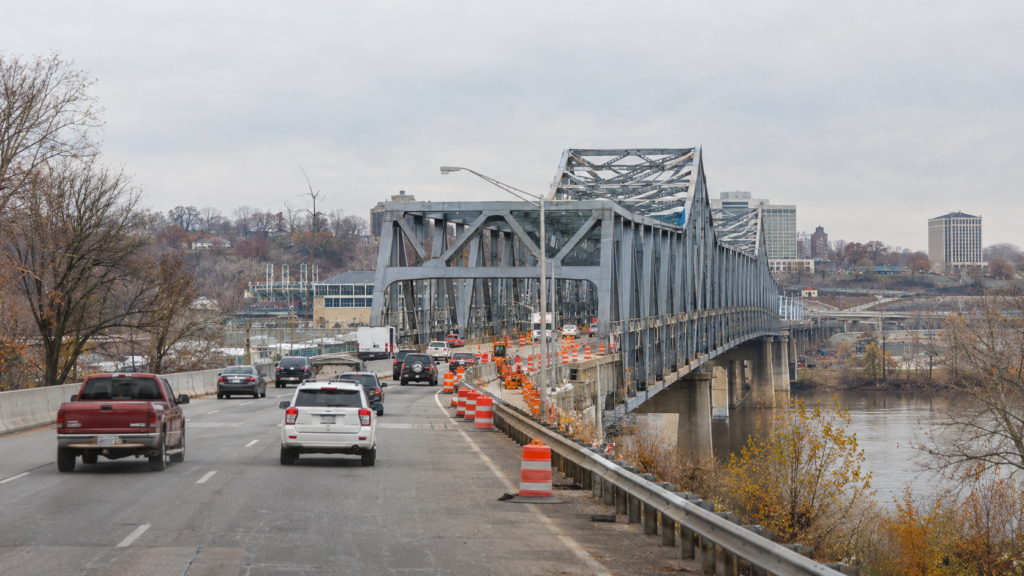
CINCINNATI, OHIO — Construction associated with the Brent Spence Bridge Corridor Project continues to affect transportation throughout downtown Cincinnati and surrounding communities. As of November 24, 2026, scheduled utility work is creating temporary lane restrictions along Third Street and Mehring Way, while longer-term construction continues to affect interstate ramps and local roadway access.
The Ohio Department of Transportation (ODOT) and the Kentucky Transportation Cabinet (KYTC) are overseeing the infrastructure project, which is designed to improve regional transportation, address roadway safety concerns, and reduce congestion between Ohio and Northern Kentucky.
For Cincinnati residents, commuters, commercial drivers, pedestrians, and visitors, understanding these construction-related restrictions can help support informed travel decisions and safer navigation through affected areas.
Call (513) 547-2445 or request a free consultation to speak with our experienced local Cincinnati car accident attorneys at Buckeye Law Group today.
Understanding the Brent Spence Bridge Corridor Project
The Brent Spence Bridge Corridor Project encompasses approximately eight miles of interstate infrastructure between Cincinnati and Northern Kentucky, extending from the Western Hills Viaduct in Ohio to Dixie Highway in Kentucky.
The project includes constructing a companion bridge immediately west of the existing Brent Spence Bridge and modifying interstate approaches, ramps, and local transportation connections. Official planned improvements include:
- Separating interstate traffic from local traffic.
- Reconfiguring interstate entrance and exit ramps.
- Restoring shoulders on the existing bridge.
- Addressing roadway design limitations.
- Improving pedestrian and bicycle connectivity.
- Improving traffic circulation between Cincinnati and Covington.
Major construction began in spring 2026. The companion bridge is anticipated to open in 2031, with approach construction substantially completed by 2033, subject to construction progress and weather conditions.
November 2026 Traffic Restrictions in Cincinnati
On November 19, ODOT announced additional utility-related traffic restrictions affecting several downtown Cincinnati roadways. Motorists should distinguish between temporary restrictions scheduled for November and longer-term closures associated with subsequent construction phases.
Third Street: November 23–25
Eastbound Third Street is scheduled for right-lane restrictions between the Clay Wade Bailey Bridge entrance and Central Avenue. Construction activity is scheduled daily between 9 a.m. and 4 p.m. An eastbound travel lane will temporarily operate on the westbound portion of the roadway, while one lane remains available for westbound motorists. Drivers should pay particular attention to temporary traffic markings and directional signs when navigating this area.
Mehring Way: November 23–25
Utility work along Mehring Way between Gas Alley and Smith Street is also scheduled between 9 a.m. and 4 p.m. Restrictions will affect one or two lanes at different times, alternating between sides of the roadway. At least one travel lane in each direction is scheduled to remain available. Motorists traveling near Cincinnati’s riverfront should allow additional time and anticipate changing traffic patterns.
U.S. 50 and I-75 Restrictions Earlier in November
Additional restrictions were scheduled along eastbound U.S. 50 near West Sixth Street on November 21. Overnight restrictions also affected northbound I-75 and its Fifth Street exit during November 16–21. These previously announced work periods have passed and should not be interpreted as continuing closures without an updated advisory.
Residents can review the November 19 ODOT announcement for additional information.
Longer-Term Cincinnati Roadway Closures
Several additional transportation restrictions are expected to continue beyond November 2026:
- Second Street between the Clay Wade Bailey Bridge and Elm Street: Reduced to one lane through spring 2027.
- I-71 northbound exit to Second Street: Anticipated reopening in fall 2028.
- Westbound U.S. 50 ramp to Gest Street: Permanently closed; replacement planned.
- Gest Street ramp to Seventh Street: Permanent closure scheduled on or after December 1, 2026.
These schedules remain subject to revision. Travelers should consult the official Ohio corridor travel updates before departing.
Roadway Safety Considerations During Construction
Construction zones can introduce unfamiliar traffic configurations, narrower travel lanes, temporary barriers, and unexpected changes in vehicle speeds.
Maintaining awareness is particularly important near interstate interchanges and downtown intersections where motorists may encounter merging vehicles, commercial trucks, pedestrians, and construction equipment. Drivers traveling throughout Cincinnati should consider the following precautions:
- Maintain Adequate Following Distance: Allow sufficient space to respond to slowing or stopped vehicles.
- Observe Temporary Traffic Controls: Follow construction signage, pavement markings, and authorized flagger instructions.
- Adjust Driving Speed To Conditions: Consider reduced visibility, precipitation, congestion, and roadway configuration.
- Complete Lane Changes Safely: Check surrounding traffic and blind spots before moving between lanes.
- Minimize Distractions: Configure navigation systems before driving and avoid handling electronic devices.
- Remain Alert Near Commercial Vehicles: Allow trucks sufficient maneuvering and stopping space.
Pedestrians and cyclists should follow designated detours, use authorized crossings, and avoid entering restricted construction areas.
Ohio Traffic Laws Applicable to Construction Zones
Ohio motorists remain responsible for complying with applicable traffic laws while traveling through roadway construction areas.
Reasonable and Appropriate Driving Speeds
Under Ohio Revised Code Section 4511.21, motorists must operate at speeds appropriate for existing traffic, roadway, and weather conditions. Compliance with a posted speed limit does not necessarily establish that a driver’s speed was appropriate under every circumstance.
Safe Lane Changes
Ohio Revised Code Section 4511.33 generally requires motorists to remain within marked lanes whenever practicable and determine that a lane movement can be completed safely before changing lanes. This requirement is particularly relevant where construction activities temporarily alter roadway configurations.
Distracted Driving
Ohio Revised Code Section 4511.204 generally prohibits drivers from using, holding, or physically supporting electronic wireless communications devices while operating a motor vehicle, subject to statutory exceptions. These requirements apply to motorists navigating construction areas as well as other Ohio roadways.
Who May Be Responsible for a Cincinnati Construction Zone Accident?
Determining liability following a construction zone collision requires an evaluation of the circumstances surrounding the incident. Depending on the available evidence, an investigation may consider driver conduct, temporary traffic controls, roadway maintenance, construction operations, and the responsibilities of involved parties. The presence of roadway construction does not independently establish negligence or legal responsibility.
Under Ohio Revised Code Section 2315.33, an injured individual may recover damages when their contributory fault does not exceed the combined fault of other responsible parties. Any recoverable damages are reduced proportionately by the individual’s assigned percentage of fault. Because the Brent Spence Bridge connects two states, collisions involving the interstate corridor may also present jurisdictional and choice-of-law considerations. Ohio law does not automatically govern every collision occurring along the corridor.
What Should You Do After a Construction Zone Collision?
Following a motor vehicle collision in Cincinnati, individuals should prioritize their health and safety. When appropriate:
- Seek Medical Attention: Obtain an appropriate medical evaluation following an injury.
- Contact Emergency Services: Call 911 when injuries or other emergency conditions are present.
- Document Relevant Conditions: When safe, photograph vehicle damage, temporary roadway markings, construction signs, and surrounding conditions.
- Identify Witnesses: Obtain contact information from individuals who observed the collision.
- Preserve Relevant Documentation: Retain crash reports, medical records, insurance correspondence, and related expenses.
- Understand Applicable Legal Deadlines: Filing requirements depend on the nature and circumstances of the claim.
Under Ohio Revised Code Section 2305.10, many Ohio bodily injury claims are subject to a two-year statute of limitations. Exceptions and different filing requirements may apply.
Cincinnati and Hamilton County Transportation and Accident Resources
Residents affected by construction restrictions or roadway collisions can access information through the following government agencies and transportation resources:
Ohio Department of Transportation – District 8
- Address: 505 OH-741, Lebanon, OH 45439
- Phone: (513) 932-3030
- Website: District 8 website
- Hamilton County traffic advisories
Interstate construction, traffic restrictions, state roadway conditions, and roadway maintenance inquiries.
Cincinnati Department of Transportation and Engineering
- Traffic Engineering: (513) 352-6229
- Website: Department website
Local traffic engineering, municipal roadway concerns, and transportation infrastructure information.
Cincinnati Police Department
- Address: 310 Ezzard Charles Dr, Cincinnati, OH 45214
- Emergency: 911
- Non-emergency: (513) 765-1212
- Police Records: (513) 352-3559
- Email: cpdrecords@cincinnati-oh.gov
- Website: Police records information
Crash report requests, law enforcement assistance, and official collision documentation.
311Cincy
- Phone: 311 or (513) 765-1212
- Website: 311Cincy website
Non-emergency municipal service requests and local roadway maintenance concerns.
Kentucky Transportation Cabinet – District 6
- Phone: (859) 341-2700
- Email: KYTC.District6Info@ky.gov
- Website: Kentucky corridor travel updates
Transportation restrictions and roadway information affecting Northern Kentucky.
Ohio Department of Public Safety
Online access to submitted Ohio traffic crash reports. Official records, including report diagrams, may be obtained from the investigating agency.
Brent Spence Bridge Corridor Project Team
Construction announcements, project questions, traffic conditions, and transportation planning information.
Frequently Asked Questions About Cincinnati’s Brent Spence Bridge Corridor Project, Traffic Restrictions, and Accident Liability
- Is the Brent Spence Bridge closing in November 2026? The November 19 advisory announces specific roadway restrictions associated with utility work rather than a complete closure of the Brent Spence Bridge. Travelers should review current project advisories for additional restrictions.
- When will the new Brent Spence companion bridge open? The official project schedule anticipates opening the companion bridge in 2031, subject to construction progress and weather conditions.
- Are construction companies automatically responsible for work zone accidents? No. Legal responsibility depends on evidence establishing applicable duties, negligence, causation, and resulting damages.
- Where can Cincinnati residents obtain traffic crash reports? Individuals can contact the investigating law enforcement agency, including the Cincinnati Police Department’s Records Section, or search available reports through the Ohio Department of Public Safety.
- Does Ohio law apply to every Brent Spence Bridge accident? Not necessarily. The interstate corridor extends into Kentucky, and the applicable law depends on the circumstances of the collision and relevant jurisdictional considerations.
Supporting Informed Transportation Decisions in Cincinnati
The Brent Spence Bridge Corridor Project represents a significant transformation of Cincinnati’s regional transportation infrastructure. As construction progresses, residents should remain informed about roadway restrictions, follow temporary traffic controls, and adjust their travel decisions accordingly.
At Buckeye Law Group’s Cincinnati office, we recognize the importance of providing accessible, factual information that helps individuals understand roadway safety and the legal considerations that may arise following an accident. Individuals injured in a motor vehicle collision may benefit from speaking with a Cincinnati car accident attorney to better understand their circumstances and available legal options.
Call (513) 547-2445 or request a free consultation to speak with our experienced local Cincinnati car accident attorneys at Buckeye Law Group today.
Legal Disclaimer: This article is provided for general informational and educational purposes only and does not constitute legal advice. Construction schedules and traffic restrictions are subject to change. Legal rights, responsibilities, and available remedies depend on the specific facts and circumstances of each matter and applicable law. Readers should consult official transportation sources for current travel information.