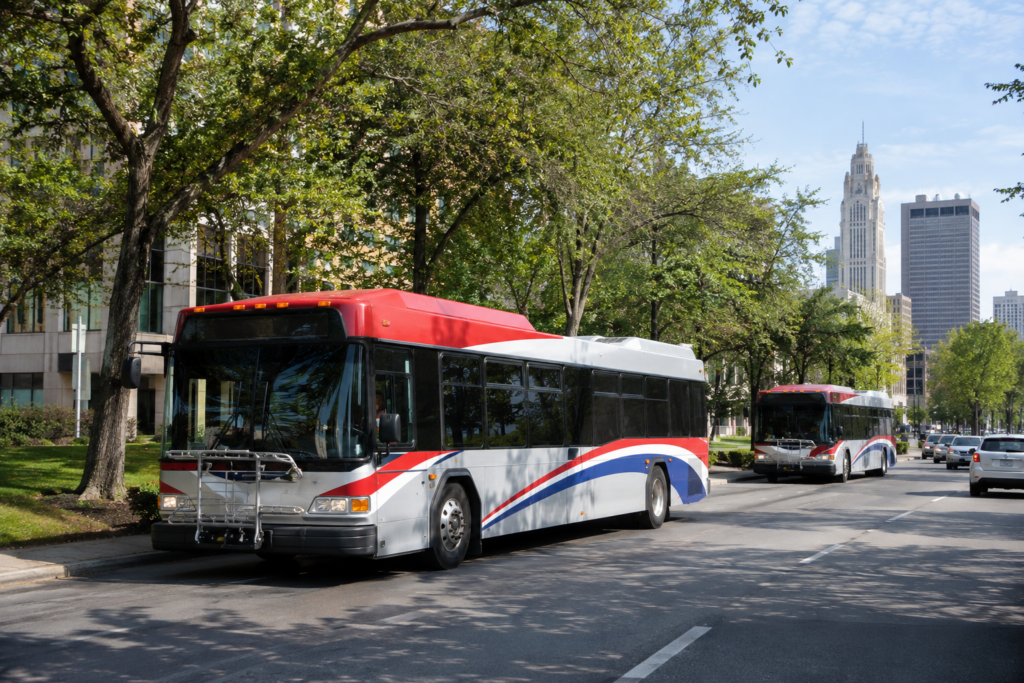
COLUMBUS, OHIO — A serious motor vehicle collision involving two Central Ohio Transit Authority (COTA) buses and a third vehicle occurred near the Ohio Expo Center and State Fairgrounds on November 23, 2026. The collision resulted in two fatalities and multiple reported injuries, prompting an investigation by local authorities.
While investigators continue to examine the circumstances surrounding the incident, the collision highlights the importance of public transportation safety, responsible vehicle operation and roadway awareness throughout Central Ohio.
For Columbus residents who rely on public transportation for employment, education, healthcare and daily travel, understanding safe transportation practices and the legal considerations associated with bus accidents can provide valuable information for navigating the region’s transportation network.
Call (614) 482-3793 or request a free consultation to speak with our experienced local Columbus Bus Accident Attorneys at Buckeye Law Group today.
Understanding the Recent COTA Bus Collision in Columbus
According to reports published on November 23, the collision occurred near the Ohio State Fairgrounds. The Central Ohio Transit Authority subsequently released an official statement addressing the incident. As of November 24, the reviewed public reports have not established a definitive cause of the collision or final determination of legal responsibility.
Residents seeking additional information are encouraged to follow official communications from COTA and the Columbus Division of Police. The following transportation safety recommendations are general educational guidance and do not represent findings concerning the November 23 collision.
The Importance of Public Transportation Safety in Columbus
Public transportation serves an important role in connecting Columbus residents to neighborhoods, businesses, medical facilities, educational institutions and community destinations.
COTA buses operate throughout Central Ohio, including Downtown Columbus, the University District, the Short North Arts District and neighborhoods surrounding the Ohio State Fairgrounds.
Public transportation vehicles frequently share roadways with passenger vehicles, commercial trucks, bicyclists and pedestrians. Their size, passenger capacity and frequent stops create operational considerations that differ from those associated with conventional passenger vehicles. Important public transportation safety considerations include:
- Regular vehicle inspections and preventive maintenance.
- Appropriate commercial driver training and licensing.
- Compliance with applicable traffic laws and traffic control devices.
- Maintaining reasonable following distances.
- Adjusting vehicle operation to traffic, weather and roadway conditions.
- Maintaining awareness of pedestrians, cyclists and other vulnerable roadway users.
Effective transportation safety depends on responsible vehicle operation, appropriate maintenance practices and cooperation among all roadway users.
Common Safety Considerations Associated With Public Transit Buses
Transit buses operate in environments that may require frequent stopping, turning, merging and navigating congested intersections. Several general roadway conditions can present safety challenges for bus operators and surrounding motorists.
Vehicle Blind Spots:
Large transportation vehicles may have areas of limited visibility. Motorists and cyclists should avoid traveling alongside buses for extended periods, particularly when approaching intersections or when a bus is preparing to turn.
Stopping Distances:
Large vehicles may require additional stopping distance depending on their speed, weight, braking systems and roadway conditions. Motorists should avoid merging abruptly in front of buses or following them too closely.
Frequent Passenger Stops:
Public transit buses regularly stop to accommodate passengers. Drivers should anticipate these stops and maintain sufficient space to respond safely to changing traffic conditions.
Weather & Roadway Conditions:
Rain, snow, ice and reduced visibility can affect vehicle control and braking performance. All motorists should adjust their speed and following distance accordingly. These considerations are particularly relevant during Ohio’s late fall and winter months.
Public Transportation Safety Tips for COTA Passengers
Passengers can take practical precautions to reduce their risk of injury while waiting for, boarding, riding and exiting public transportation vehicles:
- While Waiting For A Bus:
- Remain a safe distance from the edge of the roadway.
- Wait at designated bus stops whenever possible.
- Maintain awareness of approaching vehicles and surrounding traffic.
- Avoid entering the roadway before the bus has stopped.
- While Boarding & Riding A Bus:
- Allow exiting passengers to leave before boarding.
- Use available handrails when entering or exiting the vehicle.
- Remain seated when possible while the bus is moving.
- Maintain a secure grip on designated handrails when standing.
- Keep personal belongings clear of aisles, doors and emergency exits.
- Avoid distracting the bus operator.
- While Exiting A Bus:
- Wait until the vehicle has come to a complete stop.
- Use designated passenger exits.
- Remain alert to nearby vehicles and cyclists.
- Cross streets at designated crosswalks when available.
- Allow the bus to move away when necessary to establish a clear view of surrounding traffic before crossing.
Passengers who use wheelchairs or other mobility devices should follow applicable operator instructions concerning boarding, accessibility equipment and securement procedures.
How Columbus Motorists Can Safely Share the Road With Transit Buses
Motorists play an important role in maintaining safer public transportation corridors throughout Columbus. When traveling near transit buses, drivers should allow sufficient space for turning movements, anticipate frequent stops and remain attentive to pedestrians entering or exiting transportation vehicles. Several Ohio traffic laws are particularly relevant to safely sharing the roadway.
| Ohio Law | Safety Requirement |
| ORC § 4511.21 | Operate at a reasonable and proper speed for existing conditions and maintain an assured clear distance ahead. |
| ORC § 4511.34 | Maintain a reasonable and prudent following distance. |
| ORC § 4511.33 | Maintain proper lane positioning and ensure lane changes can be completed safely. |
| ORC § 4511.204 | Comply with Ohio’s restrictions on using handheld electronic wireless communication devices while driving, subject to statutory exceptions. |
| ORC § 4511.46 | Yield to pedestrians at crosswalks under the circumstances specified by Ohio law. |
Compliance with applicable traffic laws and maintaining awareness of surrounding roadway activity can help reduce preventable transportation hazards.
Understanding Public Transportation Accident Liability Under Ohio Law
Accidents involving public transportation vehicles may present legal considerations that differ from conventional passenger vehicle collisions. Under Ohio Revised Code Section 306.31, regional transit authorities are classified as political subdivisions.
Ohio Revised Code Section 2744.02 establishes general immunity protections for political subdivisions while identifying exceptions under which civil liability may arise, including certain instances of negligent motor vehicle operation.
Additionally, Ohio Revised Code Section 2744.01 identifies the operation of a bus line or other transit company as a proprietary function.
Evaluating a public transportation accident may involve examining vehicle maintenance documentation, driver conduct, electronic records, witness statements and applicable statutory protections. The occurrence of a collision does not independently establish negligence. Legal responsibility must be evaluated based on the available evidence, applicable law and specific circumstances of the incident.
What Should Passengers Do Following a Public Transportation Accident?
Individuals involved in a public transportation collision should prioritize their personal safety, obtain appropriate medical attention and preserve relevant information when circumstances permit. The following steps may be beneficial:
- Seek Appropriate Medical Attention: Certain accident-related symptoms may develop gradually or become more noticeable following the initial incident.
- Follow Emergency Personnel Instructions: Remain aware of surrounding traffic and potential roadway hazards when exiting a damaged vehicle.
- Document The Transportation Details: Preserve available information concerning the bus route, vehicle identification number, travel location and approximate time of the incident.
- Identify Potential Witnesses: Obtain contact information from individuals who may have observed the collision, when appropriate.
- Preserve Relevant Documentation: Retain transportation receipts, photographs, medical records and documentation of accident-related expenses.
- Obtain The Official Crash Report. Contact the investigating law enforcement agency to determine when relevant documentation becomes available.
Electronic surveillance recordings and other transportation records may be subject to retention policies. Timely evidence preservation may assist in evaluating the circumstances surrounding an accident.
Understanding Filing Deadlines for Ohio Public Transportation Accident Claims
Individuals injured in accidents involving public transportation authorities should understand that specific statutory requirements may apply. Under Ohio Revised Code Section 2744.04, qualifying civil actions against political subdivisions generally must be brought within two years after the cause of action accrues, unless a shorter applicable statutory period applies.
Different legal requirements and filing deadlines may apply to employment-related injuries, claims involving other responsible parties and certain individual circumstances. Understanding these requirements can help individuals make informed decisions regarding their legal options.
Local Transportation and Public Safety Resources for Columbus Residents
Columbus residents can access the following local and state resources for transportation assistance, roadway safety information, accident documentation and public records:
Central Ohio Transit Authority (COTA)
COTA provides public transportation services, passenger assistance, accessibility information and resources for reporting transportation-related safety concerns.
- Address: 33 N High St, Columbus, OH 43215
- Customer Care: (614) 228-1776
- Website: COTA.com
- Passenger Resources: How to Ride COTA
- Safety Policies: COTA Codes and Policies
- Documentation: Public Records Requests
Columbus Division of Police
The Columbus Division of Police provides law enforcement services, investigates motor vehicle collisions and maintains applicable accident-related records.
- Address: 120 Marconi Blvd, Columbus, OH 43215
- Emergency: 911
- Nonemergency: (614) 645-4545
- Public Records Office: (614) 645-4925
- Website: Columbus Division of Police
- Crash documentation: Police and Accident Reports
Columbus Division of Fire — Emergency Medical Services
Individuals who received emergency medical services following an accident may request applicable medical documentation through the Columbus Division of Fire, subject to privacy and authorization requirements.
- Address: 3639 Parsons Avenue Columbus, Ohio 43207
- Emergency: 911
- Medical Records Department: (614) 645-7384, option 2
- Email: EMSRecordRequest@columbus.gov
- Website: EMS Medical Records Requests
Ohio Department of Transportation (ODOT)
ODOT provides transportation resources that can assist motorists in identifying roadway restrictions, construction activity and changing travel conditions.
- Address: 1980 W Broad St, Columbus, OH 43223
- Website: Ohio Department of Transportation
- Live Traffic Information: OHGO.com
Available resources: Traffic cameras, roadway closures, construction updates and reported roadway conditions. Residents are encouraged to review available traffic information before traveling, particularly during periods of inclement weather or significant roadway disruptions.
Frequently Asked Questions About Public Transportation Safety in Columbus
- How can I report a public transportation safety concern? Passengers can contact COTA Customer Care at (614) 228-1776 or review the reporting options available through COTA’s official website. Immediate threats to personal safety or medical emergencies should be reported to 911.
- Can a passenger pursue a personal injury claim following a COTA bus accident? Potentially. Eligibility depends on the evidence, applicable Ohio laws, established legal responsibility and statutory immunity protections.
- Does a police crash report conclusively determine liability? No. A crash report may contain important observations and investigative findings. However, determining civil liability may require evaluating additional evidence and applicable legal standards.
- What information should passengers retain following a bus accident? Passengers should preserve available transportation records, route information, photographs, medical documentation and relevant witness contact information.
Promoting Public Transportation Safety Throughout Central Ohio
Public transportation safety remains an important consideration for Columbus residents, transit operators, motorists, pedestrians and cyclists. Understanding applicable Ohio traffic laws, maintaining awareness of surrounding roadway conditions and following established transportation safety practices can help reduce preventable risks throughout Central Ohio.
At Buckeye Law Group, we recognize the importance of providing factual, accessible and educational information that helps Ohio residents understand roadway safety and the legal considerations that may arise following a motor vehicle accident. Individuals seeking additional information regarding accident-related injuries, evidence preservation or applicable Ohio personal injury laws can access educational resources through our Columbus personal injury law office.
Call (614) 482-3793 or request a free consultation to speak with our experienced local Columbus Bus Accident Attorneys at Buckeye Law Group today.
Legal Disclaimer: This article is provided for general educational and informational purposes only and does not constitute legal advice. Information regarding the November 23, 2026, collision is based on publicly available reports and may change as the investigation progresses. General safety recommendations are not findings regarding the cause of the collision. No determination of negligence or legal responsibility is expressed or implied. Each legal matter depends on its specific facts, evidence and applicable law.