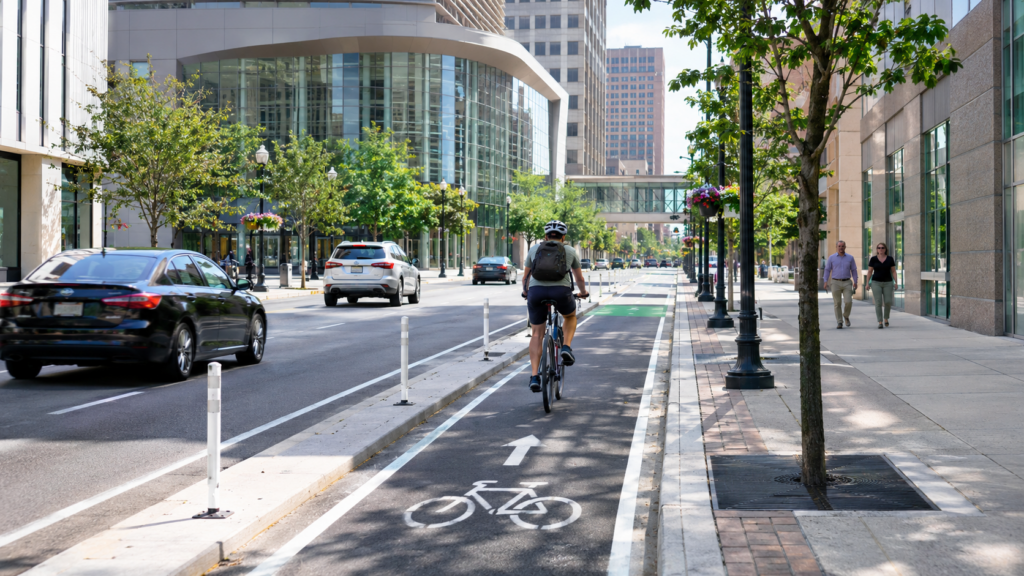
Dayton’s ongoing efforts to improve its transportation network include planned roadway changes along Ludlow Street, a downtown corridor used by motorists, cyclists, pedestrians, and public transportation.
The Dayton Ludlow Street improvements are intended to address deteriorating pavement while creating safer, more accessible conditions for bicycle travel. The project also raises practical questions about lane configurations, traffic movements, and how drivers and cyclists can navigate redesigned streets. Understanding these improvements is important for residents, downtown employees, and visitors traveling near the Schuster Center and surrounding businesses.
Call (937) 884-4474 or request a free consultation to speak with our experienced local Dayton bicycle accident lawyers at Buckeye Law Group today.
What Are the Planned Ludlow Street Improvements?
According to the Ohio Department of Transportation (ODOT), the City of Dayton proposes improvements to Ludlow Street between Monument Avenue and Washington Street. The project includes:
- Roadway reconstruction or rehabilitation to address deteriorated pavement.
- Installation of a protected bicycle lane.
- Removal of one through travel lane to accommodate the redesigned roadway.
- Changes intended to improve bicycle access through downtown Dayton.
Dayton’s 2023 Active Transportation Plan identifies the bicycle facility as a southbound protected lane. ODOT lists an estimated construction cost of approximately $1.01 million, with a scheduled construction period of spring through summer 2026.
What Is the Project’s Status in November 2026?
Resurfacing activity along Ludlow Street was publicly reported in May 2026. However, ODOT’s project webpage continues to classify the improvements as proposed. Earlier public communications also described a buffered bicycle lane rather than a physically protected facility. These terms are not necessarily interchangeable.
As of November 19, 2026, the available records do not independently establish that the final protected bicycle lane has been completed. Motorists and cyclists should follow the roadway’s existing signs, pavement markings, and traffic controls.
How Could Protected Bicycle Lanes Improve Safety?
A protected bicycle lane separates cyclists from moving motor vehicles through physical design features such as curbs, flexible posts, or other barriers. Unlike a conventional painted bicycle lane, physical separation can reduce opportunities for vehicles to encroach on the bicycle travel space.
The Federal Highway Administration (FHWA) reports that converting conventional bicycle lanes into separated facilities using flexible delineators can reduce bicycle-vehicle crashes by up to 53% in certain evaluated applications. That finding describes broader transportation research. It is not a prediction of the safety outcome on Ludlow Street. Potential benefits include:
- Reduced Passing Conflicts: Dedicated bicycle space can limit close interactions between cyclists and moving vehicles.
- Clearer Traffic Organization: Distinct travel areas can help motorists recognize where bicycle traffic is expected.
- More Comfortable Bicycle Access: Physical separation may make downtown cycling more approachable for individuals uncomfortable riding beside traffic.
- Improved Roadway Predictability: Consistent lane markings and separation can help road users anticipate each other’s movements.
The effectiveness of these improvements ultimately depends on their design, maintenance, intersection treatments, and proper use.
Why Intersections and Driveways Still Require Attention
Physical separation does not eliminate every potential collision. Intersections, parking garage entrances, driveways, and loading areas remain important locations where travel paths may intersect. For example, a motorist turning across a bicycle lane may fail to recognize an approaching cyclist. Vehicles entering or exiting parking facilities can also create conflicts when visibility is obstructed.
Near the Benjamin & Marian Schuster Performing Arts Center drivers should pay particular attention to pedestrians crossing between parking areas and nearby destinations. Important design considerations include maintaining visibility, providing understandable traffic controls, and clearly identifying where turning vehicles may cross bicycle facilities. The proposed improvements should therefore be evaluated as part of the entire downtown transportation environment, not simply as an isolated bicycle lane.
Safety Recommendations for Drivers, Cyclists, and Pedestrians
Whether traveling along Ludlow Street or another downtown Dayton roadway, practical precautions can reduce unnecessary risks.
Motorists Should:
- Check mirrors and blind spots before turning or crossing a bicycle lane.
- Follow existing lane markings, traffic signals, and parking restrictions.
- Avoid stopping or parking in designated bicycle travel areas.
- Reduce speed when approaching intersections with pedestrians and cyclists.
Cyclists Should:
- Travel in the designated direction and obey applicable traffic controls.
- Watch for turning vehicles, open car doors, and driveway movements.
- Use appropriate lighting when riding after dark.
- Avoid assuming that physical separation eliminates intersection hazards.
Pedestrians should use designated crossings when available, observe pedestrian signals, and remain attentive where bicycle and pedestrian routes intersect.
What Does Ohio Law Require?
Ohio’s traffic laws apply to motorists and bicyclists using public roadways. Under Ohio Revised Code § 4511.52, traffic provisions applicable to bicycles generally apply when bicycles are operated on public highways or designated bicycle paths.
Ohio Revised Code § 4511.55 generally requires cyclists to ride as near the right side of the roadway as practicable. Importantly, the law does not require cyclists to remain at the edge when doing so would be unreasonable or unsafe, including because of parked vehicles, roadway hazards, or insufficient lane width.
Motorists must also observe Ohio’s bicycle passing requirements. Under ORC § 4511.27, a passing clearance of at least three feet is considered a safe distance when a motor vehicle overtakes a bicycle. These requirements remain important even when new bicycle infrastructure is introduced. A protected lane does not relieve road users of their obligations to exercise reasonable care.
What Should You Do After a Bicycle Accident in Downtown Dayton?
A collision involving a cyclist and a motor vehicle can raise questions about fault, injuries, insurance coverage, and available evidence.
After An Accident:
- Prioritize Medical Attention: Call 911 for emergencies and seek appropriate evaluation for injuries.
- Report The Collision: Contact law enforcement when appropriate and obtain available report information.
- Document The Scene: If safe, photograph vehicle positions, damage, roadway markings, signs, and the surrounding intersection.
- Identify Witnesses: Record contact information and note potentially relevant surveillance cameras.
- Preserve Records: Retain medical documentation, repair estimates, receipts, and insurance communications.
Determining responsibility generally requires examining driver conduct, cyclist conduct, visibility, roadway conditions, and other relevant evidence. Ohio’s comparative fault provisions, including ORC § 2315.33, can affect recovery when an injured person shares responsibility.
Under ORC § 2305.10, many Ohio personal injury claims are subject to a two-year filing period. Exceptions and different procedural requirements may apply, particularly when a public entity is involved.
Dayton Agencies and Resources for Ludlow Street Travelers
Residents seeking information about roadway improvements, bicycle infrastructure, crash reports, or local transportation planning can contact the following agencies:
City of Dayton Division of Civil Engineering
- Phone: (937) 333-3840
- Address: 101 W Third Street, Dayton, OH 45402
- Website: Dayton Civil Engineering
The division oversees public infrastructure projects involving streets, sidewalks, bridges, and traffic signals. Residents can inquire about construction plans, roadway configurations, and infrastructure concerns.
Ohio Department of Transportation — District 7
- Public Information Phone: (937) 497-6929
- Website: District 7 – Dayton Area
- Email: D07.PIO@dot.ohio.gov
- Project: Ludlow Street Improvements, PID 111952
ODOT provides information about the project scope, published schedule, and associated transportation improvements.
Dayton Police Department
- Emergencies: 911
- Non-Emergencies: (937) 333-2677
- Traffic Services Unit: (937) 333-1149
- Website: Dayton Police Traffic Services
The department handles traffic enforcement and collision investigations. Its traffic accident reporting resources direct the public to Ohio’s crash report database.
Miami Valley Regional Planning Commission
- Phone: (937) 223-6323
- Address: 6 N. Main Street, Suite 400, Dayton, OH 45402
- Website: MVRPC
MVRPC provides regional transportation planning information and bicycle network resources, including its regional bikeways map.
Greater Dayton Regional Transit Authority
- Customer service: (937)425-8300
- Website: Dayton RTA Customer Support
Transit riders can inquire about routes, service adjustments, and temporary changes affecting downtown travel.
Frequently Asked Questions About Ludlow Street Improvements
- Where are the Ludlow Street improvements located? The documented project covers Ludlow Street between Monument Avenue and Washington Street in downtown Dayton, Montgomery County.
- Will Ludlow Street have a protected bicycle lane? The city and ODOT have documented plans for a protected bicycle lane. Dayton’s Active Transportation Plan specifies southbound travel. The final installed configuration should be confirmed with the City of Dayton.
- Will the improvements reduce vehicle travel lanes? Yes. The documented project calls for removing one through travel lane. Drivers should follow the lane configuration and traffic controls currently in place.
- Do protected bicycle lanes eliminate bicycle accidents? No. Physical separation can reduce certain vehicle-bicycle interactions, but intersection conflicts, turning vehicles, and other roadway hazards can remain.
- Who can answer questions about the construction? Dayton’s Division of Civil Engineering and ODOT District 7 are appropriate starting points for questions about project details, construction status, and roadway changes.
Understanding Roadway Safety and Legal Options in Dayton
The Ludlow Street improvements illustrate how roadway maintenance and bicycle infrastructure can work together to support safer travel. For Dayton residents, understanding existing traffic controls, the purpose of protected bicycle lanes, and Ohio’s traffic laws can help promote more responsible roadway use. Individuals injured in bicycle or motor vehicle collisions may also have questions about insurance coverage and legal responsibility.
Buckeye Law Group’s Dayton office offers free consultations to discuss individual circumstances. Additional educational information is available through the firm’s bicycle accident resources and car accident resources.
Call (937) 884-4474 or request a free consultation to speak with our experienced local Dayton bicycle accident lawyers at Buckeye Law Group today.
Legal Disclaimer: This article is provided for general educational and informational purposes only and does not constitute legal advice. Project schedules and roadway conditions may change. Every personal injury case depends on its specific facts and applicable law. Reading this article or contacting Buckeye Law Group does not, by itself, establish an attorney-client relationship.