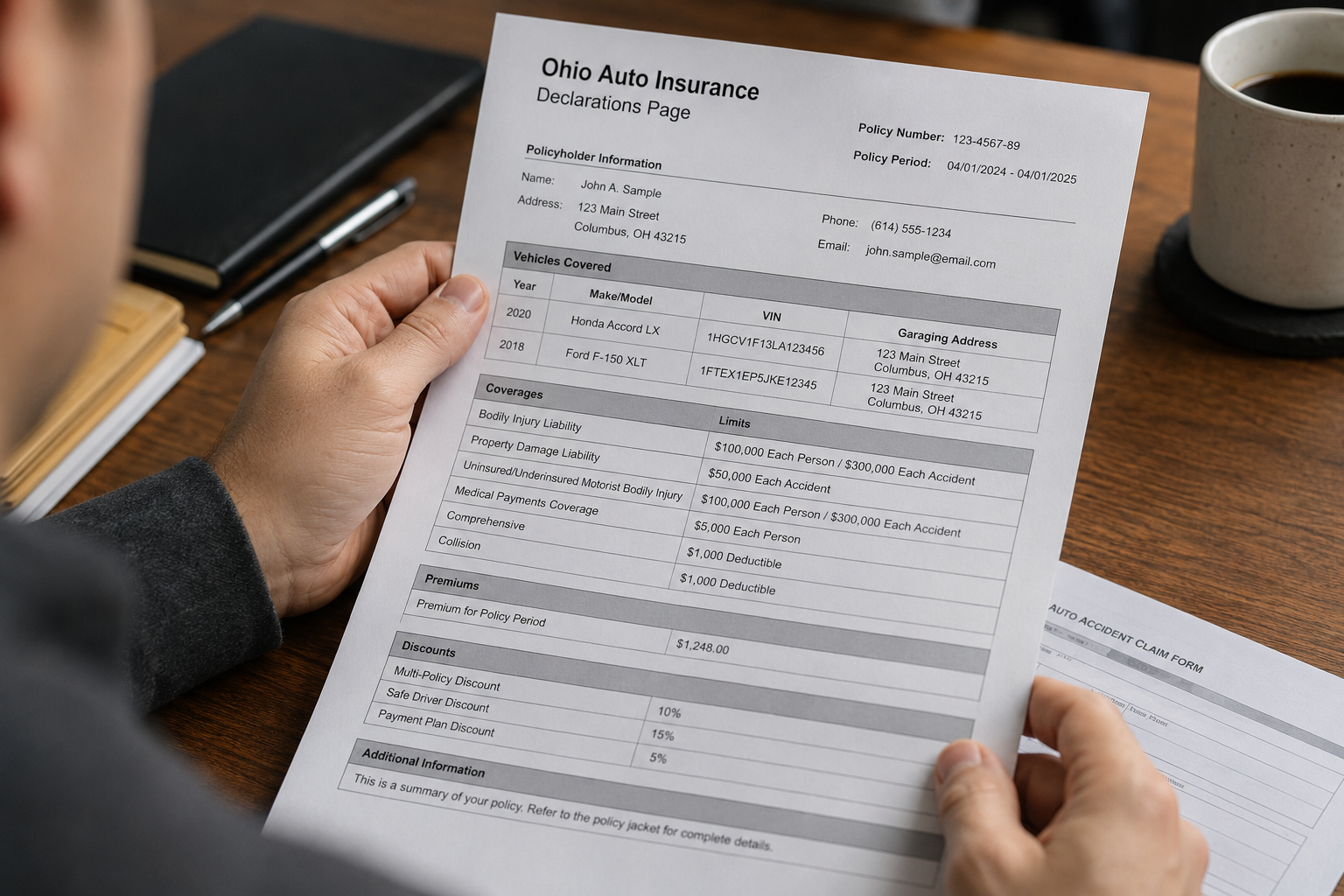
Understanding your Ohio auto insurance declarations page can be especially important after a collision. This document provides a clear summary of the coverage available under your policy, including liability limits, uninsured and underinsured motorist protection, medical payments coverage, deductibles, listed drivers, and insured vehicles. Reviewing these details can help you identify which benefits may apply to your injuries, vehicle damage, lost income, and other accident-related losses.
Many Ohio drivers do not examine their declarations page until an insurance claim arises. However, knowing what your policy includes, and what it excludes, can reduce confusion when speaking with an adjuster. It may also help you recognize coverage issues before accepting a settlement or providing a recorded statement. In this guide, we explain each section of an auto insurance declarations page, why the information matters after an Ohio crash, and how to use it when protecting your rights and evaluating your next steps in Cleveland, Columbus, Cincinnati, Toledo, Dayton, Akron, and the neighboring communities.
What Is an Auto Insurance Declarations Page, and How Can It Protect You After an Ohio Car Accident?
An auto insurance declarations page is a concise summary of the most important terms in your vehicle insurance policy. It allows you to quickly confirm who and what is insured, the types of coverage you purchased, and the financial limits that may apply after an Ohio car accident. From a personal injury perspective, this document can play an important role in determining which insurance benefits may be available for medical expenses, vehicle repairs, lost income, and other accident-related losses.
Drivers should review their auto insurance declarations page before a collision occurs and again whenever the policy is renewed. Missing drivers, incorrect vehicle information, inadequate limits, or rejected optional coverage could significantly affect a future claim. After a crash, the auto insurance declarations page also helps your attorney evaluate potential sources of compensation, including uninsured or underinsured motorist coverage and medical payments coverage.
Your auto insurance declarations page serves as a quick reference for the most important terms of your Ohio auto insurance policy. It typically summarizes your coverage limits, deductibles, insured vehicles, and listed drivers. After an Ohio car accident, this should be one of the first documents you review to confirm the coverage that may apply to your claim. Understanding these details can help you communicate with your insurer, avoid unnecessary delays, and make informed decisions about protecting your legal rights.

Key Sections of an Ohio Auto Insurance Declarations Page
An Ohio auto insurance declarations page includes vital information. Understanding each section is key after a crash. These details clarify your coverage specifics. Typical sections include:
- Policy Number and Period
- Listed Drivers and Vehicles
- Coverage Types and Limits
- Deductibles and Premiums
- Discounts and Special Provisions
Each section serves a purpose, helping guide your next steps. Familiarity with these aspects ensures you are well-prepared. Review these before and after accidents for clarity.
Why Your Declarations Page Matters After a Crash
After a crash, your declarations page becomes crucial. It quickly shows what your policy covers. This is essential for filing a claim accurately. Key reasons to review your page post-accident include:
- Verify coverage types and limits.
- Check for applicable deductibles.
- Ensure all drivers and vehicles are listed.
Your auto insurance declarations page can help prevent costly surprises during the claims process. It outlines the coverage you purchased, including liability limits, deductibles, listed drivers, insured vehicles, and any optional protections such as medical payments coverage or uninsured and underinsured motorist coverage. Reviewing these details before an accident allows you to identify potential gaps, correct inaccurate information, and better understand which benefits may be available after a crash.
Keep a current copy in a secure and accessible location. After an accident, your declarations page can help you communicate more effectively with your insurer, evaluate whether the available coverage may address your losses, and provide important information to your attorney. However, the page is only a summary of your policy. Exclusions, endorsements, and other terms may affect your rights. When coverage is disputed or unclear, a personal injury attorney can review the full policy and help protect your interests.

Policy Number and Policy Period
The policy number is your account’s unique identifier. It is essential when filing claims. Knowing this number can facilitate faster processing. Your policy period specifies coverage dates. This part confirms whether an accident falls within the covered timeframe. It is crucial in validating claims.
Listed Drivers and Covered Vehicles
Identifying every listed driver is an important part of reviewing an auto insurance declarations page and evaluating available coverage after an Ohio car accident. Confirm that all household members and individuals who regularly operate the vehicle are properly named on the policy. If a frequent driver is omitted or specifically excluded, the insurance company may dispute or deny coverage for a resulting claim. The declarations page also identifies each vehicle insured under the policy. It usually lists:
- Make and model
- Vehicle Identification Number (VIN)
- Year of manufacture
Coverage Types and Limits
The coverage section of your auto insurance declarations page identifies the protections included in your policy and the maximum amount the insurer may pay for each covered loss. Ohio drivers should review these limits carefully because they can directly affect the compensation available after a car accident. Coverage limits may apply per person, per accident, or per vehicle, depending on the policy terms. Understanding this section can help you identify potential gaps before a crash and make informed decisions during the claims process. Common coverage types include:
- Liability
- Collision
- Comprehensive
- Uninsured/Underinsured Motorist
Each type provides specific protection. Clarifying this helps avoid confusion during claims. Ensure your coverage meets Ohio’s requirements.
Deductibles and Premiums
Your auto insurance declarations page lists the deductibles you must pay out of pocket before certain coverage applies. Reviewing these amounts can help Ohio drivers prepare for potential expenses after a crash. The page also shows your policy premiums, which reflect the cost of maintaining coverage. Because higher deductibles may lower premiums, while lower deductibles may increase them, it is important to review both when evaluating your policy. Typical deductible details include:
- Dollar amounts for different coverage types.
Discounts and Special Provisions
Your auto insurance declarations page should identify any discounts that reduce the cost of your policy. Common savings may include safe-driver, multi-vehicle, bundled-policy, low-mileage, anti-theft device, or accident-free discounts. Review this section carefully to confirm that every discount you qualify for has been applied. Missing or outdated information could cause you to pay more than necessary.
The auto insurance declarations page page may also list optional coverages and special policy benefits. These can include rental reimbursement, roadside assistance, towing coverage, gap insurance, custom equipment protection, or accident forgiveness. After a collision, these benefits may help cover transportation, towing, and other immediate expenses while your vehicle is being repaired.
How to Use Your Declarations Page After a Crash
After a crash, your Ohio auto insurance declarations page is your roadmap. It provides essential information to manage the aftermath efficiently. Understanding your coverage details ensures you’re prepared for the next steps. Start by reviewing your coverage types and limits. Confirm which expenses are covered and identify the responsible parties for any costs. Pay attention to your deductible amounts, as these dictate your out-of-pocket expenses before insurance contributions begin. Key steps include:
- Verify the effective policy dates.
- Note contact details for filing a claim.
- Check deductible and coverage limits.

Keeping your auto insurance declarations page readily accessible can simplify the claims process after an Ohio car accident. This document allows you to quickly verify coverage limits, deductibles, policy numbers, and other important details when communicating with your insurer. Having accurate information available may reduce delays and help you make more informed decisions about your claim. Store a current copy in a secure location and review it regularly to ensure the listed drivers, vehicles, and coverage amounts remain correct.
Common Mistakes When Reading Your Declarations Page
Misinterpreting the auto insurance declarations page can lead to confusion. Many policyholders miss crucial details which could affect their coverage. Misreading limits or overlooking exclusions are common errors. To avoid mistakes, consider:
- Double-checking coverage limits.
- Reviewing policy dates carefully.
- Understanding deductible requirements.
Taking these steps ensures clarity. Always read each section meticulously to avoid surprises.
What to Do If You Find a Problem
Discovering issues on your auto insurance declarations page can be alarming. Address them promptly to avoid complications. Your first step should be to contact your insurance agent for clarification. Consider these actions:
- Make notes about discrepancies.
- Gather supporting documents.
- Keep a record of communication.
Do not delay. Resolving mistakes quickly safeguards your coverage and peace of mind. Always ensure your policy reflects your exact needs and details.
When to Contact Your Insurance Company or a Local Attorney
Knowing when to seek professional guidance can help prevent delays and costly mistakes. If information on your auto insurance declarations page is unclear, incomplete, or appears inaccurate, contact your insurance company first and request a written explanation. Ohio drivers should carefully review their coverage limits, deductibles, listed vehicles, named insureds, and uninsured or underinsured motorist coverage. You may also need to speak with an experienced local Ohio personal injury attorney if an error could affect your rights after a crash. Common reasons to contact your insurer or a lawyer include:
- Disputes over claim amounts.
- Denied claims.
- Misunderstood policy terms.
A local attorney from Buckeye Law Group can provide legal insight, especially if negotiations fail or issues escalate. Protect your rights by understanding when professional advice is necessary.
Protect Yourself with Knowledge
Understanding your Ohio auto insurance declarations page is an important step toward protecting your rights, finances, and future after a car crash. Knowing your coverage limits, deductibles, exclusions, and available benefits can help you make informed decisions when reporting the accident and pursuing compensation. It can also prevent unexpected disputes with the insurance company during the claims process. Review your policy before an accident occurs, keep a current copy in a secure place, and ask questions whenever the terms are unclear. If you were injured in an Ohio car accident and are uncertain about the coverage available to you, consider speaking with an experienced personal injury attorney today. Prompt legal guidance can help preserve important evidence, identify all potential insurance policies, and protect your right to seek fair compensation.
Injured at a Columbus Apartment Complex? What Tenants and Visitors Should Document
A fall at a Columbus apartment complex can raise more than immediate medical concerns when a dangerous property condition may have contributed to the injury. For tenants and lawful visitors,
What Happens After a Personal Injury Lawsuit Is Filed in Franklin County?
Filing a personal injury lawsuit in Franklin County, OH, places your claim within a formal court process governed by procedural rules and deadlines. After filing, the defendant must be served
What to Do After a Hit-and-Run Accident in Columbus, Ohio
A hit-and-run accident in Columbus, OH, or the neighboring communities can leave you hurt, shaken, and unsure how to prove what happened. The right response is simple but urgent: get
Injured as a Passenger in a Columbus Car Accident? Understanding Your Options
If you were injured as a passenger in a Columbus car accident, you may have more options than you realize. Passengers are usually not the person blamed for the crash,
Who Pays Medical Bills While an Ohio Car Accident Claim Is Pending?
After a crash, medical care cannot wait for an insurance settlement. In Ohio, the person who caused the collision may ultimately be responsible for injury-related losses, but the at-fault driver’s
Cleveland Premises Liability Lawyers: Understanding Property Injury Claims in Ohio
How Cleveland Premises Liability Lawyers Evaluate Property Injury Claims Under Ohio Law A serious injury on someone else’s property can raise immediate questions about medical bills, responsibility, and your next
How Long Does an Auto Accident Settlement Take in Ohio? A Guide to the Claims Process
Ohio Auto Accident Settlement Timeline: What to Expect From Claim to Payout An Ohio auto accident settlement can move quickly when injuries are minor, liability is clear, and records are
How Buckeye Law Group’s Slip and Fall Injury Lawyers Help Injured Ohioans Understand Their Legal Options
Ohio Slip and Fall Injury Lawyers Helping You Understand Your Rights After a Serious Injury A slip and fall can turn an ordinary trip to a store, apartment building, workplace,
How Can an Ohio Truck Accident Lawyer Help You Protect Your Rights After a Commercial Truck Crash?
Legal Guidance After an Ohio Truck Accident: How an Ohio Truck Accident Lawyer Can Support Your Claim A truck accident lawyer from Buckeye Law Group can help injured individuals and
Should You Accept An Insurance Settlement Offer? Why Ohio Injury Victims Should Speak With An Attorney First
After an accident, an insurance settlement offer may provide welcome financial relief while medical bills and lost wages continue to accumulate. However, accepting an offer before the full extent of
Buckeye Law Group represents people injured in auto accidents, slip and falls, workplace accidents and more in Ohio. Contact us today to learn more.
© 2026 All Rights Reserved | The Buckeye Law Group Inc. Privacy Policy Sitemap
Office Locations
- Akron Office 388 S Main St #400 Akron, OH 44311 (330) 426-0288
- Cincinnati Office 201 E 5th St Ste 1910 Cincinnati, OH 45202 (513) 547-2445
- Cleveland Office 127 Public Square Ste 1540 Cleveland, OH 44114 (216) 677-5490
- Columbus Office 20 E Broad St Suite 300 Columbus, OH 43215 (614) 482-3793
- Dayton Office 70 Birch Alley Ste 240 Dayton, OH 45440 (937) 884-4474
- Euclid Office 25701 N Lakeland Blvd Suite 113-C, Cleveland, OH 44132 (216) 405-2626
- Mansfield Office 305 E Main St Ste 6A, Mansfield, OH 44904 (567) 210-2606
- Findlay Office 7430 Timberstone Dr unit 101a, Findlay, OH 45840 419-873-5119
- Mentor Office 7537 Mentor Ave Ste 101, Mentor, OH 44060 (440) 306-3536
- Middletown Office 300 N Main St #400, Middletown, OH 45042 (326) 800-9150
- Parma Office 1257 Rockside Rd #A, Parma, OH 44131 (216) 279-1664
- Springfield Office 2100 E High St Ste TL3, Springfield, OH 45505 (937) 806-5791
- Toledo Office 3950 Sunforest Ct Ste 200, Toledo, OH 43623 (567) 483-3883
- Westlake Office 26404 Center Ridge Rd Ste B2, Westlake, OH 44145 216-247-0565
- Whitehall Office 5340 E Main St Ste 203, Whitehall, OH 43213 (380) 257-5206
- Youngstown Office 306 Churchill Hubbard Rd, Youngstown, OH 44505 (234) 225-0683
Contact Us
© 2026 All Rights Reserved | The Buckeye Law Group Inc. Privacy Policy Sitemap