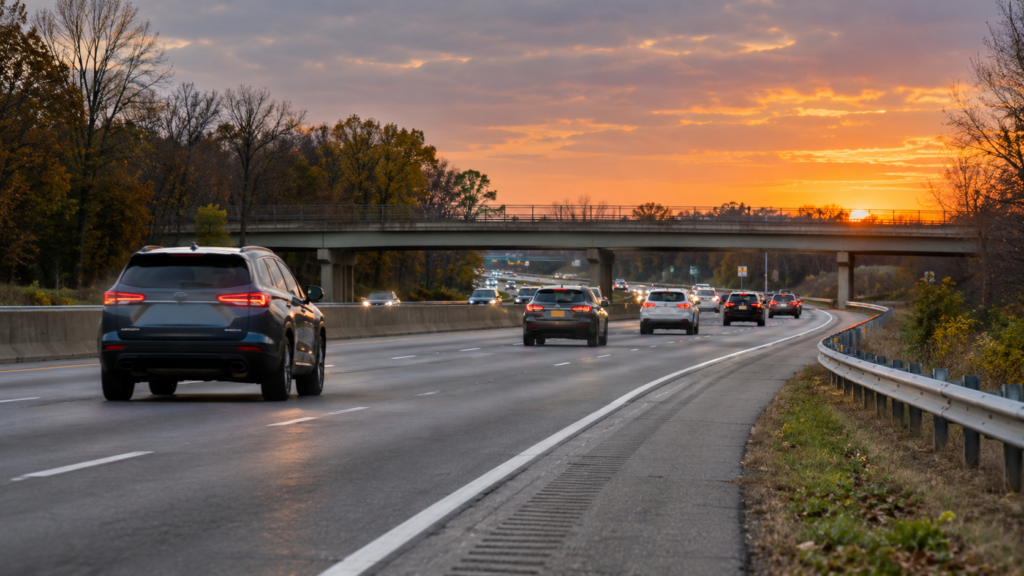
Interstate 90 is a major transportation corridor connecting communities throughout Northeast Ohio, including Cleveland, Westlake, Avon, Elyria, and surrounding areas of Lorain County. Thousands of motorists depend on this highway for commuting, commercial transportation, and everyday travel. However, interstate driving can present serious safety risks, particularly when motorists encounter unexpected hazards at highway speeds. A fatal wrong-way collision in Avon on Sunday night, November 8, 2026, has renewed attention to the dangers of vehicles entering divided highways against the designated flow of traffic.
According to the Ohio State Highway Patrol, three people died and another was injured when a gray 2025 Tesla Model 3 traveled eastbound in the westbound lanes of I-90 near Nagel Road and collided with two other vehicles. The Tesla caught fire following the collision, and the incident remains under investigation.
The loss of life underscores the importance of recognizing dangerous driving situations, understanding highway entrance and exit configurations, and knowing how to respond when another motorist travels against traffic. For Northeast Ohio drivers, awareness and defensive driving are essential components of highway safety.
What Happened on I-90 in Avon on November 8, 2026?
According to preliminary reports from the Ohio State Highway Patrol, the collision occurred late Sunday evening along westbound Interstate 90 near Nagel Road in Avon, Ohio. Authorities reported that a Tesla Model 3 entered the highway traveling in the opposite direction of westbound traffic. The vehicle subsequently collided with a Chevrolet Cruze and a Chevrolet Traverse. Three individuals suffered fatal injuries, while the driver of the third vehicle was transported to an area hospital with injuries described as non-life-threatening.
The collision temporarily closed westbound I-90 as emergency personnel responded and investigators examined the scene. The affected roadway reopened Monday morning. The Ohio State Highway Patrol’s Elyria Post is investigating the crash, and additional findings may clarify the circumstances surrounding the collision.
Although the incident involved a Tesla, publicly available information does not establish that the vehicle’s technology, automated driving systems, or a mechanical malfunction contributed to the crash. The broader public safety concern is the extraordinary danger created when a vehicle travels against traffic on a high-speed interstate.
Why Are Wrong-Way Collisions So Dangerous on Interstate 90?
Wrong-way driving occurs when a vehicle travels against the legally designated direction of traffic. On divided interstate highways, these incidents are particularly dangerous because motorists generally do not anticipate approaching vehicles traveling toward them.
The National Transportation Safety Board (NTSB) identifies wrong-way collisions as an especially severe category of highway crashes. Several conditions contribute to the danger.
High Speeds Reduce Available Reaction Time
Interstate highways are designed for relatively high-speed travel. When two vehicles approach each other from opposite directions, the distance between them can close rapidly.
For example, two vehicles traveling toward one another at 65 mph have a combined closing speed of 130 mph. This does not mean the collision is equivalent to one vehicle striking a stationary object at 130 mph; actual collision forces depend on vehicle mass, speed, direction, and other factors. Nevertheless, high closing speeds leave very little time for motorists to identify a hazard and respond safely.
Nighttime Conditions Can Make Wrong-Way Vehicles Difficult to Recognize
The November 8 collision occurred after dark, when visibility and depth perception can be reduced. Headlights approaching in the wrong direction may initially appear to belong to vehicles on an adjacent roadway, particularly near highway curves, ramps, or interchange structures.
The NTSB’s historical research found that wrong-way crashes occurred disproportionately during nighttime hours. This does not establish that darkness caused the Avon collision. However, it reinforces the importance of additional vigilance when traveling I-90 after sunset.
Multiple Vehicles May Be Exposed to a Single Hazard
A wrong-way vehicle can create danger beyond the initial collision. Other motorists may brake suddenly, attempt evasive maneuvers, or encounter debris and disabled vehicles. These reactions can create additional collision risks, even among drivers who do not directly contact the wrong-way vehicle. The November 8 incident involved three vehicles, demonstrating why quickly identifying and reporting dangerous highway movements is essential.
I-90 and Nagel Road: Understanding the Local Interchange Safety Concerns
The I-90 and Nagel Road interchange is an important connection for motorists traveling through Avon and the surrounding Lorain County communities. Highway interchanges require drivers to interpret multiple signs, traffic signals, lane markings, and directional movements within a relatively small geographic area.
In February 2024, Cleveland 19 News reported that Avon police had identified recurring crashes at the westbound I-90 exit ramp and Nagel Road intersection. Authorities implemented a prohibition on right turns on red from the westbound exit ramp to address concerns involving visibility and rear-end collisions.
At the time, police described approximately 50 to 60 crashes annually at that intersection, most involving relatively minor collisions. These historical findings do not establish that the interchange design contributed to the November 8, 2026, wrong-way crash. They illustrate why local traffic engineering, roadway visibility, and driver awareness deserve continued attention.
Why Highway Entrance and Exit Ramps Require Additional Caution
Interstate ramps create transitional areas where drivers move between local streets and high-speed highways. Drivers approaching these locations should:
- Identify the correct entrance ramp before turning.
- Obey posted DO NOT ENTER and WRONG WAY signs.
- Follow directional arrows and pavement markings.
- Avoid last-second turns or lane changes.
- Reduce distractions while approaching unfamiliar interchanges.
- Never reverse or attempt a U-turn on an interstate ramp.
If a driver realizes they are entering an exit ramp in the wrong direction, they should stop as soon as it is safe, activate hazard lights, and contact 911 for assistance rather than continuing toward highway traffic.
What Should Drivers Do If They Encounter a Wrong-Way Vehicle on I-90?
Encountering a wrong-way driver can be frightening, especially at highway speeds. There may be only seconds to make a decision. While no response can guarantee safety, defensive driving practices may reduce exposure to additional hazards.
1. Maintain Awareness Of Approaching Traffic: Regularly scan the roadway ahead, particularly near entrance ramps, interchanges, and curves. At night, remain alert for headlights moving unexpectedly toward your lane.
2. Reduce Speed Without Creating Another Hazard: If an approaching vehicle appears to be traveling in the wrong direction, slow down carefully. Sudden braking can increase the risk of a rear-end collision when vehicles are following closely.
3. Move Away From The Approaching Vehicle When Safe: Create separation if there is an available, unobstructed path. Do not make an abrupt lane change without checking nearby traffic.
4. Avoid Attempting To Stop Or Confront The Driver: Motorists should never pursue, block, or attempt to physically intercept a wrong-way vehicle.
5. Report The Emergency Immediately When Safe: Call 911 or have a passenger make the call. Provide the interstate number, approximate location, direction of travel, nearest exit, and description of the vehicle. If safely stopped away from traffic, follow instructions provided by emergency personnel.
How Ohio Is Working to Prevent Wrong-Way Highway Crashes
Wrong-way driving prevention requires more than individual driver awareness. Roadway engineering, traffic management, enforcement, and detection technology also play important roles. The Ohio Department of Transportation (ODOT) uses several countermeasures designed to discourage vehicles from entering highways in the wrong direction.
Wrong-Way Detection and Warning Systems
ODOT has deployed wrong-way detection technology at selected Northeast Ohio interstate ramps. These systems can use vehicle-detection equipment and illuminated warning signs to identify motorists traveling against the intended direction.
According to News 5 Cleveland’s November 2026 reporting, ODOT has used technology involving flashing warnings and detection equipment at 25 exits along a Northeast Ohio corridor. However, the presence of warning technology at some locations does not mean every interchange along I-90 has the same protection.
Roadway Signs, Markings, and Interchange Design
Additional countermeasures include clearly positioned WRONG WAY and DO NOT ENTER signs, directional arrows, pavement markings, and engineering improvements that distinguish entrance ramps from exit ramps. ODOT also identifies ramp separation, medians, and channelizing islands among design measures that can discourage incorrect movements. These protections are intended to help drivers recognize the proper roadway direction before entering interstate traffic.
Additional Highway Safety Precautions for Northeast Ohio Drivers
Wrong-way collisions are only one hazard motorists may encounter along I-90. Heavy traffic, sudden slowdowns, adverse weather, work zones, and distracted driving can also increase collision risks. Drivers traveling through Avon, Westlake, Cleveland, and surrounding communities should consider several precautions.
- Maintain A Safe Following Distance: Additional spacing provides more time to react to sudden braking or roadway obstructions.
- Adjust Speed To Weather And Visibility: Rain, snow, ice, and darkness may require slower travel than the posted speed limit.
- Avoid Distracted Driving: Keep attention on traffic movements and use electronic devices only as permitted by Ohio law.
- Use Extra Caution Near Ramps: Watch for merging vehicles, abrupt lane changes, and unexpected stops.
- Check Traffic Conditions Before Departure: ODOT’s OHGO traffic platform provides information about incidents, roadway closures, traffic cameras, and delays.
Motorists should also wear properly positioned seat belts and ensure passengers are appropriately restrained.
Frequently Asked Questions About Wrong-Way Driving on I-90
- Why do wrong-way crashes happen on interstate highways? Wrong-way movements can involve driver impairment, confusion, intentional actions, or errors at highway ramps. The cause of any particular incident must be established through investigation rather than assumption.
- Are wrong-way crashes more common at night? Historical NTSB research identifies nighttime hours as a significant pattern in wrong-way collisions. Reduced visibility and difficulty recognizing roadway direction can increase safety concerns.
- What should I do if I accidentally enter an interstate exit ramp? Stop as soon as it is safe, turn on hazard lights, and call 911. Do not continue onto the interstate or attempt an unsafe maneuver to correct your direction.
- Where can I find current I-90 traffic alerts? Visit OHGO for Ohio highway traffic updates, incident information, and available traffic camera views.
Promoting Safer Travel on I-90 Through Awareness and Prevention
The November 8, 2026, wrong-way collision in Avon is a reminder of how quickly dangerous roadway conditions can develop and why highway safety deserves ongoing public attention. For motorists who regularly travel Interstate 90, understanding entrance and exit ramps, remaining alert during nighttime travel, avoiding distractions, and responding appropriately to unexpected hazards are important safety practices. Preventing serious collisions requires shared responsibility among drivers, transportation officials, law enforcement, and local communities.
Disclaimer: This article is provided by Buckeye Law Group for general educational and informational purposes only and does not constitute individualized legal, medical, or emergency-response advice. Information concerning the reported I-90 collision in Avon, Ohio, is based on sources available at the time of publication and may change as authorities release additional findings. References to individuals, vehicles, roadway conditions, or safety systems do not establish fault, legal liability, or the cause of the collision. The safety guidance discussed is general in nature. Appropriate actions depend on traffic, visibility, roadway conditions, and the circumstances of an emergency; no precaution can guarantee safety. Follow posted traffic controls and instructions from law enforcement and emergency personnel. Call 911 when emergency assistance is needed and it is safe to do so. Reading this article or contacting Buckeye Law Group does not, by itself, establish an attorney-client relationship. Any potential legal claim requires an individualized evaluation of the facts, evidence, and applicable law.