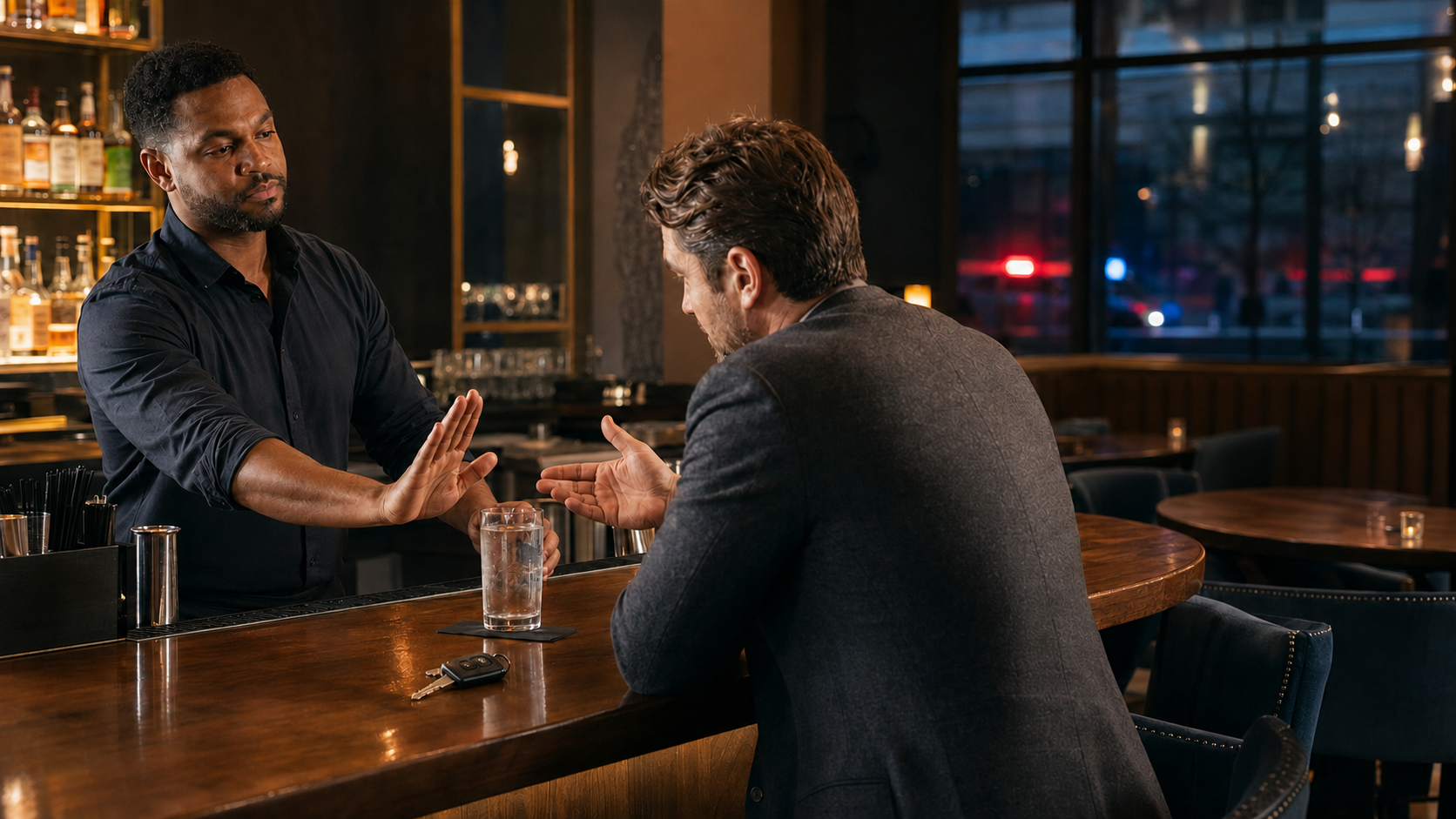
Understanding the Ohio Dram Shop Law is important for bar and restaurant owners, managers, employees, and individuals injured by an impaired driver. Under Ohio Revised Code § 4399.18, a liquor-permit holder may be held liable for an off-premises drunk-driving accident when an employee knowingly sells alcohol to a noticeably intoxicated person or unlawfully sells alcohol to an underage person, and that person’s intoxication causes the resulting injuries or property damage. Liability is not automatic; each claim depends on the evidence surrounding the alcohol sale, the patron’s condition, and the connection between the intoxication and the collision.
Bars and restaurants in Cleveland, Columbus, Cincinnati, Toledo, Dayton, Akron, and local communities throughout Ohio should maintain clear alcohol-service policies. They should also train employees to verify identification, recognize signs of intoxication, document concerning incidents, and refuse additional service when appropriate. These safeguards can protect patrons, reduce preventable crashes, and help establishments comply with Ohio law.
People injured in alcohol-related accidents may have claims against the impaired driver and, in qualifying cases, the establishment that provided the alcohol under the Ohio Dram Shop Law. Social-host liability is governed by different legal standards and is generally more limited. However, a host who knowingly furnishes alcohol to an underage person may face civil liability under certain circumstances. Because claims involving the Ohio Dram Shop Law require prompt investigation and fact-specific evidence, injured individuals should consult an experienced Ohio personal injury attorney as soon as possible.
What Is the Ohio Dram Shop Law?
The Ohio Dram Shop Act is a critical component of state law. It holds establishments accountable for serving alcohol irresponsibly. This law is specifically designed to reduce alcohol-related accidents. To hold a bar accountable under this act, certain conditions must be met. Primarily, the establishment must have served alcohol to a visibly intoxicated person or an underage person. This person must then cause an injury or accident. Key aspects of the Ohio Dram Shop Law include:
- Liability for serving alcohol to visibly intoxicated persons.
- Accountability for selling to underage individuals.
- Coverage of any venue with a liquor license.
Understanding this law helps protect both patrons and establishments from the risks associated with irresponsible alcohol service. Compliance not only limits liability but promotes public safety as well.
When Can a Bar Be Held Liable Under Ohio Dram Shop Law for a Drunk-Driving Accident?
Under the Ohio Dram Shop Law, a bar, restaurant, or other liquor permit holder may be held liable for a drunk-driving accident in limited circumstances. For an off-premises injury claim, evidence generally must show that the establishment knowingly sold alcohol to a noticeably intoxicated person or unlawfully provided alcohol to an underage person. The injured party must also establish that the individual’s intoxication proximately caused the accident and resulting harm.
To reduce potential liability under the Ohio Dram Shop Law, bars, restaurants, and other liquor-permit holders should closely monitor patrons for signs of noticeable intoxication and stop alcohol service when appropriate. Establishments should also maintain reliable identification procedures and train employees to recognize altered, fraudulent, or invalid IDs. Because dram shop liability depends on the specific circumstances and supporting evidence, each potential claim requires a careful legal analysis:
- Serving a visibly intoxicated patron.
- Selling alcohol to underage individuals.
- Failing to monitor patron behavior effectively.
Compliance with these regulations helps safeguard public safety. It also protects bars from potential lawsuits. By understanding these rules, establishments can promote a safer drinking environment for everyone involved.
Key Provisions of Ohio Alcohol Service Laws
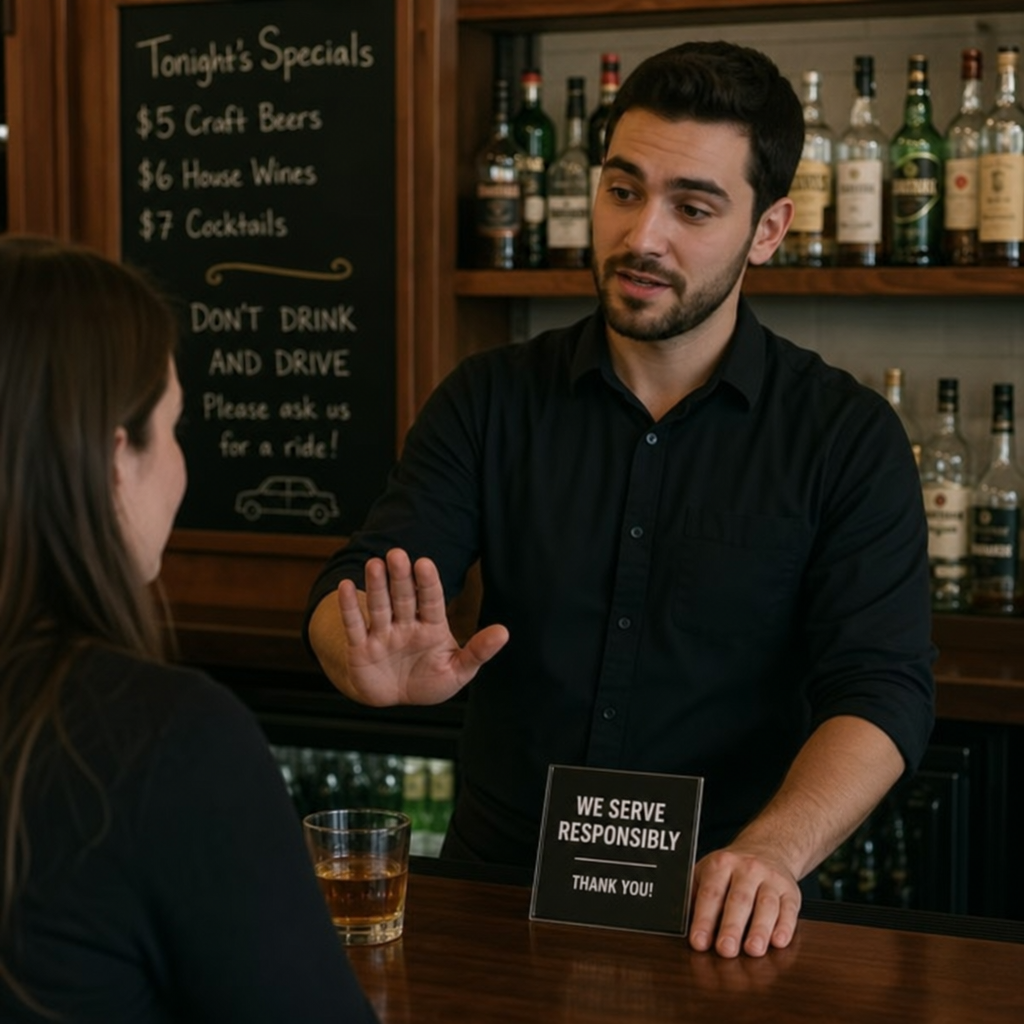
Ohio alcohol laws promote responsible service and help protect patrons and the public. Under the Ohio Dram Shop Law, a liquor permit holder may face liability when an employee knowingly serves alcohol to a noticeably intoxicated person or unlawfully serves an underage individual who later causes injury, death, or property damage. Although Ohio law does not universally require every alcohol-service employee to complete a specific training program, establishments should provide thorough instruction on checking identification, recognizing intoxication, refusing service, and documenting incidents. Programs such as TIPS (Training for Intervention Procedures) and Ohio’s Alcohol Server Knowledge Program can reinforce these responsible-service practices. Ohio alcohol service laws emphasize several key responsibilities: Ohio Revised Code § 4399.18 and 4301.22
- Mandatory training for staff.
- Strict ID verification for patrons.
- Monitoring and documenting incidents involving intoxication.
These provisions help reduce the risks associated with alcohol service and support compliance with the Ohio Dram Shop Law. By following responsible service practices, Ohio businesses can promote safer communities while limiting potential legal exposure.
Proving Bar Liability Under Dram Shop Law Ohio
Establishing bar liability under the Ohio Dram Shop Law is complex. It requires clear evidence of negligence in alcohol service. Courts look for proof that a bar served alcohol to someone visibly intoxicated or to an underage person. Witnesses can be crucial in these cases, providing firsthand accounts of the patron’s behavior. Evidence can include:
- Testimony from employees or other patrons.
- Surveillance footage showing the patron’s condition.
- Detailed incident logs maintained by the bar.
Each piece of evidence can strengthen a claim by showing what the establishment and its employees knew when alcohol was served. Under the Ohio Dram Shop Law, an off-premises claim generally requires proof that a liquor-permit holder or employee knowingly sold alcohol to a noticeably intoxicated person or unlawfully sold alcohol to an underage person. The intoxication must also have directly caused the resulting injury or property damage. Service policies, training records, receipts, surveillance footage, and witness testimony may help establish whether employees properly monitored alcohol consumption. Bars and restaurants should maintain clear, consistently enforced alcohol-service procedures to reduce preventable harm and document compliance with Ohio law.
Steps Bars Can Take to Reduce Liability
Bars can adopt several strategies to minimize liability under the Ohio Dram Shop Law. Proactive measures can make a significant difference. Training staff is crucial. Employees should identify signs of intoxication and know when to refuse service. Regular workshops or certifications like TIPS can enhance staff skills. Implementing strict policies on alcohol service is also important. Consider:
- Using ID scanners to verify ages.
- Keeping thorough records of incidents.
- Collaborating with law enforcement on safe drinking initiatives.
Regularly reviewing and updating these policies helps bars remain compliant with the Ohio Dram Shop Law and follow responsible alcohol-service practices. These measures can reduce legal risk while promoting public safety and strengthening trust within the communities they serve.
What Victims Need to Know About Filing a Claim
Victims injured in drunk-driving accidents may pursue compensation from a bar or restaurant under the Ohio Dram Shop Law when specific legal requirements are met. Generally, the injured person must prove that the establishment knowingly sold alcohol to a noticeably intoxicated patron and that the patron’s intoxication directly caused the accident and resulting injuries. Receipts, surveillance footage, point-of-sale records, police reports, and witness statements may help establish liability under the Ohio Dram Shop Law.
Timing is also critical. Ohio generally allows two years to file a lawsuit involving bodily injury, although exceptions may affect the applicable deadline. Consulting an experienced local Ohio personal injury attorney from Buckeye Law Group promptly can help preserve evidence, evaluate potential claims, and protect the victim’s legal rights. Ohio Revised Code § 2305.10
- Gather evidence of intoxication.
- Consult with an attorney specializing in dram shop cases.
- File within the legal timeframe.
Dram Shop Law and Social Host Liability in Ohio
The Ohio Dram Shop Law primarily governs claims involving liquor-permit holders, but social hosts may face liability in more limited circumstances. Generally, a private host is not liable merely for serving alcohol to an adult guest who later causes an accident. However, liability may arise when a host knowingly furnishes alcohol to someone under the age of 21 or permits unlawful underage drinking. Ohio social hosts should verify guests’ ages, monitor alcohol consumption, and arrange safe transportation when necessary. Because these cases depend heavily on the specific facts, injured individuals should consult an experienced Ohio personal injury attorney. Key considerations for social hosts include:
- Always monitor guests’ alcohol intake.
- Provide non-alcoholic drink options.
- Plan transportation for guests who may be impaired.
Frequently Asked Questions About Ohio’s Dram Shop Law
Ohio’s Dram Shop Law can raise questions for many individuals and families. Knowing the law can prevent legal issues and promote safety. Below are answers to common concerns:
- When can a bar or restaurant be held liable for a drunk-driving accident in Ohio? Under the Ohio Dram Shop Law, a liquor-permit holder may be liable for an off-premises accident when it knowingly sells alcohol to a noticeably intoxicated person or unlawfully sells alcohol to an underage person. The injured party must also prove that the person’s intoxication proximately caused the injuries, death, or property damage. Liability is not automatic and depends on the specific evidence.
- What evidence can help establish liability under the Ohio Dram Shop Law? Relevant evidence may include surveillance footage, receipts, point-of-sale records, witness statements, employee testimony, incident reports, police records, and communications involving the alcohol sale. Evidence showing slurred speech, impaired coordination, aggressive behavior, or other noticeable signs of intoxication may be especially important. Because businesses may retain records for limited periods, an investigation should begin promptly.
- Can a social host be held liable for an intoxicated guest’s actions? A social host is generally not liable merely for serving alcohol to an adult guest who later causes an accident. Different rules may apply when a host unlawfully furnishes alcohol to someone under the age of 21 or knowingly permits unlawful underage drinking. Social-host claims are highly fact-specific and fall under different legal standards than claims against liquor-permit holders. Ohio Revised Code § 4301.69
- How long does an injured person have to file an Ohio Dram Shop claim? Under the Ohio Dram Shop Law, most bodily injury lawsuits must generally be filed within two years after the claim accrues. However, the applicable deadline may vary based on the nature of the injuries, the parties involved, and other case-specific circumstances. Injured individuals should consult an experienced Ohio personal injury attorney promptly to protect their legal rights and preserve time-sensitive evidence, including surveillance footage, transaction records, and witness testimony.
The Importance of Responsible Alcohol Service
The Ohio Dram Shop Law emphasizes the critical need for responsible alcohol service. Bars and businesses must ensure staff are trained to serve wisely and understand liability implications. This law balances business operations with public safety, reducing the risk of drunk-driving accidents. Promoting responsible drinking practices benefits both patrons and the community. It builds trust between businesses and their customers and minimizes potential legal troubles. A proactive approach to alcohol service can foster a safer, more responsible environment for everyone.
Injured at a Columbus Apartment Complex? What Tenants and Visitors Should Document
A fall at a Columbus apartment complex can raise more than immediate medical concerns when a dangerous property condition may have contributed to the injury. For tenants and lawful visitors,
What Happens After a Personal Injury Lawsuit Is Filed in Franklin County?
Filing a personal injury lawsuit in Franklin County, OH, places your claim within a formal court process governed by procedural rules and deadlines. After filing, the defendant must be served
What to Do After a Hit-and-Run Accident in Columbus, Ohio
A hit-and-run accident in Columbus, OH, or the neighboring communities can leave you hurt, shaken, and unsure how to prove what happened. The right response is simple but urgent: get
Injured as a Passenger in a Columbus Car Accident? Understanding Your Options
If you were injured as a passenger in a Columbus car accident, you may have more options than you realize. Passengers are usually not the person blamed for the crash,
Who Pays Medical Bills While an Ohio Car Accident Claim Is Pending?
After a crash, medical care cannot wait for an insurance settlement. In Ohio, the person who caused the collision may ultimately be responsible for injury-related losses, but the at-fault driver’s
Cleveland Premises Liability Lawyers: Understanding Property Injury Claims in Ohio
How Cleveland Premises Liability Lawyers Evaluate Property Injury Claims Under Ohio Law A serious injury on someone else’s property can raise immediate questions about medical bills, responsibility, and your next
How Long Does an Auto Accident Settlement Take in Ohio? A Guide to the Claims Process
Ohio Auto Accident Settlement Timeline: What to Expect From Claim to Payout An Ohio auto accident settlement can move quickly when injuries are minor, liability is clear, and records are
How Buckeye Law Group’s Slip and Fall Injury Lawyers Help Injured Ohioans Understand Their Legal Options
Ohio Slip and Fall Injury Lawyers Helping You Understand Your Rights After a Serious Injury A slip and fall can turn an ordinary trip to a store, apartment building, workplace,
How Can an Ohio Truck Accident Lawyer Help You Protect Your Rights After a Commercial Truck Crash?
Legal Guidance After an Ohio Truck Accident: How an Ohio Truck Accident Lawyer Can Support Your Claim A truck accident lawyer from Buckeye Law Group can help injured individuals and
Should You Accept An Insurance Settlement Offer? Why Ohio Injury Victims Should Speak With An Attorney First
After an accident, an insurance settlement offer may provide welcome financial relief while medical bills and lost wages continue to accumulate. However, accepting an offer before the full extent of
Buckeye Law Group represents people injured in auto accidents, slip and falls, workplace accidents and more in Ohio. Contact us today to learn more.
© 2026 All Rights Reserved | The Buckeye Law Group Inc. Privacy Policy Sitemap
Office Locations
- Akron Office 388 S Main St #400 Akron, OH 44311 (330) 426-0288
- Cincinnati Office 201 E 5th St Ste 1910 Cincinnati, OH 45202 (513) 547-2445
- Cleveland Office 127 Public Square Ste 1540 Cleveland, OH 44114 (216) 677-5490
- Columbus Office 20 E Broad St Suite 300 Columbus, OH 43215 (614) 482-3793
- Dayton Office 70 Birch Alley Ste 240 Dayton, OH 45440 (937) 884-4474
- Euclid Office 25701 N Lakeland Blvd Suite 113-C, Cleveland, OH 44132 (216) 405-2626
- Mansfield Office 305 E Main St Ste 6A, Mansfield, OH 44904 (567) 210-2606
- Findlay Office 7430 Timberstone Dr unit 101a, Findlay, OH 45840 419-873-5119
- Mentor Office 7537 Mentor Ave Ste 101, Mentor, OH 44060 (440) 306-3536
- Middletown Office 300 N Main St #400, Middletown, OH 45042 (326) 800-9150
- Parma Office 1257 Rockside Rd #A, Parma, OH 44131 (216) 279-1664
- Springfield Office 2100 E High St Ste TL3, Springfield, OH 45505 (937) 806-5791
- Toledo Office 3950 Sunforest Ct Ste 200, Toledo, OH 43623 (567) 483-3883
- Westlake Office 26404 Center Ridge Rd Ste B2, Westlake, OH 44145 216-247-0565
- Whitehall Office 5340 E Main St Ste 203, Whitehall, OH 43213 (380) 257-5206
- Youngstown Office 306 Churchill Hubbard Rd, Youngstown, OH 44505 (234) 225-0683
Contact Us
© 2026 All Rights Reserved | The Buckeye Law Group Inc. Privacy Policy Sitemap