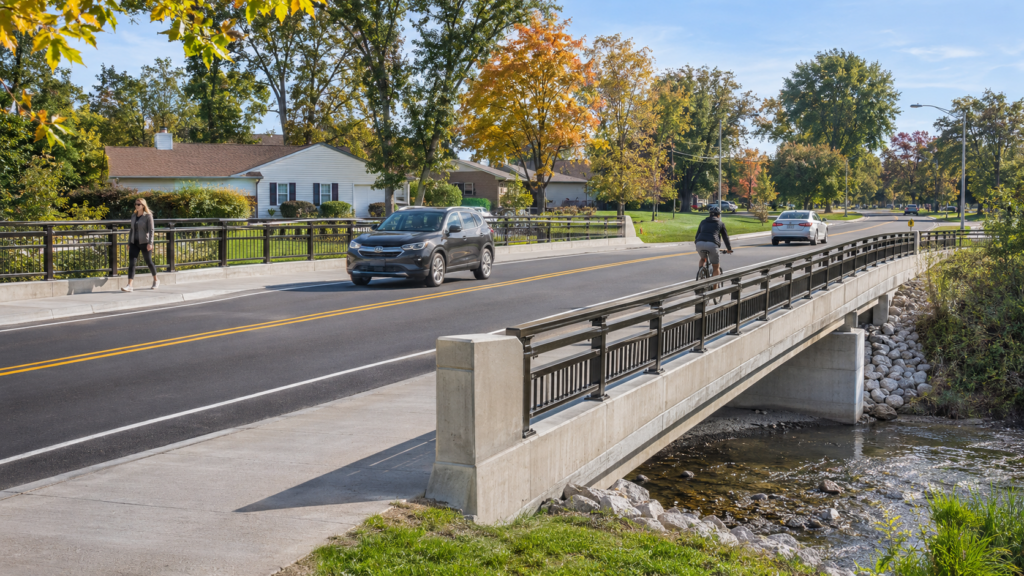
Parma, Ohio, residents and commuters now have a newly reconstructed crossing along West Ridgewood Drive, following the replacement of a century-old bridge over West Creek. The project represents an important investment in roadway infrastructure, pedestrian accessibility, stormwater management, and safer travel throughout the community.
Located near Saint Sava Picnic Grove, the new West Ridgewood Drive Bridge reopened to two-way traffic on September 8, 2026, after construction began in May. The replacement structure addresses deterioration associated with the previous bridge while providing improvements intended to accommodate motorists, pedestrians, and potential future recreational connections.
According to the Cuyahoga County Department of Public Works, the reconstruction included new roadway pavement, sidewalks, guardrails, drainage infrastructure, and updated traffic markings. For drivers, cyclists, and pedestrians traveling through Parma, understanding these improvements, and the traffic safety responsibilities that remain, is essential to your safety.
Call (216) 279-1664 or request a free consultation to speak with an experienced Parma auto accident attorney at Buckeye Law Group today.
Why Was the West Ridgewood Drive Bridge Replaced?
Originally constructed in 1925, the West Ridgewood Drive Bridge served the Parma community for nearly a century, providing an important connection for residents, commuters, and emergency responders. As the structure aged, deterioration raised concerns about its long-term reliability and prompted the need for replacement. County officials prioritized the project to help preserve safe, dependable transportation access and support the community’s long-term infrastructure needs. The replacement project included several significant improvements:
- Construction of a new 61-foot bridge over West Creek.
- Replacement and resurfacing of adjacent roadway pavement.
- Installation of sidewalks, curbs, and protective railings.
- Improved drainage and stormwater infrastructure.
- Updated roadway markings, signs, and guardrails.
- Space intended to accommodate future pedestrian and multi-use trail connections.
Local reporting indicates that the new bridge is designed to provide more than 75 years of service, although its long-term performance will depend on regular inspections, maintenance, and environmental conditions. Beyond structural improvements, the project aims to support safer, more dependable travel for residents, school buses, and emergency responders, particularly those accessing University Hospitals Parma Medical Center and surrounding neighborhoods.
When Did Parma’s New West Ridgewood Drive Bridge Reopen?
Construction-related closure of the bridge began on May 4, 2026. During the closure, motorists were directed to use alternate routes involving State Road, Snow Road, and Broadview Road.
According to Cuyahoga County’s October 2, 2026, construction update, the bridge reopened to two-way traffic on September 8. The county also reported that pavement markings and roadway signs had been restored, residential driveway aprons reinstalled, and detour signs removed. Although the bridge is open, the county’s published project schedule continues through November 30, 2026. Drivers should distinguish between a bridge reopening and formal completion of every remaining project activity.
Residents can review the official Cuyahoga County bridge project updates for additional information.
How Does the New Bridge Improve Safety for Parma Drivers?
One of the most important aspects of the West Ridgewood Drive Bridge replacement is the reconstruction of aging roadway infrastructure. Deteriorating road surfaces can create hazards involving uneven pavement, potholes, standing water, and sudden vehicle movements. The reconstructed bridge provides a renewed driving surface, updated pavement markings, and protective infrastructure intended to support more predictable travel conditions.
Safer travel for emergency vehicles and school buses
Reliable bridge access is particularly important for larger vehicles, including ambulances, fire trucks, and school buses. Poor roadway conditions can affect vehicle stability, passenger comfort, and the ability of emergency personnel to travel efficiently. The West Ridgewood Drive improvements are particularly relevant because of the bridge’s proximity to University Hospitals Parma Medical Center and nearby residential neighborhoods. Nevertheless, a reconstructed roadway does not eliminate driver responsibility. Motorists should continue to observe posted speed limits, maintain appropriate following distances, and exercise additional caution when encountering school buses or emergency vehicles.
Managing wet pavement and changing weather conditions
Improved drainage is another significant component of the project. The new bridge design is intended to improve stormwater flow through the West Creek crossing and reduce flooding concerns. However, improved drainage does not mean flooding or slippery roadway conditions can no longer occur.
During heavy rainfall, motorists should avoid entering flooded pavement, reduce speed when visibility is limited, and allow additional stopping distance. During Northeast Ohio winters, drivers should also remain alert for ice on bridges, which can form before ice develops on surrounding roadway surfaces. These precautions remain necessary regardless of the bridge’s age or condition.
Pedestrian Safety Improvements Along West Ridgewood Drive
Pedestrian accessibility was another important consideration in the bridge reconstruction. County construction records confirm the installation of a new concrete sidewalk, curbs, bridge parapets, and tubular railings. These features help define pedestrian space and provide physical separation from the bridge’s edges. However, pedestrians should not assume that the reconstructed crossing eliminates every potential hazard. When walking along West Ridgewood Drive, pedestrians should:
- Use designated sidewalks and available pedestrian facilities.
- Cross at appropriate intersections or designated crosswalks.
- Remain alert when approaching driveways or intersections.
- Avoid distractions while crossing the roadway.
- Use additional caution during rain, snow, ice, or reduced visibility.
Understanding pedestrian right-of-way in Ohio
Under Ohio Revised Code § 4511.46, motorists generally must yield to pedestrians within crosswalks when traffic signals do not otherwise assign the right-of-way, subject to the statute’s specific conditions.
Ohio law also prohibits drivers from overtaking vehicles stopped at crosswalks to allow pedestrians to cross. Pedestrians have responsibilities as well, including avoiding sudden entry into the path of vehicles that are too close to stop safely. These legal requirements remain relevant wherever motorists and pedestrians interact near the bridge.
What Cyclists Should Know About the New Bridge
The West Ridgewood Drive Bridge replacement also supports longer-term efforts to improve bicycle and pedestrian connectivity throughout Cuyahoga County. County officials previously identified the bridge as a potential connection within the Cuyahoga Greenways Plan, which seeks to expand opportunities for walking and cycling.
The reconstructed bridge includes space intended to accommodate future pedestrian and multi-use trail connections. Importantly, a planned trail connection should not be confused with an already completed or officially opened bicycle route. Cyclists should verify the availability of designated facilities before planning a route through the area.
Ohio bicycle laws and safe passing distances
Under Ohio Revised Code § 4511.55, cyclists generally must follow applicable traffic rules and ride as near to the right side of the roadway as practicable. However, the law does not require cyclists to remain at the roadway edge when doing so would be unsafe, including when avoiding surface hazards or traveling within a lane too narrow for safe side-by-side travel.
Additionally, Ohio Revised Code § 4511.27 establishes that three feet or greater is considered a safe passing distance when motorists overtake bicycles. Drivers approaching cyclists near the bridge should allow sufficient clearance and avoid attempting to pass when roadway conditions make doing so unsafe.
How the Bridge Replacement May Help Reduce Flooding
The bridge crosses West Creek, making stormwater management an important consideration. The previous crossing presented infrastructure challenges, including concerns about water movement during heavy rainfall. The replacement incorporates updated drainage structures, roadway underdrains, channel protection, and a redesigned crossing intended to improve stormwater flow.
Improved water conveyance can help reduce localized flooding risks, but the actual effect depends on rainfall intensity, upstream conditions, debris accumulation, and continued maintenance. Residents should continue following weather advisories and never assume a roadway is safe simply because nearby drainage infrastructure has been replaced.
What Should You Do After an Accident Near the Bridge?
Even with modern infrastructure, collisions involving motorists, pedestrians, or cyclists can occur. If an accident happens near the West Ridgewood Drive Bridge, the following steps may help protect your safety and preserve relevant information:
- Seek Medical Attention and Report the Accident: Some injuries, including concussions, whiplash, and soft tissue injuries, may not produce noticeable symptoms immediately after a collision. Seeking a timely medical evaluation can help identify potential injuries and document your condition. Contact the Parma Police Department to report the accident and request assistance when appropriate, particularly if anyone is injured or there is significant property damage.
- Contact Emergency Services When Necessary: If a collision results in serious injuries, a medical emergency, or an immediate safety hazard, call 911 to request assistance from police, fire, or emergency medical personnel. Provide the dispatcher with your location, the number of vehicles involved, and any known injuries to help emergency responders assess the situation and provide appropriate assistance.
- Document the Accident Scene When Safe to Do So: If conditions permit, take clear photographs of vehicle damage, roadway markings, traffic signals, posted signs, and relevant road surface conditions. Documenting factors such as construction barriers, lane closures, debris, or obstructed visibility may help establish the circumstances surrounding the collision. Prioritize your safety and avoid entering active traffic or hazardous areas to gather evidence.
- Identify Potential Witnesses and Collect Contact Information: If other drivers, pedestrians, cyclists, or nearby individuals witnessed the collision, consider requesting their names and contact information when it is safe to do so. Independent witness statements may provide valuable details about traffic conditions, driver behavior, visibility, and the sequence of events leading to the accident. These observations can help clarify disputed circumstances and support an accurate investigation.
- Preserve Relevant Documentation and Accident Records: Maintain copies of medical evaluations, treatment records, medical expenses, insurance correspondence, and any available police crash reports. These documents can help establish the nature and extent of reported injuries, track accident-related expenses, and clarify important details surrounding the collision. Keeping records organized and accessible may also help resolve insurance disputes and support a potential personal injury claim.
Ohio’s two-year statute of limitations for many personal injury claims may apply, although exceptions and different deadlines can affect individual circumstances. Determining responsibility requires consideration of the evidence, applicable traffic laws, and the specific circumstances of the collision.
Frequently Asked Questions About Parma’s New West Ridgewood Drive Bridge
- Is the West Ridgewood Drive Bridge in Parma open? Yes. Cuyahoga County reports that the bridge reopened to two-way traffic on September 8, 2026. The county’s October 2 update identified only minor remaining project items.
- Does the new bridge have sidewalks? Yes. County construction updates confirm that new concrete sidewalks, curbs, and protective railings were installed as part of the bridge replacement.
- Is there a new bicycle trail on the bridge? The bridge was designed to accommodate potential future pedestrian and multi-use trail connections. The available project information does not establish that every planned connecting trail has opened.
- Will the new bridge prevent flooding? The replacement is designed to improve stormwater flow and reduce flooding concerns. However, no bridge or drainage improvement can guarantee that flooding will never occur.
Supporting Safer Travel Throughout Parma, Ohio
The replacement of the West Ridgewood Drive Bridge represents a meaningful investment in Parma’s transportation infrastructure. With renewed pavement, pedestrian facilities, updated drainage infrastructure, and potential future trail connectivity, the improvements are intended to support safer and more reliable travel for residents, commuters, and emergency responders.
However, infrastructure improvements work alongside, not in place of, responsible driving, pedestrian awareness, and compliance with Ohio traffic laws. At Buckeye Law Group, we believe access to accurate roadway safety information helps Ohio residents make informed decisions and better understand their responsibilities when traveling.
Call (216) 279-1664 or request a free consultation to speak with an experienced Parma auto accident attorney at Buckeye Law Group today.
Legal Disclaimer: This article is provided by Buckeye Law Group for general educational and informational purposes only and does not constitute legal advice or establish an attorney-client relationship. Traffic regulations, construction conditions, and legal requirements may change. Every accident involves unique facts, and potential legal rights depend on the circumstances of the incident and applicable law. Buckeye Law Group offers free consultations and handles qualifying personal injury matters on a contingency-fee basis, subject to a written fee agreement. No legal outcome is guaranteed. Consult a qualified Ohio attorney regarding your specific situation.