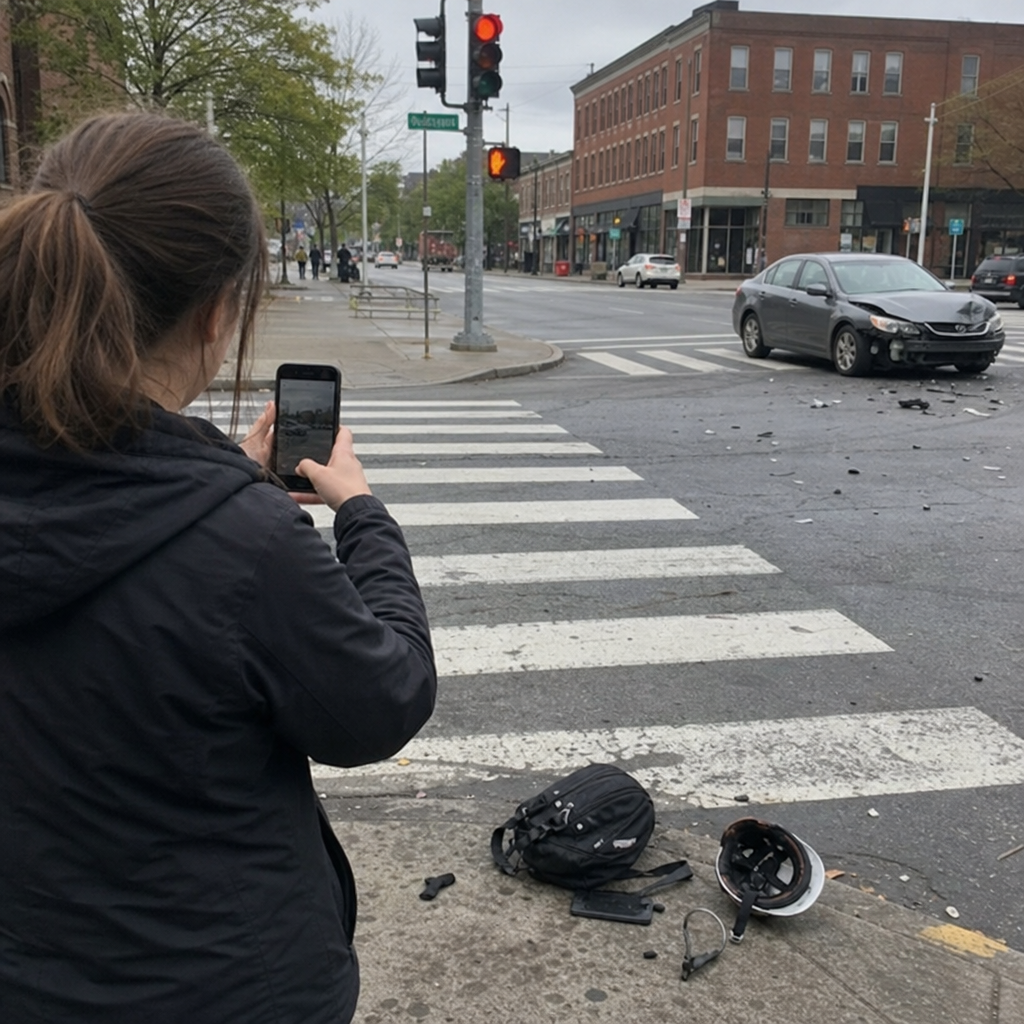
When a pedestrian is hit by a car in downtown Dayton, the first priorities are medical care, safety, and creating a clear record of what happened. After the scene is under control, the pedestrian accident report, witness details, insurance information, and Ohio pedestrian laws may all affect what comes next. This article outlines the essential steps to take following a pedestrian accident in Dayton, Ohio, including protecting your legal rights, preserving critical evidence, and understanding the responsibilities of injured pedestrians, motorists, witnesses, and family members under Ohio law.
Downtown Dayton presents unique pedestrian safety concerns, particularly near Main Street, Third Street, Jefferson Street, and the Oregon District. Pedestrians frequently share these areas with turning vehicles, public transportation, delivery trucks, and motorists entering parking facilities. Areas surrounding Courthouse Square, Wright Stop Plaza, and the Fifth Street entertainment corridor warrant particular attention when evaluating pedestrian collisions. Crosswalk signals, roadway visibility, vehicle movements, and nearby surveillance cameras may provide important evidence when determining liability under Ohio law.
Call (937) 884-4474 or request a free consultation to speak with a Dayton pedestrian injury attorney at Buckeye Law Group today.
What happens when a pedestrian is hit by a car in downtown Dayton?
In most cases, the immediate sequence is emergency response, medical evaluation, police documentation, insurance contact, and then a review of fault and damages. If the crash caused an injury, calling 911 is the right first move because a pedestrian may have injuries that are not obvious right away. Ohio law also requires drivers involved in crashes on public roads to stop and provide identifying information, with additional consequences possible when a driver leaves the scene.
Downtown Dayton adds a few real-world complications. Traffic may be moving around intersections, buses, delivery vehicles, parked cars, scooters, and people leaving restaurants, offices, events, or parking garages. A crash scene can change quickly, so details like signal timing, crosswalk location, skid marks, vehicle position, and nearby cameras may matter later. If you are physically able, move out of traffic and wait for help. If you are assisting someone else, avoid moving them unless they are in immediate danger. The goal is simple: prevent a second collision, get medical help, and preserve the basic facts before everyone leaves the scene.
The first minutes matter most
The first few minutes after a pedestrian crash can feel chaotic, but they often shape the entire recovery process. A person may feel embarrassed, disoriented, angry, or convinced they are “fine,” only to realize hours later that pain, dizziness, swelling, or confusion is getting worse. That is why medical attention should come before debating fault. Here is a practical checklist for the scene:
- Call 911 if anyone is hurt, shaken, or blocking traffic.
- Stay nearby but safe until police and emergency responders arrive.
- Get the driver’s information, including name, phone number, license plate, and insurance if possible.
- Ask witnesses for contact details before they leave.
- Take photos or video of the crosswalk, signals, vehicle position, injuries, clothing, weather, lighting, and anything obstructing visibility.
- Avoid quick blame statements, even casual comments like “I didn’t see them” or “I came out of nowhere.”
- Get checked by a medical professional, even if the pain seems manageable.
These steps are not about being dramatic. They are about making sure the facts do not disappear. A clean record is especially useful when there are conflicting memories, unclear traffic signals, or a driver who later gives a different version of events.
Police reports and records create the paper trail
A pedestrian accident report is one of the most important documents after a downtown crash. It may include the date, location, people involved, insurance details, witness names, diagrams, citations, and the officer’s observations. It is not the only evidence, and it is not always perfect, but it gives everyone a starting point.
The City of Dayton provides information for obtaining traffic crash witness statements and says complete Traffic Crash Reports with witness statements can be requested through the Dayton Police Department Records Bureau. Ohio also offers an online crash report search through its traffic safety data system.
If you review the report and see something that looks wrong, do not ignore it. Names, vehicle descriptions, times, directions of travel, and witness information can be entered incorrectly. You can ask how to submit additional information or documentation, but keep your expectations realistic: an officer may not simply rewrite conclusions because one party disagrees.
Fault is not always as simple as “car versus pedestrian”
Many people assume the driver is always at fault when a car hits a person walking. Drivers do have a serious responsibility because vehicles can cause severe harm, but Ohio law looks at the conduct of everyone involved. In an unsignalized crosswalk, drivers must yield to a pedestrian in the crosswalk when the pedestrian is on the vehicle’s half of the road or close enough from the opposite half to be in danger.
At the same time, Ohio law also says a pedestrian must not suddenly leave a curb or other place of safety and move into the path of a vehicle that is so close it creates an immediate hazard. That means details matter: Was the pedestrian in a marked or unmarked crosswalk? Did the signal say walk? Was the driver speeding, distracted, turning, or failing to yield? Was visibility blocked by a parked vehicle or construction equipment?
Ohio uses a comparative fault system in injury cases. In general, a person’s recovery can be reduced by their share of fault, and recovery can be barred if their fault is greater than the combined fault of the other parties. This is one reason it is smart to avoid arguing at the scene or giving recorded statements before you understand the facts.
Medical care connects the crash to the injury
After Dayton traffic incidents involving pedestrians, documentation does not stop with the police report. Medical records often become the timeline that connects the crash to the injury. Emergency room notes, urgent care records, imaging, physical therapy notes, prescriptions, work restrictions, and follow-up visits can all help show what changed after the collision. Common pedestrian injuries may involve the head, neck, back, hips, knees, shoulders, wrists, or ankles. Some injuries are obvious right away, while others show up after the adrenaline fades. If symptoms change, tell your provider when they started and how the crash happened. Good documentation is also practical for daily life. It can help with employer paperwork, insurance forms, school absences, transportation needs, and follow-up care. Keep a folder with discharge papers, bills, receipts, mileage to appointments, photos of injuries, and notes about pain levels or limitations.
What should you avoid after a downtown pedestrian crash?
You should avoid rushing the process, minimizing injuries, posting dramatic updates online, or accepting a quick settlement before you know the full impact. Insurance companies may need information, but that does not mean every conversation is harmless. A short statement can be interpreted in ways you did not intend. Be especially careful with these mistakes:
- Waiting Too Long for Medical Care: Delays can make injuries harder to treat and harder to connect to the crash.
- Throwing Away Damaged Items: Shoes, clothing, bags, phones, and mobility aids may help show impact or visibility.
- Assuming Cameras Will be Saved Automatically: Nearby businesses, garages, buses, and buildings may overwrite video.
- Posting About Fault Online: Social media comments can be taken out of context.
- Ignoring Deadlines: Ohio’s general deadline for bodily injury actions is two years from when the cause of action accrues, subject to exceptions.
A pedestrian crash can overlap with other injury issues too. For example, someone may be hit after tripping on a broken curb, slipping near a business entrance, or falling because a walkway was poorly maintained. In that kind of mixed situation, a Dayton slip and fall attorney or injury lawyer may look at both the driver’s conduct and the property conditions that contributed to the event.
Downtown safety tips for pedestrians and drivers
No set of downtown safety tips can eliminate every risk, but small habits can reduce confusion at busy intersections. Pedestrians should use marked crossings when available, wait for the signal, make themselves visible at night, and avoid assuming a turning driver has made eye contact. Drivers should slow down near crosswalks, scan both sides before turning, avoid blocking intersections, and expect pedestrians near parking lots, transit stops, entertainment areas, and office buildings. A few practical habits help everyone:
- At Intersections: Pause before stepping off the curb, even with the walk signal.
- At Night or in Rain: Use brighter clothing, reflective gear, or a phone light when appropriate.
- When Turning: Drivers should check for pedestrians before checking for a traffic gap.
- Near Parked Cars: Both drivers and pedestrians should expect limited visibility.
- After Events: Give yourself extra time because foot traffic and rideshare pickups can crowd the curb.
Local conversations about downtown accident news often focus on a single crash, but safety is usually about patterns. Speed, visibility, distraction, lighting, road design, and timing all interact. The more predictable everyone becomes, the fewer split-second surprises happen.
When legal help may be worth considering
Not every pedestrian crash turns into a legal claim, and not every injury requires a lawyer. Still, it may be worth getting guidance if injuries are serious, fault is disputed, the driver left the scene, an insurance adjuster is pressuring you, medical bills are piling up, or the crash involved a commercial vehicle. A local Ohio lawyer can help organize records, identify insurance coverage, review the pedestrian accident report, and explain how Ohio fault rules may apply. This is also where timing matters. Evidence is easier to gather early, while witnesses still remember details and video may still exist. Even if you are unsure whether you have a claim, a short consultation can help you understand what information to collect and what not to sign too quickly.
Steps to Protect Your Health and Legal Rights After a Pedestrian Accident in Downtown Dayton
A pedestrian crash in downtown Dayton can turn an ordinary day into a confusing mess of medical appointments, police paperwork, insurance calls, and unanswered questions. Start with safety and medical care, then focus on documentation: the crash report, witness information, photos, medical records, and any available video. If you remember only one thing, remember this: the details matter. Crosswalk rules, signal timing, driver behavior, pedestrian actions, and injury records can all shape what happens next. Getting organized early gives you the best chance to protect your health, understand your options, and move forward with a clearer picture.
Call (937) 884-4474 or request a free consultation to speak with a Dayton pedestrian injury attorney at Buckeye Law Group.
*This article provides general information about pedestrian accident claims in Dayton, Ohio, and the legal considerations injured pedestrians and their families may face following a traffic collision. It is intended for educational purposes only and does not constitute legal advice. Reading this article or contacting Buckeye Law Group does not, by itself, create an attorney-client relationship. Pedestrian accidents in Dayton may involve distracted driving, failure to yield, speeding, impaired driving, or unsafe intersection conditions. Establishing liability under Ohio law requires evaluating driver negligence, traffic laws, available evidence, and applicable defenses. Important documentation may include police reports, witness statements, surveillance footage, photographs, medical records, and financial losses. Ohio’s comparative negligence rules, insurance requirements, and applicable filing deadlines may also affect a pedestrian injury claim. Consult a qualified Dayton pedestrian accident lawyer at Buckeye Law Group to understand your legal rights, potential compensation, and available options. Every case is different, and prior results do not guarantee a similar outcome.*
Who Is Liable After a Commercial Truck Accident on I-75 Near Dayton?
A commercial truck crash on I-75 near Dayton can involve more than one responsible party. The driver may be part of the story, but truck accident liability often turns on
What Happens When a Pedestrian Is Hit by a Car in Downtown Dayton?
When a pedestrian is hit by a car in downtown Dayton, the first priorities are medical care, safety, and creating a clear record of what happened. After the scene is
How Do You Prove a Slip and Fall Injury Claim in Dayton, Ohio?
A slip and fall injury claim in Dayton, Ohio, usually comes down to evidence: what dangerous condition caused the fall, who was responsible for the property, whether they knew or
What Are Common Signs of Medical Malpractice in Toledo Hospitals?
Medical malpractice can be difficult to recognize because poor outcomes sometimes happen even when doctors, nurses, and hospitals do everything right. Still, certain warning signs may suggest that a preventable
How an Ohio car accident lawyer helps negotiate with insurance companies
After a crash, the insurance process can feel like a second accident: confusing, stressful, and full of pressure to make quick decisions. Understanding how an Ohio car accident lawyer helps
What Evidence is Needed After a Commercial Truck Accident in Akron, Ohio?
After a commercial truck crash in Akron, the strongest claim is usually built from evidence gathered quickly, preserved properly, and connected to the real cause of the collision. Useful evidence
Most dangerous roads and intersections in Akron, Ohio
Akron has plenty of everyday driving pinch points: quick merges, busy arterials, short downtown blocks, and neighborhood streets where drivers, walkers, and cyclists all share a common space. The latest
What Happens After a Dog Bite in Dayton, Ohio?
A dog bite can turn an ordinary walk, delivery stop, visit, or neighborhood errand into a confusing medical and legal situation. In Dayton and the surrounding Montgomery County area, the
Wrongful Death Lawyers in Akron and How Local Ohio Attorneys Can Provide the Legal Resources Your Family Deserves
When a loved one dies because of another person’s carelessness, unsafe choices, or misconduct, the family is left with grief, unanswered questions, and often sudden financial pressure. Ohio law allows
How Can Cleveland Wrongful Death Lawyers Help Families Protect Their Rights and Pursue Compensation?
When a preventable death changes your family’s future, the legal process can feel impossible to face. Wrongful death lawyers in Cleveland can help families understand Ohio law, preserve evidence, deal
Buckeye Law Group represents people injured in auto accidents, slip and falls, workplace accidents and more in Ohio. Contact us today to learn more.
© 2026 All Rights Reserved | The Buckeye Law Group Inc. Privacy Policy Sitemap
Office Locations
- Akron Office 388 S Main St #400 Akron, OH 44311 (330) 426-0288
- Cincinnati Office 201 E 5th St Ste 1910 Cincinnati, OH 45202 (513) 547-2445
- Cleveland Office 127 Public Square Ste 1540 Cleveland, OH 44114 (216) 677-5490
- Columbus Office 20 E Broad St Suite 300 Columbus, OH 43215 (614) 482-3793
- Dayton Office 70 Birch Alley Ste 240 Dayton, OH 45440 (937) 884-4474
- Euclid Office 25701 N Lakeland Blvd Suite 113-C, Cleveland, OH 44132 (216) 405-2626
- Mansfield Office 305 E Main St Ste 6A, Mansfield, OH 44904 (567) 210-2606
- Findlay Office 7430 Timberstone Dr unit 101a, Findlay, OH 45840 419-873-5119
- Mentor Office 7537 Mentor Ave Ste 101, Mentor, OH 44060 (440) 306-3536
- Middletown Office 300 N Main St #400, Middletown, OH 45042 (326) 800-9150
- Parma Office 1257 Rockside Rd #A, Parma, OH 44131 (216) 279-1664
- Springfield Office 2100 E High St Ste TL3, Springfield, OH 45505 (937) 806-5791
- Toledo Office 3950 Sunforest Ct Ste 200, Toledo, OH 43623 (567) 483-3883
- Westlake Office 26404 Center Ridge Rd Ste B2, Westlake, OH 44145 216-247-0565
- Whitehall Office 5340 E Main St Ste 203, Whitehall, OH 43213 (380) 257-5206
- Youngstown Office 306 Churchill Hubbard Rd, Youngstown, OH 44505 (234) 225-0683
Contact Us
© 2026 All Rights Reserved | The Buckeye Law Group Inc. Privacy Policy Sitemap