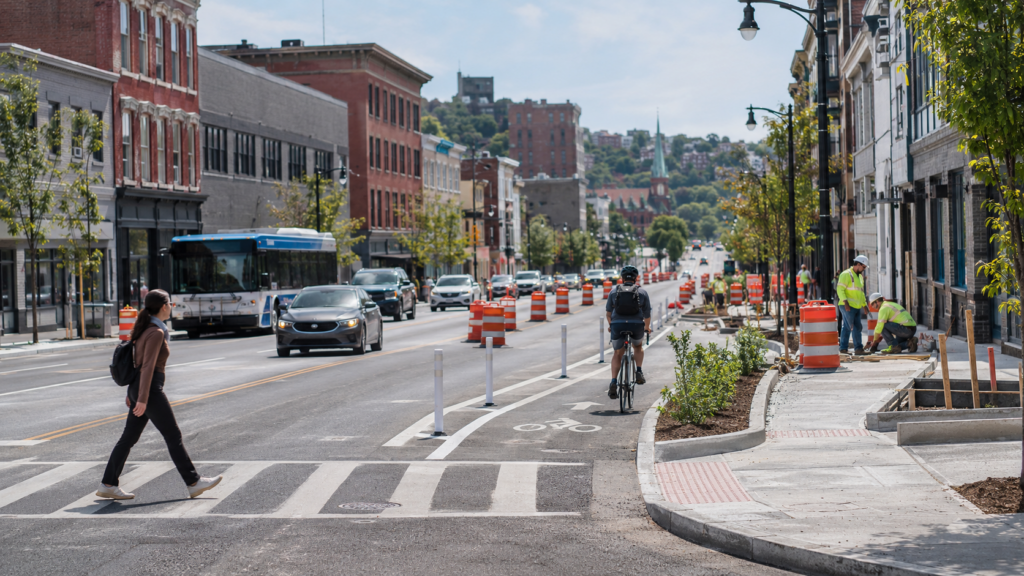
Cincinnati’s Gilbert Avenue is an important connection between downtown, Walnut Hills, and surrounding neighborhoods. The corridor serves motorists, pedestrians, cyclists, public transit passengers, and businesses that depend on accessible streets and sidewalks. In 2026, the City of Cincinnati is advancing the Gilbert Avenue Complete Street Project, a roadway improvement initiative intended to reduce traffic conflicts and create safer conditions for different types of transportation.
The plans include protected bicycle lanes, shorter pedestrian crossings, intersection improvements, and changes to how roadway space is allocated. However, the timing matters: water main work was scheduled to begin in September 2026, while the main Complete Streets roadway improvements are expected to begin in spring 2027, according to the City of Cincinnati’s Phase 1 project page. For Cincinnati residents and commuters, understanding the project, its construction phases, and the traffic laws governing shared roadways can help reduce confusion and support safer travel.
Call (513) 547-2445 or request a free consultation today to speak with an experienced local Cincinnati auto and pedestrian accident lawyer at Buckeye Law Group.
What Is Cincinnati’s Gilbert Avenue Complete Street Project?
The Gilbert Avenue Complete Street Project is led by the City of Cincinnati Department of Transportation & Engineering (DOTE). A Complete Street is designed to accommodate multiple types of roadway users rather than focus exclusively on automobile traffic. Depending on the corridor, improvements may include safer crossings, bicycle infrastructure, transit accommodations, and measures intended to manage vehicle speeds.
Phase 1 covers approximately two miles of Gilbert Avenue between Court Street in downtown Cincinnati and Martin Luther King Jr. Drive near Walnut Hills. The city identifies several major improvements:
- Roadway Rightsizing: Adjusting the street’s configuration to improve how space is allocated and how traffic moves.
- Protected Bicycle Lanes: Providing designated space intended to separate cyclists from moving motor vehicles.
- Shorter Pedestrian Crossings: Reducing the distance pedestrians travel through portions of the roadway.
- Intersection Improvements: Modifying intersections and traffic signals to improve safety and operations.
- Transit Improvements: Incorporating changes intended to make bus stops safer and more accessible.
These are planned improvements, not evidence that the new facilities are already installed or available for use.
Gilbert Avenue Construction Timeline: What Is Happening in 2026?
- Phase 1 — Court Street to Martin Luther King Jr. Drive: Greater Cincinnati Water Works utility work was scheduled to begin in September 2026. Cincinnati currently anticipates starting the primary Complete Streets construction in spring 2027.
- Phase 2 — Martin Luther King Jr. Drive to Dixmont Avenue: Phase 2 extends approximately half a mile toward Evanston, beyond Victory Parkway. Design work began in spring 2026, with construction currently targeted for summer 2029. The city scheduled a Phase 2 public open house for November 17, 2026, at the Walnut Hills Library. For changes to this phase, consult the official Phase 2 project page.
Schedules are subject to change. As of November 19, 2026, the published project information does not establish a complete dated list of individual Gilbert Avenue lane closures or detours. Motorists should consult official city updates rather than assume that all planned roadway changes are already in place.
How Could the Gilbert Avenue Improvements Affect Drivers?
Gilbert Avenue’s proposed configuration could change how drivers approach intersections, make turns, and interact with cyclists and pedestrians. Roadway rightsizing can reallocate space previously used by vehicle lanes. Protected bicycle facilities may also introduce separation features that require closer attention when crossing bicycle routes.
Drivers traveling through the corridor should:
- Follow posted traffic signs, temporary signals, and construction-zone instructions.
- Reduce speed when visibility is limited by equipment, barriers, or roadway activity.
- Check for pedestrians and cyclists before making turns, including at driveways.
- Avoid stopping or parking in designated bicycle lanes.
- Allow additional travel time when construction affects established traffic patterns.
Motorists should consider changing conditions near Gilbert Avenue and William Howard Taft Road, McMillan Street, and Martin Luther King Jr. Drive. These are useful geographic reference points, not confirmed locations of specific November 2026 closures.
What Pedestrians Should Know About Gilbert Avenue Safety
Shorter pedestrian crossings are a central component of the proposed design. Reducing crossing distances can limit the time pedestrians spend in traveled portions of the roadway. Curb extensions and revised intersection layouts can also improve visibility when appropriately designed.
Construction, however, may temporarily change sidewalk access or crossing routes. Pedestrians should use designated temporary walkways where available, observe pedestrian signals, and avoid barricaded work areas. Additional consideration is important for people using wheelchairs, mobility devices, or other accessibility accommodations.
If a sidewalk or crossing becomes inaccessible, residents can contact DOTE or the city’s 311 service. Pedestrian right-of-way depends on signals, crossing locations, and applicable Ohio law; a marked crosswalk does not eliminate everyone’s obligation to remain attentive. For injury-related questions involving pedestrian collisions, readers can also review Buckeye Law Group’s Cincinnati pedestrian accident information.
How the Project Could Improve Bicycle Safety
Protected bicycle infrastructure is among the most significant proposed changes. The city’s preferred Phase 1 design includes a two-way bicycle facility between Court Street and Morris Street, with other bicycle-lane arrangements proposed farther north.
The intended improvements may create a more comfortable route between downtown Cincinnati and Walnut Hills and support connections to the broader bicycle network. Until new facilities are completed and opened, cyclists should follow existing traffic controls and lawful routes.
Useful precautions include watching for turning vehicles, avoiding obstructed construction areas, and using appropriate lights in low-visibility conditions. Drivers must also watch for cyclists where bicycle routes intersect turning movements or driveways. Physical separation can reduce some traffic conflicts, but it cannot eliminate every possible collision risk.
Additional educational information is available through our firm’s Cincinnati bicycle accident resources.
Ohio Traffic Laws That Apply Along Gilbert Avenue
Ohio traffic laws remain applicable during construction and after the roadway improvements are completed. Several provisions are especially relevant:
- Pedestrian Crossings — Ohio Revised Code § 4511.46: When traffic signals are absent, not operating, or not clearly assigning right-of-way, motorists generally must yield to pedestrians in crosswalks under the circumstances established by the statute.
- Passing Bicycles — Ohio Revised Code § 4511.27: Ohio law identifies three feet or greater as a safe passing distance when a motor vehicle overtakes a bicycle.
- Bicycle Roadway Operation — Ohio Revised Code § 4511.55: Cyclists generally must follow applicable vehicle rules, subject to statutory exceptions. The statute recognizes circumstances when riding at the roadway’s edge would be unreasonable or unsafe.
- Comparative Fault — Ohio Revised Code § 2315.33: An injured person’s recovery may be reduced by their share of fault. Generally, a person whose fault exceeds 50% cannot recover compensatory damages under Ohio’s comparative-fault framework.
None of these provisions automatically establishes liability in a collision. Legal responsibility depends on the conduct involved, available evidence, and the duties applicable to the specific circumstances.
What Should You Do After an Accident Near Gilbert Avenue?
Collisions involving cars, bicycles, or pedestrians can raise complicated questions when temporary traffic controls or changing roadway conditions are involved. If an accident occurs:
- Address Immediate Safety Concerns: Call 911 for emergencies and obtain appropriate medical attention.
- Report The Incident: Contact the Cincinnati Police Department when appropriate and request information about obtaining the crash report.
- Document The Conditions: When safe, photograph vehicle positions, traffic signals, pavement markings, construction barriers, and nearby signs.
- Preserve Evidence: Record witness information and promptly identify possible surveillance footage, photographs, and other documentation.
- Review Your Legal Options: Insurance coverage, fault, medical records, and the circumstances of the collision can affect an injury claim.
Under Ohio Revised Code § 2305.10, many personal injury lawsuits are subject to a two-year statute of limitations. Exceptions and different requirements may apply, including certain claims involving public entities. Readers seeking additional guidance can consult Buckeye Law Group’s Ohio car accident resources.
Cincinnati and Hamilton County Resources for Gilbert Avenue Travelers
These local agencies may help residents obtain project information, report safety concerns, review transit changes, or request official accident records. Confirm contact information and office procedures before visiting:
Cincinnati Department of Transportation & Engineering — Traffic Engineering
- Address: 801 Plum Street, Suite 450, Cincinnati, OH 45202
- Phone: (513) 352-6229
- Website: Cincinnati Traffic Engineering
- Useful for questions about traffic signals, street design, and roadway safety.
Greater Cincinnati Water Works
- Address: 4747 Spring Grove Ave, Cincinnati, OH 45232
- Phone: (513) 591-7700
- Website: Water construction projects
- Useful for water main construction inquiries and service issues.
Cincinnati 311 — City Customer Service
- Phone: 311 or (513) 765-1212
- Website: Cincinnati 311
- Use for nonemergency hazards, obstructed public walkways, and city service concerns.
Cincinnati Metro
- Route Information: (513) 621-4455
- Customer Care: (513) 632-7575
- Customer Care Email: customerservice@go-metro.com
- Website: Metro service alerts
- Check temporary bus detours and changes in transit service.
Cincinnati Police Department — Records Section
- Address: 801 Linn Street, Cincinnati, OH 45203
- Phone: (513) 352-3559
- Website: Police records and crash reports
- Request available police crash reports and related records.
Frequently Asked Questions About the Gilbert Avenue Complete Street Project
- Is the Gilbert Avenue project under construction in November 2026? The city scheduled Greater Cincinnati Water Works construction to begin in September 2026. The main Complete Streets roadway improvements are expected to begin in spring 2027. Confirm specific work locations and traffic impacts with the city.
- Will Gilbert Avenue have protected bike lanes? Yes. Protected bicycle facilities are included in the planned design, although the configuration varies by segment. The lanes should not be treated as operational until completed and officially opened.
- Will the project extend into Evanston? Yes. Phase 2 extends from Martin Luther King Jr. Drive to Dixmont Avenue, connecting Walnut Hills and Evanston. Construction is currently targeted for summer 2029.
- Who may be responsible for an accident during road construction? Responsibility depends on the facts. Potential issues include driver conduct, traffic controls, visibility, construction activity, and compliance with applicable legal duties. A roadway project does not automatically establish negligence by the city or a contractor.
Understanding Your Legal Options After a Cincinnati Traffic Accident
The Gilbert Avenue Complete Street Project represents an investment in Cincinnati’s transportation infrastructure, with planned improvements intended to support safer travel for drivers, pedestrians, cyclists, and transit users. While construction and redesign may improve roadway conditions, travelers should remain attentive to existing traffic controls and changing circumstances.
People injured in a collision may have questions about insurance coverage, responsibility, medical expenses, and available legal remedies. Buckeye Law Group’s Cincinnati office offers free initial consultations to help individuals understand potential options under Ohio law. For accepted cases, our firm explains the contingency-fee arrangements and treatment of case expenses in a written agreement. Every case requires an individualized evaluation.
Call (513) 547-2445 or request a free consultation today to speak with an experienced local Cincinnati auto and pedestrian accident lawyer at Buckeye Law Group.
Legal Disclaimer: This article provides general educational information and does not constitute legal advice or create an attorney-client relationship. Construction schedules and traffic conditions may change. Legal rights, deadlines, and outcomes depend on the facts of each matter. Consult a qualified local Ohio attorney regarding your circumstances.
