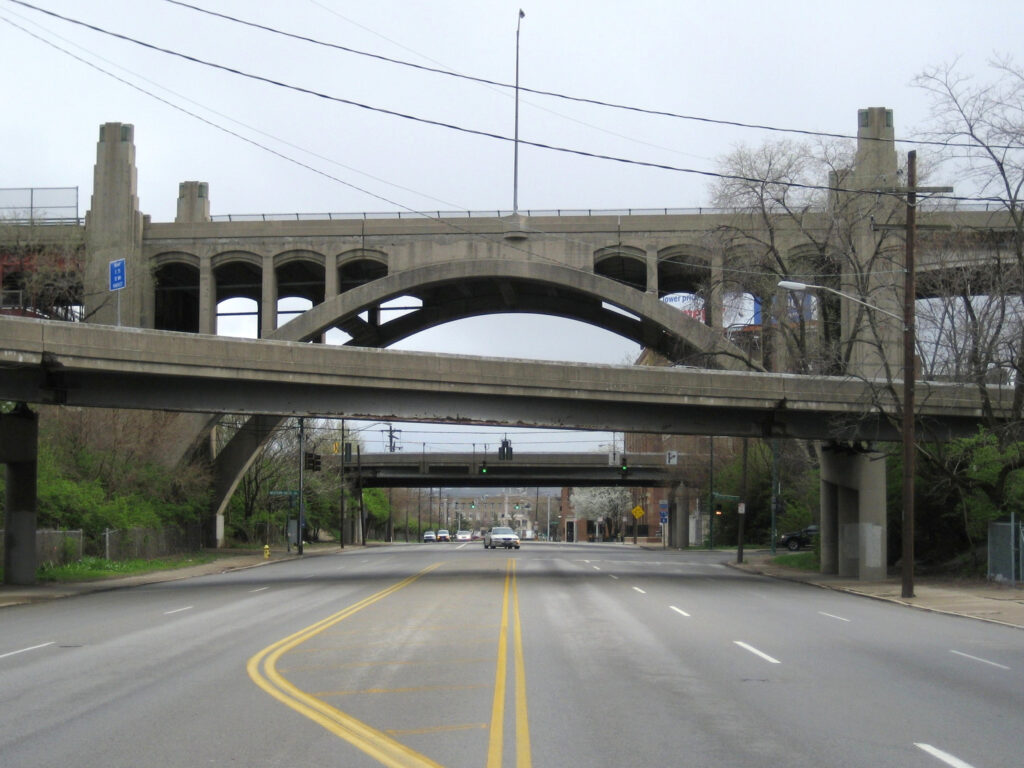
The Western Hills Viaduct has connected Cincinnati’s West Side with downtown and surrounding neighborhoods for generations. With construction activity underway for its long-planned replacement, understanding how the project may affect travel is increasingly important for motorists, pedestrians, cyclists, and nearby residents.
According to the City of Cincinnati Department of Transportation & Engineering (DOTE), the existing viaduct carries more than 55,000 vehicles daily across the Mill Creek Valley and an active railroad yard. Originally constructed in the early 1930s, the structure has experienced deterioration that requires continued inspections and maintenance.
The replacement project is intended to modernize this important transportation connection while improving roadway design and accessibility for people traveling outside motor vehicles. For Cincinnati residents who regularly use Interstate 75, Harrison Avenue, Queen City Avenue, and nearby streets, understanding the construction timeline and following changing traffic controls can help reduce preventable hazards.
Call (513) 547-2445 or request a free consultation today to speak with an experienced Cincinnati auto accident attorney at Buckeye Law Group.
What Is Happening With Cincinnati’s Western Hills Viaduct Replacement?
The City of Cincinnati and Hamilton County are overseeing the replacement of the existing Western Hills Viaduct with a new cable-stayed bridge approximately 50 feet south of the current structure.
According to the city’s November 2026 project information, site preparation and early construction activities are underway. The work involves utility relocation, railroad infrastructure adjustments, and temporary access structures necessary to construct the new bridge over the Mill Creek Valley.
The city’s current project schedule identifies several milestones:
- 2026: Early construction work, including railroad track relocation and temporary construction access over Mill Creek.
- 2027: Planned beginning of major bridge construction, including deep foundations, and completion of final design.
- 2032: Projected completion of the replacement bridge.
These dates are planning estimates rather than guaranteed construction deadlines. Weather, engineering requirements, railroad coordination, and other project conditions may affect the schedule. Importantly, the existing viaduct is expected to remain available for traffic during construction, although temporary restrictions and coordinated ramp closures may occur.
Why Does the Western Hills Viaduct Need to Be Replaced?
The existing Western Hills Viaduct has reached an advanced stage in its service life. Cincinnati officials report that the structure has received a condition rating of 4 on a scale of 0 to 9, which falls within the classification of poor condition. The city has identified deterioration involving concrete-encased steel components and design limitations that make ongoing maintenance challenging.
A poor bridge condition rating does not automatically mean the structure is unsafe or facing imminent collapse. DOTE states that the existing bridge remains safe for vehicles complying with posted weight restrictions. Maintenance activities include inspecting structural components, removing potentially loose concrete, clearing drainage systems, and monitoring areas requiring additional attention.
Protective netting has also been installed above Spring Grove Avenue to help prevent loose concrete from reaching the roadway below. For drivers, the important distinction is that the bridge’s long-term replacement needs and its current operating restrictions are separate considerations. Motorists should follow posted signs rather than assume that normal vehicle travel is prohibited.
How Could Western Hills Viaduct Construction Affect Cincinnati Traffic?
Although the existing viaduct is expected to remain open during much of the replacement project, construction activities can temporarily change traffic patterns on nearby roads. The project affects an important transportation area connecting Cincinnati’s western neighborhoods with I-75, Queensgate, South Fairmount, and routes toward Downtown and Uptown.
Construction-related changes may include:
- Temporary lane restrictions near access roads and construction entrances.
- Short-term closures associated with utility or railroad work.
- Increased construction vehicle activity on nearby streets.
- Changes to traffic signals, roadway markings, or available turning movements.
- Additional congestion during commuting periods.
The city has previously announced temporary State Avenue closures between Harrison Avenue and Queen City Avenue. These notices demonstrate how project activities can affect local routes, but previously published closure dates should not be treated as continuing restrictions. Motorists should consult the city’s Western Hills Viaduct project updates and current traffic information before traveling.
Construction Safety Tips for Cincinnati Drivers
Driving through an active construction area requires additional attention, particularly where established traffic patterns change.
- Reduce Speed and Maintain a Safe Following Distance: Construction zones may contain narrower travel lanes, temporary barriers, reduced visibility, and vehicles entering or leaving work areas. Drivers should follow posted speed limits, allow additional following distance, and remain prepared for sudden traffic backups.
- Watch for Temporary Traffic Controls: Orange warning signs, cones, temporary pavement markings, and flaggers may direct vehicles differently from their usual routes. Motorists should follow current traffic controls and avoid relying exclusively on navigation applications when directions conflict with posted restrictions.
- Avoid Distracted Driving: Navigation adjustments, phone notifications, and unfamiliar lane configurations can divert attention from changing traffic conditions. Ohio’s distracted-driving restrictions, including its hands-free requirements, remain relevant in construction zones.
- Give Construction Vehicles Additional Space: Large construction trucks may need additional room to turn, accelerate, or maneuver through designated entrances. Avoid lingering in blind spots, cutting closely in front of heavy vehicles, or stopping near active work access points.
What Pedestrians Should Know About Construction Near the Viaduct
Pedestrian safety is particularly important around construction corridors where sidewalks, crossings, or access routes may change. Individuals walking near Harrison Avenue, Queen City Avenue, State Avenue, or connecting streets should remain attentive to temporary pedestrian restrictions.
Practical precautions include:
- Follow designated pedestrian detours when sidewalks are closed.
- Use available marked crossings and obey pedestrian traffic signals.
- Avoid walking around barricades or entering restricted work areas.
- Watch for trucks entering construction sites, particularly near intersections.
- Allow additional travel time when familiar pedestrian routes are unavailable.
Under Ohio Revised Code § 4511.46, drivers must yield to pedestrians in certain crosswalk situations when traffic signals are absent, inoperative, or do not clearly assign right-of-way. Pedestrians also have obligations under Ohio law, including requirements governing roadway crossings. These provisions reinforce the importance of caution by everyone using streets near construction activity.
Bicycle Safety During the Western Hills Viaduct Replacement
Cyclists traveling through Cincinnati’s western neighborhoods may encounter changing roadway conditions as construction continues. Temporary lane shifts, gravel, uneven pavement, and construction barriers can create additional challenges for bicycle travel. Cyclists traveling through construction zones should review current road closures, detours, and bicycle access restrictions before beginning their trip. Uneven pavement, loose gravel, construction debris, and temporary traffic patterns can create additional hazards, particularly near narrow lanes and work areas. When available and suitable for their route, cyclists should use designated bicycle lanes or shared-use paths, remain alert to changing roadway conditions, and follow posted traffic controls to reduce the risk of a collision.
Ohio Revised Code § 4511.55 generally requires bicyclists using roadways to follow applicable traffic rules. However, the law does not require cyclists to ride at the roadway’s edge when doing so would be unreasonable or unsafe.
This distinction can be important near narrow construction lanes, surface hazards, and temporary barriers. Drivers should also recognize that cyclists may need additional roadway space when conditions prevent safe travel along the edge of a lane.
How Will the New Western Hills Viaduct Improve Pedestrian and Bicycle Access?
One of the project’s notable improvements is its planned accommodation of pedestrians and cyclists. Under the city’s revised 2025 design, the new bridge will feature six vehicle travel lanes, three in each direction, and a 14-foot-wide shared-use path physically separated from motor vehicle traffic. The path is intended to accommodate both pedestrians and cyclists along the bridge and its approaches. This revised arrangement replaces an earlier proposal that included separate pedestrian and bicycle facilities.
The project also aims to improve connections to I-75 and Harrison Avenue, addressing complex traffic movements associated with the existing structure. These improvements could create more predictable travel conditions and better access for people using different transportation methods. Their effectiveness will ultimately depend on the completed design, maintenance, traffic operations, and how safely road users navigate the new infrastructure.
Who May Be Responsible for an Accident Near a Construction Zone?
Accidents occurring near construction areas can involve several contributing factors, including driver conduct, road conditions, temporary traffic controls, or equipment operations. Responsibility depends on the specific circumstances and available evidence.
Depending on the facts, an investigation may consider whether a driver failed to exercise reasonable care, whether a construction vehicle was operated negligently, or whether applicable traffic-control requirements were followed.
Ohio Revised Code § 2315.33 addresses comparative fault. Generally, an injured person’s contributory fault does not automatically prevent recovery when it is no greater than 50%, although recoverable damages may be reduced proportionately. Claims involving public entities or roadway construction can present additional legal questions, including potential immunity defenses and procedural requirements. No individual or organization should be assumed responsible simply because a collision occurred near construction.
What Should You Do After a Construction-Related Accident?
If a collision occurs near the Western Hills Viaduct or its surrounding roadways, taking appropriate steps may help protect personal safety and preserve important information:
- Seek Medical Attention: Call 911 for emergencies or serious injuries. Some injuries may not produce obvious symptoms immediately after an accident.
- Move To Safety When Possible: Avoid remaining in active traffic lanes or construction equipment operating areas. Follow emergency responders’ directions.
- Document The Surrounding Conditions: When safe, photograph vehicle damage, traffic signs, lane markings, barriers, and relevant roadway conditions.
- Identify Potential Witnesses: Record available contact information for individuals who observed the incident.
- Preserve Important Records: Keep medical documentation, insurance communications, photographs, and crash-report information.
These records may help clarify how an accident occurred and support a later insurance or legal evaluation.
Cincinnati Transportation and Construction Safety Resources
Drivers, pedestrians, and cyclists traveling near the Western Hills Viaduct can consult several official resources for construction updates, roadway restrictions, and transportation safety information.
- City of Cincinnati – Western Hills Viaduct Replacement: Provides information about the replacement project’s design, construction timeline, planned transportation improvements, and traffic advisories.
- Ohio Department of Transportation – OHGO: Offers traffic maps, reported incidents, construction activity, and highway closure information to help motorists prepare for travel throughout the Cincinnati area.
- ODOT – Brent Spence Bridge Corridor: Explains planned I-75 improvements and future interchange connections involving the Western Hills Viaduct.
- Cincinnati – State-to-Central Complete Street Project: Details planned pedestrian crossings, bicycle infrastructure, and roadway improvements connecting Queensgate, the West End, and Lower Price Hill.
- Cincinnati Bicycle Transportation Program: Provides educational guidance about bicycle safety, applicable traffic laws, and the responsibilities of motorists and cyclists.
- Cincinnati Department of Transportation & Engineering – Safety Resources: Provides information about roadway safety initiatives and methods for reporting sidewalk, pedestrian, bicycle, and accessibility concerns.
Because construction schedules and temporary restrictions may change, travelers should review current government advisories and follow posted traffic-control signs before entering affected areas.
Frequently Asked Questions About the Western Hills Viaduct Replacement
- Is The Western Hills Viaduct Currently Open To Traffic? The City of Cincinnati plans to maintain traffic on the existing structure during construction, subject to temporary closures or restrictions. Travelers should check current project announcements and roadway signs.
- When Will The New Western Hills Viaduct Be Completed? The city’s latest published schedule projects completion in 2032. This is an estimated date and may change as construction progresses.
- Will The Replacement Bridge Include A Bicycle And Pedestrian Path? Yes. The current design includes a 14-foot-wide shared-use path separated from vehicle traffic and intended for both pedestrians and bicyclists.
- Will Construction Affect Interstate 75? The city indicates that substantial I-75 disruptions are not expected during early work. Later phases involving the new interstate interchange are expected to affect traffic.
- Can Someone Pursue Compensation After An Accident In A Construction Zone? Depending on the circumstances, an injured person may have a claim when another party’s negligence contributed to the accident. Liability, insurance coverage, available damages, and applicable deadlines require an individualized evaluation.
Staying Safe as Cincinnati’s Western Hills Viaduct Project Moves Forward
The Western Hills Viaduct replacement represents a significant infrastructure investment for Cincinnati and the surrounding communities. Although the new bridge is intended to improve long-term transportation access, construction introduces temporary conditions that require continued attention from motorists, pedestrians, and cyclists.
Reviewing official traffic updates, following posted restrictions, and allowing additional travel time can help residents navigate construction more safely. At Buckeye Law Group, our local Ohio attorneys believe public awareness and access to reliable safety information are important parts of supporting Ohio communities. Individuals injured in an accident involving potentially negligent conduct may contact Buckeye Law Group for a free consultation to discuss their circumstances and available legal options.
Call (513) 547-2445 or request a free consultation today to speak with an experienced Cincinnati auto accident attorney at Buckeye Law Group.
Legal Disclaimer: This article is provided by Buckeye Law Group for general educational and informational purposes only and does not constitute legal advice, medical advice, or official transportation guidance. Construction schedules, road closures, traffic restrictions, and project designs may change. Readers should consult official government sources for current information. Every accident and potential legal claim involves unique facts and circumstances. Reading this article or contacting Buckeye Law Group does not establish an attorney-client relationship. Buckeye Law Group offers free consultations and handles qualifying personal injury matters on a contingency-fee basis, subject to a written fee agreement. No attorney fees are owed unless compensation is recovered; responsibility for litigation expenses is governed by the agreement. Past results do not guarantee future outcomes.