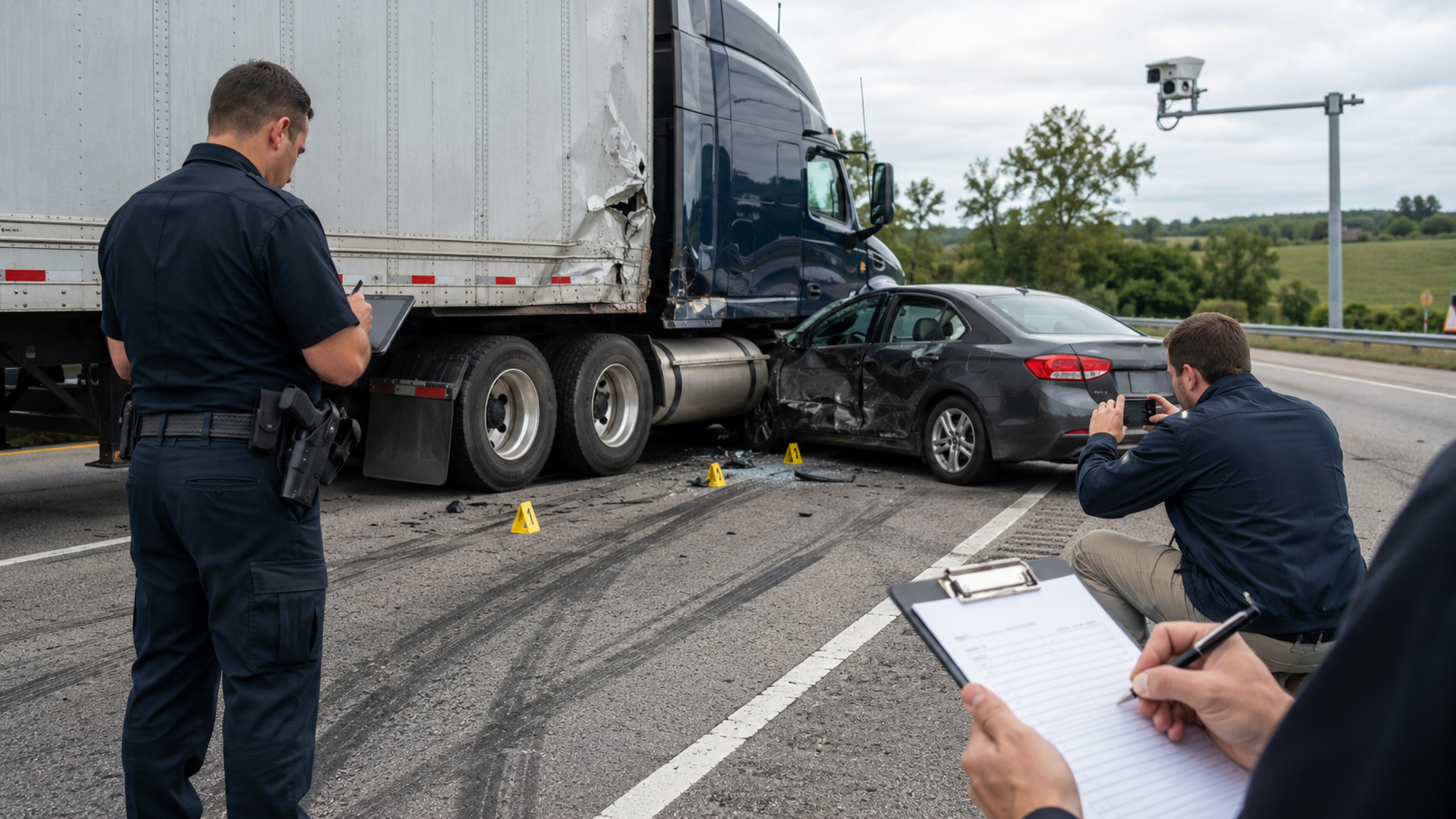
Truck accidents in Ohio can be devastating. They often result in serious injuries and significant property damage. In the aftermath, gathering the right evidence is crucial. It can make or break your legal claim. Understanding what evidence matters most is essential. This knowledge can help you secure fair compensation. From photographs to electronic data, each piece of evidence plays a role. Knowing how to collect and preserve it is key. This guide will walk you through the process. It will help you navigate the complexities of truck accident evidence collection in Ohio.
Why Truck Accident Evidence Is Critical After an Ohio Collision
After a commercial truck collision, truck accident evidence can play a critical role in protecting your rights and supporting your Ohio injury claim. Reliable evidence helps establish how the crash occurred, identify potentially responsible parties, and document the full extent of your losses. Without strong documentation, trucking companies and insurers may dispute liability or challenge the compensation you deserve. Collecting and preserving evidence as soon as possible is essential because witness memories can fade, surveillance footage may be erased, and trucking records may become difficult to obtain. Prompt action helps protect valuable information before it is lost or altered. Key reasons truck accident evidence is critical include:
- Proves fault by showing what happened.
- Helps determine the extent of damages.
- Supports your account of the accident.
Ultimately, thorough truck accident evidence strengthens your legal position. It’s the foundation for a successful resolution in your favor.
Essential Types of Truck Accident Evidence in Ohio
Understanding the types of truck accident evidence that may support your claim is essential after a collision in Cleveland, Columbus, Cincinnati, Toledo, Dayton, Akron, and the surrounding cities in Ohio. Each piece of evidence can help establish how the crash occurred, identify responsible parties, and document the extent of the resulting damage. Photographs and videos can preserve vehicle damage, skid marks, road conditions, weather, debris, traffic signals, and visible injuries before the scene changes. Police reports also provide an important independent record of the incident. They may include officer observations, driver and witness statements, collision diagrams, insurance information, citations, and other details that can help attorneys and investigators evaluate an Ohio truck accident claim.
Photographs and Videos of the Scene
Visual evidence is powerful. Photos and videos show vehicle positions, weather conditions, and visible injuries. Such evidence captures details that might be overlooked later. Essential elements to photograph or video:
- Vehicle positions.
- Road conditions.
- Traffic signals or signs.
These visuals provide a real-time view of the accident environment.

Police Reports and Official Documentation
Police reports can serve as valuable truck accident evidence by providing an independent record of a collision in Ohio. Responding officers may document the crash location, time, weather, road conditions, vehicle damage, visible injuries, and statements from drivers or witnesses. The report may also identify suspected traffic violations, list any citations issued, include a collision diagram, and record driver, trucking company, and insurance information. Although a police report does not always determine legal fault, it can help an Ohio truck accident attorney investigate the circumstances, compare witness accounts, and identify additional evidence. Key details in police reports often include:
- Date and time of the accident.
- Parties involved.
- Officer’s assessment of fault.
Although a police report may not determine legal liability by itself, it can help attorneys investigate fault, preserve evidence, and support an Ohio personal injury claim.
Witness Statements and Testimony
Witnesses can provide independent and valuable perspectives about how an Ohio truck accident occurred. Their statements may serve as important truck accident evidence by supporting your account, identifying careless conduct, and clarifying the sequence of events leading to the collision. Collect witness names, phone numbers, email addresses, and brief observations as soon as it is safe because memories may fade and witnesses can become difficult to locate. Avoid pressuring anyone or suggesting what they should say. Instead, document their observations accurately and allow an experienced Ohio truck accident attorney or investigator to conduct a detailed follow-up. Important witness details include:
- Names and contact information.
- Statements about what they saw.
- Descriptions of the accident.
Witness credibility can significantly impact your case’s outcome by supporting your version of events.
Electronic Data: Black Box, Logbooks, and GPS
Commercial trucks often contain electronic systems that record important information before, during, and after a collision. This truck accident evidence may include vehicle speed, sudden braking, steering inputs, engine activity, GPS location, and the driver’s hours of service. Electronic logging devices may also show whether the driver exceeded federal driving limits or failed to take required rest breaks. An experienced Ohio truck accident attorney can work to preserve and analyze this data before it is overwritten, deleted, or lost. When reviewed alongside police reports, witness statements, maintenance records, and photographs, electronic evidence can help clarify how the crash occurred and identify potentially responsible parties. Such evidence is especially valuable in:
- Establishing driver behavior.
- Determining the truck’s condition.
- Analyzing driver fatigue.
This technological data can clarify the underlying causes of the accident.

Medical Records and Injury Documentation
Medical records are essential truck accident evidence because they help connect the collision to your injuries, treatment, and ongoing limitations. After an Ohio truck accident, seek medical attention promptly and follow all recommended care. Delayed or inconsistent treatment may give an insurance company grounds to question the severity or cause of your injuries. Important medical documentation may include:
- Diagnosis and treatment specifics.
- Medical professionals consulted.
- Recovery timeline.
Accurate medical evidence supports your claims for damages and compensation by showing the extent of your injuries.
Physical Evidence: Vehicle Damage and Debris
Physical truck accident evidence can help explain how an Ohio collision occurred and identify the individuals or companies that may be responsible. Vehicle damage patterns may reveal the point of impact, direction of travel, collision angle, and forces involved. Investigators may also examine skid marks, debris fields, tire impressions, damaged guardrails, roadway conditions, unsecured cargo, and defective vehicle components. Photographs and measurements should be collected before the scene changes or the vehicles undergo repairs. An accident reconstruction specialist may analyze this truck accident evidence to test witness statements and determine whether speeding, improper braking, equipment failure, cargo problems, or unsafe maneuvering contributed to the crash. Key physical evidence may include vehicle damage, roadway marks, debris, cargo, damaged safety equipment, and detailed photographs of the accident scene.
- Vehicle damage analysis.
- Debris locations.
- Skid marks and their length.
This evidence helps reconstruct the crash, offering insights into how it occurred.
Preserving and Collecting Evidence After a Truck Crash
Securing truck accident evidence immediately after an Ohio collision can preserve important details before vehicles are repaired, roadway conditions change, electronic records are overwritten, or witnesses forget what they observed. When it is safe, photograph vehicle damage, skid marks, debris, traffic signals, weather conditions, cargo, license plates, and visible injuries. Exchange contact and insurance information with every involved driver, and collect names and phone numbers from witnesses. Seek prompt medical attention, even when symptoms initially seem minor, because certain injuries may develop gradually. Report the crash to law enforcement and obtain the accident report number. Avoid admitting fault, giving recorded statements without legal guidance, or posting case details online. An experienced Ohio truck accident attorney can send preservation notices to help protect trucking records, electronic data, maintenance documents, and surveillance footage from being lost or destroyed. Key steps to take include:
- Document the scene with photos and videos.
- Note witness information and statements.
- Secure vehicle records and logs.
Preservation efforts prevent evidence tampering or loss. If you’re unable to gather evidence, ask someone you trust to do it for you. Consulting with an attorney early can aid in preserving evidence. They provide guidance on what evidence is critical for your case.
The Role of Legal Professionals and Experts in Evidence Collection
Legal professionals play a vital role in evidence collection. They have the expertise to determine what evidence is essential for your case. Experts like accident reconstructionists can provide invaluable insights. They analyze evidence to recreate accident scenarios. With their help, you can strengthen your legal claims. Key contributions include:
- Guiding evidence preservation.
- Analyzing data for accuracy.
- Providing expert testimony in court.
What to Do If Evidence Is Missing or Altered
If important truck accident evidence is lost, destroyed, or altered after an Ohio collision, take action as soon as possible. Contact an experienced Ohio personal injury lawyer who can identify the missing materials and protect your legal rights. An attorney may send a formal preservation letter requiring trucking companies, insurers, maintenance providers, or other parties to retain electronic logging data, surveillance footage, inspection records, photographs, and physical evidence. They can also interview witnesses and investigate whether the loss occurred accidentally or through improper conduct. When a party fails to preserve relevant evidence, an Ohio court may consider appropriate legal remedies based on the circumstances. Acting quickly can prevent further loss, strengthen your claim, and help ensure all available truck accident evidence is properly and fairly investigated.
- Alert authorities to the issue.
- File a complaint if evidence tampering is suspected.
- Consult a legal professional for advice.
Protecting Your Rights After an Ohio Truck Accident
Securing and preserving truck accident evidence can play a major role in protecting your rights after a commercial truck collision in Ohio. Driver logs, electronic control module data, medical records, photographs, witness statements, inspection reports, and maintenance documents may help establish liability and document the full extent of your losses. Because trucking companies and insurers often begin investigating immediately, injured individuals should also act promptly. An experienced Ohio truck accident attorney can send preservation notices, identify potentially responsible parties, review available truck accident evidence, and handle insurance negotiations on your behalf. If you were injured in an Ohio truck accident, contact a qualified personal injury lawyer for a free consultation and guidance about the next steps in your claim.
Injured in an Uber Accident in Toledo? Understanding Insurance Coverage and Liability
A Toledo Uber accident can feel more confusing than a typical car crash because several insurance policies may be involved. The most important issue is usually the driver’s app status
Does Renters Insurance Cover Dog Bites in Ohio? What Cleveland Residents Should Know
In Ohio, renters insurance may cover dog bite claims through the policy’s personal liability section, but coverage depends on the policy language, the dog’s history, and any exclusions. Cleveland renters
How Uninsured Motorist Coverage Works After a Car Accident in Dayton, Ohio
A crash with an uninsured or underinsured driver can turn an ordinary Dayton commute into a confusing insurance problem. Uninsured motorist coverage helps protect you when the at-fault driver has
Whiplash Symptoms After a Cleveland Car Accident: What Injured Drivers Should Know
Whiplash is one of the most common neck injuries people worry about after a car accident, especially after a rear-end collision. For Cleveland drivers, the challenge is that auto accident
Uninsured Motorist Coverage in Ohio: What Cleveland Drivers Need to Know
Ohio requires drivers to prove financial responsibility, but that does not mean every driver on I-90, I-71, or a Cleveland surface street has enough insurance to pay for the harm
Rear-End Collisions in Columbus: Who Is at Fault and What Evidence Matters?
Rear-end crashes can look simple from the outside, but fault still depends on what each driver did, what the road conditions were, and what the evidence shows. In Columbus, Ohio,
How to Prove a Slip-and-Fall Injury Claim in Cincinnati Ohio
A slip-and-fall injury claim in Cincinnati, Ohio, usually turns on proof: what caused the fall, who controlled the property, what the owner or occupier knew or should have known, and
What to Do After a Truck Accident in Cleveland, Ohio: A Step-by-Step Guide
A serious truck crash can leave you shaken, injured, and unsure what to do next. This Cleveland truck accident guide walks you through the practical steps to protect your health,
Are Personal Injury Settlements Taxable in Ohio?
A personal injury settlement in Ohio is often not taxable when the money compensates you for physical injuries or physical sickness. But some parts of a settlement can be taxable,
Is It Worth Hiring a Cincinnati Car Accident Attorney After a Minor Crash?
A minor crash can feel like something you should be able to handle with a few phone calls and a repair estimate. Sometimes that is true. But if pain appears
Buckeye Law Group represents people injured in auto accidents, slip and falls, workplace accidents and more in Ohio. Contact us today to learn more.
© 2026 All Rights Reserved | The Buckeye Law Group Inc. Privacy Policy Sitemap
Office Locations
- Akron Office 388 S Main St #400 Akron, OH 44311 (330) 426-0288
- Cincinnati Office 201 E 5th St Ste 1910 Cincinnati, OH 45202 (513) 547-2445
- Cleveland Office 127 Public Square Ste 1540 Cleveland, OH 44114 (216) 677-5490
- Columbus Office 20 E Broad St Suite 300 Columbus, OH 43215 (614) 482-3793
- Dayton Office 70 Birch Alley Ste 240 Dayton, OH 45440 (937) 884-4474
- Euclid Office 25701 N Lakeland Blvd Suite 113-C, Cleveland, OH 44132 (216) 405-2626
- Mansfield Office 305 E Main St Ste 6A, Mansfield, OH 44904 (567) 210-2606
- Findlay Office 7430 Timberstone Dr unit 101a, Findlay, OH 45840 419-873-5119
- Mentor Office 7537 Mentor Ave Ste 101, Mentor, OH 44060 (440) 306-3536
- Middletown Office 300 N Main St #400, Middletown, OH 45042 (326) 800-9150
- Parma Office 1257 Rockside Rd #A, Parma, OH 44131 (216) 279-1664
- Springfield Office 2100 E High St Ste TL3, Springfield, OH 45505 (937) 806-5791
- Toledo Office 3950 Sunforest Ct Ste 200, Toledo, OH 43623 (567) 483-3883
- Westlake Office 26404 Center Ridge Rd Ste B2, Westlake, OH 44145 216-247-0565
- Whitehall Office 5340 E Main St Ste 203, Whitehall, OH 43213 (380) 257-5206
- Youngstown Office 306 Churchill Hubbard Rd, Youngstown, OH 44505 (234) 225-0683
Contact Us
© 2026 All Rights Reserved | The Buckeye Law Group Inc. Privacy Policy Sitemap