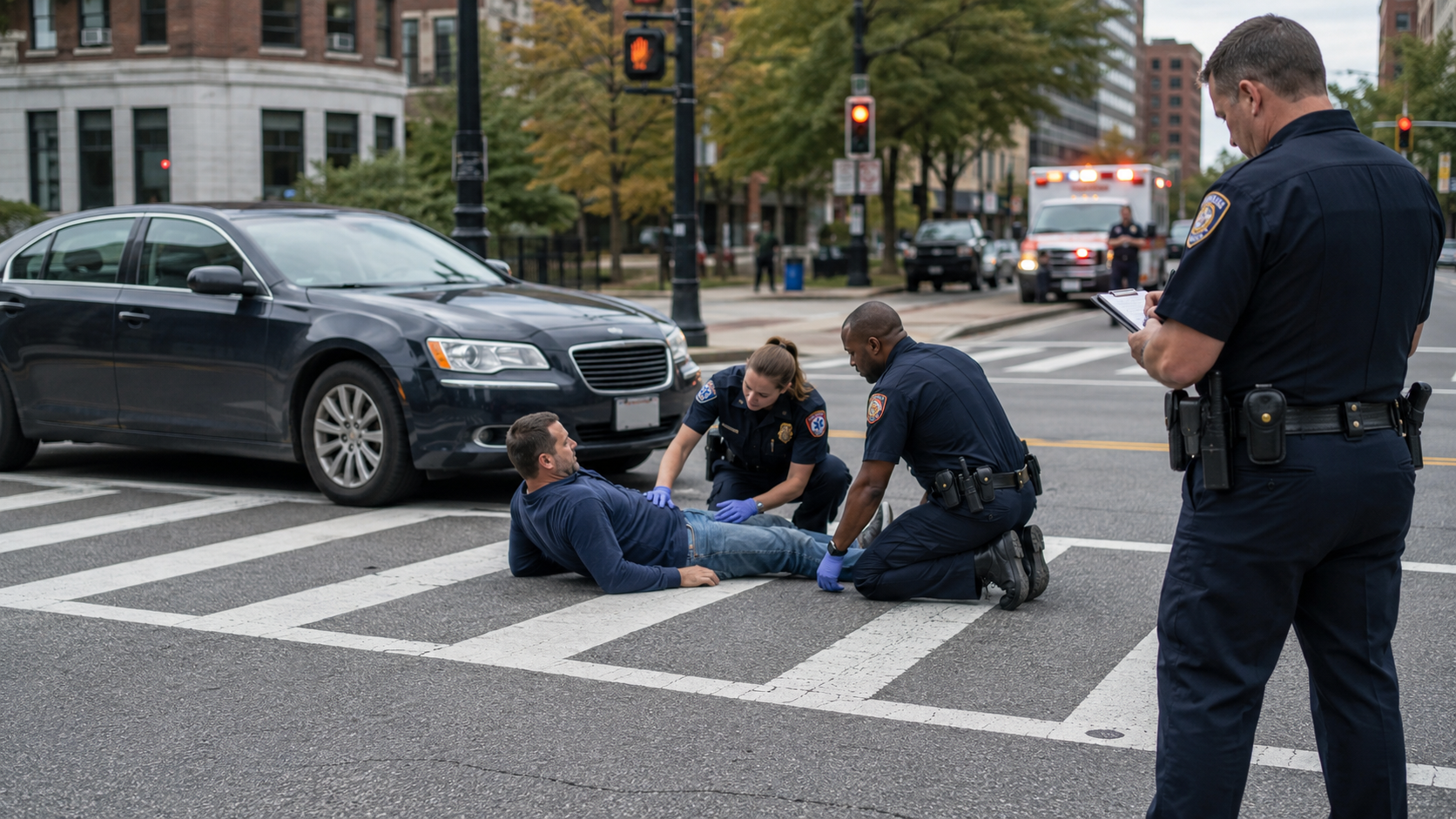
Walking is a fantastic way to commute, exercise, and explore local communities, but navigating busy streets comes with inherent risks. Unfortunately, crosswalks, intersections, and driver responsibility have become increasingly critical topics as traffic congestion and distracted driving rise across the state. Preventing pedestrian accidents starts with understanding how and where accidents occur most often.
Understanding the legal landscape, from right-of-way rules to establishing liability, is vital for everyone sharing the road. Whether you are behind the wheel or crossing the street, knowing your rights and obligations can reduce the risk of pedestrian accidents and protect you legally.
Understanding Ohio Pedestrian Right of Way Laws
Whether you are a daily commuter in a bustling city like Cleveland, Columbus, or Akron, or an occasional stroller in a quiet suburb like Westlake, Westerville, or Canton, knowing the Ohio pedestrian right of way laws is essential for reducing pedestrian accidents. These regulations dictate exactly who has the legal right to proceed in various traffic scenarios, keeping order and preventing collisions that lead to serious accidents.
Marked vs. Unmarked Crosswalks
A common misconception among drivers is that pedestrians only have the right of way in visibly painted crosswalks. However, Ohio law generally recognizes a crosswalk at nearly every intersection, regardless of whether bold white lines are painted on the roadway.
Drivers are legally obligated to yield to pedestrians lawfully crossing the street within these zones. When it comes to yielding to pedestrians in Ohio intersections, motorists must be highly vigilant, especially when making right or left turns on green lights. A green light for a driver often means a “Walk” signal for the pedestrian parallel to them, and the pedestrian always has the right of way in this scenario, which can help prevent pedestrian accidents.

The Driver’s Role: Duty of Care and Common Causes
Every motorist assumes a strict duty of care for Ohio drivers the moment they start their engine, and that duty exists to prevent pedestrian accidents. This legal obligation requires them to operate their vehicles safely, obey all traffic laws, and keep a careful lookout for vulnerable road users, especially in areas known for life altering accidents. When drivers fail to uphold this fundamental duty, devastating events can happen. Some of the most common causes of pedestrian injuries in Ohio include:
- Distracted driving: Texting, adjusting the navigation system, or interacting with passengers takes a driver’s eyes off the road for crucial seconds, increasing the risk of pedestrian accidents.
- Speeding: Driving above the speed limit reduces reaction time and dramatically increases the severity of pedestrian injuries in major accidents.
- Failing to yield: Ignoring crosswalks, rolling through stop signs, and blatantly disregarding traffic signals are frequent factors in pedestrian accidents.
- Impaired driving: Operating a vehicle under the influence of alcohol or drugs impairs judgment and motor skills, leading to serior accudents for pedestrians.
To help mitigate these risks, Ohio traffic signals and pedestrian safety infrastructure, such as countdown walk signs, flashing beacons, and pedestrian refuge islands, are specifically designed to guide both drivers and walkers safely through high-traffic areas where pedestrian accidents are more likely.

Pedestrian Rules and Jaywalking
While drivers bear a significant burden of responsibility due to the size and speed of their vehicles, pedestrians are certainly not exempt from following traffic rules. Understanding your pedestrian responsibilities when crossing Ohio roads is crucial for your personal physical safety and your legal protection after an accident. Furthermore, a pedestrian cannot suddenly step off a curb into the path of a vehicle that is so close it is mathematically impossible for the driver to yield.
Additionally, having jaywalking laws in Ohio explained helps clarify common disputes. Crossing a road outside of a marked or unmarked crosswalk at an intersection (commonly referred to as jaywalking) generally means the pedestrian must yield the right of way to all oncoming vehicles. However, it is vital to note that even if a pedestrian is jaywalking, drivers are still required to exercise due care and sound their horns if necessary to avoid hitting someone in the roadway, because even technical violations do not excuse pedestrian accidents.
Who is Liable? Determining Fault in Ohio
After a collision, one of the most pressing questions for everyone involved is who is at fault for a crosswalk accident? Fault isn’t always cut and dry; it requires a careful, objective investigation of the facts in many pedestrian accidents. To succeed in how to prove driver liability in Ohio, you typically need strong evidence. This can include official police reports, independent witness testimonies, dashcam or traffic camera footage, and sometimes expert accident reconstruction. You must clearly demonstrate that the driver breached their duty of care and that this breach directly caused the accident.
But what happens if the pedestrian was partially at fault, perhaps by stepping into the street a few seconds before the signal changed? This is where comparative negligence in Ohio pedestrian cases comes into play in pedestrian accidents. Under Ohio law, you can still recover damages as long as you are not more than 50% responsible for the accident. However, your total financial compensation will be reduced by your assigned percentage of fault. If you are deemed 20% at fault, your final award will be reduced by 20%.

Frequently Asked Questions About Pedestrian Accidents in Ohio
- What should I do first after a pedestrian accident? Call 911 and seek medical attention immediately. Even when injuries appear minor, adrenaline may temporarily conceal concussions, internal bleeding, fractures, or other serious trauma. Prompt medical care protects your health and creates documentation connecting your injuries to the pedestrian accident. After 911, Call 1-800-411-7246
- Should I contact law enforcement after a pedestrian accident? Yes. Ask the responding officers to investigate the scene and prepare a formal crash report. The report may document the driver’s information, witness statements, road conditions, traffic violations, and an initial assessment of how the pedestrian accident occurred.
- What evidence should I gather at the accident scene? When it is safe and you are physically able, photograph the vehicle, license plate, crosswalk, traffic signals, skid marks, road conditions, nearby businesses, and visible injuries. Video footage and other scene evidence may help establish fault and challenge inaccurate insurance company allegations.
- What information should I collect after being struck by a vehicle? Obtain the driver’s name, phone number, license plate number, insurance information, and vehicle details. You should also collect the names and contact information of eyewitnesses. Independent witness testimony can provide valuable support when liability is disputed.
- When should I contact an attorney after a pedestrian accident? Contact a pedestrian accident attorney as soon as possible, preferably before giving a recorded statement or accepting a settlement. An attorney can preserve evidence, communicate with insurers, evaluate available compensation, and protect you from efforts to minimize your injuries or unfairly shift blame.
Seeking Compensation and Legal Deadlines
The physical, emotional, and financial toll of being struck by a vehicle can turn your life upside down. Recovering damages for Ohio pedestrian injuries is often necessary after pedestrian accidents to cover exorbitant medical bills, lost wages from missing work, ongoing rehabilitation costs, and your pain and suffering.
Because pedestrian accidents can involve significant medical care and long-term consequences, documenting everything early is critical. However, victims do not have unlimited time to take legal action. The statute of limitations for Ohio pedestrian injury claims is generally two years from the exact date of the accident. Failing to formally file a lawsuit within this strict time window typically bars you from ever recovering any compensation. Because gathering evidence, negotiating with insurers, and building a robust case takes significant time, it is highly recommended to start the legal process as soon as possible after pedestrian accidents.

Connect With Our Pedestiran Accident Attrorneys Today
Navigating the aftermath of a collision is daunting, but understanding the intricate nuances of pedestrian accidents in Ohio: crosswalks, intersections, and driver responsibility empowers you to proactively protect your rights. Preventing pedestrian accidents requires both drivers and pedestrians to actively participate in road safety by staying vigilant, avoiding distractions, and respecting all traffic laws.
If the unthinkable happens, knowing your legal standing, understanding the rules of comparative fault, and acting quickly to secure necessary evidence are your absolute best tools for responding to life changing accidents. Stay alert, stay informed, and always prioritize safety on every journey you take to reduce pedestrian accidents.
How Uninsured Motorist Coverage Works After a Car Accident in Dayton, Ohio
A crash with an uninsured or underinsured driver can turn an ordinary Dayton commute into a confusing insurance problem. Uninsured motorist coverage helps protect you when the at-fault driver has
Whiplash Symptoms After a Cleveland Car Accident: What Injured Drivers Should Know
Whiplash is one of the most common neck injuries people worry about after a car accident, especially after a rear-end collision. For Cleveland drivers, the challenge is that auto accident
Uninsured Motorist Coverage in Ohio: What Cleveland Drivers Need to Know
Ohio requires drivers to prove financial responsibility, but that does not mean every driver on I-90, I-71, or a Cleveland surface street has enough insurance to pay for the harm
Rear-End Collisions in Columbus: Who Is at Fault and What Evidence Matters?
Rear-end crashes can look simple from the outside, but fault still depends on what each driver did, what the road conditions were, and what the evidence shows. In Columbus, Ohio,
How to Prove a Slip-and-Fall Injury Claim in Cincinnati Ohio
A slip-and-fall injury claim in Cincinnati, Ohio, usually turns on proof: what caused the fall, who controlled the property, what the owner or occupier knew or should have known, and
What to Do After a Truck Accident in Cleveland, Ohio: A Step-by-Step Guide
A serious truck crash can leave you shaken, injured, and unsure what to do next. This Cleveland truck accident guide walks you through the practical steps to protect your health,
Are Personal Injury Settlements Taxable in Ohio?
A personal injury settlement in Ohio is often not taxable when the money compensates you for physical injuries or physical sickness. But some parts of a settlement can be taxable,
Is It Worth Hiring a Cincinnati Car Accident Attorney After a Minor Crash?
A minor crash can feel like something you should be able to handle with a few phone calls and a repair estimate. Sometimes that is true. But if pain appears
Does Homeowners Insurance Cover Dog Bite Injuries in Cincinnati?
Homeowners insurance often provides coverage for dog bite injuries in Cincinnati, Ohio. However, coverage is not guaranteed. Whether an insurance policy covers a particular incident depends on its liability provisions,
Who Is Responsible for a Multi-Vehicle Car Accident on I-480 Near Cleveland?
A multi-vehicle crash on I-480 can feel chaotic from the first second: traffic stops, drivers swerve, several insurers get involved, and everyone has a different version of what happened. Responsibility

Buckeye Law Group represents people injured in auto accidents, slip and falls, workplace accidents and more in Ohio. Contact us today to learn more.
© 2026 All Rights Reserved | The Buckeye Law Group Inc. Privacy Policy Sitemap
Office Locations
- Akron Office 388 S Main St #400 Akron, OH 44311 (330) 426-0288
- Cincinnati Office 201 E 5th St Ste 1910 Cincinnati, OH 45202 (513) 547-2445
- Cleveland Office 127 Public Square Ste 1540 Cleveland, OH 44114 (216) 677-5490
- Columbus Office 20 E Broad St Suite 300 Columbus, OH 43215 (614) 482-3793
- Dayton Office 70 Birch Alley Ste 240 Dayton, OH 45440 (937) 884-4474
- Euclid Office 25701 N Lakeland Blvd Suite 113-C, Cleveland, OH 44132 (216) 405-2626
- Mansfield Office 305 E Main St Ste 6A, Mansfield, OH 44904 (567) 210-2606
- Findlay Office 7430 Timberstone Dr unit 101a, Findlay, OH 45840 419-873-5119
- Mentor Office 7537 Mentor Ave Ste 101, Mentor, OH 44060 (440) 306-3536
- Middletown Office 300 N Main St #400, Middletown, OH 45042 (326) 800-9150
- Parma Office 1257 Rockside Rd #A, Parma, OH 44131 (216) 279-1664
- Springfield Office 2100 E High St Ste TL3, Springfield, OH 45505 (937) 806-5791
- Toledo Office 3950 Sunforest Ct Ste 200, Toledo, OH 43623 (567) 483-3883
- Westlake Office 26404 Center Ridge Rd Ste B2, Westlake, OH 44145 216-247-0565
- Whitehall Office 5340 E Main St Ste 203, Whitehall, OH 43213 (380) 257-5206
- Youngstown Office 306 Churchill Hubbard Rd, Youngstown, OH 44505 (234) 225-0683
Contact Us
© 2026 All Rights Reserved | The Buckeye Law Group Inc. Privacy Policy Sitemap