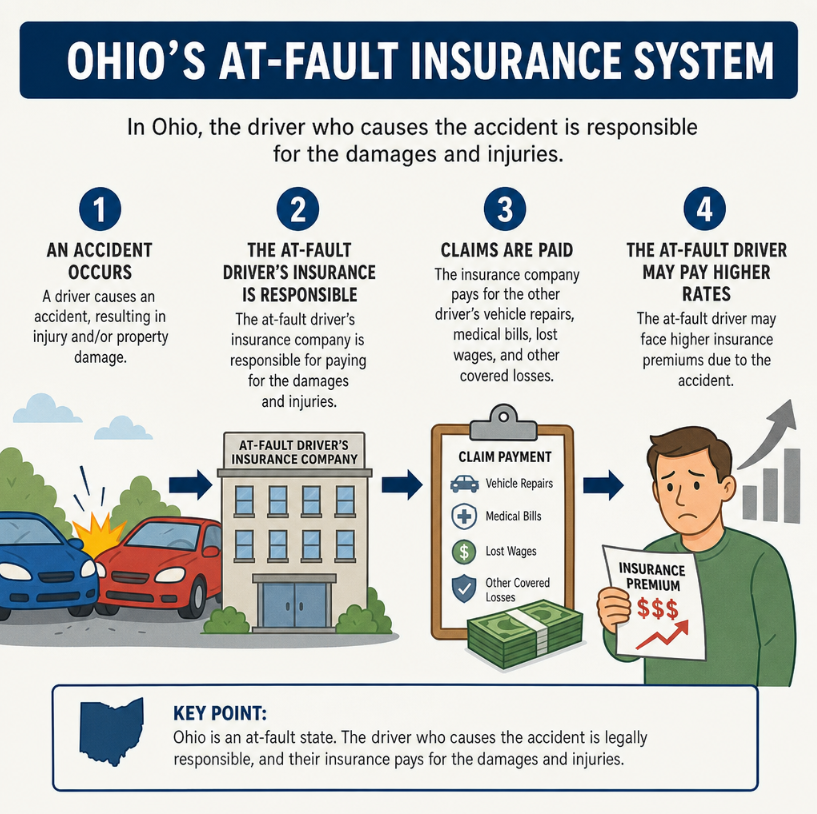
Medical bills after a car accident in Ohio can become overwhelming very quickly. In many cases, injured people are left trying to get treatment, manage insurance paperwork, and understand who is responsible for payment. Ohio follows an at-fault insurance system, which means the driver who caused the crash may be legally responsible for the damages. However, that does not always mean medical bills are paid immediately.
Depending on your situation, health insurance, Medical Payments Coverage, uninsured/underinsured motorist coverage, or other available insurance may help cover treatment while your injury claim is pending. Each policy has its own rules, limits, and reimbursement requirements. For that reason, it is important to understand your coverage and speak with a personal injury attorney before making decisions that could affect your claim. If the at-fault driver is uninsured, the situation becomes more complex. Uninsured/Underinsured Motorist Coverage can be a lifesaver. It helps cover costs when the other driver lacks sufficient insurance. Without it, you might face significant out-of-pocket expenses. Legal guidance can be invaluable in these situations. A personal injury attorney from Buckeye Law Group can help navigate the claims process. They ensure you receive fair compensation under Ohio law. Understanding your rights and options can prevent financial strain.
Understanding Ohio’s At-Fault Insurance System
Ohio is an at-fault insurance state. This means the driver who caused the accident may be held financially responsible for the harm they caused. In a personal injury claim, those damages may include medical bills, lost wages, pain and suffering, property damage, and other accident-related losses.
Although the at-fault driver’s insurance company is typically responsible for paying covered damages, the claims process is not always simple. Insurance companies may investigate fault, question the extent of your injuries, or dispute the value of your claim. Understanding how responsibility works under Ohio law can help you protect your rights after a collision. Here is a general breakdown of how financial responsibility may work in Ohio:
- At-fault driver’s insurance covers medical and repair costs.
- Victims may use their own insurance if needed.
- Legal action can recover additional expenses.
It’s vital to understand how fault is determined. Fault can affect how bills are handled. Knowing your rights can prevent being taken advantage of by insurers. With the right knowledge, you can ensure your medical bills are covered as they should be.
Who Is Responsible for Medical Bills After a Car Accident?
In Ohio, determining who pays medical bills after a car accident depends on several factors. The at-fault driver’s insurance typically covers your medical expenses. But this process can take time. If you’re in an accident, your health insurance may help initially. Health insurers often seek reimbursement from the at-fault party’s insurer later. This approach can ensure you get timely medical care. Sometimes, your own insurance might assist. Here’s how coverage can differ:
- At-fault driver’s insurance
- Your health insurance
- Medical Payment Coverage (MedPay)
It’s crucial to understand these coverage types. Knowing your options can make managing medical bills easier. If coverage gaps exist, out-of-pocket payments could be required until settlements are reached. Proper planning and legal advice can reduce unexpected costs.
Health Insurance, MedPay, and Other Coverage Options
Health insurance can be a crucial asset following a car accident in Ohio. It provides immediate relief for medical expenses. However, it’s important to note that your insurer may seek reimbursement from the at-fault driver’s insurance later. This process is known as subrogation and is common in personal injury claims.
MedPay, or Medical Payment Coverage, is another option. It’s not mandatory in Ohio but can cover medical costs regardless of fault. MedPay is beneficial for covering initial expenses without the delay of insurance claims. Beyond health insurance and MedPay, consider other coverage types. Here are a few options you might have:
- Uninsured/Underinsured Motorist Coverage
- Collision coverage for vehicle repairs
- Personal Injury Protection, though not common in Ohio
Each coverage type serves different purposes and can help reduce the financial burden after an accident. Understanding these options is key to ensuring comprehensive coverage. Evaluate your policy details to understand what applies in your unique situation.
What If the At-Fault Driver Is Uninsured or Underinsured?
Dealing with an uninsured or underinsured driver adds complexity to your case. In Ohio, you might have to rely on your own Uninsured/Underinsured Motorist Coverage. This coverage can help when the at-fault driver’s insurance is insufficient. If you lack this coverage, you may face out-of-pocket costs for medical bills. It’s crucial to explore other financial avenues like personal health insurance. A personal injury lawyer can guide you through these challenges, exploring all potential compensation sources. This ensures you’re not burdened by expenses you’re not responsible for.
Out-of-Pocket Costs and Medical Debt in Ohio
After an accident, medical bills can build up fast. Sometimes, the at-fault driver’s insurance won’t cover all your expenses. This may lead to significant out-of-pocket costs. Understanding your insurance limits helps in managing these potential financial burdens. Ensure you check your policy thoroughly to know what it covers. Each policy and situation is different, so it’s vital to identify any gaps. To prevent excessive medical debt in Ohio, consider these options:
- Apply for financial assistance from hospitals.
- Negotiate directly with healthcare providers for better payment terms.
- Explore flexible payment plans to manage owed amounts over time.
Medical Liens, Subrogation, and Delayed Payments
Medical liens can complicate the claims process. Hospitals may agree to delay payments until your claim settles. This means they place a lien on your settlement. Subrogation allows your health insurer to be reimbursed from the at-fault party’s insurance. This process requires careful management to avoid surprises. Keeping track of liens and subrogation claims is crucial. To address these effectively, consider:
- Communicating regularly with insurance companies about subrogation.
- Documenting all agreements related to delayed payments and liens.
- Consulting with a legal expert to understand your liabilities and options.
Managing Medical Bills While Claims Are Pending
While awaiting claim settlements, stay proactive with medical bills. This period can stretch, so careful planning is essential. Explore interim solutions to avoid overwhelming debt. To manage these bills:
- Negotiate with healthcare providers for payment plans.
- Use savings or emergency funds if necessary.
- Keep accurate records of all transactions and communications.
Effective management during this time protects your financial health while ensuring continued care.
Protecting Your Credit and Avoiding Medical Debt
Medical debt in Ohio can impact your credit score. Protecting your credit requires active management of medical expenses. Address bills promptly and communicate with medical providers. Consider these strategies to avoid damaging debt:
- Request detailed billing statements to verify accuracy.
- Negotiate for lower payments or reduced balances.
- Explore financial assistance programs offered by hospitals.
Steps to Take After a Car Accident to Protect Your Rights
After a car accident, immediate action is crucial. Your first priority should be ensuring everyone’s safety at the scene. Once safety is addressed, focus on protecting your legal rights and documenting the accident. Here are essential steps to follow:
- Obtain medical attention, even if injuries seem minor.
- Collect information from all parties involved.
- Document the accident scene with photos and notes.

Promptly attending to these steps helps in building a strong case. It also aids your personal injury lawyer in pursuing claims efficiently. Legal guidance can ensure that every necessary step is covered adequately.
When to Consult a Personal Injury Attorney
Consulting a personal injury attorney can be invaluable after a car accident. If your injuries are severe or fault is disputed, legal advice becomes crucial. Early involvement of an attorney can prevent costly mistakes. A personal injury lawyer from Buckeye Law Group aids in negotiating fair settlements with insurance companies. Our team ensures your rights are safeguarded throughout the claims process. After 911, Call 1-800-411-7246
Frequently Asked Questions About Medical Bills After Ohio Car Accidents
Many people wonder if the at-fault driver is always responsible for medical bills. In Ohio, the answer depends on their insurance coverage and fault determination:
- Can health insurance cover initial medical expenses? Health insurance may cover initial medical expenses after an accident, depending on your policy, providers, and treatment needs. Using health insurance can help keep bills moving while the injury claim is pending. However, your insurer may later seek reimbursement through subrogation if you recover compensation from the at-fault party or their insurance company. A personal injury lawyer can review medical liens and help protect more of your recovery.
- What is the time limit for filing a personal injury claim in Ohio? In Ohio, most personal injury claims must be filed within two years from the date of the accident or injury. This deadline is known as the statute of limitations. If you miss it, the court may dismiss your case and you may lose the right to seek compensation. Some cases involve shorter notice requirements or limited exceptions, so it is important to speak with a personal injury lawyer as soon as possible after receiving medical care.
- How can a personal injury lawyer assist me? A personal injury lawyer can protect your rights and guide you through each stage of the claim. They may investigate the accident, gather evidence, review medical records, calculate damages, communicate with insurance companies, and negotiate for a fair settlement. If the insurer refuses to make a reasonable offer, your attorney can also prepare the case for litigation and help you pursue compensation for medical bills, lost income, pain, and other losses.
Protect Your Rights After an Ohio Car Accident With Trusted Legal Guidance
Medical bills after a car accident in Ohio can create stress, confusion, and financial pressure. Knowing how health insurance, MedPay, uninsured motorist coverage, medical liens, and subrogation may apply can help you make informed decisions while your claim is pending. Because every accident, insurance policy, and injury claim is different, legal guidance can be an important step in protecting your rights. If you were injured in an Ohio car accident, Buckeye Law Group can review your situation, explain your options, and help you pursue the compensation you may be entitled to recover. Contact our team today to request a free consultation.
How Uninsured Motorist Coverage Works After a Car Accident in Dayton, Ohio
A crash with an uninsured or underinsured driver can turn an ordinary Dayton commute into a confusing insurance problem. Uninsured motorist coverage helps protect you when the at-fault driver has
Whiplash Symptoms After a Cleveland Car Accident: What Injured Drivers Should Know
Whiplash is one of the most common neck injuries people worry about after a car accident, especially after a rear-end collision. For Cleveland drivers, the challenge is that auto accident
Uninsured Motorist Coverage in Ohio: What Cleveland Drivers Need to Know
Ohio requires drivers to prove financial responsibility, but that does not mean every driver on I-90, I-71, or a Cleveland surface street has enough insurance to pay for the harm
Rear-End Collisions in Columbus: Who Is at Fault and What Evidence Matters?
Rear-end crashes can look simple from the outside, but fault still depends on what each driver did, what the road conditions were, and what the evidence shows. In Columbus, Ohio,
How to Prove a Slip-and-Fall Injury Claim in Cincinnati Ohio
A slip-and-fall injury claim in Cincinnati, Ohio, usually turns on proof: what caused the fall, who controlled the property, what the owner or occupier knew or should have known, and
What to Do After a Truck Accident in Cleveland, Ohio: A Step-by-Step Guide
A serious truck crash can leave you shaken, injured, and unsure what to do next. This Cleveland truck accident guide walks you through the practical steps to protect your health,
Are Personal Injury Settlements Taxable in Ohio?
A personal injury settlement in Ohio is often not taxable when the money compensates you for physical injuries or physical sickness. But some parts of a settlement can be taxable,
Is It Worth Hiring a Cincinnati Car Accident Attorney After a Minor Crash?
A minor crash can feel like something you should be able to handle with a few phone calls and a repair estimate. Sometimes that is true. But if pain appears
Does Homeowners Insurance Cover Dog Bite Injuries in Cincinnati?
Homeowners insurance often provides coverage for dog bite injuries in Cincinnati, Ohio. However, coverage is not guaranteed. Whether an insurance policy covers a particular incident depends on its liability provisions,
Who Is Responsible for a Multi-Vehicle Car Accident on I-480 Near Cleveland?
A multi-vehicle crash on I-480 can feel chaotic from the first second: traffic stops, drivers swerve, several insurers get involved, and everyone has a different version of what happened. Responsibility
Buckeye Law Group represents people injured in auto accidents, slip and falls, workplace accidents and more in Ohio. Contact us today to learn more.
© 2026 All Rights Reserved | The Buckeye Law Group Inc. Privacy Policy Sitemap
Office Locations
- Akron Office 388 S Main St #400 Akron, OH 44311 (330) 426-0288
- Cincinnati Office 201 E 5th St Ste 1910 Cincinnati, OH 45202 (513) 547-2445
- Cleveland Office 127 Public Square Ste 1540 Cleveland, OH 44114 (216) 677-5490
- Columbus Office 20 E Broad St Suite 300 Columbus, OH 43215 (614) 482-3793
- Dayton Office 70 Birch Alley Ste 240 Dayton, OH 45440 (937) 884-4474
- Euclid Office 25701 N Lakeland Blvd Suite 113-C, Cleveland, OH 44132 (216) 405-2626
- Mansfield Office 305 E Main St Ste 6A, Mansfield, OH 44904 (567) 210-2606
- Findlay Office 7430 Timberstone Dr unit 101a, Findlay, OH 45840 419-873-5119
- Mentor Office 7537 Mentor Ave Ste 101, Mentor, OH 44060 (440) 306-3536
- Middletown Office 300 N Main St #400, Middletown, OH 45042 (326) 800-9150
- Parma Office 1257 Rockside Rd #A, Parma, OH 44131 (216) 279-1664
- Springfield Office 2100 E High St Ste TL3, Springfield, OH 45505 (937) 806-5791
- Toledo Office 3950 Sunforest Ct Ste 200, Toledo, OH 43623 (567) 483-3883
- Westlake Office 26404 Center Ridge Rd Ste B2, Westlake, OH 44145 216-247-0565
- Whitehall Office 5340 E Main St Ste 203, Whitehall, OH 43213 (380) 257-5206
- Youngstown Office 306 Churchill Hubbard Rd, Youngstown, OH 44505 (234) 225-0683
Contact Us
© 2026 All Rights Reserved | The Buckeye Law Group Inc. Privacy Policy Sitemap