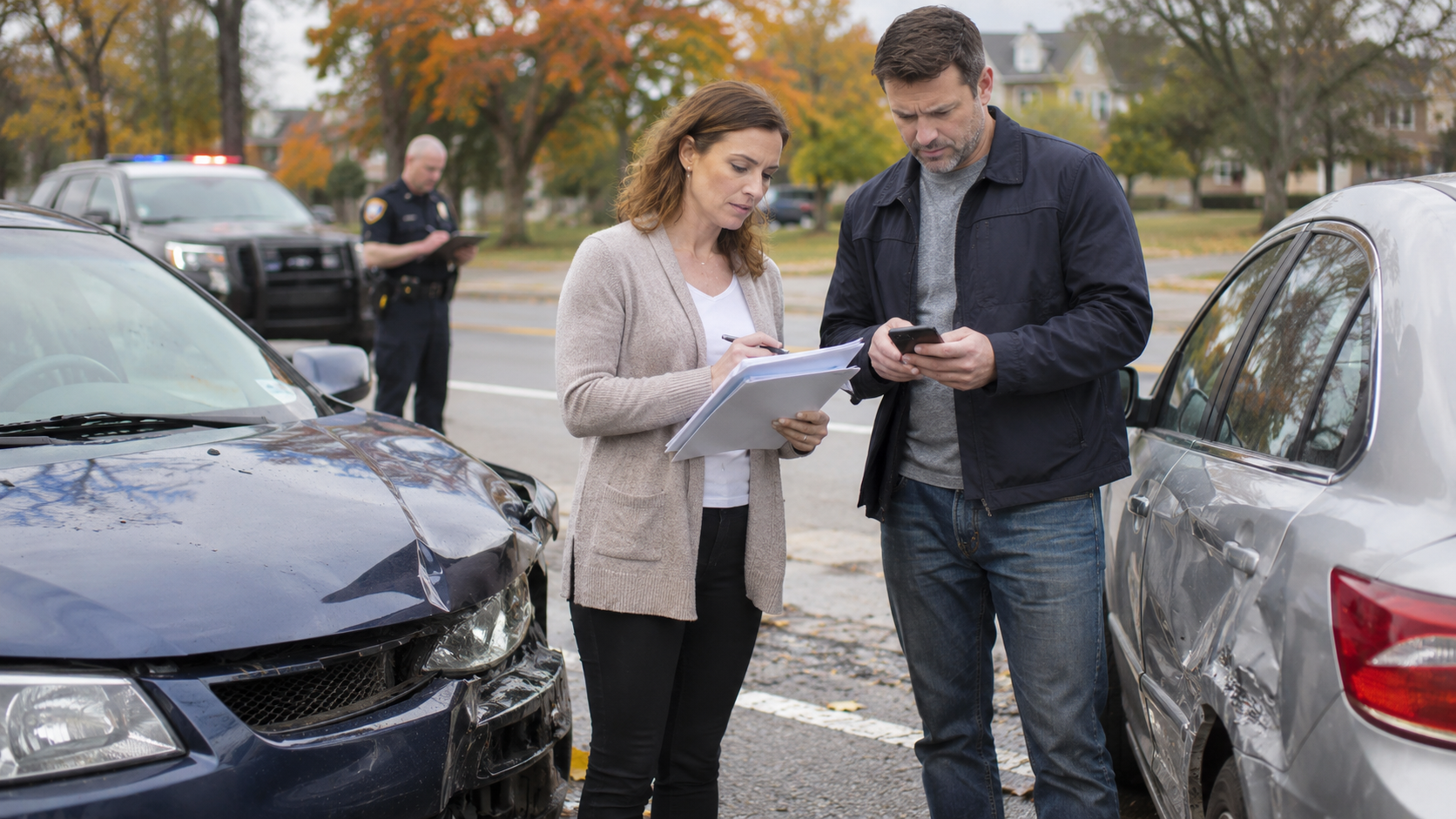
After an Ohio car accident, an insurance company may offer a settlement before the full extent of your injuries, anticipated medical treatment, or long-term financial losses becomes clear. Ohio law does not establish a fixed settlement amount for every car accident injury. Instead, evaluating a personal injury claim requires examining the nature and severity of the injuries, medical expenses, reasonably anticipated future care, lost wages, diminished earning capacity, and the collision’s impact on your daily life. Evidence establishing liability, Ohio’s comparative negligence rules, and applicable insurance policy limits may also affect the compensation available. Understanding these factors can help injured individuals assess whether an insurance settlement offer adequately accounts for their documented losses and potential future needs before agreeing to a resolution that may permanently close their claim.
Call 1-800-411-PAIN or request a free consultation today to speak with an experienced local Ohio personal injury attorney at Buckeye Law Group.
What Compensation Can an Insurance Company Pay After a Car Accident?
When another driver is legally responsible, a bodily injury claim may involve two broad categories of compensatory damages.
Economic Damages: Measurable Financial Losses
Economic damages may include emergency treatment, hospital bills, diagnostic testing, prescriptions, rehabilitation, and reasonably supported future care. They can also include lost wages, reduced earning capacity, and necessary out-of-pocket costs related to the injury. Maintain organized copies of all medical bills, insurance statements, employment and wage records, and healthcare providers’ treatment recommendations to help document your financial losses, medical expenses, and anticipated future care needs. Insurance companies may question whether medical treatment was directly related to the collision, medically necessary, or reasonably priced. Comprehensive medical records, diagnostic findings, and healthcare providers’ recommendations can help establish the connection between the accident and the injuries sustained while supporting the necessity and reasonableness of the associated medical expenses.
Noneconomic Damages: Personal Effects of an Injury
Ohio law recognizes noneconomic losses such as physical pain, emotional distress, loss of enjoyment of ordinary activities, and certain effects on relationships. Medical findings, recovery duration, and documented daily limitations help explain these harms. Ohio law does not establish a fixed formula or require pain and suffering damages in car accident claims to equal three times the injured person’s medical expenses. Instead, these damages are evaluated based on the specific circumstances of the case, including the nature and severity of the injuries, their duration, and their impact on the individual’s daily life. Multipliers found online are not a substitute for evaluating the particular injuries and evidence.
How Is a Car Accident Injury Settlement Calculated?
Consider the following hypothetical scenario illustrating how injuries and related losses may be evaluated following a motor vehicle collision:
| Documented Economic Loss | Illustrative Amount |
|---|---|
| Accident-Related Medical Expenses | $18,000 |
| Lost Earnings | $4,000 |
| Reasonably Supported Future Treatment | $2,000 |
| Total Economic Losses | $24,000 |
This hypothetical example is intended for educational purposes and should not be interpreted as an estimate of potential settlement value. A comprehensive claim evaluation must also consider noneconomic damages, the necessity and reasonableness of medical treatment, evidence of liability, applicable insurance coverage, and potential medical reimbursement obligations. Injured individuals should request clarification regarding which damages the insurance adjuster included, reduced, or excluded from the settlement calculation. An offer that fails to account for reasonably anticipated future medical treatment or other documented losses may not adequately reflect the full extent of the injuries and their financial consequences.
How Do Ohio Insurance Policy Limits Affect Payment?
Ohio generally requires minimum automobile liability coverage of $25,000 for bodily injury to one person, $50,000 for bodily injuries to two or more people per accident, and $25,000 for property damage per accident under Ohio Revised Code § 4509.51.
These minimums are not an injury valuation or automatic entitlement. For example, a legally supported injury claim worth more than $25,000 may exceed one at-fault driver’s minimum per-person bodily injury limit. Several injured people may share the per-accident limit.
Other policies or liable parties may matter, including umbrella and uninsured/underinsured motorist coverage UM/UIM. Ohio permits but does not require UM/UIM coverage, and its availability and payment depend on the policy and Ohio Revised Code § 3937.18. The presence of a policy limit never proves that the entire limit is payable.
Does Shared Fault Reduce the Insurance Settlement?
Yes, it can. Under Ohio Revised Code § 2315.33, an injured plaintiff generally may recover if their share of fault is 50% or less; recoverable compensatory damages are reduced proportionately. A plaintiff whose fault exceeds 50% generally cannot recover under this rule.
For illustrative purposes, consider the following hypothetical example: $40,000 in otherwise recoverable damages would be reduced to $30,000 if 25% fault were assigned to the injured person, before considering coverage limits or other issues. Ask for evidence supporting a disputed fault percentage; an adjuster’s position is not a final legal determination.
Are There Limits on Pain and Suffering Damages in Ohio?
Ohio Revised Code § 2315.18 generally limits noneconomic damages in many civil injury actions to the greater of $250,000 or three times economic loss, subject to statutory maximums and important exceptions for certain severe permanent injuries. Economic compensatory damages are not capped under that section. These are rules governing covered court actions, not a schedule instructing insurers what to offer. Exceptions require case-specific analysis.
What Should You Do If the Insurance Company’s Offer Seems Too Low?
Request a detailed explanation of how the insurance company evaluated the claim and determined its settlement offer. Identify whether the insurer disputes liability, the nature or extent of the injuries, the necessity of medical treatment, documented lost income, or applicable insurance coverage. Carefully compare the insurer’s findings with the available medical records, financial documentation, and evidence of the collision. A thorough assessment of the settlement offer should address the following considerations:
- Medical Evidence: Obtain records, itemized bills, and information about continuing treatment or documented future care.
- Financial Losses: Collect pay statements, employer verification, receipts, and other support for lost income or expenses.
- Collision Evidence: Preserve photographs, witness information, claim correspondence, and any available crash report.
- Settlement Language: Read any proposed release carefully. Confirm which claims and parties it covers before signing.
The Ohio Department of Insurance’s claims-settlement rule establishes claim-handling standards, including a general 15-day acknowledgement requirement and rules for explaining claim decisions and investigation extensions. Those rules do not guarantee a settlement by a particular date or create a private lawsuit solely for violating the rule. An evidence-based response is more useful than an unsupported target amount. Serious injuries, liability disputes, or releases warrant case-specific review.
Who Pays Medical Bills Before an Injury Claim Settles?
The at-fault driver’s insurer generally does not pay bills as treatment occurs. Health insurance or optional medical payments (MedPay) coverage may pay initially. MedPay can cover qualifying accident-related medical expenses regardless of fault, subject to the policy.
Health insurance providers and other entities that have paid accident-related medical expenses may have contractual or legal rights to seek reimbursement from a personal injury settlement. Consequently, the total settlement amount may differ significantly from the compensation an injured individual ultimately receives after applicable medical reimbursement claims, attorney fees, and case-related expenses are deducted. Before finalizing a settlement, injured individuals should request a detailed accounting of anticipated deductions, outstanding reimbursement obligations, and the estimated net recovery to better understand the financial implications of resolving their claim.
Ohio Resources and Deadlines for Injured Drivers
Ohio’s Crash Report Search can help locate a submitted report. Reports may take up to six weeks to appear, and the state’s searchable copies are not official court-ready reports. Request the official report from the investigating city police department, sheriff’s office, or Ohio State Highway Patrol.
For unresolved insurance complaints, the Ohio Department of Insurance provides Consumer Services at (800) 686-1526. The department reviews regulatory issues; it cannot set the dollar value of your injury claim.
Under Ohio Revised Code § 2305.10, most personal injury lawsuits arising from car accidents in Ohio must be filed within two years after the cause of action accrues, which is generally the date the injury occurs. Exceptions and other deadlines may apply. Negotiating with an insurer should not be assumed to extend the filing deadline.
Frequently Asked Questions About Car Accident Injury Settlements
- Will Insurance Pay All My Medical Bills After a Car Accident? Not automatically. Payment depends on legal responsibility, whether treatment is related to the crash, the available coverage, and other claim-specific issues. A liability settlement may address medical expenses alongside other damages, but bills and reimbursement claims still require review.
- How Much Is Pain and Suffering Worth After an Ohio Car Accident? There is no universal amount. Factors include the nature and duration of injuries, treatment, ongoing limitations, and the strength of supporting evidence. Applicable statutory limitations may also affect court-awarded noneconomic damages.
- Can an Insurance Company Offer Less Than My Medical Bills? Yes. The insurer may dispute fault, causation, treatment, or coverage, and policy limits may restrict payment. A low offer does not automatically establish unlawful conduct. Request the basis for the amount and compare it with your records.
- Can I Negotiate an Insurance Settlement Without a Lawyer? Yes. You may ask for a written explanation, correct factual errors, submit additional evidence, and propose a supported counteroffer. Before signing a final release, consider the consequences of resolving a claim while treatment or financial losses remain uncertain.
- What If the At-Fault Driver Has Only $25,000 in Injury Coverage? That may be the insurer’s per-person limit, even if damages are higher. Whether other policies, UM/UIM coverage, or additional responsible parties provide potential recovery depends on the circumstances. The $25,000 limit itself does not guarantee payment.
Understanding Your Options Before Accepting a Settlement
Determining fair compensation after a car accident requires a careful evaluation of the injuries sustained, the financial losses incurred, and the collision’s long-term consequences. Relevant considerations may include documented medical expenses, anticipated treatment and rehabilitation costs, lost wages, reduced earning capacity, and the physical and emotional effects of the injuries on daily life. Liability, available insurance coverage, and supporting evidence can also influence the value of a claim. An insurance company’s initial settlement offer may not fully account for these factors, particularly when future medical needs or lasting limitations remain uncertain. Before accepting an offer, injured individuals should understand which damages are included, whether additional losses may arise, and how signing a settlement release could affect their right to pursue further compensation.
Call 1-800-411-PAIN or request a free consultation today to speak with an experienced local Ohio personal injury attorney at Buckeye Law Group.
Legal Disclaimer: This article is provided for general informational and educational purposes and reflects Ohio personal injury and insurance laws as of November 6, 2026. It does not constitute legal or medical advice, establish an attorney-client relationship, or provide a determination of liability, potential compensation, or the merits of any individual claim. Applicable insurance coverage, filing deadlines, legal rights, and available remedies may vary depending on the specific facts and circumstances of each case. Individuals seeking guidance regarding a potential car accident injury claim should consult a qualified Ohio personal injury attorney.
How Much Should an Insurance Company Pay for Injuries After a Car Accident?
After an Ohio car accident, an insurance company may offer a settlement before the full extent of your injuries, anticipated medical treatment, or long-term financial losses becomes clear. Ohio law
What Happens If an Insurance Company Won’t Offer a Fair Settlement After a Car Accident?
After an Ohio car accident, an insurance settlement offer may arrive while medical treatment continues and fault remains disputed. If the insurance company won’t offer a fair settlement, you do
Toledo’s Summit Street Cycle Track: What the 2026–2027 Redesign Means for Cyclist and Pedestrian Safety
Toledo’s Summit Street Cycle Track project is a two-phase reconstruction intended to make a section of North Summit Street safer and more connected for people walking and bicycling. In 2026,
Greater Dayton’s 2026 E-Bike and E-Moto Safety Proposal: What Ohio Riders and Parents Should Know
Electric bicycles and other small electric-powered vehicles are becoming increasingly common on roads, neighborhood streets, and recreational trails throughout Greater Dayton. Their growing use also raises important questions about rider
Dayton’s Keowee Street Safety Project: How Lane Reductions and New Walking Paths Could Improve Roadway Safety
Dayton’s Keowee Street safety project would reduce the roadway from seven lanes to five between East Fifth Street and East Monument Avenue, adding multi-use paths, landscaping, and signal upgrades. The
Dayton I-75 Construction in November 2026: Lane Closures, Traffic Shifts, and Work-Zone Safety
Motorists traveling along I-75 through Dayton, Ohio, in November 2026 should be aware of multiple construction projects that may affect travel times, lane configurations, and access to nearby interchanges. According
Columbus I-70/I-71 Construction in November 2026: Ramp Closures, Detours, and Driver Safety
Motorists traveling through downtown Columbus, Ohio, in November 2026 should prepare for temporary traffic disruptions as construction continues along the I-70/I-71 corridor. Overnight interstate restrictions, ramp closures, and designated detours
Mansfield’s Main Street Transformation: What Drivers and Pedestrians Should Know About Downtown Traffic Changes in 2026
As Mansfield completes its 2026 Main Street Transformation, residents and visitors should understand how the redesigned streets affect access to downtown businesses, public buildings, pedestrian crossings, and nearby parking areas.
Toledo’s Douglas Road and Monroe Street Intersection Improvements: What Drivers and Pedestrians Should Know in 2026
The City of Toledo identifies the Douglas Road and Monroe Street intersection as a 2026 improvement project intended to support pedestrian safety, driver safety, and better pavement conditions. For people
Springfield’s South Limestone Street Safety Improvements: What Drivers Should Know
South Limestone Street in Springfield, Ohio, is the focus of safety improvements intended to reduce conflicts between vehicles entering, leaving, and traveling along the corridor. The Ohio Department of Transportation’s

Buckeye Law Group represents people injured in auto accidents, slip and falls, workplace accidents and more in Ohio. Contact us today to learn more.
© 2026 All Rights Reserved | The Buckeye Law Group Inc. Privacy Policy Sitemap
Office Locations
- Akron Office 388 S Main St #400 Akron, OH 44311 (330) 426-0288
- Cincinnati Office 201 E 5th St Ste 1910 Cincinnati, OH 45202 (513) 547-2445
- Cleveland Office 127 Public Square Ste 1540 Cleveland, OH 44114 (216) 677-5490
- Columbus Office 20 E Broad St Suite 300 Columbus, OH 43215 (614) 482-3793
- Dayton Office 70 Birch Alley Ste 240 Dayton, OH 45440 (937) 884-4474
- Euclid Office 25701 N Lakeland Blvd Suite 113-C, Cleveland, OH 44132 (216) 405-2626
- Mansfield Office 305 E Main St Ste 6A, Mansfield, OH 44904 (567) 210-2606
- Findlay Office 7430 Timberstone Dr unit 101a, Findlay, OH 45840 419-873-5119
- Mentor Office 7537 Mentor Ave Ste 101, Mentor, OH 44060 (440) 306-3536
- Middletown Office 300 N Main St #400, Middletown, OH 45042 (326) 800-9150
- Parma Office 1257 Rockside Rd #A, Parma, OH 44131 (216) 279-1664
- Springfield Office 2100 E High St Ste TL3, Springfield, OH 45505 (937) 806-5791
- Toledo Office 3950 Sunforest Ct Ste 200, Toledo, OH 43623 (567) 483-3883
- Westlake Office 26404 Center Ridge Rd Ste B2, Westlake, OH 44145 216-247-0565
- Whitehall Office 5340 E Main St Ste 203, Whitehall, OH 43213 (380) 257-5206
- Youngstown Office 306 Churchill Hubbard Rd, Youngstown, OH 44505 (234) 225-0683
Contact Us
© 2026 All Rights Reserved | The Buckeye Law Group Inc. Privacy Policy Sitemap