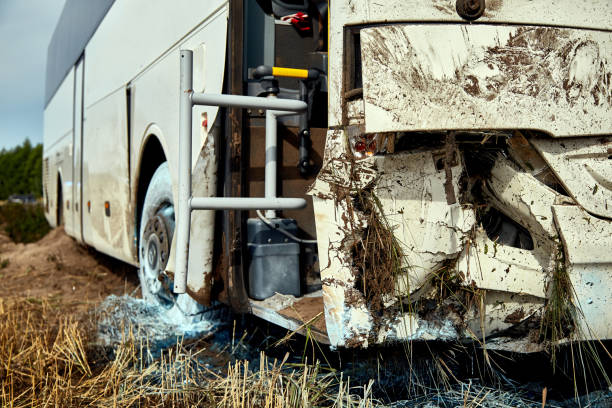
Understanding the Two Types of Bus Accident Claims
When a bus accident happens, one of the first and most important legal questions is who owns and operates the bus. Whether the vehicle is privately owned or publicly operated can completely change how victims pursue compensation.
At Buckeye Law Group, we represent victims of both private and public bus crashes across Ohio, helping them navigate the complex legal differences between these two types of claims. If you were injured in a bus accident, knowing which category your case falls under is the key to protecting your rights.
What Counts as a Public Bus Accident?
Public buses are typically operated by city, county, or regional transit authorities such as:
- The Greater Cleveland Regional Transit Authority (RTA)
- Central Ohio Transit Authority (COTA)
- Other government-operated commuter and school bus systems
Because these entities are government agencies, they are protected by sovereign immunity—a legal doctrine that limits how and when they can be sued. However, exceptions exist when negligence can be proven, such as:
- Unsafe driving by a public bus operator
- Failure to properly train or supervise drivers
- Poor vehicle maintenance
- Negligent hiring practices
Special Rules for Public Bus Claims
Filing a claim against a public transit agency in Ohio involves unique challenges:
- Shorter deadlines: You may have as little as 180 days to file a notice of claim.
- Damage caps: Compensation may be limited under the Ohio Political Subdivision Tort Liability Act.
- Government defense: City or state lawyers often aggressively defend against claims.
Because of these restrictions, it’s critical to have a legal team experienced in handling public transportation injury cases.
What About Private Bus Accidents?
Private bus accidents involve vehicles owned by companies or organizations such as:
- Charter or tour bus companies
- Intercity carriers like Greyhound or Megabus
- Private school or church buses
- Casino, airport, or hotel shuttle buses
Private bus operators are held to commercial carrier standards, meaning they have a duty to ensure passenger safety at all times. When they fail to meet these standards, they can be held fully liable for injuries caused by:
- Driver negligence or impairment
- Overworked or untrained drivers
- Mechanical failure due to skipped maintenance
- Unsafe driving conditions ignored by management
Unlike public claims, lawsuits against private bus companies are not subject to immunity laws, and victims often have a broader path to full compensation.
Key Differences Between Public and Private Bus Claims
| Legal Aspect | Public Bus | Private Bus |
|---|---|---|
| Ownership | City, county, or state agency | Private company or organization |
| Liability Limits | Restricted by immunity laws | No immunity protection |
| Filing Deadline | As short as 180 days | Typically 2 years under Ohio law |
| Compensation | Capped by statute | Full compensation possible |
| Who Defends the Case | Government lawyers | Private insurance attorneys |
Why You Need an Attorney
Bus accident cases are complex due to multiple potential defendants and overlapping insurance coverage. The attorneys at Buckeye Law Group:
- Investigate maintenance records and driver logs
- Identify every liable party (including municipalities or contractors)
- Work with accident reconstruction experts
- Handle all communications and deadlines
Take Action Today
If you were injured in a bus accident—public or private—you may be entitled to significant compensation for medical bills, lost income, and pain and suffering. Let us handle the legal complexities while you focus on recovery.
Where Serious Crashes Occur in Columbus: A Data-Driven Guide to Local Roadway Risks
Understanding where serious crashes occur in Columbus can help you recognize roadway risks before your next trip. This guide draws on publicly available local crash data and safety reports to
Pedestrian Accident Near The University of Akron: What to Do and How to Protect Your Rights
A pedestrian accident near The University of Akron can interrupt your education, work, and daily life without warning. You may face medical bills, missed classes, and questions about who will
Is Ohio a No-Fault State for Car Accidents?
Ohio is not a no-fault state for car accidents. Ohio uses an at-fault, or tort, system, which means the person who caused the crash is generally responsible for the resulting
Who Pays Medical Bills After a Truck Accident in Columbus Ohio?
After a serious truck crash in Columbus, the hospital does not wait for the insurance companies to finish arguing about fault. Medical bills usually start with the coverage available right
What Is My Car Accident Case Worth in Columbus Ohio Factors That Affect Compensation
The value of an Ohio car accident case in Columbus depends on the losses you can prove, the seriousness of your injuries, available insurance, and how fault is divided. There
Injured at a Columbus Apartment Complex? What Tenants and Visitors Should Document
A fall at a Columbus apartment complex can raise more than immediate medical concerns when a dangerous property condition may have contributed to the injury. For tenants and lawful visitors,
What Happens After a Personal Injury Lawsuit Is Filed in Franklin County?
Filing a personal injury lawsuit in Franklin County, OH, places your claim within a formal court process governed by procedural rules and deadlines. After filing, the defendant must be served
What to Do After a Hit-and-Run Accident in Columbus, Ohio
A hit-and-run accident in Columbus, OH, or the neighboring communities can leave you hurt, shaken, and unsure how to prove what happened. The right response is simple but urgent: get
Injured as a Passenger in a Columbus Car Accident? Understanding Your Options
If you were injured as a passenger in a Columbus car accident, you may have more options than you realize. Passengers are usually not the person blamed for the crash,
Who Pays Medical Bills While an Ohio Car Accident Claim Is Pending?
After a crash, medical care cannot wait for an insurance settlement. In Ohio, the person who caused the collision may ultimately be responsible for injury-related losses, but the at-fault driver’s

Buckeye Law Group represents people injured in auto accidents, slip and falls, workplace accidents and more in Ohio. Contact us today to learn more.
© 2026 All Rights Reserved | The Buckeye Law Group Inc. Privacy Policy Sitemap
Office Locations
- Akron Office 388 S Main St #400 Akron, OH 44311 (330) 426-0288
- Cincinnati Office 201 E 5th St Ste 1910 Cincinnati, OH 45202 (513) 547-2445
- Cleveland Office 127 Public Square Ste 1540 Cleveland, OH 44114 (216) 677-5490
- Columbus Office 20 E Broad St Suite 300 Columbus, OH 43215 (614) 482-3793
- Dayton Office 70 Birch Alley Ste 240 Dayton, OH 45440 (937) 884-4474
- Euclid Office 25701 N Lakeland Blvd Suite 113-C, Cleveland, OH 44132 (216) 405-2626
- Mansfield Office 305 E Main St Ste 6A, Mansfield, OH 44904 (567) 210-2606
- Findlay Office 7430 Timberstone Dr unit 101a, Findlay, OH 45840 419-873-5119
- Mentor Office 7537 Mentor Ave Ste 101, Mentor, OH 44060 (440) 306-3536
- Middletown Office 300 N Main St #400, Middletown, OH 45042 (326) 800-9150
- Parma Office 1257 Rockside Rd #A, Parma, OH 44131 (216) 279-1664
- Springfield Office 2100 E High St Ste TL3, Springfield, OH 45505 (937) 806-5791
- Toledo Office 3950 Sunforest Ct Ste 200, Toledo, OH 43623 (567) 483-3883
- Westlake Office 26404 Center Ridge Rd Ste B2, Westlake, OH 44145 216-247-0565
- Whitehall Office 5340 E Main St Ste 203, Whitehall, OH 43213 (380) 257-5206
- Youngstown Office 306 Churchill Hubbard Rd, Youngstown, OH 44505 (234) 225-0683
Contact Us
© 2026 All Rights Reserved | The Buckeye Law Group Inc. Privacy Policy Sitemap