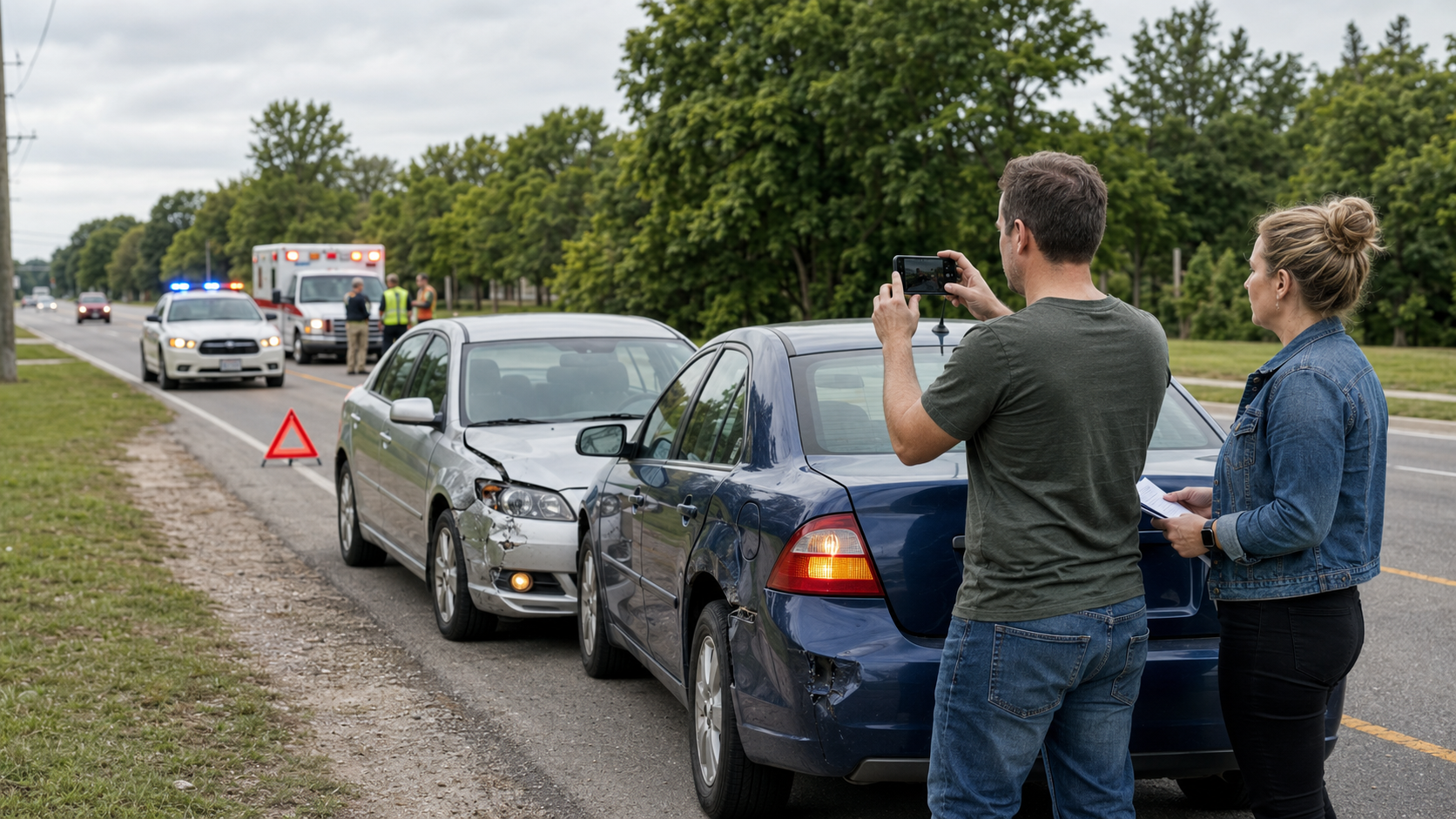
Quick Answer: Knowing what to do after a car accident in Ohio begins with stopping at the scene, checking for injuries, moving to safety when possible, contacting law enforcement, documenting the collision, exchanging information, obtaining appropriate medical care, and notifying your insurer. Before giving the other driver’s insurer a recorded statement or accepting a settlement, consider speaking with an Ohio car accident attorney. After 911, call Buckeye Law Group at 1-800-411-7246.
A collision can cause injuries, vehicle damage, medical expenses, and difficult insurance questions. If you are uncertain what to do after a car accident in Ohio, remember that your immediate decisions may affect your recovery and potential claim. These attorney-reviewed steps explain how to protect your health, preserve evidence, and avoid common mistakes.
1. Check for Injuries and Protect the Scene
The first priority when considering what to do after a car accident in Ohio is to stop and check for injuries. Under Ohio Revised Code § 4549.02, a driver involved in a public-road collision must stop, remain at the scene, and provide the required identifying information. If no one needs immediate care and your vehicle can be moved safely, leave active traffic or follow the dispatcher’s instructions. Activate your hazard lights. Use warning devices only when they can be placed safely. Do not move someone with a possible head, neck, or back injury unless immediate danger makes movement necessary.
2. Contact Law Enforcement
Calling law enforcement is an important part of what to do after a car accident in Ohio when someone is injured, traffic is obstructed, a driver flees, impairment is suspected, or another urgent danger exists. For a minor crash without an emergency, contact the appropriate local police agency and follow its instructions. A responding officer may document the drivers, vehicles, witnesses, road conditions, and visible damage. This record may matter if an insurer later disputes fault.
Ohio Revised Code § 5502.11 requires an investigating agency to forward a written report when a crash involves a fatality, injury, or more than $1,000 in property damage. This duty applies to the agency. It does not require every driver to call police based only on estimated damage.
3. What to Do After a Car Accident in Ohio: Document the Scene
Preserving evidence is central to understanding what to do after a car accident in Ohio. If it is safe, collect information before vehicles move or conditions change.
Accident Documentation Checklist
- Capture vehicle damage from several angles.
- Record license plates and final vehicle positions.
- Photograph debris, skid marks, signals, signs, and road defects.
- Document weather, lighting, and road conditions.
- Record the date, time, and exact location.
- Exchange driver, vehicle, contact, and insurance information.
- Obtain contact information from witnesses.
- Save dashcam recordings before they are overwritten.
- Note cameras that may have recorded the crash.
Remain calm. Exchange required information, but avoid arguing, speculating, or accepting fault.
4. Seek Appropriate Medical Attention
Prompt medical care belongs on any responsible checklist of what to do after a car accident in Ohio. Request emergency help for serious injuries. Otherwise, seek timely evaluation for pain, dizziness, confusion, headaches, numbness, weakness, or restricted movement. Some symptoms appear later. Medical records can connect symptoms, diagnoses, and recommended treatment. Follow your provider’s instructions. Unexplained treatment gaps may affect recovery and allow an insurer to dispute causation.
5. Notify Your Insurer
Reporting the collision promptly is another important part of what to do after a car accident in Ohio. Your policy may impose notice and cooperation duties. Provide accurate facts, but do not guess about speed, fault, or injuries.
The opposing adjuster may request a recorded statement or medical authorization. You generally do not have to give that insurer unrestricted access to your medical history. Seek legal guidance before giving a statement, signing a broad authorization, or accepting payment. Do not sign a release until you understand what it resolves. A final settlement may prevent further recovery if additional losses later appear.
6. Understand Ohio’s Comparative Negligence Rule
Understanding fault is essential when evaluating what to do after a car accident in Ohio. Under Ohio’s modified comparative-negligence rule, compensation is reduced by your percentage of responsibility. You generally cannot recover if your fault exceeds the combined fault of all other responsible parties.
For example, $100,000 in damages would be reduced to $80,000 if the injured person were 20% at fault. A person more than 50% responsible generally cannot recover. Photos, video, witnesses, vehicle data, and police records may address disputed fault. See Ohio Revised Code § 2315.33.
7. Know Ohio’s Filing Deadline
Legal deadlines are critical to what to do after a car accident in Ohio. Under Ohio Revised Code § 2305.10, a bodily-injury or personal-property action generally must be filed within two years after it accrues. In a typical crash, that period begins when the injury or loss occurs.
Insurance deadlines may require earlier notice or action, and exceptions can alter the filing period. Delay can lead to lost video, unavailable witnesses, destroyed records, or lost legal rights.
8. Speak With an Attorney Before Settling
An attorney consultation can be an important final step when deciding what to do after a car accident in Ohio. An early offer may arrive before you understand your medical expenses, lost income, property damage, future care, and other related losses. A final release usually ends the claim.
An Ohio personal injury attorney can investigate, preserve evidence, identify coverage, evaluate fault, calculate damages, and communicate with insurers. Buckeye Law Group offers free case reviews before injured Ohioans make decisions affecting their claims.
Frequently Asked Questions
These answers address common questions about what to do after a car accident in Ohio. The correct strategy depends on the facts, law, and available coverage.
- Do I need a lawyer for a minor car accident in Ohio? Not every minor collision requires counsel. When reviewing what to do after a car accident in Ohio, consider legal guidance if someone is injured, fault is disputed, coverage is denied, or an adjuster seeks a statement or quick settlement.
- What if the other driver does not have insurance? Review your policy for uninsured- and underinsured-motorist coverage. If included, it may provide benefits through your insurer. Ohio permits this coverage but does not require every policy to include it. See Ohio Revised Code § 3937.18.
- How long do I have to file an Ohio car accident claim? Ohio generally allows two years to file a lawsuit for collision-related bodily injury or property damage. Insurance deadlines may be shorter. When determining what to do after a car accident in Ohio, act early to identify deadlines and preserve evidence.
- Should I give the other driver’s insurer a recorded statement? Obtain legal advice first. The opposing insurer may use your answers to challenge fault, causation, or your injuries. As part of what to do after a car accident in Ohio, satisfy duties under your policy, but do not assume they require a statement to the opposing insurer.
- Can I recover compensation if I was partially at fault? Potentially. Ohio permits recovery when your fault is not greater than the combined fault of all other responsible parties. Compensation is reduced by your percentage. Evidence gathered while following what to do after a car accident in Ohio may help challenge an unsupported fault allegation.
Get Clear Guidance on What to Do After a Car Accident Today
If another driver’s carelessness injured you, Buckeye Law Group can review the collision, explain the law, preserve evidence, and evaluate your options. For reliable guidance about what to do after a car accident in Ohio, call 1-800-411-7246 for a complimentary consultation. There are no upfront attorney fees, and no attorney fee is owed unless compensation is recovered.
*This content provides general information and is not legal advice. Case outcomes depend on the specific facts, evidence, applicable law, and available insurance coverage. Prior results do not guarantee a similar outcome.*
What to Do After a Hit-and-Run Accident in Columbus, Ohio
A hit-and-run accident in Columbus, OH, or the neighboring communities can leave you hurt, shaken, and unsure how to prove what happened. The right response is simple but urgent: get
Injured as a Passenger in a Columbus Car Accident? Understanding Your Options
If you were injured as a passenger in a Columbus car accident, you may have more options than you realize. Passengers are usually not the person blamed for the crash,
Who Pays Medical Bills While an Ohio Car Accident Claim Is Pending?
After a crash, medical care cannot wait for an insurance settlement. In Ohio, the person who caused the collision may ultimately be responsible for injury-related losses, but the at-fault driver’s
Cleveland Premises Liability Lawyers: Understanding Property Injury Claims in Ohio
How Cleveland Premises Liability Lawyers Evaluate Property Injury Claims Under Ohio Law A serious injury on someone else’s property can raise immediate questions about medical bills, responsibility, and your next
How Long Does an Auto Accident Settlement Take in Ohio? A Guide to the Claims Process
Ohio Auto Accident Settlement Timeline: What to Expect From Claim to Payout An Ohio auto accident settlement can move quickly when injuries are minor, liability is clear, and records are
How Buckeye Law Group’s Slip and Fall Injury Lawyers Help Injured Ohioans Understand Their Legal Options
Ohio Slip and Fall Injury Lawyers Helping You Understand Your Rights After a Serious Injury A slip and fall can turn an ordinary trip to a store, apartment building, workplace,
How Can an Ohio Truck Accident Lawyer Help You Protect Your Rights After a Commercial Truck Crash?
Legal Guidance After an Ohio Truck Accident: How an Ohio Truck Accident Lawyer Can Support Your Claim A truck accident lawyer from Buckeye Law Group can help injured individuals and
Should You Accept An Insurance Settlement Offer? Why Ohio Injury Victims Should Speak With An Attorney First
After an accident, an insurance settlement offer may provide welcome financial relief while medical bills and lost wages continue to accumulate. However, accepting an offer before the full extent of
What Should You Do After a Pedestrian Accident Near Ohio State University in Columbus?
A pedestrian accident near Ohio State University can leave you hurt, disoriented, and unsure what to do next. In the OSU area, where student foot traffic, Uber & Lyft rideshare
How Do I Choose the Right Dog Bite Lawyer in Columbus, Ohio?
If you were bitten or otherwise injured by a dog in central Ohio, the right lawyer can help determine liability, preserve evidence, communicate with insurance companies, and pursue fair compensation
Buckeye Law Group represents people injured in auto accidents, slip and falls, workplace accidents and more in Ohio. Contact us today to learn more.
© 2026 All Rights Reserved | The Buckeye Law Group Inc. Privacy Policy Sitemap
Office Locations
- Akron Office 388 S Main St #400 Akron, OH 44311 (330) 426-0288
- Cincinnati Office 201 E 5th St Ste 1910 Cincinnati, OH 45202 (513) 547-2445
- Cleveland Office 127 Public Square Ste 1540 Cleveland, OH 44114 (216) 677-5490
- Columbus Office 20 E Broad St Suite 300 Columbus, OH 43215 (614) 482-3793
- Dayton Office 70 Birch Alley Ste 240 Dayton, OH 45440 (937) 884-4474
- Euclid Office 25701 N Lakeland Blvd Suite 113-C, Cleveland, OH 44132 (216) 405-2626
- Mansfield Office 305 E Main St Ste 6A, Mansfield, OH 44904 (567) 210-2606
- Findlay Office 7430 Timberstone Dr unit 101a, Findlay, OH 45840 419-873-5119
- Mentor Office 7537 Mentor Ave Ste 101, Mentor, OH 44060 (440) 306-3536
- Middletown Office 300 N Main St #400, Middletown, OH 45042 (326) 800-9150
- Parma Office 1257 Rockside Rd #A, Parma, OH 44131 (216) 279-1664
- Springfield Office 2100 E High St Ste TL3, Springfield, OH 45505 (937) 806-5791
- Toledo Office 3950 Sunforest Ct Ste 200, Toledo, OH 43623 (567) 483-3883
- Westlake Office 26404 Center Ridge Rd Ste B2, Westlake, OH 44145 216-247-0565
- Whitehall Office 5340 E Main St Ste 203, Whitehall, OH 43213 (380) 257-5206
- Youngstown Office 306 Churchill Hubbard Rd, Youngstown, OH 44505 (234) 225-0683
Contact Us
© 2026 All Rights Reserved | The Buckeye Law Group Inc. Privacy Policy Sitemap