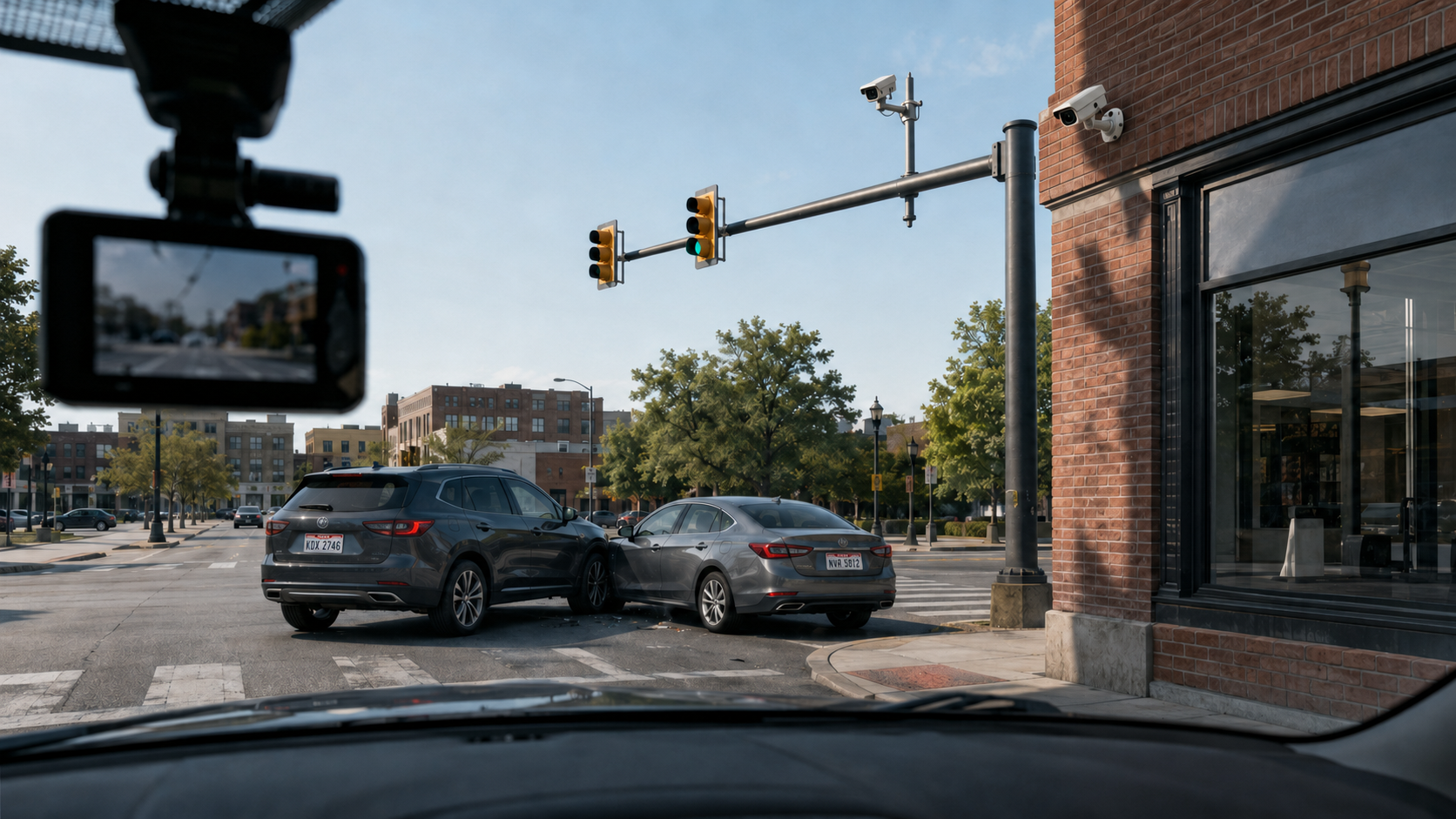
Car accidents in Ohio can be chaotic and stressful. However, video evidence may provide an objective record of how a collision occurred. Dashcam recordings, business surveillance, and traffic camera footage after a car accident can help document vehicle movements, road conditions, traffic signals, and other important details.
Each source has different procedures for requesting and preserving recordings. Acting promptly is critical because footage may be routinely overwritten, deleted, or otherwise become unavailable. An experienced Ohio car accident attorney can help identify potential video sources, submit preservation requests, and pursue available legal procedures for obtaining evidence. This guide explains practical steps for preserving dashcam, traffic-camera, and business-surveillance footage after an Ohio crash.
Why Traffic Camera Footage After a Car Accident Matters to an Ohio Injury Claim
Video footage can provide an objective record of how a collision occurred. It may capture vehicle movements, traffic signals, road conditions, and other details that witnesses overlook or later forget. Dashcam recordings, business surveillance, and traffic camera footage after a car accident may help establish fault and resolve conflicting accounts. Insurers and attorneys can also use this evidence to evaluate liability and support a properly documented Ohio accident claim. However, footage should be reviewed alongside police reports, witness statements, photographs, and other available evidence. Key benefits of video footage include:
- Offers an objective record of the incident.
- Helps identify parties involved and their actions.
- Reinforces or challenges witness statements.
These points underscore the importance of promptly preserving traffic camera footage after a car accident in Ohio. Because many camera systems routinely overwrite recordings, delays may result in the permanent loss of valuable evidence. Without reliable video footage, establishing fault and proving what happened may become significantly more difficult.

Types of Ohio Video Evidence: Dashcams, Business Surveillance, and Traffic Camera Footage After a Car Accident
After an Ohio crash, preserving traffic camera footage after a car accident, along with dashcam recordings and nearby business-surveillance video, may provide valuable evidence. Each source can capture different angles, vehicle movements, road conditions, and other details that may help attorneys, insurers, and investigators evaluate fault and damages:
Dashcams: These cameras are installed inside vehicles. They record the road ahead, providing direct evidence from the driver’s viewpoint.
Traffic cameras: Managed by local authorities, these cameras monitor intersections and major roads. Their footage can show traffic light changes and vehicle movements.
Business surveillance: Businesses often have cameras pointed towards parking lots and streets. They can capture footage from angles not covered by public cameras.
Quick access to traffic camera footage after a car accident is crucial. This video evidence may provide a comprehensive, objective view of the crash that photographs or witness accounts alone cannot capture.

Immediate Steps to Preserve Dashcam Footage
Time is critical when preserving dashcam video after a crash in Cleveland, Columbus, Cincinnati, Toledo, Dayton, Akron, and the surrounding cities. As with traffic camera footage after a car accident, dashcam recordings may be overwritten, deleted, or damaged if you do not act promptly. Remove the memory card or disable recording as soon as it is safe to prevent the device from recording over the relevant file. Then, save the original video to a secure location without editing or altering it. Create backup copies using encrypted cloud storage and an external drive. Keep the original file name, date, time, and device information whenever possible, as these details may help establish the footage’s authenticity. Consider the following steps to preserve dashcam footage:
- Label the footage with the accident date and location.
- Make copies for safe backup.
- Check for any dashcam features that auto-save crash events.
Regularly review and update your dashcam settings to ensure emergency recordings are saved and protected from automatic deletion. Taking prompt action to preserve dashcam recordings and traffic camera footage after a car accident can help maintain the evidence’s integrity, authenticity, and credibility for an Ohio insurance claim or personal injury case.
How to Request and Preserve Traffic Camera Footage After a Car Accident
Requesting traffic camera footage after a car accident requires swift action. These recordings may be overwritten in just a few days. Contact the local government agency responsible for the cameras quickly. Understand the procedure for accessing footage, as it may differ by location. Some cities require a formal written request. Include details like the date, time, and location of the accident to help identify the relevant footage. Be prepared to make a public records request. This formal process often involves filling out specific forms provided by the government agency. Ensure all information is accurate and complete to avoid delays. Here’s how you can proceed effectively:
- Identify which agency manages the traffic cameras.
- Submit a formal request promptly.
- Follow up regularly to ensure timely release of footage.
Acting quickly increases your chances of preserving traffic camera footage after a car accident before it is overwritten or deleted. This evidence may help establish fault and support an Ohio insurance claim or personal injury case.
Securing Business-Surveillance Footage Near the Crash Scene
Obtaining business-surveillance footage near an Ohio crash scene may provide valuable evidence. Businesses often have cameras directed toward parking lots, intersections, entrances, and nearby roads. These recordings may capture the collision from another angle, show traffic-signal timing, or document the vehicles’ movements before impact. Contact nearby business owners promptly and courteously when searching for traffic camera footage after a car accident. Explain when and where the crash occurred, why the recording may be relevant, and the specific time period you need. Because many surveillance systems automatically overwrite files, acting quickly is essential.
Document every interaction, including the business name, contact person, date, and response. Keep copies of emails, written requests, and any footage-release agreements. Although requesting a recording directly may be efficient, the business owner generally controls whether it is voluntarily released. If the owner declines or does not respond, an Ohio car accident attorney may send a preservation letter and pursue the footage through a subpoena or other available legal process. When requesting business-surveillance footage, keep these tips in mind:
- Identify businesses with possible footage.
- Communicate clearly and respectfully with owners.
- Back up any footage received immediately.

Legal Considerations and Ohio Laws on Video Evidence
Understanding Ohio’s legal requirements is essential when handling video evidence after a crash. The ownership, location, and source of the camera may affect how the recording can be requested, preserved, authenticated, and used in court. When seeking traffic camera footage after a car accident, act promptly because government agencies, businesses, and private camera owners may retain recordings for only a limited period. Following the proper preservation procedures can help protect the footage’s integrity and your legal rights. When preserving video evidence, keep in mind:
- Compliance with local privacy laws.
- Documenting the date and time of the request.
- Maintaining the chain of custody to ensure admissibility.
Legal guidance can be valuable when seeking traffic camera footage after a car accident in Ohio. An experienced Ohio car accident attorney can identify potential video sources, submit timely preservation requests, and follow the appropriate legal procedures before recordings are deleted or overwritten. Taking these steps may help protect important evidence and strengthen your claim.
Working with Attorneys and Insurance Companies
Collaborating with an experienced local Ohio personal injury attorney can simplify the process of obtaining traffic camera footage after a car accident. An attorney can identify potential video sources, prepare preservation requests, and explain the legal procedures for securing evidence before it is deleted or overwritten. Insurance companies may also request footage when investigating liability or evaluating a claim. Keep your insurer informed, but consider seeking legal guidance before providing recorded statements or signing documents. Here are practical steps for working with legal and insurance professionals:
- Share any video footage promptly.
- Document all communications for records.
- Follow their guidance on legal procedures.
By working with experienced Ohio attorneys and insurance professionals, you can better protect your rights and strengthen your claim. Prompt coordination may help preserve traffic camera footage after a car accident before it is overwritten or deleted. Legal counsel can also help identify relevant recordings, submit timely preservation requests, and determine how the evidence may support your case.
Tips for Ensuring Video Evidence Is Admissible in Court
For traffic camera footage after a car accident to be considered in an Ohio insurance claim or court proceeding, it must be relevant, authentic, and properly preserved. Maintaining the original file, documenting its source, protecting its metadata, and establishing a clear chain of custody can help demonstrate that the recording has not been altered. Because admissibility depends on the facts and applicable evidence rules, consider consulting an experienced Ohio car accident attorney. Follow these practical steps to help protect the footage’s integrity and potential evidentiary value:
- Ensure clear time, date, and location stamps.
- Maintain the chain of custody rigorously.
- Avoid unauthorized editing or tampering.
- Seek professional legal advice for compliance.
Each step you take to preserve and authenticate traffic camera footage after a car accident may affect your Ohio injury claim. Following proper procedures can help establish the footage’s reliability, improve its likelihood of being admitted in court, and strengthen the evidence supporting your case.
Act Quickly to Protect Your Rights
Preserving video evidence after a crash can make a meaningful difference in establishing fault and documenting what occurred. Dashcam recordings, business surveillance, and traffic camera footage after a car accident may be erased, overwritten, or lost within days. Therefore, prompt action is essential. Identify nearby cameras, save original files, document where the footage came from, and avoid editing or altering recordings. An experienced Ohio car accident attorney can also send preservation requests and pursue evidence that may be difficult to obtain independently. Do not wait until critical footage disappears. Taking immediate steps to secure available video can protect your legal rights and provide valuable support for your insurance claim or personal injury case.
What to Do After a Hit-and-Run Accident in Columbus, Ohio
A hit-and-run accident in Columbus, OH, or the neighboring communities can leave you hurt, shaken, and unsure how to prove what happened. The right response is simple but urgent: get
Injured as a Passenger in a Columbus Car Accident? Understanding Your Options
If you were injured as a passenger in a Columbus car accident, you may have more options than you realize. Passengers are usually not the person blamed for the crash,
Who Pays Medical Bills While an Ohio Car Accident Claim Is Pending?
After a crash, medical care cannot wait for an insurance settlement. In Ohio, the person who caused the collision may ultimately be responsible for injury-related losses, but the at-fault driver’s
Cleveland Premises Liability Lawyers: Understanding Property Injury Claims in Ohio
How Cleveland Premises Liability Lawyers Evaluate Property Injury Claims Under Ohio Law A serious injury on someone else’s property can raise immediate questions about medical bills, responsibility, and your next
How Long Does an Auto Accident Settlement Take in Ohio? A Guide to the Claims Process
Ohio Auto Accident Settlement Timeline: What to Expect From Claim to Payout An Ohio auto accident settlement can move quickly when injuries are minor, liability is clear, and records are
How Buckeye Law Group’s Slip and Fall Injury Lawyers Help Injured Ohioans Understand Their Legal Options
Ohio Slip and Fall Injury Lawyers Helping You Understand Your Rights After a Serious Injury A slip and fall can turn an ordinary trip to a store, apartment building, workplace,
How Can an Ohio Truck Accident Lawyer Help You Protect Your Rights After a Commercial Truck Crash?
Legal Guidance After an Ohio Truck Accident: How an Ohio Truck Accident Lawyer Can Support Your Claim A truck accident lawyer from Buckeye Law Group can help injured individuals and
Should You Accept An Insurance Settlement Offer? Why Ohio Injury Victims Should Speak With An Attorney First
After an accident, an insurance settlement offer may provide welcome financial relief while medical bills and lost wages continue to accumulate. However, accepting an offer before the full extent of
What Should You Do After a Pedestrian Accident Near Ohio State University in Columbus?
A pedestrian accident near Ohio State University can leave you hurt, disoriented, and unsure what to do next. In the OSU area, where student foot traffic, Uber & Lyft rideshare
How Do I Choose the Right Dog Bite Lawyer in Columbus, Ohio?
If you were bitten or otherwise injured by a dog in central Ohio, the right lawyer can help determine liability, preserve evidence, communicate with insurance companies, and pursue fair compensation

Buckeye Law Group represents people injured in auto accidents, slip and falls, workplace accidents and more in Ohio. Contact us today to learn more.
© 2026 All Rights Reserved | The Buckeye Law Group Inc. Privacy Policy Sitemap
Office Locations
- Akron Office 388 S Main St #400 Akron, OH 44311 (330) 426-0288
- Cincinnati Office 201 E 5th St Ste 1910 Cincinnati, OH 45202 (513) 547-2445
- Cleveland Office 127 Public Square Ste 1540 Cleveland, OH 44114 (216) 677-5490
- Columbus Office 20 E Broad St Suite 300 Columbus, OH 43215 (614) 482-3793
- Dayton Office 70 Birch Alley Ste 240 Dayton, OH 45440 (937) 884-4474
- Euclid Office 25701 N Lakeland Blvd Suite 113-C, Cleveland, OH 44132 (216) 405-2626
- Mansfield Office 305 E Main St Ste 6A, Mansfield, OH 44904 (567) 210-2606
- Findlay Office 7430 Timberstone Dr unit 101a, Findlay, OH 45840 419-873-5119
- Mentor Office 7537 Mentor Ave Ste 101, Mentor, OH 44060 (440) 306-3536
- Middletown Office 300 N Main St #400, Middletown, OH 45042 (326) 800-9150
- Parma Office 1257 Rockside Rd #A, Parma, OH 44131 (216) 279-1664
- Springfield Office 2100 E High St Ste TL3, Springfield, OH 45505 (937) 806-5791
- Toledo Office 3950 Sunforest Ct Ste 200, Toledo, OH 43623 (567) 483-3883
- Westlake Office 26404 Center Ridge Rd Ste B2, Westlake, OH 44145 216-247-0565
- Whitehall Office 5340 E Main St Ste 203, Whitehall, OH 43213 (380) 257-5206
- Youngstown Office 306 Churchill Hubbard Rd, Youngstown, OH 44505 (234) 225-0683
Contact Us
© 2026 All Rights Reserved | The Buckeye Law Group Inc. Privacy Policy Sitemap