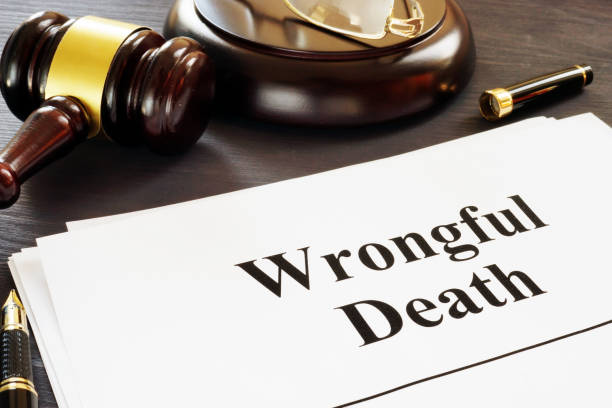
What Is a Wrongful Death Lawsuit?
A wrongful death lawsuit is a legal action that allows surviving family members to seek justice and financial compensation after losing a loved one due to negligence, recklessness, or intentional misconduct. Unlike a criminal case, which punishes wrongdoers, a wrongful death lawsuit is civil in nature and focuses on providing relief for grieving families.
In Ohio, wrongful death cases often stem from:
- Medical malpractice (such as surgical errors or misdiagnoses)
- Car and truck accidents caused by negligent drivers
- Workplace accidents due to unsafe conditions
- Defective products that cause fatal injuries
Who Can File a Wrongful Death Claim in Ohio?
Only the personal representative of the deceased’s estate has the legal authority to file a wrongful death claim in Ohio. This person is typically named in the deceased’s will or appointed by the probate court. Once the claim is filed, compensation is distributed to the deceased’s family members, such as:
- The spouse
- Children
- Parents
- Other dependents
This ensures that the individuals most affected by the loss receive support.
Types of Damages in Wrongful Death Cases
Ohio law allows families to recover damages for both financial and emotional losses. These may include:
- Loss of income and benefits: Replacing the earnings the deceased would have provided.
- Funeral and burial expenses: Covering the immediate costs of laying a loved one to rest.
- Medical expenses: If treatment was provided before death.
- Loss of care, companionship, and guidance: Reflecting the deep personal losses suffered by family members.
- Mental anguish: Acknowledging the profound emotional toll of wrongful death.
Courts recognize that the loss of a loved one extends far beyond financial hardship—it’s about the irreplaceable role that person played in their family’s life.
The Legal Process: What Families Can Expect
Wrongful death claims in Ohio involve several steps:
- Investigation – Gathering evidence, medical records, accident reports, and witness statements.
- Filing the claim – The personal representative formally initiates the lawsuit.
- Expert testimony – Medical experts, accident reconstructionists, or workplace safety experts may testify.
- Negotiation – Many claims settle outside court, but families should be prepared for trial if needed.
Time Limits for Filing a Claim
Ohio law places strict time limits, known as the statute of limitations, on wrongful death lawsuits. Families typically have two years from the date of death to file a claim. Missing this deadline can mean losing the right to seek justice altogether, which makes acting quickly critical.
Why Legal Representation Matters
Wrongful death cases are complex. Families often face:
- Hospitals and doctors denying negligence
- Insurance companies minimizing payouts
- Defendants with large legal teams and resources
Having a knowledgeable wrongful death attorney levels the playing field. A skilled lawyer can build a strong case, negotiate effectively, and fight for the compensation your family deserves.
Seeking Justice and Closure
A wrongful death lawsuit can never replace the person you’ve lost, but it can bring accountability, financial relief, and peace of mind. It allows families to move forward knowing that negligence was addressed and their loved one’s life was honored.
👉 Speak with Buckeye Law Group today to explore your legal options
T-Bone Accidents in Columbus Ohio: Who Is at Fault and What Evidence Matters?
T-bone collisions are often among the most disputed Columbus car accidents because both drivers may tell very different stories about the same intersection. Fault usually depends on who had the
Medical Negligence in Dayton: When a Medical Error May Support an Ohio Malpractice Claim
A bad medical outcome does not always mean a provider committed malpractice, but some errors may support an Ohio medical malpractice claim. For patients and families in Dayton, the key
Fatal Cleveland Bicycle Hit-and-Run: Honoring a Life Lost and Raising Awareness About Roadway Safety
The tragic death of a bicyclist following an October 18, 2026, hit-and-run collision near West 25th Street and Detroit Avenue in Cleveland has left loved ones grieving an irreplaceable loss
Gregory E. Gudin’s $12 Million USAA Insurance Settlement
In 2021, attorney Gregory E. Gudin handled a case involving USAA, one of the nation’s most recognized insurance companies, that resulted in a $12 million settlement. This significant result is
Gregory E. Gudin’s $14.5 Million Progressive Insurance Settlement
Gregory E. Gudin has spent his legal career representing individuals whose cases involve serious financial consequences. Among the significant settlements on his professional portfolio is a $14.5 million settlement involving
Wrongful Death Lawsuits in Columbus, Ohio: Who Can File and What Compensation Is Available?
The wrongful death of a loved one can leave a family facing significant emotional and financial hardships, particularly when the loss results from another party’s negligence. Under Ohio law, surviving
Injured in an Uber Accident in Toledo? Understanding Insurance Coverage and Liability
A Toledo Uber accident can feel more confusing than a typical car crash because several insurance policies may be involved. The most important issue is usually the driver’s app status
Does Renters Insurance Cover Dog Bites in Ohio? What Cleveland Residents Should Know
In Ohio, renters insurance may cover dog bite claims through the policy’s personal liability section, but coverage depends on the policy language, the dog’s history, and any exclusions. Cleveland renters
How Uninsured Motorist Coverage Works After a Car Accident in Dayton, Ohio
A crash with an uninsured or underinsured driver can turn an ordinary Dayton commute into a confusing insurance problem. Uninsured motorist coverage helps protect you when the at-fault driver has
Whiplash Symptoms After a Cleveland Car Accident: What Injured Drivers Should Know
Whiplash is one of the most common neck injuries people worry about after a car accident, especially after a rear-end collision. For Cleveland drivers, the challenge is that auto accident
Buckeye Law Group represents people injured in auto accidents, slip and falls, workplace accidents and more in Ohio. Contact us today to learn more.
© 2026 All Rights Reserved | The Buckeye Law Group Inc. Privacy Policy Sitemap
Office Locations
- Akron Office 388 S Main St #400 Akron, OH 44311 (330) 426-0288
- Cincinnati Office 201 E 5th St Ste 1910 Cincinnati, OH 45202 (513) 547-2445
- Cleveland Office 127 Public Square Ste 1540 Cleveland, OH 44114 (216) 677-5490
- Columbus Office 20 E Broad St Suite 300 Columbus, OH 43215 (614) 482-3793
- Dayton Office 70 Birch Alley Ste 240 Dayton, OH 45440 (937) 884-4474
- Euclid Office 25701 N Lakeland Blvd Suite 113-C, Cleveland, OH 44132 (216) 405-2626
- Mansfield Office 305 E Main St Ste 6A, Mansfield, OH 44904 (567) 210-2606
- Findlay Office 7430 Timberstone Dr unit 101a, Findlay, OH 45840 419-873-5119
- Mentor Office 7537 Mentor Ave Ste 101, Mentor, OH 44060 (440) 306-3536
- Middletown Office 300 N Main St #400, Middletown, OH 45042 (326) 800-9150
- Parma Office 1257 Rockside Rd #A, Parma, OH 44131 (216) 279-1664
- Springfield Office 2100 E High St Ste TL3, Springfield, OH 45505 (937) 806-5791
- Toledo Office 3950 Sunforest Ct Ste 200, Toledo, OH 43623 (567) 483-3883
- Westlake Office 26404 Center Ridge Rd Ste B2, Westlake, OH 44145 216-247-0565
- Whitehall Office 5340 E Main St Ste 203, Whitehall, OH 43213 (380) 257-5206
- Youngstown Office 306 Churchill Hubbard Rd, Youngstown, OH 44505 (234) 225-0683
Contact Us
© 2026 All Rights Reserved | The Buckeye Law Group Inc. Privacy Policy Sitemap