Introduction
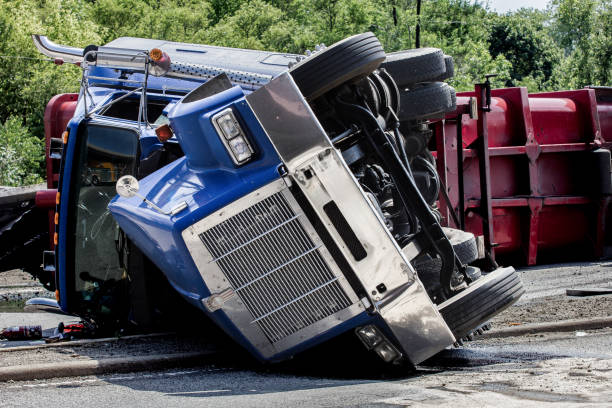
Trucking accidents in Ohio involve complex legal, regulatory, and safety issues. Due to the size and weight of commercial trucks, collisions can result in severe injuries, fatalities, and significant property damage. Understanding Ohio’s legal framework, common causes of truck accidents, and notable cases is essential for victims, families, and legal professionals.
Trucking accidents are distinct from standard auto accidents due to federal regulations, commercial insurance requirements, and specialized liability issues. Buckeye Law Group emphasizes fact-based, neutral analysis to help individuals navigate these complex cases.
Key Statistics and Trends
Statewide Crash Data
According to the Ohio Department of Public Safety, in 2022, commercial truck-involved crashes totaled 8,234, resulting in 312 fatalities and 2,578 serious injuries. Single-vehicle crashes accounted for 26% of these accidents, while multi-vehicle crashes involving passenger cars represented 74%.
Source: Ohio Department of Public Safety Traffic Safety Bulletin, 2023
Common Truck Accident Causes
- Driver Fatigue: Long driving hours can impair reaction time and judgment.
- Distracted Driving: Use of phones, GPS devices, or other distractions contributes to accidents.
- Improper Loading: Overloaded or improperly secured cargo increases rollover or jackknife risks.
- Speeding and Aggressive Driving: Trucks involved in speeding are more likely to cause severe accidents.
- Mechanical Failures: Brake malfunctions, tire blowouts, or suspension failures often lead to collisions.
Source: Federal Motor Carrier Safety Administration, Large Truck Crash Facts 2022
Driver Demographics
Data shows that commercial truck drivers aged 25-44 account for 57% of crashes, and 76% of truck accidents involve drivers with less than five years of experience. These statistics highlight the critical role of training and regulatory compliance in preventing accidents.
Source: National Highway Traffic Safety Administration, Truck Safety Data
Legal Framework in Ohio
Statute of Limitations
Ohio law allows two years from the date of the accident for filing personal injury claims arising from trucking accidents. For wrongful death claims, the period begins from the date of death. Adhering to these deadlines is essential to preserve legal rights.
Source: Ohio Revised Code § 2305.10
Liability Considerations
Truck accidents often involve multiple liable parties, including:
- Truck drivers
- Trucking companies/employers
- Vehicle manufacturers (for defects)
- Cargo loaders (for improper loading)
Ohio uses a modified comparative fault system, meaning plaintiffs can recover damages if they are less than 50% at fault. Compensation is reduced proportionally based on the plaintiff’s share of fault.
Source: Flickinger Legal Group, Trucking Accident Liability
Federal Regulations
Commercial truck drivers and companies must comply with Federal Motor Carrier Safety Regulations (FMCSRs), including limits on driving hours, drug and alcohol testing, vehicle maintenance standards, and logbook requirements. Violations of these regulations often play a key role in determining liability in Ohio trucking accidents.
Source: Federal Motor Carrier Safety Administration
Notable Cases and Legal Precedents
Multi-Vehicle Accident in Columbus
In 2024, a multi-vehicle collision involving a semi-truck and several passenger cars in Columbus resulted in five fatalities and seven serious injuries. The investigation revealed that the truck driver had exceeded federal driving hours, violating FMCSA regulations. The case underscored the intersection of state and federal law in determining liability and damages.
Source: Columbus Dispatch, Truck Accident Coverage 2024
Wrongful Death Verdicts
Ohio courts have awarded substantial settlements in wrongful death cases involving commercial trucks. For instance, a 2023 case involving a truck rollover on I-71 resulted in a $6.8 million verdict for the victims’ families, reflecting both economic losses and non-economic damages such as pain and suffering.
Source: Cleveland Plain Dealer, Truck Accident Settlement 2023
Insurance and Financial Considerations
Commercial trucking insurance is subject to federal minimum coverage requirements, but actual coverage often exceeds these limits, particularly for large carriers. Policies typically cover liability, cargo, and physical damage, but victims may also pursue claims against multiple parties. Buckeye Law Group emphasizes the importance of working with experienced attorneys to navigate complex insurance negotiations and maximize compensation.
Conclusion
Trucking accidents in Ohio present unique challenges due to vehicle size, regulatory oversight, and multiple liable parties. Victims must act promptly to file claims, gather evidence, and understand liability rules. Buckeye Law Group provides neutral, detailed guidance for those affected, focusing on factual legal analysis and independent research to help navigate these cases effectively.
Sources
- Ohio Department of Public Safety, Traffic Safety Bulletin 2023
- Federal Motor Carrier Safety Administration, Large Truck Crash Facts 2022
- National Highway Traffic Safety Administration, Truck Safety Data
- Ohio Revised Code § 2305.10
- Flickinger Legal Group, Trucking Accident Liability
- Columbus Dispatch, Truck Accident Coverage 2024
- Cleveland Plain Dealer, Truck Accident Settlement 2023
- Federal Motor Carrier Safety Administration, Regulations
- Insurance Information Institute, Commercial Vehicle Coverage
- Ohio Trucking Association, Safety and Compliance
T-Bone Accidents in Columbus Ohio: Who Is at Fault and What Evidence Matters?
T-bone collisions are often among the most disputed Columbus car accidents because both drivers may tell very different stories about the same intersection. Fault usually depends on who had the
Medical Negligence in Dayton: When a Medical Error May Support an Ohio Malpractice Claim
A bad medical outcome does not always mean a provider committed malpractice, but some errors may support an Ohio medical malpractice claim. For patients and families in Dayton, the key
Fatal Cleveland Bicycle Hit-and-Run: Honoring a Life Lost and Raising Awareness About Roadway Safety
The tragic death of a bicyclist following an October 18, 2026, hit-and-run collision near West 25th Street and Detroit Avenue in Cleveland has left loved ones grieving an irreplaceable loss
Gregory E. Gudin’s $12 Million USAA Insurance Settlement
In 2021, attorney Gregory E. Gudin handled a case involving USAA, one of the nation’s most recognized insurance companies, that resulted in a $12 million settlement. This significant result is
Gregory E. Gudin’s $14.5 Million Progressive Insurance Settlement
Gregory E. Gudin has spent his legal career representing individuals whose cases involve serious financial consequences. Among the significant settlements on his professional portfolio is a $14.5 million settlement involving
Wrongful Death Lawsuits in Columbus, Ohio: Who Can File and What Compensation Is Available?
The wrongful death of a loved one can leave a family facing significant emotional and financial hardships, particularly when the loss results from another party’s negligence. Under Ohio law, surviving
Injured in an Uber Accident in Toledo? Understanding Insurance Coverage and Liability
A Toledo Uber accident can feel more confusing than a typical car crash because several insurance policies may be involved. The most important issue is usually the driver’s app status
Does Renters Insurance Cover Dog Bites in Ohio? What Cleveland Residents Should Know
In Ohio, renters insurance may cover dog bite claims through the policy’s personal liability section, but coverage depends on the policy language, the dog’s history, and any exclusions. Cleveland renters
How Uninsured Motorist Coverage Works After a Car Accident in Dayton, Ohio
A crash with an uninsured or underinsured driver can turn an ordinary Dayton commute into a confusing insurance problem. Uninsured motorist coverage helps protect you when the at-fault driver has
Whiplash Symptoms After a Cleveland Car Accident: What Injured Drivers Should Know
Whiplash is one of the most common neck injuries people worry about after a car accident, especially after a rear-end collision. For Cleveland drivers, the challenge is that auto accident
Buckeye Law Group represents people injured in auto accidents, slip and falls, workplace accidents and more in Ohio. Contact us today to learn more.
© 2026 All Rights Reserved | The Buckeye Law Group Inc. Privacy Policy Sitemap
Office Locations
- Akron Office 388 S Main St #400 Akron, OH 44311 (330) 426-0288
- Cincinnati Office 201 E 5th St Ste 1910 Cincinnati, OH 45202 (513) 547-2445
- Cleveland Office 127 Public Square Ste 1540 Cleveland, OH 44114 (216) 677-5490
- Columbus Office 20 E Broad St Suite 300 Columbus, OH 43215 (614) 482-3793
- Dayton Office 70 Birch Alley Ste 240 Dayton, OH 45440 (937) 884-4474
- Euclid Office 25701 N Lakeland Blvd Suite 113-C, Cleveland, OH 44132 (216) 405-2626
- Mansfield Office 305 E Main St Ste 6A, Mansfield, OH 44904 (567) 210-2606
- Findlay Office 7430 Timberstone Dr unit 101a, Findlay, OH 45840 419-873-5119
- Mentor Office 7537 Mentor Ave Ste 101, Mentor, OH 44060 (440) 306-3536
- Middletown Office 300 N Main St #400, Middletown, OH 45042 (326) 800-9150
- Parma Office 1257 Rockside Rd #A, Parma, OH 44131 (216) 279-1664
- Springfield Office 2100 E High St Ste TL3, Springfield, OH 45505 (937) 806-5791
- Toledo Office 3950 Sunforest Ct Ste 200, Toledo, OH 43623 (567) 483-3883
- Westlake Office 26404 Center Ridge Rd Ste B2, Westlake, OH 44145 216-247-0565
- Whitehall Office 5340 E Main St Ste 203, Whitehall, OH 43213 (380) 257-5206
- Youngstown Office 306 Churchill Hubbard Rd, Youngstown, OH 44505 (234) 225-0683
Contact Us
© 2026 All Rights Reserved | The Buckeye Law Group Inc. Privacy Policy Sitemap