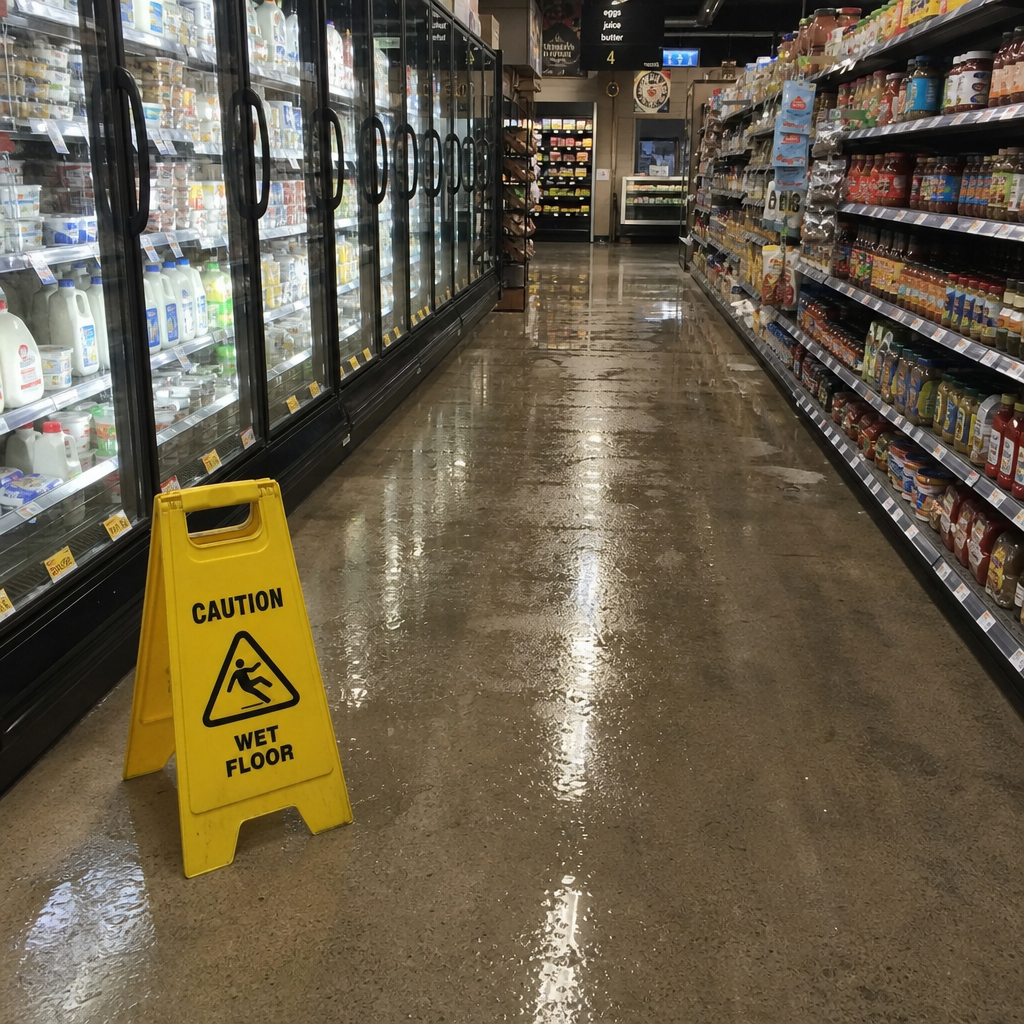
How to prove liability in a Toledo slip and fall accident comes down to evidence: what caused the fall, who controlled the property, what they knew or should have known, and how the injury changed your life. A fall in a grocery store, apartment building, parking lot, restaurant, workplace-adjacent property, or public-facing business can feel embarrassing at first, but your slip and fall rights matter. This guide explains the practical pieces of a Toledo premises liability claim and the steps that can help protect a potential case.
Call (567) 483-3883 or request a free consultation to speak with a Toledo slip and fall injury lawyer at Buckeye Law Group.
What must you prove after a Toledo slip and fall?
To prove a Toledo slip and fall claim, you generally need to show that a dangerous condition existed, the property owner or responsible party had a legal duty to address it, that party failed to use reasonable care, and the fall caused measurable harm. It is not enough to say you fell on someone else’s property; you need facts connecting the hazard to the injury and connecting the hazard to the property owner’s responsibility.
Ohio personal injury claims involving bodily injury generally must be filed within two years after the injury occurs, although specific facts can affect deadlines and strategy. That makes early documentation important, even if you are still waiting to learn the full extent of your medical recovery. Ohio also uses a comparative fault rule: if the injured person’s fault is not greater than the combined fault of others, damages may be reduced in proportion to the injured person’s share of fault. For Toledo personal injury cases, the central question is usually practical: can you prove the property condition was unreasonably unsafe and that the responsible party had a fair chance to prevent the harm?
Liability starts with the dangerous condition
A slip and fall case begins with identifying exactly what caused the fall. “I slipped” is a starting point, not the evidence. A stronger claim names the condition: spilled liquid, tracked-in snow, untreated ice, loose flooring, uneven pavement, torn carpet, poor lighting, missing handrails, hidden step-downs, cluttered walkways, leaking refrigeration units, or recently mopped floors without warnings.
The more specific the hazard, the easier it becomes to investigate who created it, how long it existed, and whether reasonable safety steps were missing. A Toledo slip and fall lawyer will often look for details such as store inspection logs, cleaning schedules, maintenance requests, prior complaints, incident reports, photographs, surveillance footage, and witness accounts. Useful evidence may include:
- Photos and Video: Capture the hazard, the wider area, lighting, warning signs or the lack of signs, footwear, weather conditions, and visible injuries.
- Incident Reports: Ask the property manager, store employee, landlord, or business owner to document the event.
- Witness Information: Get names and contact details from anyone who saw the fall or noticed the hazard before it happened.
- Medical Records: Seek care promptly and explain how the fall occurred so the record connects the injury to the incident.
- Preserved Items: Keep the shoes and clothing you wore, especially if a substance, defect, or traction issue may become relevant.
- Timeline Notes: Write down when you arrived, when you fell, who responded, what was said, and whether the condition appeared old, recurring, or freshly created.
Small details can matter. A dirty puddle may suggest it sat long enough for foot traffic to pass through it. A cone placed far away from the actual hazard may raise questions about whether the warning was adequate. A recurring leak near a freezer may show the problem was not a surprise.
The property owner’s knowledge matters
In many Toledo premises liability cases, one of the hardest issues is notice. The injured person may need to show that the owner, tenant, manager, maintenance company, or employee knew about the danger or should have discovered it through reasonable care.
There are several ways this issue may develop. If an employee spills something and walks away, the business may have actual knowledge because its own worker created the hazard. If a customer spills a drink and another customer falls seconds later, proving liability may be harder unless the business had other warning signs or failed procedures. If a roof leak has caused puddles in the same entryway for weeks, prior maintenance requests or employee testimony could become powerful evidence. A slip and fall injury attorney may investigate:
- Who controlled the area: Responsibility may rest with a store, landlord, tenant, property management company, snow removal contractor, maintenance vendor, or another party.
- How the hazard appeared: A newly broken bottle, long-standing flooring defect, recurring leak, or untreated icy walkway can each point to different evidence.
- How long the hazard existed: Video footage, witness statements, inspection logs, and the condition of the hazard can help establish timing.
- What safety procedures existed: Written policies are useful only if employees actually followed them.
- Whether similar problems happened before: Prior complaints, repairs, or incident reports may show the danger was foreseeable.
This is why waiting can hurt a claim. Surveillance video may be overwritten, employees may move on, weather may change, and repairs may erase the condition before it is photographed.
How do Ohio slip and fall laws affect your case?
Ohio slip and fall laws affect your case by shaping what duty the property owner owed, what defenses may apply, and how fault may be divided. One important Ohio rule is the “open and obvious” doctrine: the Supreme Court of Ohio has held that when a danger is open and obvious, a landowner owes no duty of care to individuals lawfully on the premises. That rule can be a major defense in a Toledo slip and fall case. A property owner may argue that the hazard was so visible that a reasonable person should have seen and avoided it. The injured person may respond by showing that the danger was not truly obvious, that lighting or distractions affected visibility, that the hazard blended into the surroundings, or that the circumstances made avoidance unreasonable.
Open and obvious arguments are fact-specific. A bright orange cone in front of a large puddle may be different from clear liquid on a glossy floor. A raised sidewalk edge in daylight may be different from the same defect in a poorly lit entrance. A Toledo personal injury attorney can help evaluate whether the evidence supports a response to this defense. Comparative fault can also affect recovery. If the defense claims you were rushing, looking at your phone, wearing unsafe footwear, ignoring warnings, or walking in a restricted area, the available evidence may determine whether that argument gains traction. Under Ohio’s comparative fault statute, damages can be reduced by the plaintiff’s percentage of fault when recovery is allowed.
Strong evidence connects the fall to the injury
Liability is only part of the claim. You also need to prove damages. Medical records, diagnostic testing, treatment plans, work restrictions, physical therapy notes, prescriptions, and provider opinions can help show what injuries the fall caused and how serious they are. Do not assume pain will “speak for itself.” Insurance adjusters often look for gaps in treatment, inconsistent histories, prior injuries, and delays in seeking care. If your knee, hip, wrist, back, shoulder, neck, or head hurt after the fall, tell your medical provider when symptoms started and how they affect daily activities. Practical damage documentation can include:
- Medical bills and insurance statements showing treatment costs.
- Work records showing missed time, reduced hours, or job limitations.
- A recovery journal noting pain levels, mobility problems, sleep disruption, and tasks you cannot perform.
- Photos of bruising, swelling, casts, braces, stitches, or mobility aids as recovery progresses.
- Receipts for related expenses such as transportation, medication, medical equipment, or home assistance.
The goal is not to exaggerate. The goal is to create a clear, consistent record so the responsible party cannot dismiss the injury as minor, unrelated, or unsupported.
Common mistakes can weaken a valid claim
After a fall, people often try to be polite, leave quickly, or avoid making a scene. That reaction is understandable, but it can make a legitimate claim harder to prove. A business may later argue there was no hazard, no notice, no injury, or no connection between the property and your medical condition. Avoid these common mistakes:
- Leaving without reporting the fall: Report it before you leave if you can, and ask how to obtain a copy of the incident record.
- Failing to photograph the scene: Conditions can change within minutes.
- Giving a recorded statement too soon: You may not yet know the full facts or the full extent of your injuries.
- Posting about the accident online: Photos, check-ins, and comments can be taken out of context.
- Ignoring medical advice: Missed appointments and untreated symptoms can be used against you.
- Assuming the insurance company is neutral: The insurer’s role is to evaluate exposure for the insured party, not to build your case for you.
If you are unsure what to say after a fall, keep it simple and factual. Identify where you fell, what caused it if you know, what hurts, and who witnessed it. Avoid guessing about details you do not know.
When a Toledo slip and fall attorney can help
A Toledo slip and fall attorney can help when the injury is serious, liability is disputed, evidence is at risk, or an insurance company is pushing for a quick statement or settlement. Legal help can be especially important when the fall happened at a commercial property, apartment complex, medical facility, government-related location, construction-adjacent area, or parking lot with snow and ice issues.
A Toledo slip and fall lawyer may send preservation letters, request video, identify all potentially responsible parties, analyze Ohio defenses, gather medical proof, and calculate losses. A Toledo personal injury attorney can also help you avoid undervaluing future treatment, wage loss, and long-term limitations. Before a consultation, gather anything you already have:
- Date, time, and exact location of the fall.
- Photos or videos of the hazard and injuries.
- Names of employees, managers, witnesses, or responders.
- Medical records, discharge papers, and appointment lists.
- Incident report numbers or claim numbers.
- Communications from insurers or property representatives.
- Shoes and clothing worn during the fall.
You do not need a perfect file before asking questions. A focused conversation with a slip injury attorney can clarify whether the missing evidence may still be available and what deadlines may apply.
The key takeaway for protecting your slip and fall rights
The strongest Toledo premises liability claims are built early, with clear evidence of the hazard, notice, causation, and damages. If you fell on someone else’s property, document the scene, report the incident, get medical care, preserve records, and be cautious with insurance communications. Slip and fall laws can be technical, especially when open and obvious defenses or comparative fault arguments appear. If your injuries are more than minor or the property owner denies responsibility, speaking with a Toledo personal injury attorney can help you understand your options and protect your rights before evidence disappears.
Call (567) 483-3883 or request a free consultation to speak with a Toledo slip and fall injury lawyer at Buckeye Law Group.
*This article provides general information about how Toledo slip and fall attorneys may assist injured individuals with premises liability claims, insurance negotiations, and legal matters following an accident on another person’s property in Toledo, Ohio. It is intended for educational purposes only and does not constitute legal advice. Reading this article or contacting Buckeye Law Group does not, by itself, establish an attorney-client relationship. Slip and fall claims in Toledo and throughout Lucas County may involve hazardous property conditions, disputed liability, property owner negligence, medical expenses, lost income, and applicable filing deadlines. Evaluating a premises liability claim requires examining the circumstances of the accident, the injured person’s legal status on the property, and the property owner’s responsibilities under Ohio law. Relevant evidence may include incident reports, photographs, surveillance footage, witness statements, maintenance records, and medical documentation. A Toledo slip and fall attorney may help injured individuals understand their legal rights, investigate potentially negligent property conditions, evaluate settlement offers, communicate with insurance companies, and address disputes concerning liability or compensation.*
Does Homeowners Insurance Cover Dog Bite Injuries in Cincinnati?
Homeowners insurance often provides coverage for dog bite injuries in Cincinnati, Ohio. However, coverage is not guaranteed. Whether an insurance policy covers a particular incident depends on its liability provisions,
Who Is Responsible for a Multi-Vehicle Car Accident on I-480 Near Cleveland?
A multi-vehicle crash on I-480 can feel chaotic from the first second: traffic stops, drivers swerve, several insurers get involved, and everyone has a different version of what happened. Responsibility
How to prove liability in a Toledo slip and fall accident
How to prove liability in a Toledo slip and fall accident comes down to evidence: what caused the fall, who controlled the property, what they knew or should have known,
How Long Does a Car Accident Settlement Take in Toledo Ohio?
If you were hurt in a crash in Toledo, the settlement timeline depends on the injury, the insurance coverage, the evidence, and whether the insurer accepts responsibility. A straightforward claim
PTSD After a Columbus Car Accident: Can Psychological Injuries Support Compensation?
A Columbus car accident can cause more than physical injuries. The psychological effects of a serious collision may persist long after visible injuries have healed. Individuals may experience recurring nightmares,
Can You Recover Compensation After a Motorcycle Accident in Dayton if You Were Not Wearing a Helmet?
A missing helmet does not automatically prevent an injured rider from seeking compensation after a motorcycle crash in Dayton. Ohio law looks at who caused the collision, whether the rider
Who Can File a Wrongful Death Lawsuit in Toledo, Ohio?
When someone dies as a result of another person’s negligence, recklessness, or wrongful conduct, Ohio law may allow surviving family members to seek compensation through a civil claim known as
Who Is Liable After a Commercial Truck Accident on I-75 Near Dayton?
A commercial truck crash on I-75 near Dayton can involve more than one responsible party. The driver may be part of the story, but truck accident liability often turns on
What Happens When a Pedestrian Is Hit by a Car in Downtown Dayton?
When a pedestrian is hit by a car in downtown Dayton, the first priorities are medical care, safety, and creating a clear record of what happened. After the scene is
How Do You Prove a Slip and Fall Injury Claim in Dayton, Ohio?
A slip and fall injury claim in Dayton, Ohio, usually comes down to evidence: what dangerous condition caused the fall, who was responsible for the property, whether they knew or
Buckeye Law Group represents people injured in auto accidents, slip and falls, workplace accidents and more in Ohio. Contact us today to learn more.
© 2026 All Rights Reserved | The Buckeye Law Group Inc. Privacy Policy Sitemap
Office Locations
- Akron Office 388 S Main St #400 Akron, OH 44311 (330) 426-0288
- Cincinnati Office 201 E 5th St Ste 1910 Cincinnati, OH 45202 (513) 547-2445
- Cleveland Office 127 Public Square Ste 1540 Cleveland, OH 44114 (216) 677-5490
- Columbus Office 20 E Broad St Suite 300 Columbus, OH 43215 (614) 482-3793
- Dayton Office 70 Birch Alley Ste 240 Dayton, OH 45440 (937) 884-4474
- Euclid Office 25701 N Lakeland Blvd Suite 113-C, Cleveland, OH 44132 (216) 405-2626
- Mansfield Office 305 E Main St Ste 6A, Mansfield, OH 44904 (567) 210-2606
- Findlay Office 7430 Timberstone Dr unit 101a, Findlay, OH 45840 419-873-5119
- Mentor Office 7537 Mentor Ave Ste 101, Mentor, OH 44060 (440) 306-3536
- Middletown Office 300 N Main St #400, Middletown, OH 45042 (326) 800-9150
- Parma Office 1257 Rockside Rd #A, Parma, OH 44131 (216) 279-1664
- Springfield Office 2100 E High St Ste TL3, Springfield, OH 45505 (937) 806-5791
- Toledo Office 3950 Sunforest Ct Ste 200, Toledo, OH 43623 (567) 483-3883
- Westlake Office 26404 Center Ridge Rd Ste B2, Westlake, OH 44145 216-247-0565
- Whitehall Office 5340 E Main St Ste 203, Whitehall, OH 43213 (380) 257-5206
- Youngstown Office 306 Churchill Hubbard Rd, Youngstown, OH 44505 (234) 225-0683
Contact Us
© 2026 All Rights Reserved | The Buckeye Law Group Inc. Privacy Policy Sitemap