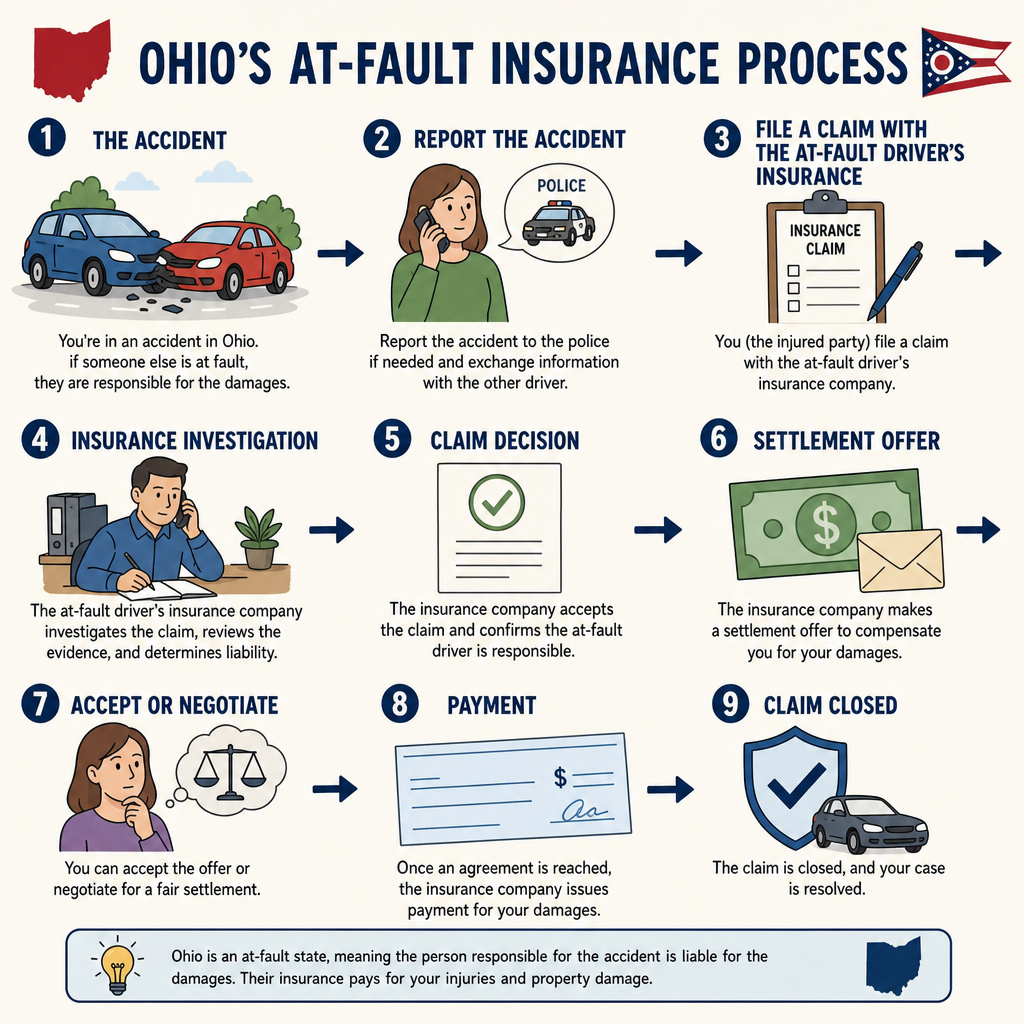
Navigating car accident medical bills in Ohio can feel overwhelming. Because Ohio follows an at-fault insurance system, the responsible driver may ultimately be liable for accident-related medical expenses. However, their insurer may not pay bills as treatment occurs. Health insurance, optional medical payments coverage (MedPay), or other available benefits may provide initial payment.
Responsibility for car accident medical bills depends on several factors, including available insurance coverage, proof of fault, injury documentation, and the at-fault driver’s financial resources. Medical records, invoices, and insurance correspondence can help establish the value of a claim. An experienced Ohio personal injury attorney can explain your options, address medical liens, and pursue fair compensation. This guide examines how Ohio accident victims can manage medical expenses and protect their legal rights.
Understanding Ohio’s At-Fault Insurance System and Car Accident Medical Bills
Managing car accident medical bills in Ohio begins with understanding the state’s at-fault insurance system. The driver whose negligence caused the crash may be liable for resulting injuries and property damage. Their liability insurance may reimburse covered losses up to the policy limits. However, the insurer may not pay medical providers while treatment is ongoing. If fault is disputed, compensation may be delayed. Preserve the police report, medical records, bills, photographs, witness information, and related receipts. This evidence can connect your injuries and expenses to the collision.
Ohio’s minimum bodily injury liability limits are $25,000 per person and $50,000 per accident. These limits may not cover losses from a serious crash. MedPay, health insurance, and uninsured or underinsured motorist coverage may provide additional protection, depending on the policy. An experienced Ohio car accident attorney can review available coverage, document damages, and pursue fair compensation.
Who Is Responsible for Car Accident Medical Bills in Ohio?
In Ohio, the at-fault driver’s liability insurance may ultimately cover your car accident medical bills. However, payment can be delayed while the insurer investigates fault, injuries, and treatment costs. During this process, your health insurance or Medical Payments Coverage may pay eligible expenses, subject to policy terms. Those insurers may later seek reimbursement from a settlement. Promptly notify each insurer and maintain complete medical and billing records. Potential sources of payment include:
- The at-fault driver’s liability insurance.
- Your own health insurance.
- Optional Medical Payment Coverage (MedPay).
MedPay is additional coverage you might have. It helps pay medical bills immediately, regardless of fault. This can reduce financial stress while claims are settled.
The Role of Health Insurance and MedPay in Ohio
Health insurance can be a vital resource for managing car accident medical bills in Ohio. It may cover treatment promptly, reducing immediate financial pressure while a liability claim is pending. However, your health insurer may later seek reimbursement from any settlement or payment made by the at-fault driver’s insurer. Optional Medical Payments coverage, commonly called MedPay, may also help pay reasonable accident-related medical expenses for you and your passengers, regardless of fault and subject to policy limits. This coverage can provide faster access to benefits while your claim is being investigated. Key aspects of MedPay include:
- Coverage for medical expenses regardless of fault.
- Payment for hospital visits, surgeries, and other treatments.
- Protection against immediate out-of-pocket expenses.
What Happens If the At-Fault Driver Is Uninsured or Underinsured?
In Ohio, an at-fault driver may lack enough insurance to cover your car accident medical bills and other losses. Prompt action can help protect your claim. Depending on your policy, uninsured/underinsured motorist coverage may provide compensation when the responsible driver has no insurance or insufficient limits. Consider these steps if the at-fault driver is uninsured or underinsured:
- Review your auto insurance policy for coverage details.
- Promptly inform your insurer about the accident.
- Consult an attorney if necessary to explore legal options.
Being prepared can mitigate the financial impact of such accidents.
Navigating Insurance Claims and Subrogation
Dealing with insurance claims and car accident medical bills can feel overwhelming after an Ohio collision. Understanding the claims process is essential to protecting your rights and pursuing fair compensation. Detailed medical records, invoices, and insurance correspondence can strengthen your claim. Your health insurer may initially pay your treatment costs but later seek reimbursement from the at-fault driver’s insurer through subrogation. To navigate insurance claims and subrogation effectively, consider these steps:
- Gather and organize all medical bills and accident-related documents.
- Communicate clearly with insurance adjusters and follow their guidelines.
- Keep detailed records of communication with all involved parties.

Out-of-Pocket Costs and Managing Medical Debt in Ohio
After a car accident in Ohio, you may face out-of-pocket expenses, particularly when the at-fault driver’s insurance does not provide enough coverage. Managing car accident medical bills is essential to protecting your financial stability. Promptly contact your healthcare providers to explain your circumstances. They may offer payment plans, financial assistance, or temporary billing arrangements while your insurance claim remains pending. Consider these strategies to manage your medical debt:
- Negotiate bill payments or request discounts.
- Check if you qualify for any financial aid programs.
- Prioritize and pay bills systematically to avoid collections.
Tackling medical debt proactively helps in protecting your credit score and financial future.
Protecting Your Credit and Financial Stability
After a car accident, unpaid medical bills can harm your credit. To prevent this, ensure timely payments. Communication with providers is key to managing debt effectively. Here are steps to protect your credit and finances:
- Review medical bills for errors before payment.
- Set up automatic payments to avoid missing deadlines.
- Contact creditors to discuss alternative payment options if needed.
Being proactive helps maintain a healthy credit score and financial well-being.
Steps to Take After a Car Accident to Protect Your Rights
After a car accident in Ohio, taking prompt action can protect your rights and strengthen a claim for car accident medical bills and other losses. Remain calm, move to a safe location, and contact local law enforcement. Exchange insurance and contact information with all drivers, obtain witness details, and photograph the vehicles, injuries, road conditions, and surrounding area. Here’s a quick checklist of what to do:
- Exchange insurance information with involved parties.
- Gather witness statements and contact details.
- Take photos of vehicle damage and the accident scene.
- After 911, Call 1-800-411-7246
Always seek medical attention, even for minor injuries. This ensures your health and documents injuries for claims.

by Luke Miller
When to Consult a Personal Injury Attorney
Car accidents in Ohio can create complex legal and financial challenges. If you are struggling with car accident medical bills, delayed insurance payments, or a denied claim, consulting an experienced personal injury attorney may help. An attorney can evaluate your coverage, preserve critical evidence, protect your rights, and pursue the compensation you deserve available under Ohio law.
Frequently Asked Questions About Car Accident Medical Bills in Ohio
Who covers initial medical expenses after an accident? After an Ohio car accident, initial car accident medical bills may be paid through health insurance or available Medical Payments (MedPay) coverage. The at-fault party’s insurer typically does not pay these expenses as they arise. An experienced Ohio personal injury attorney can review applicable coverage, protect your rights, and pursue compensation for accident-related medical costs.
Is Personal Injury Protection (PIP) available in Ohio? No. Ohio is an at-fault state and does not require Personal Injury Protection (PIP). Instead, drivers may purchase optional Medical Payments coverage, or MedPay, to help cover car accident medical bills regardless of fault. An experienced Ohio personal injury attorney can review the available policies and identify potential sources of compensation. Ohio Department of Insurence
What happens if the at-fault driver’s insurance refuses to pay? If the at-fault driver’s insurer refuses to pay your car accident medical bills, request the denial in writing. Preserve your medical records, crash report, photographs, and witness information. An Ohio personal injury attorney can challenge the denial, negotiate with the insurer, review available UM/UIM coverage, and file a lawsuit within the applicable deadline to protect your claim.
Can I negotiate my medical bills? Yes. Ohio patients managing car accident medical bills may request itemized statements, dispute errors, apply for financial assistance, or negotiate payment plans or reduced balances. An Ohio personal injury attorney may also seek reductions of eligible bills or medical liens during the claims process. Results depend on the provider and circumstances of each case. CMS Guidance
Navigating Medical Bills After an Ohio Car Accident
Managing car accident medical bills can feel overwhelming. Understanding Ohio’s at-fault insurance system is essential when pursuing compensation. Health insurance, MedPay, and the at-fault driver’s liability coverage may help address your expenses. Keep detailed records and review your policy carefully. If payment is delayed or disputed, consult an experienced Ohio personal injury attorney to protect your rights and determine your legal options. Taking informed, timely action can help you manage medical debt and reduce financial pressure after an accident in Cleveland, Columbus, Cincinnati, Toledo, Dayton, Akron, and the surrounding areas.
Cleveland Premises Liability Lawyers: Understanding Property Injury Claims in Ohio
How Cleveland Premises Liability Lawyers Evaluate Property Injury Claims Under Ohio Law A serious injury on someone else’s property can raise immediate questions about medical bills, responsibility, and your next
How Long Does an Auto Accident Settlement Take in Ohio? A Guide to the Claims Process
Ohio Auto Accident Settlement Timeline: What to Expect From Claim to Payout An Ohio auto accident settlement can move quickly when injuries are minor, liability is clear, and records are
How Buckeye Law Group’s Slip and Fall Injury Lawyers Help Injured Ohioans Understand Their Legal Options
Ohio Slip and Fall Injury Lawyers Helping You Understand Your Rights After a Serious Injury A slip and fall can turn an ordinary trip to a store, apartment building, workplace,
How Can an Ohio Truck Accident Lawyer Help You Protect Your Rights After a Commercial Truck Crash?
Legal Guidance After an Ohio Truck Accident: How an Ohio Truck Accident Lawyer Can Support Your Claim A truck accident lawyer from Buckeye Law Group can help injured individuals and
Should You Accept An Insurance Settlement Offer? Why Ohio Injury Victims Should Speak With An Attorney First
After an accident, an insurance settlement offer may provide welcome financial relief while medical bills and lost wages continue to accumulate. However, accepting an offer before the full extent of
What Should You Do After a Pedestrian Accident Near Ohio State University in Columbus?
A pedestrian accident near Ohio State University can leave you hurt, disoriented, and unsure what to do next. In the OSU area, where student foot traffic, Uber & Lyft rideshare
How Do I Choose the Right Dog Bite Lawyer in Columbus, Ohio?
If you were bitten or otherwise injured by a dog in central Ohio, the right lawyer can help determine liability, preserve evidence, communicate with insurance companies, and pursue fair compensation
How to Choose the Right Columbus Wrongful Death Attorney for Your Family
Losing someone because of another person’s negligence is devastating, and choosing the right legal help can feel overwhelming when your family is already grieving. The best wrongful death attorneys combine
What Must You Prove in an Ohio Medical Malpractice Claim, and How Can a Columbus Medical Malpractice Attorney Help?
An unexpected complication can leave a patient with serious questions. Was the outcome an unavoidable medical risk, or did a preventable error cause additional harm? Not every unsuccessful treatment amounts
Columbus Auto Accident Attorneys: Legal Guidance for Injured Drivers in Central Ohio
A serious crash can disrupt every part of your life. Medical expenses, lost income, vehicle repairs, and insurance calls can quickly become overwhelming. The experienced Columbus auto accident attorneys at
Buckeye Law Group represents people injured in auto accidents, slip and falls, workplace accidents and more in Ohio. Contact us today to learn more.
© 2026 All Rights Reserved | The Buckeye Law Group Inc. Privacy Policy Sitemap
Office Locations
- Akron Office 388 S Main St #400 Akron, OH 44311 (330) 426-0288
- Cincinnati Office 201 E 5th St Ste 1910 Cincinnati, OH 45202 (513) 547-2445
- Cleveland Office 127 Public Square Ste 1540 Cleveland, OH 44114 (216) 677-5490
- Columbus Office 20 E Broad St Suite 300 Columbus, OH 43215 (614) 482-3793
- Dayton Office 70 Birch Alley Ste 240 Dayton, OH 45440 (937) 884-4474
- Euclid Office 25701 N Lakeland Blvd Suite 113-C, Cleveland, OH 44132 (216) 405-2626
- Mansfield Office 305 E Main St Ste 6A, Mansfield, OH 44904 (567) 210-2606
- Findlay Office 7430 Timberstone Dr unit 101a, Findlay, OH 45840 419-873-5119
- Mentor Office 7537 Mentor Ave Ste 101, Mentor, OH 44060 (440) 306-3536
- Middletown Office 300 N Main St #400, Middletown, OH 45042 (326) 800-9150
- Parma Office 1257 Rockside Rd #A, Parma, OH 44131 (216) 279-1664
- Springfield Office 2100 E High St Ste TL3, Springfield, OH 45505 (937) 806-5791
- Toledo Office 3950 Sunforest Ct Ste 200, Toledo, OH 43623 (567) 483-3883
- Westlake Office 26404 Center Ridge Rd Ste B2, Westlake, OH 44145 216-247-0565
- Whitehall Office 5340 E Main St Ste 203, Whitehall, OH 43213 (380) 257-5206
- Youngstown Office 306 Churchill Hubbard Rd, Youngstown, OH 44505 (234) 225-0683
Contact Us
© 2026 All Rights Reserved | The Buckeye Law Group Inc. Privacy Policy Sitemap