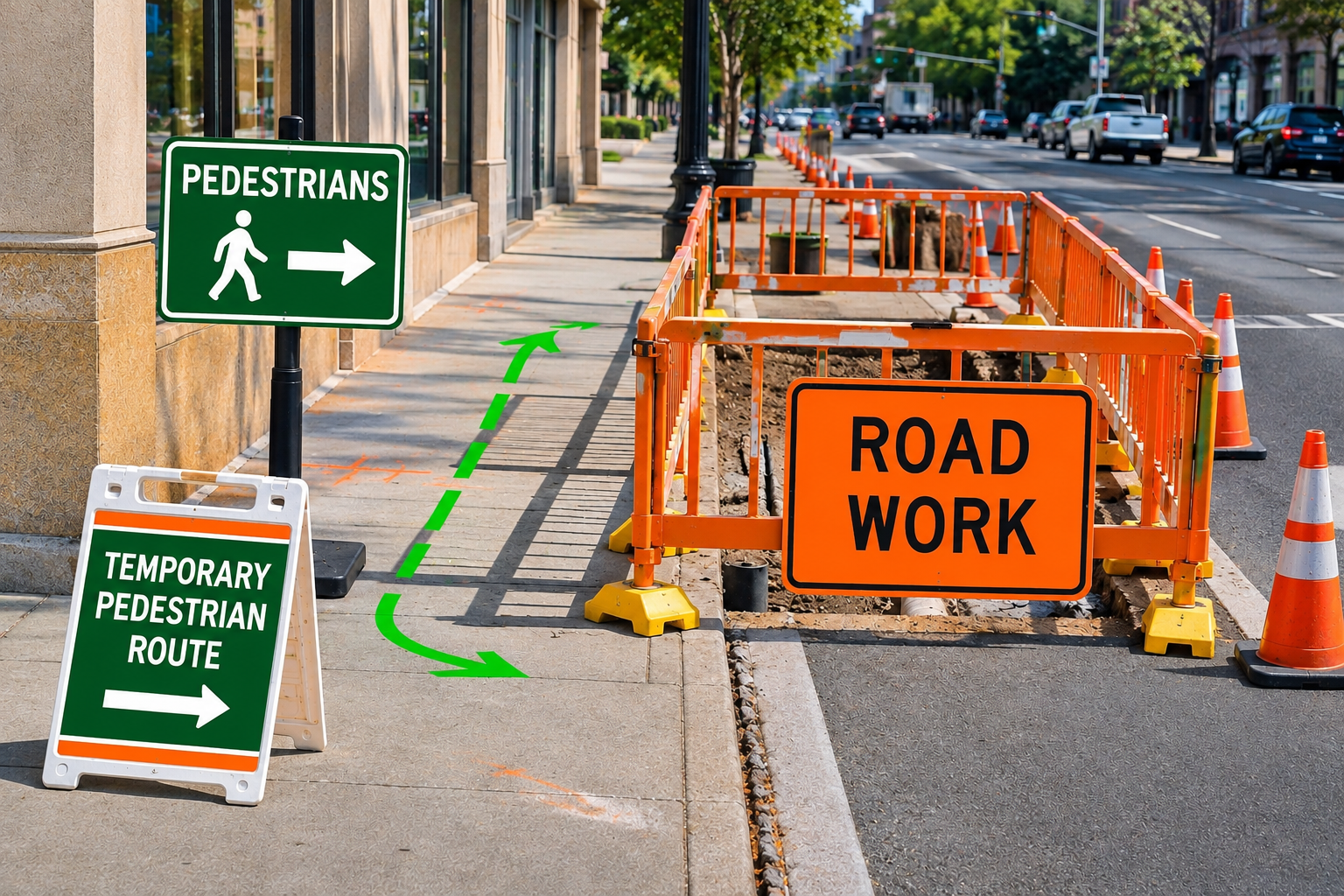
The City of Toledo identifies the Douglas Road and Monroe Street intersection as a 2026 improvement project intended to support pedestrian safety, driver safety, and better pavement conditions. For people traveling through the area, the practical priorities are checking current access information, following posted controls, and allowing time to adjust to unfamiliar roadway conditions. This article explains how drivers, cyclists, and pedestrians can prepare without assuming a particular construction schedule or final layout. (toledo.oh.gov)
Call (567) 483-3883 or request a free consultation today to speak with an experienced Toledo auto accident attorney at Buckeye Law Group.
What should travelers know about the Douglas and Monroe improvements?
The most useful starting point is the City of Toledo’s official project information, followed by the signs and directions encountered on the road. The city describes safety-focused work at this intersection, but this article does not provide project-specific construction dates, dimensions, or engineering details. Check official updates before a trip rather than treating a general overview as a live traffic advisory. (toledo.oh.gov)
The city also describes a larger Monroe Street corridor initiative, which has its own planning process. Information about that wider effort should not be treated as confirmation of the construction sequence or features at Douglas and Monroe. (toledo.oh.gov)
For everyday travel, make a simple plan: check the route before leaving, leave room for delays, and put navigation away before entering the work zone. Federal work-zone guidance emphasizes route research, attention to signs, slower speeds, and extra following distance. Those habits remain useful even when the route is familiar. (fmcsa.dot.gov)
Drivers: look beyond the vehicle ahead
At roadwork sites generally, lane closures, traffic shifts, and reduced speeds can change the approach to an intersection. These are possibilities to prepare for, not a description of the exact arrangement at Douglas and Monroe. Watch the full scene ahead, including warning signs, queues, workers, and vehicles preparing to merge. (fmcsa.dot.gov)
Use this approach checklist:
- Reduce Speed Before Reaching A Queue: Look farther ahead for brake lights instead of reacting only to the nearest bumper.
- Leave Additional Following Space: Make room to slow gradually when traffic stops unexpectedly.
- Follow Posted Lane Directions: Check mirrors and blind spots before moving into an open lane.
- Remove Distractions Early. Set navigation and finish other adjustments before entering the work area. (fmcsa.dot.gov)
Cyclists: prioritize a predictable, usable route
Construction can affect bicycle access as well as motor-vehicle lanes. Ohio transportation guidance addresses bicycle accommodations in work zones and keeping open bikeways clear of construction materials. Before riding through, check whether an announced detour or another suitable route would avoid an uncomfortable or unclear approach. (transportation.ohio.gov)
Ride predictably, travel with traffic, and signal intended movements when safe. Avoid suddenly weaving around an obstruction into an adjacent vehicle’s path. At intersections, watch especially for motorists turning across your direction of travel; do not assume that being alongside a vehicle means its driver has noticed you. (nhtsa.gov)
Pedestrians: check the crossing before committing
Construction may make an otherwise familiar sidewalk or curb ramp unusable. Ohio’s bicycle and pedestrian guidance recognizes construction and missing curb ramps as potential sidewalk barriers. For someone using a wheelchair, walker, stroller, or cane, checking the available route before entering the affected block is especially worthwhile. (transportation.ohio.gov)
Use the designated pedestrian route and look for crossing instructions before stepping off the curb. Continue checking for turning vehicles while crossing, rather than relying solely on a driver’s apparent attention. NHTSA recommends using sidewalks where available, crossing at intersections or crosswalks, and remaining alert to traffic throughout the crossing. (nhtsa.gov)
Common work-zone crash risks
A work zone combines changing traffic patterns with less room for mistakes. Federal safety guidance identifies rear-end crashes as a particular concern and emphasizes the need for extra space. Narrow lanes, sudden stops, uneven surfaces, and traffic shifts also demand more attention than an ordinary approach. (fmcsa.dot.gov)
Watch for these situations:
- A Queue Beyond The Expected Stopping Point: Following too closely leaves little time to respond when vehicles brake.
- A Lane Change Beside Another Vehicle: Check blind spots and establish a clear gap rather than squeezing through.
- A Driver Focused On Signs Instead Of People: Continue scanning the roadside and crossing areas while processing directions.
- A Large Vehicle Maneuvering Nearby: Trucks and buses have limited maneuverability and substantial blind spots; give them space. (fmcsa.dot.gov)
Pedestrian and bicycle conflicts deserve equal attention. A driver turning while looking mainly for gaps in vehicle traffic can overlook someone crossing the intended path. Approach turns slowly, check for people, and avoid treating a clear vehicle lane as proof that the whole intersection is clear. (nhtsa.gov)
After construction: learn the intersection again
Treat the first trips through the completed intersection as opportunities to relearn it. Read the posted signs and follow current markings rather than assuming yesterday’s lane choice or turning path still applies. The city identifies improved safety as a project goal, but that is not a reason to relax attention.
For intersection safety measures generally, the practical rule is straightforward: choose the correct lane early, approach at a manageable speed, and check for people before turning. If you miss a permitted movement, continue to a safe place to reroute instead of making an abrupt correction. Predictability matters more than saving a few seconds.
Bicycle Safety at Toledo’s Douglas Road and Monroe Street Intersection: Navigating Traffic Patterns and Turning Vehicles
After work ends, check the actual route available rather than assuming the project includes a dedicated bicycle facility. This article makes no claim about a particular cycling layout at Douglas and Monroe. Ride according to the signs and signals present, with a clear, predictable line of travel.
Before proceeding alongside a turning vehicle, consider whether its path could cross yours. Drivers should likewise check for cyclists before turning and allow safe passing space. A smoother or more orderly-looking intersection does not remove the need for those checks.
Pedestrians: Use the marked route and stay observant
Locate the crossing entrance, pedestrian signal, and destination curb before starting across. Follow the signals provided and keep watching for turning traffic throughout the movement. Even where improvements aim to make walking safer, pedestrian safety still depends on drivers yielding and everyone remaining attentive. (nhtsa.gov)
Avoid crossing between stopped vehicles or assuming that a stopped vehicle makes adjacent lanes safe. Drivers must not pass vehicles stopped at a crosswalk because someone may be crossing out of view. These checks matter after construction just as much as during it.
Why can a redesigned intersection still require extra caution?
A redesigned intersection still brings together people moving in different directions, including vehicles turning across walking and cycling routes. Improvements do not eliminate those interactions. NHTSA’s safety guidance specifically calls attention to turning conflicts involving pedestrians and cyclists, making careful scanning important regardless of how recently an intersection was updated.
Use three habits on every approach: read the current controls, make your intended movement predictable, and check the path before proceeding. Drivers should slow for turns; cyclists should avoid unexpected movements; pedestrians should remain attentive while crossing. Think of new infrastructure as support for safer decisions, not a substitute for them.
If a crash happens, focus on safety and documentation
Address immediate safety needs first and request emergency assistance when necessary. Ohio’s driver guidance recommends exchanging information with others involved without discussing fault or insurance coverage. Once it is safe, preserve relevant photographs and notes rather than putting yourself in traffic to document the scene.
Consider consulting a Toledo car accident attorney or Toledo auto accident lawyer if injuries, disputed responsibility, or insurance questions make the next steps unclear. A consultation can help you understand your options; it does not promise compensation or a particular outcome. This article is general information, not legal advice, and no guarantees are made.
Toledo and Lucas County Accident Resources: Reporting Crashes and Protecting Your Rights
Following a car or pedestrian accident in Toledo, Ohio, knowing where to obtain official records, report roadway hazards, and access legal resources can help protect your rights.
Local Accident Reporting and Legal Resources
- Toledo Police Department:
- Location: 525 N. Erie St. Toledo, OH 43604
- Call: (419) 255-8443 for non-emergency dispatch
- Call: 911 for emergencies
- Ohio Traffic Crash Reports:
- Search for available accident reports through the Ohio Department of Public Safety. Reports may take several weeks to become available.
- Lucas County Clerk of Courts:
- Location: 700 Adams Street, Toledo, OH 43604
- Call: (419) 213-4484 for Civil Division information, including court filings and records.
- Engage Toledo:
- Call: (419) 936-2020 to report potholes, damaged sidewalks, and other municipal roadway concerns
Documenting an Auto or Pedestrian Accident in Toledo
Whether a collision occurs near Douglas Road and Monroe Street or elsewhere in Lucas County, preserve photographs, witness information, medical records, and available crash reports. Construction zones, temporary pedestrian routes, and roadway conditions may require additional investigation when evaluating negligence.
Staying Informed and Adapting to Changing Traffic Patterns During Toledo Roadway Improvements
As Toledo’s Douglas Road and Monroe Street intersection undergoes improvements in 2026, motorists, cyclists, and pedestrians should remain attentive to changing traffic patterns, temporary lane restrictions, and posted construction signage. Before traveling through the area, review the City of Toledo’s official project updates and allow additional time for potential delays. Drivers should maintain appropriate following distances, reduce speed when conditions warrant, and yield to pedestrians as required by Ohio law. Pedestrians and cyclists should use designated routes and remain alert to temporary changes in traffic control. Once construction is complete, all road users should familiarize themselves with the updated signals, pedestrian crossings, and intersection configuration. Regardless of roadway improvements, every motorist has a responsibility to exercise reasonable care and follow applicable traffic laws to help prevent avoidable collisions and protect others sharing Toledo’s roads. (toledo.oh.gov)
Call (567) 483-3883 or request a free consultation today to speak with an experienced Toledo auto accident attorney at Buckeye Law Group.
Legal Disclaimer: This article is provided by Buckeye Law Group for general educational and informational purposes and does not constitute individualized legal or medical advice. The content discusses Toledo, Ohio, roadway safety initiatives, local intersection and infrastructure improvements, pedestrian safety, traffic conditions, motor vehicle accidents, pedestrian accidents, and legal considerations involving personal injury claims. References to Ohio traffic laws, pedestrian rights and responsibilities, accident reporting procedures, insurance coverage, negligence, potential compensation, and filing deadlines are intended to help Toledo and Lucas County residents better understand their legal rights and available resources following an auto or pedestrian accident. Every personal injury case involves unique circumstances, and determining liability or eligibility for compensation requires an evaluation of the available evidence, applicable Ohio laws, and individual facts. Reading this article or contacting Buckeye Law Group’s Toledo auto accident and pedestrian accident attorneys does not, by itself, establish an attorney-client relationship. Individuals seeking guidance about their specific circumstances should consult a qualified local Ohio personal injury attorney. Past case results do not guarantee or predict future outcomes.
Mansfield’s Main Street Transformation: What Drivers and Pedestrians Should Know About Downtown Traffic Changes in 2026
As Mansfield completes its 2026 Main Street Transformation, residents and visitors should understand how the redesigned streets affect access to downtown businesses, public buildings, pedestrian crossings, and nearby parking areas.
Toledo’s Douglas Road and Monroe Street Intersection Improvements: What Drivers and Pedestrians Should Know in 2026
The City of Toledo identifies the Douglas Road and Monroe Street intersection as a 2026 improvement project intended to support pedestrian safety, driver safety, and better pavement conditions. For people
Springfield’s South Limestone Street Safety Improvements: What Drivers Should Know
South Limestone Street in Springfield, Ohio, is the focus of safety improvements intended to reduce conflicts between vehicles entering, leaving, and traveling along the corridor. The Ohio Department of Transportation’s
Middletown’s 2026 Safe Streets and Roads for All Initiative: What Residents Should Know
Middletown, Ohio’s Safe Streets and Roads for All (SS4A) effort is best understood as a road-safety planning-and-delivery process funded through the U.S. Department of Transportation. For residents following this community
Euclid’s Lakeshore Boulevard Pedestrian Safety Improvements: What Drivers and Walkers Should Know
Euclid’s Lakeshore Boulevard pedestrian safety improvements aim to enhance roadway visibility, provide safer crossing opportunities, and strengthen connections between Downtown Euclid, Sims Park, and the Lake Erie waterfront. The City
Cincinnati’s Victory Parkway Safety Improvements: What Drivers and Pedestrians Should Know in 2026
Cincinnati’s Victory Parkway Improvement Project represents a significant investment in roadway safety, pedestrian accessibility, and transportation infrastructure. Overseen by the Cincinnati Department of Transportation & Engineering (DOTE), the project includes
What Greater Akron’s latest crash data reveals about roadway safety and serious injuries
Greater Akron’s latest regional crash report shows fewer crashes overall, but serious injuries remain a concern. The Akron Metropolitan Area Transportation Study’s 2022–2024 analysis separates encouraging declines in fatalities from
Why Is St. Clair Avenue One of Cleveland’s Most Dangerous Roads? Crash Data and Safety Improvements Explained
St. Clair Avenue’s danger comes into focus when you look beyond fender-benders to deaths and life-changing injuries. Cleveland reports at least 14 people killed and 79 seriously injured between East
Dayton’s 2026 Road Safety Action Plan: What Local Crash Data Reveals About Dangerous Driving Conditions
The City of Dayton, Ohio, has adopted a comprehensive Safe Streets and Roads for All (SS4A) Safety Action Plan to address traffic fatalities, serious injuries, and hazardous roadway conditions throughout
Cleveland’s 2026 Daylight Saving Time Change: Earlier Darkness, Pedestrian Safety, and Ohio Traffic Laws
Cleveland’s daylight saving time ends on Sunday, November 1, 2026, at 2:00 a.m., when clocks move backward one hour and Northeast Ohio returns to Eastern Standard Time (EST). While the

Buckeye Law Group represents people injured in auto accidents, slip and falls, workplace accidents and more in Ohio. Contact us today to learn more.
© 2026 All Rights Reserved | The Buckeye Law Group Inc. Privacy Policy Sitemap
Office Locations
- Akron Office 388 S Main St #400 Akron, OH 44311 (330) 426-0288
- Cincinnati Office 201 E 5th St Ste 1910 Cincinnati, OH 45202 (513) 547-2445
- Cleveland Office 127 Public Square Ste 1540 Cleveland, OH 44114 (216) 677-5490
- Columbus Office 20 E Broad St Suite 300 Columbus, OH 43215 (614) 482-3793
- Dayton Office 70 Birch Alley Ste 240 Dayton, OH 45440 (937) 884-4474
- Euclid Office 25701 N Lakeland Blvd Suite 113-C, Cleveland, OH 44132 (216) 405-2626
- Mansfield Office 305 E Main St Ste 6A, Mansfield, OH 44904 (567) 210-2606
- Findlay Office 7430 Timberstone Dr unit 101a, Findlay, OH 45840 419-873-5119
- Mentor Office 7537 Mentor Ave Ste 101, Mentor, OH 44060 (440) 306-3536
- Middletown Office 300 N Main St #400, Middletown, OH 45042 (326) 800-9150
- Parma Office 1257 Rockside Rd #A, Parma, OH 44131 (216) 279-1664
- Springfield Office 2100 E High St Ste TL3, Springfield, OH 45505 (937) 806-5791
- Toledo Office 3950 Sunforest Ct Ste 200, Toledo, OH 43623 (567) 483-3883
- Westlake Office 26404 Center Ridge Rd Ste B2, Westlake, OH 44145 216-247-0565
- Whitehall Office 5340 E Main St Ste 203, Whitehall, OH 43213 (380) 257-5206
- Youngstown Office 306 Churchill Hubbard Rd, Youngstown, OH 44505 (234) 225-0683
Contact Us
© 2026 All Rights Reserved | The Buckeye Law Group Inc. Privacy Policy Sitemap