Middletown, Ohio’s Safe Streets and Roads for All (SS4A) effort is best understood as a road-safety planning-and-delivery process funded through the U.S. Department of Transportation. For residents following this community safety initiative in 2026, the practical questions are: What safety problems are being prioritized, what changes are being proposed, how will they be funded, and when will you see improvements in the street?
Call (216) 405-2626 or request a free consultation to speak with an experienced Middletown auto accident attorney at Buckeye Law Group today.
What SS4A isand what it is not
SS4A is a federal program designed to help communities prevent roadway deaths and serious injuries. Most cities start with a Safety Action Plan (data + community input + prioritized strategies), then pursue implementation funding for projects that come out of that plan.
- SS4A planning typically focuses on identifying where and why serious crashes happen (for people walking, biking, driving, and using transit), then selecting countermeasures and policies that match those risks.
- SS4A implementation is where you may see construction, signal changes, quick-build pilots, or other deployed strategies-but only after a plan identifies eligible, prioritized actions.
In other words: a plan is not the same thing as a funded construction schedule. Residents should read announcements carefully and ask whether the update is about planning, design, or building.
What residents should look for in Middletown, Ohio in 2026
Without assuming any specific grant award or corridor list, here are the milestones that matter most for Middletown, Ohio’s SS4A work in 2026:
- A Clear, Adopted Safety Action Plan: Look for a public document that defines goals (often framed as toward zero), explains what data was used, and identifies priority locations and strategies.
- A Prioritized List of Projects and policies: The plan should distinguish between nice ideas and actions that are ready to pursue with realistic cost ranges and a rough timeline.
- Coordination With Partner Agencies: Many of the streets that feel most dangerous are controlled by state or county agencies. Ask how the city is coordinating to make changes on those roads.
- Near-Term Quick Wins: Good plans usually include low-cost operational fixes and quick-build demonstrations (for example, visibility upgrades, signage, curb extensions with paint/flex posts) while longer-term design and funding move forward.
- A Funding Roadmap: SS4A is one potential source. Residents should also expect the city to discuss other funding sources and what local match may be required.
How SS4A funding typically works (and why match matters)
SS4A grants are federal transportation dollars, and many award types generally require a local share (often described as a match). For residents, the key takeaway is simple: even when federal funding is available, cities often need to align budgets, partner contributions, or other funding sources to deliver projects at scale. When you see a grant headline or a project total, ask city staff or elected officials these four questions:
- Is this funding for planning or implementation?
- What is the city’s required match (if any), and where does it come from?
- What projects does this money actually pay for?
- What must happen next before work begins (design, approvals, right-of-way, bidding)?
What kinds of street changes might be on the table
SS4A encourages communities to select strategies that match their highest-risk crash patterns-not one-size-fits-all solutions. In practice, Middletown residents may see discussions around combinations of:
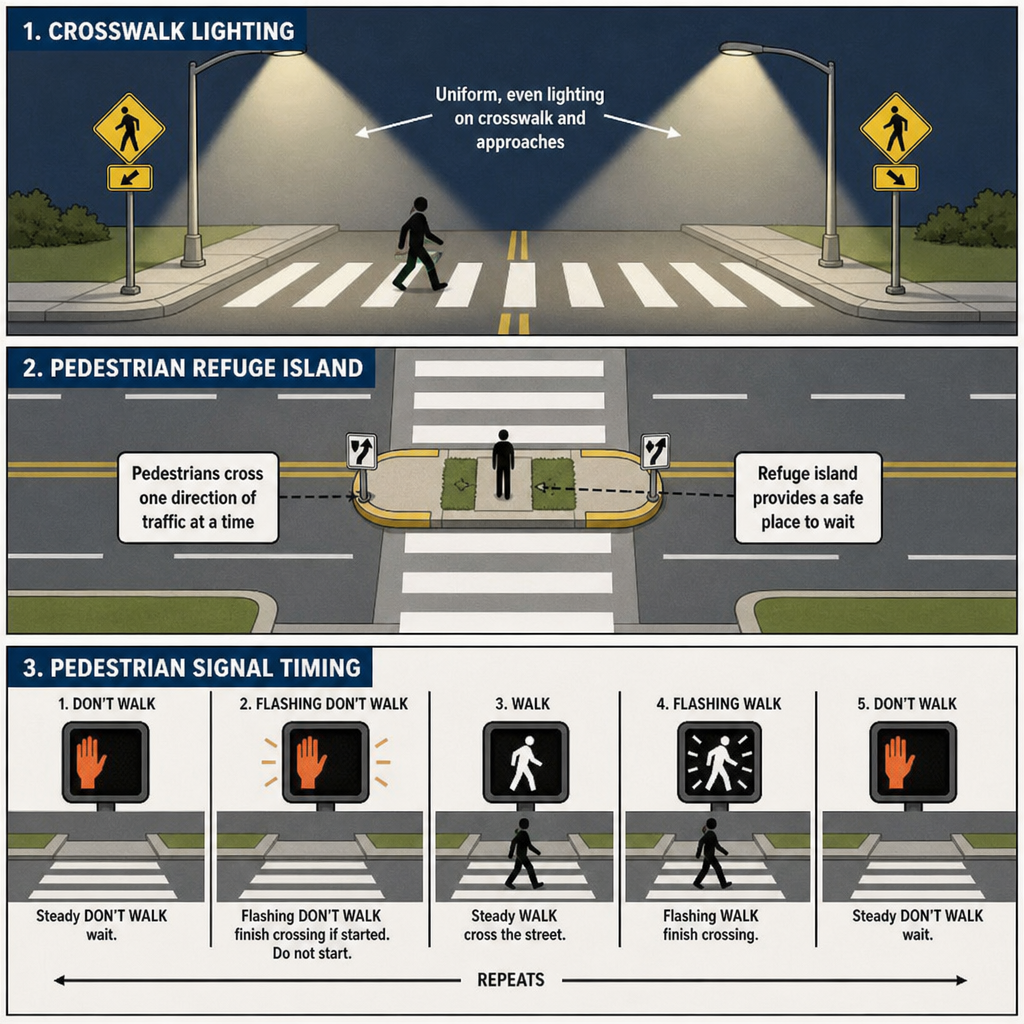
- Safer Crossings: Higher-visibility crosswalks, pedestrian refuge islands, better lighting, reduced crossing distances, and signal timing changes that reduce turning conflicts.
- Speed Management: Roadway redesign, lane narrowing/road diets, traffic calming, and targeted enforcement approaches paired with engineering changes.
- Intersection Improvements: Protected turn phases, improved sight lines, simplified movements, or roundabout conversions where appropriate.
- Bicycle & Micromobility Safety: Protected lanes or separated facilities where feasible, plus safer connections to schools, parks, and key destinations.
- Transit Access & Walking Connections: Safer routes to bus stops, sidewalk gap closures, and ADA-focused upgrades.

If you want to evaluate a proposal like a planner would, consider the whole trip: Can a child, an older adult, or someone using a mobility device get from home to a destination without being forced into the roadway? Are there safe crossings where people actually need to cross, not only where it is convenient to paint lines?
How to turn everyday experience into useful public input
Public feedback is most effective when it is specific, repeatable, and tied to a place and time. You do not need engineering terminology to help shape a safe city initiative-you need clear observations. Use this checklist when you email the city, speak at a meeting, or fill out a survey:
- Pinpoint The Location: Intersection, midblock crossing area, driveway cluster, school zone, or bus stop-and the direction you travel.
- Describe When It Happens: Morning drop-off, after dark, weekend peak, shift change, during rain, etc.
- Explain The Conflict: Turning vehicles, speeding, blocked sight lines, long crossings, no sidewalk, confusing signals, or near-misses.
- Identify Who Is Affected: People walking, kids, seniors, cyclists, transit riders, delivery drivers, people with disabilities.
- Ask For An Evaluation and follow-up: Request that the appropriate municipal authorities evaluate the roadway safety concern, identify feasible improvements, and provide information about potential funding, necessary approvals, and anticipated implementation timelines.
What to watch for in meetings, maps, and plan drafts
Safety plans often include maps showing high-injury networks or corridors with severe crashes. Those maps are useful, but residents should still ask how conclusions were reached. Good SS4A work typically explains:
- What data was used (crash reports, speed studies, community reports, near-miss feedback).
- How the city defines serious injury and priority risk.
- How equity and access are considered (who bears the risk, who lacks safe options).
- How strategies are prioritized (effectiveness, cost, feasibility, community benefit).
Keep legal questions separate from project feedback
SS4A planning is about preventing crashes. If you are injured in a crash, you should consider getting individualized advice promptly, because time limits can apply and evidence can disappear quickly. A public comment, complaint, or planning meeting statement is not a substitute for legal guidance.
When speaking with a middletown pedestrian accident attorney, consider asking what evidence to preserve, what deadlines may apply in Ohio, and how fault is evaluated in pedestrian injury cases. When consulting a Middletown car accident lawyer, ask how they evaluate insurance coverage, medical documentation, wage loss, and vehicle damage-and what steps they recommend to protect your claim.
Regardless of whether you hire counsel, preserve what you can: photos of the scene (taken safely), contact information for witnesses, police report details, insurer correspondence, repair estimates, and medical paperwork.
The takeaway: demand clarity from plan to delivery
The success of Middletown, Ohio’s Safe Streets and Roads for All (SS4A) initiative should ultimately be measured by its ability to reduce traffic fatalities, serious injuries, and documented roadway hazards. As the city advances its 2026 transportation safety planning efforts, residents should focus on three essential questions: What safety improvements are being proposed? Which projects have secured funding? What are the next steps and anticipated implementation timelines? Clear answers, transparent decision-making, and continued evaluation can help ensure that community feedback informs meaningful roadway improvements and long-term transportation safety.
Call (216) 405-2626 or request a free consultation today to speak with an experienced Middletown auto accident attorney at Buckeye Law Group.
Legal Disclaimer: This article is provided by Buckeye Law Group for general educational and informational purposes and does not constitute individualized legal or medical advice. The content discusses Middletown, Ohio, roadway safety initiatives, local traffic conditions, pedestrian safety, motor vehicle accidents, and legal considerations involving personal injury claims. References to Ohio personal injury laws, accident reporting procedures, insurance coverage, negligence, potential compensation, and applicable filing deadlines are intended to help Middletown residents and individuals throughout Butler and Warren Counties better understand their legal rights and available resources following an accident or injury. Every personal injury case involves unique circumstances, and determining liability or eligibility for compensation requires a careful evaluation of the available evidence, applicable Ohio laws, and individual facts. Reading this article or contacting Buckeye Law Group’s Middletown personal injury attorneys does not, by itself, establish an attorney-client relationship. Individuals seeking guidance regarding their specific circumstances should consult a qualified local Ohio personal injury attorney. Past case results do not guarantee or predict future outcomes.
Middletown’s 2026 Safe Streets and Roads for All Initiative: What Residents Should Know
Middletown, Ohio’s Safe Streets and Roads for All (SS4A) effort is best understood as a road-safety planning-and-delivery process funded through the U.S. Department of Transportation. For residents following this community
Euclid’s Lakeshore Boulevard Pedestrian Safety Improvements: What Drivers and Walkers Should Know
Euclid’s Lakeshore Boulevard pedestrian safety improvements aim to enhance roadway visibility, provide safer crossing opportunities, and strengthen connections between Downtown Euclid, Sims Park, and the Lake Erie waterfront. The City
Cincinnati’s Victory Parkway Safety Improvements: What Drivers and Pedestrians Should Know in 2026
Cincinnati’s Victory Parkway Improvement Project represents a significant investment in roadway safety, pedestrian accessibility, and transportation infrastructure. Overseen by the Cincinnati Department of Transportation & Engineering (DOTE), the project includes
What Greater Akron’s latest crash data reveals about roadway safety and serious injuries
Greater Akron’s latest regional crash report shows fewer crashes overall, but serious injuries remain a concern. The Akron Metropolitan Area Transportation Study’s 2022–2024 analysis separates encouraging declines in fatalities from
Why Is St. Clair Avenue One of Cleveland’s Most Dangerous Roads? Crash Data and Safety Improvements Explained
St. Clair Avenue’s danger comes into focus when you look beyond fender-benders to deaths and life-changing injuries. Cleveland reports at least 14 people killed and 79 seriously injured between East
Dayton’s 2026 Road Safety Action Plan: What Local Crash Data Reveals About Dangerous Driving Conditions
The City of Dayton, Ohio, has adopted a comprehensive Safe Streets and Roads for All (SS4A) Safety Action Plan to address traffic fatalities, serious injuries, and hazardous roadway conditions throughout
Cleveland’s 2026 Daylight Saving Time Change: Earlier Darkness, Pedestrian Safety, and Ohio Traffic Laws
Cleveland’s daylight saving time ends on Sunday, November 1, 2026, at 2:00 a.m., when clocks move backward one hour and Northeast Ohio returns to Eastern Standard Time (EST). While the
Halloween Weekend 2026 in Dayton: Impaired Driving Risks, Free Rideshare Resources, and Ohio Accident Laws
Halloween weekend brings celebrations throughout Dayton, Ohio, but increased nighttime traffic, pedestrians, and alcohol-related activities also create important safety concerns. Whether you are attending an event in downtown Dayton, visiting
Halloween Pedestrian Safety Near Ohio State University: Columbus Crosswalk Laws, Accident Risks, and What to Do If You’re Injured
Halloween weekend brings students, residents, and visitors throughout Columbus, particularly around The Ohio State University and the surrounding University District. As people travel between campus, restaurants, residential neighborhoods, and entertainment
Can You Pursue Compensation for a Traumatic Brain Injury After an Ohio Car Accident?
A traumatic brain injury sustained in an Ohio car accident can have significant and lasting consequences for an individual’s health, financial stability, and quality of life. When another party’s negligence

Buckeye Law Group represents people injured in auto accidents, slip and falls, workplace accidents and more in Ohio. Contact us today to learn more.
© 2026 All Rights Reserved | The Buckeye Law Group Inc. Privacy Policy Sitemap
Office Locations
- Akron Office 388 S Main St #400 Akron, OH 44311 (330) 426-0288
- Cincinnati Office 201 E 5th St Ste 1910 Cincinnati, OH 45202 (513) 547-2445
- Cleveland Office 127 Public Square Ste 1540 Cleveland, OH 44114 (216) 677-5490
- Columbus Office 20 E Broad St Suite 300 Columbus, OH 43215 (614) 482-3793
- Dayton Office 70 Birch Alley Ste 240 Dayton, OH 45440 (937) 884-4474
- Euclid Office 25701 N Lakeland Blvd Suite 113-C, Cleveland, OH 44132 (216) 405-2626
- Mansfield Office 305 E Main St Ste 6A, Mansfield, OH 44904 (567) 210-2606
- Findlay Office 7430 Timberstone Dr unit 101a, Findlay, OH 45840 419-873-5119
- Mentor Office 7537 Mentor Ave Ste 101, Mentor, OH 44060 (440) 306-3536
- Middletown Office 300 N Main St #400, Middletown, OH 45042 (326) 800-9150
- Parma Office 1257 Rockside Rd #A, Parma, OH 44131 (216) 279-1664
- Springfield Office 2100 E High St Ste TL3, Springfield, OH 45505 (937) 806-5791
- Toledo Office 3950 Sunforest Ct Ste 200, Toledo, OH 43623 (567) 483-3883
- Westlake Office 26404 Center Ridge Rd Ste B2, Westlake, OH 44145 216-247-0565
- Whitehall Office 5340 E Main St Ste 203, Whitehall, OH 43213 (380) 257-5206
- Youngstown Office 306 Churchill Hubbard Rd, Youngstown, OH 44505 (234) 225-0683
Contact Us
© 2026 All Rights Reserved | The Buckeye Law Group Inc. Privacy Policy Sitemap